 ProMapRanker
Best Apps to Make Friends in 2026

Key takeaways
- Meetup is the strongest pick for lasting friendships, because recurring groups give you repeated contact with the same people.
- Bumble For Friends suits one-to-one matching when you want to chat first and meet later.
- Timeleft and similar curated dinners work when you want a planned small group meetup without organizing it yourself.
- Safety habits matter more than any app feature: meet in public, tell a friend your plans, and keep personal details private at first.
- Use one broad app and one niche app together, and give a group at least three visits before you decide it is not for you.
Quick comparison
| Pick | Great for | Pricing starts at | Free tier | |
|---|---|---|---|---|
 Meetup | Recurring interest groups and events | Free | Yes | Visit |
 Bumble For Friends | One-to-one platonic matching | Free | Yes | Visit |
 Nextdoor | Neighborhood friendships and local help | Free | Yes | Visit |
 Peanut | Mothers and women in the same life stage | Free | Yes | Visit |
 Timeleft | Curated dinners with strangers | See website | No | Visit |
 Friender | Activity based friend matching | Free | Yes | Visit |
 Slowly | Thoughtful pen-pal friendships | Free | Yes | Visit |
 Hey VINA | Friend matching for women | Free | Yes | Visit |
 Discord | Long-term hobby and interest communities | Free | Yes | Visit |
The best apps to make friends
This list focuses on apps that lead to real contact: recurring groups, planned meetups, and shared activities, rather than endless chat alone. We favored apps with clear moderation, reporting, and blocking tools, and we note where an app is built for a specific group, so you can judge fit quickly.
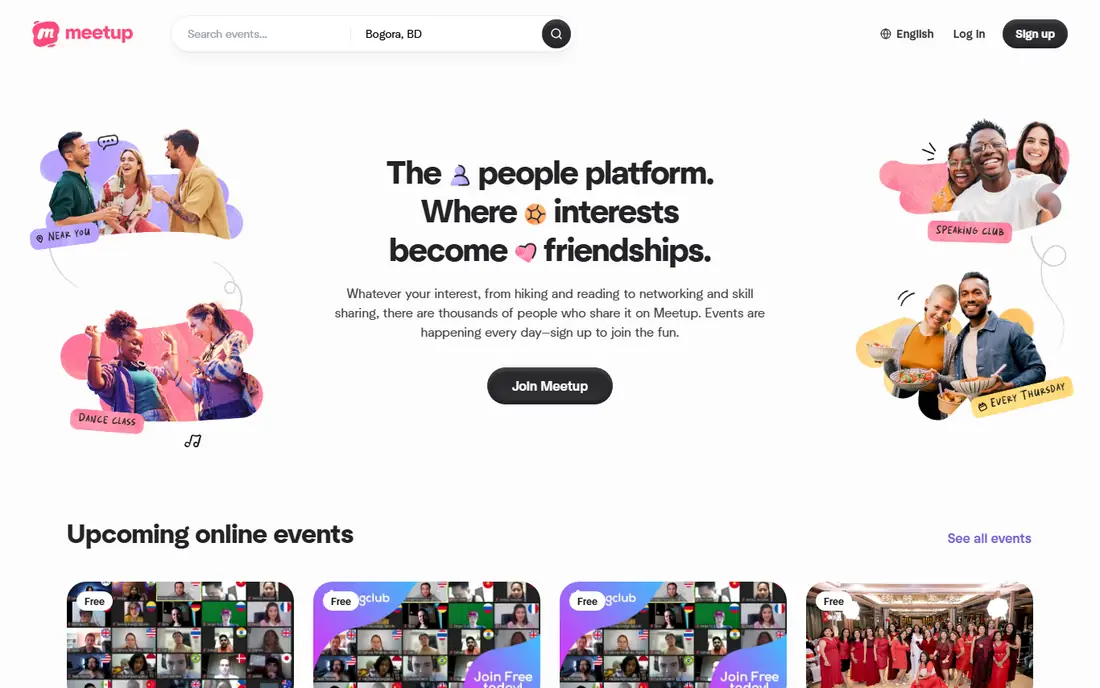
Meetup remains the most reliable route to real friendships as an adult. You join a group for hiking, board games, language practice, or professional networking, and you see the same people week after week. That repetition is what turns a stranger into a friend, because shared time builds trust in a way that a single chat cannot.
The free app covers browsing and attending most events, though some groups charge a small fee per event and organizers pay to run groups. Activity depends on your city, so check how many groups near you have met in the past month before you judge it. For newcomers to a city, Meetup is the first app to try, and the one most likely to produce a regular social circle.
- Huge range of local groups
- Recurring meetings build familiarity
- Most events are free to attend
- Activity varies by city
- Some groups charge small event fees
- Organizers set their own rules
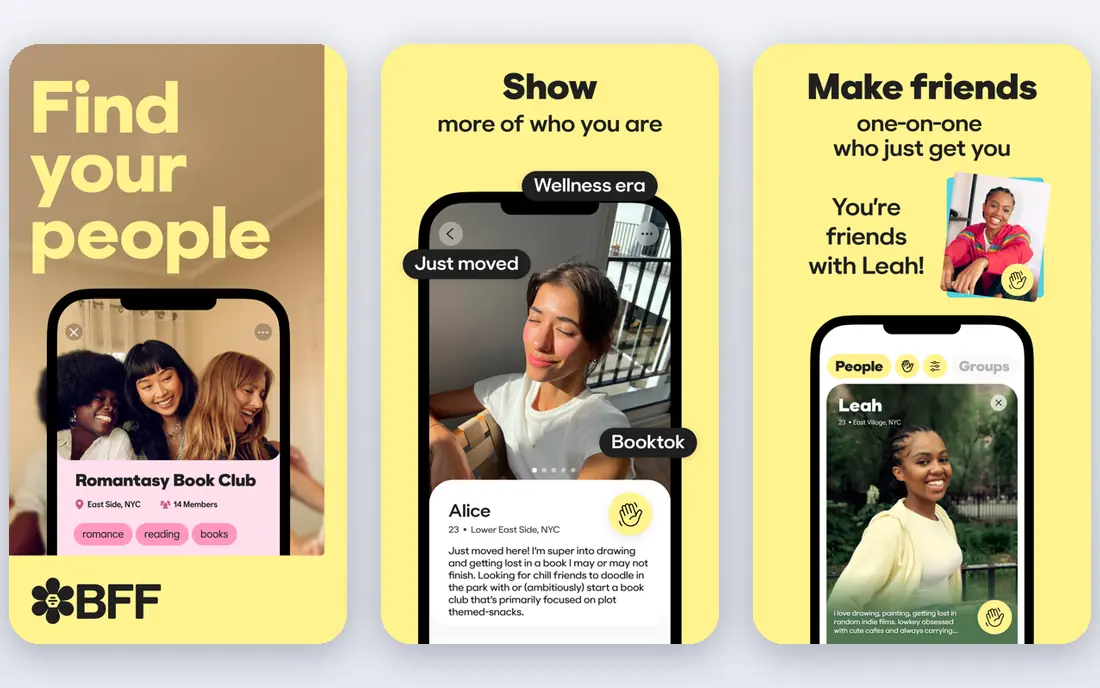
Bumble For Friends, formerly Bumble BFF, is the familiar swipe option, kept separate from dating. You build a profile with photos, interest tags, and prompts, swipe through nearby people looking for friends, and chat after a mutual match. The separation from dating matters, because it sets a clear platonic expectation from the start.
The free tier covers core matching and messaging, with premium add-ons for extra filters and visibility. Results vary by city and by how complete your profile is, and not every match leads to a meetup. Bumble For Friends works best when you move from chat to a public coffee meetup within a few messages, rather than chatting for weeks.
- Friends-only mode separate from dating
- Interest tags and prompts
- Photo verification options
- Match quality varies by city
- Some users report low response rates
- Premium features cost extra
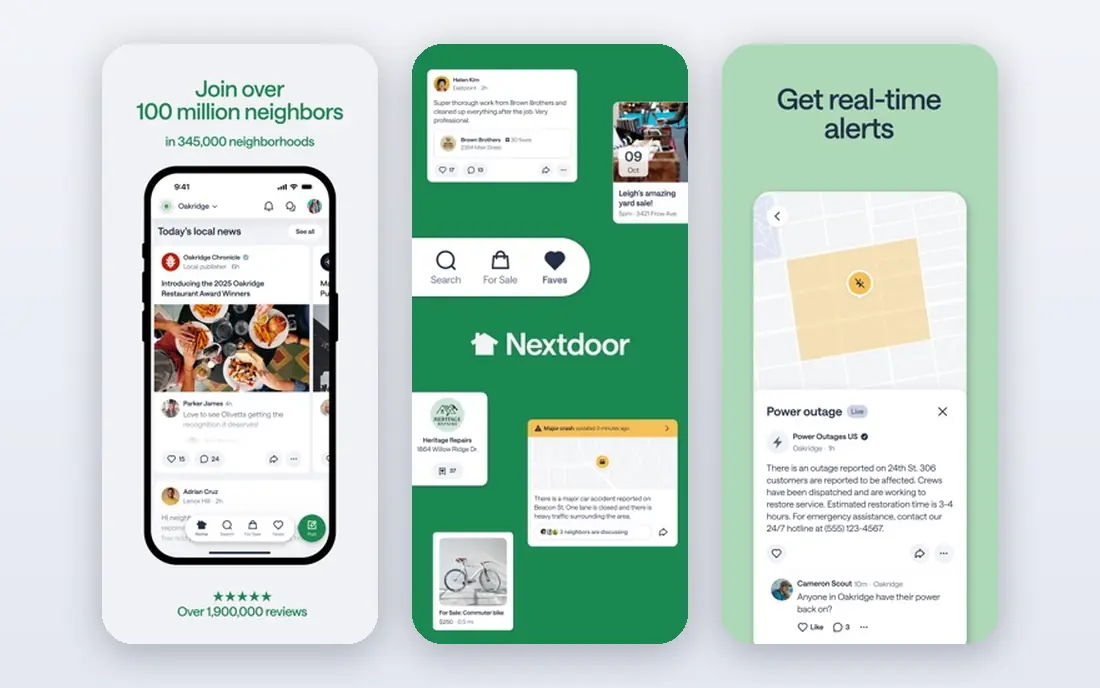
Nextdoor connects you with people who actually live nearby, which makes spontaneous meetups easier. Neighborhood groups cover walking clubs, parent groups, book clubs, and local volunteering, and the events and recommendations sections surface gatherings you would miss on a national app. Because members are tied to a real address area, the community feels more grounded than a global chat app.
The trade-off is focus. Nextdoor is a neighborhood network, not a friend matching app, so you must join groups and attend events rather than expect matches. Tone and activity also vary by neighborhood. For people who want friends close to home, and for new movers who want to learn a neighborhood fast, Nextdoor is a useful second app alongside Meetup.
- Real neighborhood based groups
- Local events, recommendations, and safety alerts
- Free to join
- Conversation quality varies by neighborhood
- Not designed for interest based matching
Peanut is built for women, with a strong focus on mothers, who often find adult friendship hardest to rebuild after a move or a new child. Groups are organized by life stage, location, and interests, and topic communities let you ask questions, share advice, and find local meetups. That shared life stage gives conversations a natural starting point.
The app is free for core use, with premium options for extra features. Its focus is also its limit: Peanut is not a general friend app for everyone, and activity depends on your city. For mothers and women seeking peers in a similar stage of life, Peanut offers a more relevant community than a general matching app.
- Community groups by life stage
- Q and A and topic communities
- Events for mothers and women
- Women focused, so not for all seekers
- Activity varies by city
Timeleft takes the organizing work out of meeting people. You book a dinner in your city, answer a short personality and preference survey, and Timeleft seats you with a small group of strangers at a restaurant. The shared meal gives everyone a reason to talk, and the fixed format suits people who find open chat apps awkward.
Dinners are paid, with prices varying by city and listed on the Timeleft site, so we list See website. Availability is strongest in larger cities, and a single dinner may not click, so try more than one. For adults who want a real meetup without planning it, Timeleft is one of the most direct options on this list.
- Planned small group dinners in your city
- No organizing needed
- Good for people who dislike open-ended chat
- Paid per dinner
- Availability varies by city
- Group chemistry is luck on the night
Friender matches people by what they want to do together, from hiking and gaming to coffee and study sessions, rather than by photos alone. That activity focus helps the first meetup feel natural, because you already share a plan. The app is platonic by design, which sets expectations clearly for both sides.
The smaller user base is the main drawback, so check activity in your city before relying on it. The core app is free, with messaging after a match. For people who want a friend to do a specific activity with, Friender is a focused alternative to general swipe matching.
- Matches by shared activities, not just photos
- Platonic by design
- Messaging after a match
- Smaller user base than Bumble
- IOS availability has been stronger than Android in some periods
Slowly is the outlier here, and it earns its place for introverts, language learners, and people who like writing. Letters arrive after a delay based on distance, like real mail, and you match with pen pals by interests, language, and location. The slow pace filters for people who want a deeper exchange rather than a quick chat.
Slowly will not help you find a local hiking group this weekend, and that is the point. It suits long-distance friendships, language practice, and thoughtful conversation, with optional in-app purchases for extra stamps and features. If fast local meetups are your goal, pair Slowly with Meetup rather than using it alone.
- Delayed letters encourage thoughtful replies
- Matches by interests and language
- Global reach
- Slow by design, so not for quick local meetups
- Text only, with no in-person events
Hey VINA, often written as VINA, is a friend matching app built for women. Profiles use personality quizzes and interest tags, and the app includes community features and events alongside one-to-one matching. The women only design is intended to create a safer and more comfortable space for platonic connection.
The core app is free, with premium options for extra visibility and features. As with other matching apps, results depend on local activity and profile completeness. For women who prefer a women only space for making friends, Hey VINA is a focused alternative to Bumble For Friends.
- Women only friend matching
- Personality and interest based profiles
- Community and events features
- Women only, so not for all seekers
- Activity varies by city
Discord is not a friend matching app, but it is one of the best places to build friendships around a shared interest over time. Servers for games, art, music, study, fitness, and local cities host regular voice chats, events, and meetups, and repeated contact in a small server often leads to real friendships. Many local Meetup groups also run a Discord server between events.
The challenge is discovery. You must find servers that fit, join smaller ones where conversation is possible, and check moderation rules before engaging. Discord is free for core use, with an optional Nitro subscription for extra features. For hobby based friendships that grow slowly, Discord complements a local app like Meetup well.
- Huge range of topic servers
- Voice, video, and text in one place
- Free core use
- Finding good servers takes effort
- Large servers can feel noisy
- Moderation quality varies
How we picked these
We compared official app pages, app store listings, and recent friendship app roundups for apps that are live in October 2026 and that lead to real contact, not only chat. We favored apps with reporting, blocking, and verification tools, and we included a mix of broad, niche, local, and slow formats so different social styles are covered. We left out dating apps and apps without a clear friendship focus.
We did not test meetups ourselves for this roundup. Our findings rest on published features, pricing, and public reviews, and local activity varies by city, so check groups near you before paying for a premium tier.
Staying safe when you meet people from an app
Meet in a public place for the first few times, ideally a cafe or a group event, and tell a friend where you are going and when you expect to be back. Keep your home address, workplace details, and financial information private until trust is earned over repeated meetings. Trust your instincts: if a person pressures you to meet privately, share personal details, or send money, end contact and use the app report and block tools.
Group formats are safer than one-to-one meets with a stranger, especially at first. Meetup events, Timeleft dinners, and Discord community meetups give you other people around and a public setting. For younger users, check age rules on each app, and for teens, use only apps designed for their age group with parental guidance. No app feature replaces careful habits, and a good friendship should never require you to ignore discomfort.
Frequently asked questions
What is the best app to make friends as an adult?
Meetup is the best overall pick for adults, because recurring groups give repeated contact. Add Bumble For Friends if you want one-to-one matching, and Timeleft if you want a planned group meetup without organizing it.
What is the best free app to make friends?
Meetup, Bumble For Friends, Nextdoor, and Discord all offer useful free tiers. Meetup is strongest for local groups, while Discord is strongest for hobby communities. Start free, check local activity, and only pay once you know an app suits you.
Are friendship apps safe?
They can be, when you use apps with verification, reporting, and moderation, and follow basic safety habits. Meet in public, tell a friend your plans, keep personal details private at first, and report and block anyone who pressures you.
How long does it take to make friends through an app?
It usually takes several repeated meetings, not one event. Research on friendship formation points to dozens of hours of shared time before a casual friendship forms, so attend a group at least three times and follow up with people you clicked with.
Can introverts make friends through apps?
Yes, and format matters more than personality. Recurring small groups, activity based matching, and Slowly letters all suit introverts better than large open chat. Choose a format with a clear activity, so conversation has a natural focus.
Sources
See where you really rank - block by block
ProMapRanker scans Google Maps across a grid of your service area. Simple monthly plans from $19, white-label on every plan.
Start freeKeep reading
 top custom software development company
Top Custom Software Development Company in 2026
Looking for a top custom software development company? We compare 9 firms for web, mobile, and enterprise software, covering strengths and fit for 2026.
Read → tableau alternatives
Tableau Alternatives in 2026
Compare the best Tableau alternatives for 2026, from Power BI to Metabase, with prices, hosting options, and picks for small teams and enterprises today.
Read → microsoft teams alternatives
Best Microsoft Teams Alternatives in 2026
Looking for microsoft teams alternatives? We compare 9 chat and video tools for 2026, covering free plans, pricing, meetings, and integrations for teams.
Read →