 ProMapRanker
Best Apps for Renting Houses in 2026

Key takeaways
- Use more than one app, since no single service lists every house, especially homes from small landlords.
- Zillow and Trulia offer broad inventory, while Realtor.com and Redfin lean on fresher listing data in many markets.
- Set alerts for your exact price, bedroom count and area, because good houses can move quickly.
- Never pay before touring a home in person or by live video, and verify the landlord before sending money.
Quick comparison
| Pick | Great for | Pricing starts at | Free tier | |
|---|---|---|---|---|
 Zillow | Broadest house search | Free | Yes | Visit |
 Trulia | Neighbourhood detail | Free | Yes | Visit |
 Apartments.com | Verified large-complex listings | Free | Yes | Visit |
 Realtor.com | Fresh MLS-based listings | Free | Yes | Visit |
 Redfin | Fast updates and tour booking | Free | Yes | Visit |
 Zumper | Fast applications in cities | Free | Yes | Visit |
 Apartment List | Personalised matches | Free | Yes | Visit |
 Homes.com | Second-source house search | Free | Yes | Visit |
 Rent.com | Cash-back eligible rentals | Free | Yes | Visit |
 Facebook Marketplace | Private landlord listings | Free | Yes | Visit |
The best apps for renting houses
House hunting works better when you combine a broad search app with a fresher data source and, where it fits, a private landlord channel. These picks cover that mix, and all are free for renters to browse.
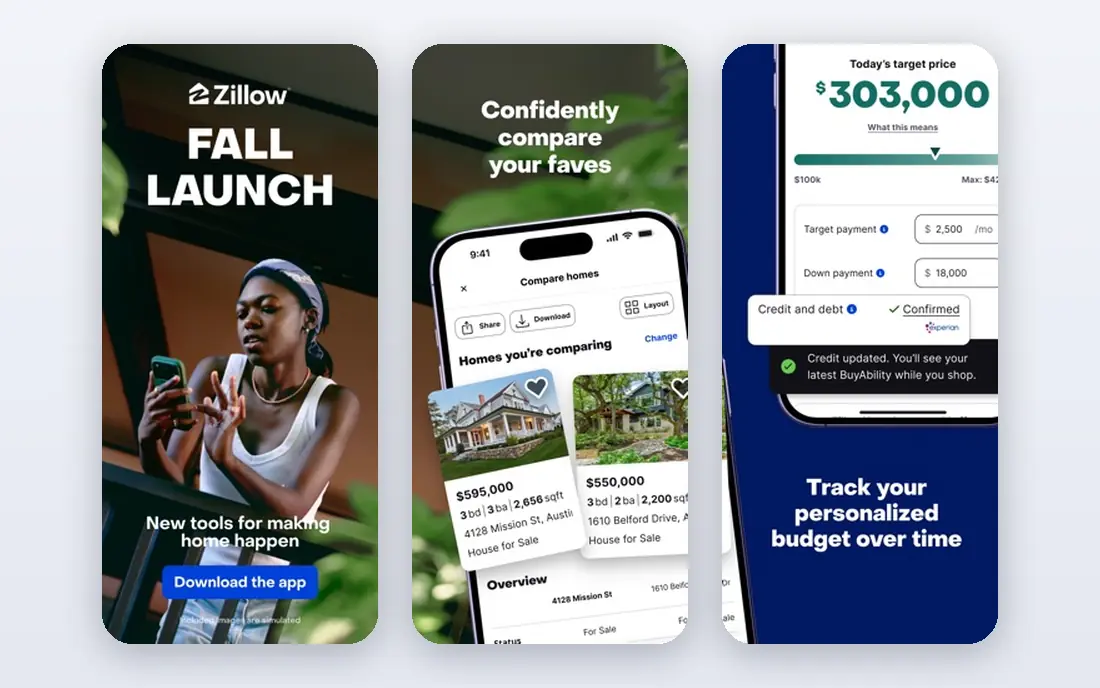
Zillow is the natural starting point for most house renters because its inventory is broad, covering houses, townhomes and apartments from many sources. Filters for price, bedrooms, pets and commute tools help narrow a large map quickly, and saved searches with alerts mean you hear about new matches without checking all day. The renter profile can also speed up applications to participating properties.
The weakness is freshness. A house can be leased while still showing as available, so treat Zillow as a discovery tool and confirm availability directly with the landlord or manager before you get attached. Used that way, it remains the widest net in this list.
- Very large listing pool
- Strong filters and saved searches
- Map search and alerts
- Some listings may already be leased
- Duplicate listings appear
- Agent contact can be persistent
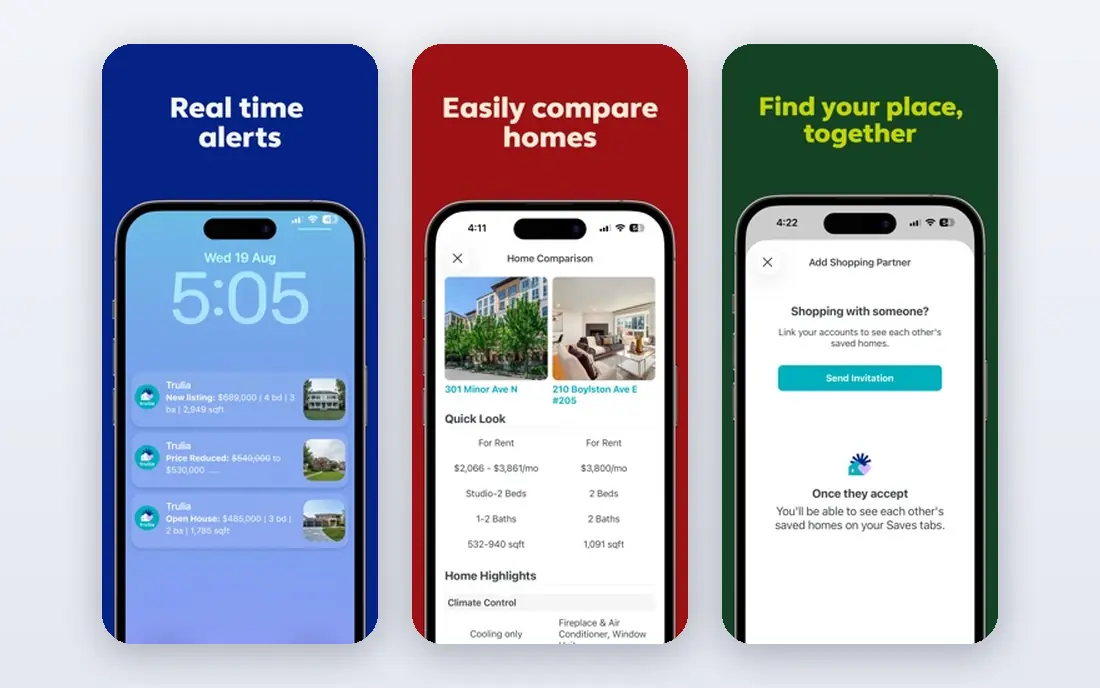
Trulia, part of the Zillow Group, adds neighbourhood context that helps when you are choosing between areas rather than specific houses. Maps showing schools, amenities and local detail make it easier to compare two similar rentals in different parts of town. For renters moving to a new city, that context can matter as much as the house itself.
Because much of its inventory overlaps with Zillow, Trulia works best as a second view on the same search, not as a wholly separate pool. Check both, but confirm availability the same way, and do not assume a Trulia listing is fresher than its Zillow twin.
- Neighbourhood maps and local detail
- Owned by the same group as Zillow
- Useful crime and school context
- Much overlap with Zillow listings
- Freshness limits apply
- Smaller unique inventory
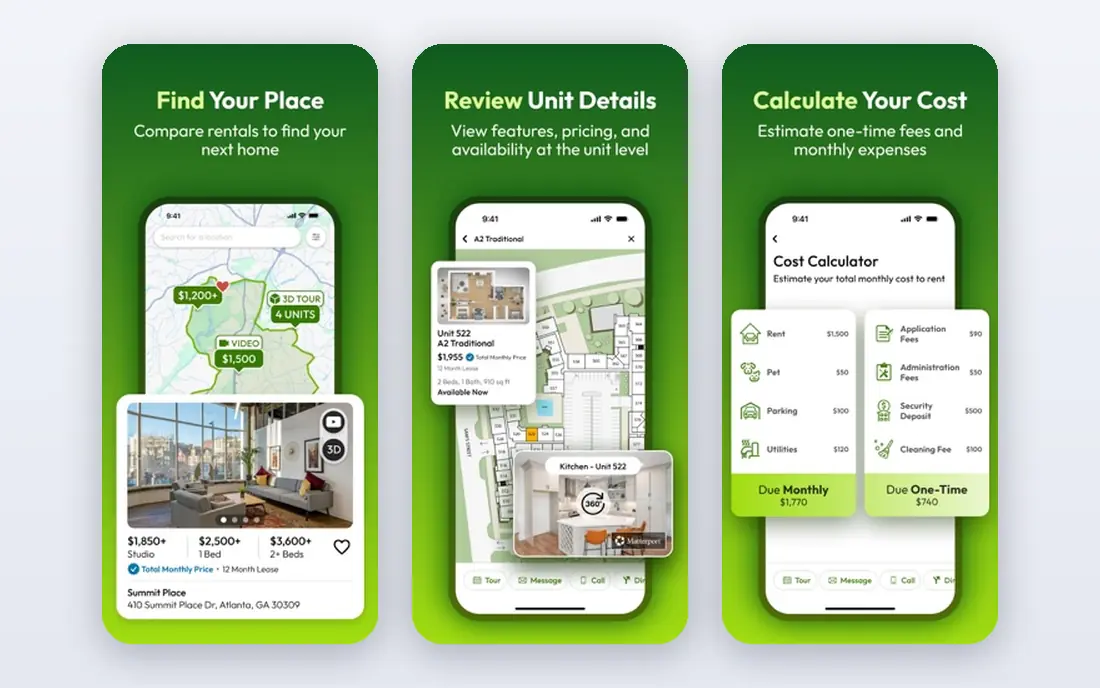
Apartments.com is strongest where large property managers list directly, which means fewer stale listings and clearer pricing for those properties. If your search includes townhomes or apartments in managed communities, its verified approach saves time wasted on homes that are already gone. Photos, floor plans and amenity detail are usually thorough.
Single-family houses from private owners are thinner here, so house hunters should pair it with Zillow or Facebook Marketplace. Think of Apartments.com as the reliable core for managed rentals, not the whole search.
- Strong verified listings from property managers
- Clear pricing detail
- Large apartment inventory
- Less single-family house inventory
- Weaker for small private landlords
- Search leans toward complexes
Realtor.com draws on Multiple Listing Service data in many markets, which often makes its listing status more current than a general portal. For renters, that matters when a house has just come on the market or just been leased, since a day can decide whether a tour is still possible. Commute tools and neighbourhood detail add practical context.
Its rental pool can be smaller than Zillow in some areas, so it should not be your only app. Use Realtor.com to verify freshness on houses you like elsewhere, and to catch agent-listed rentals that may appear here first.
- MLS-sourced listings in many markets
- Clearer listing status
- Neighbourhood and school detail
- Smaller rental pool than Zillow in some areas
- Interface is less slick
- Some features favour buyers
Redfin is known for fast updates and a clean search experience, and its rental search benefits from the same approach. Tour scheduling is straightforward where it is offered, and the map view makes it easy to compare houses across a neighbourhood. Renters who may later buy can also compare rent and sale markets in one place.
Rentals are not Redfin's main focus, so inventory can be thinner than on Zillow or Realtor.com, and coverage varies by city. Use it as a fast second check and a tour tool, alongside a broader search app.
- Fast listing updates
- Clean map and filters
- Easy tour scheduling where offered
- Rental inventory smaller than sale inventory
- Brokerage ties may colour recommendations
- Coverage varies by market
Zumper is built for speed, which matters in competitive city markets where a house can be leased within days. Its mobile app, alerts and instant apply feature for participating properties cut the gap between seeing a listing and submitting an application. That speed is a real advantage when landlords review applications in order.
Outside larger cities, inventory is thinner, so rural and small-town renters may find less here. Pair Zumper with a broader portal if your market is smaller, and still verify each landlord before applying.
- Mobile-first search
- Instant apply to participating properties
- Alerts for new listings
- Strongest in larger cities
- Inventory thinner outside major markets
- Application features vary by property
Apartment List takes a different route, starting with a quiz about budget, location, pets and must-haves, then presenting matches rather than an open map of everything. That approach suits renters who feel overwhelmed by thousands of listings and want a shorter, more relevant shortlist. In some markets, a concierge can help with tours and questions.
The trade-off is control. A matching system can hide a house that would have suited you but fell outside your stated filters, so widen your answers if matches feel thin. Use it alongside an open search app to avoid missing a good fit.
- Personalised matching quiz
- Concierge help in some markets
- Clean comparison of matches
- House inventory varies by market
- Matching may narrow options too far
- Not a full open search for all
Homes.com works well as a second source, especially for houses, since it pairs listings with neighbourhood information and local detail. Checking a house here after finding it elsewhere can reveal extra photos, history or context that the first listing missed. That cross-check is worth the extra minute on a shortlisted home.
It is not a replacement for Zillow or Realtor.com as a primary search, because rental inventory is smaller. Treat Homes.com as a verification and research step in a wider search, not the only app you open.
- Neighbourhood detail
- House and rental search in one place
- Useful second check on listings
- Rental inventory smaller than leaders
- Freshness varies
- Fewer application tools
Rent.com combines a rental search with cash back on select eligible units, which can be a welcome bonus if you were going to rent that property anyway. Search and property detail are straightforward, and the app covers apartments and some houses across many US markets. For renters focused on managed properties, it is worth checking.
Cash back should never drive the choice of home. It applies only to select units, terms and timing matter, and the amount may be modest next to a year of rent. Read the eligibility rules before counting on it, and choose the house on price, location and condition first.
- Cash back on some eligible rentals
- Broad apartment search
- Clear property detail
- Cash back only on select units and terms apply
- House inventory thinner
- Payout rules need reading
Facebook Marketplace is where many private landlords list houses that never reach the big portals, including older homes and rentals in smaller areas. That makes it valuable for house hunters who keep missing out on portal listings, and direct messaging can lead to a quick tour. Prices and terms are sometimes negotiable with a private owner.
Scam risk is the serious catch. Never pay a deposit before touring, never send money by wire or gift card, and verify that the person messaging you actually controls the property. With those checks, Marketplace can surface houses no other app in this list will show you.
- Private landlord and small-owner houses
- Negotiable terms in some cases
- Local and fast-moving listings
- Higher scam risk
- Listing quality varies widely
- No central verification of landlords
How we picked these
We compared official feature pages, app store listings and public rental guides, and we favoured apps that are free for renters, still active in the US and genuinely useful for houses rather than only apartments. We kept a mix of broad portals, fresher MLS sources and private landlord channels, because no single app covers every type of house rental.
How to search without missing good houses
Set alerts on two or three apps, not ten, and make the filters match your real limits on price, bedrooms and commute. Tour quickly when a strong match appears, bring your application documents, and ask about fees, utilities and lease terms before you apply. Keep a short note on each house you tour, since similar houses blur together after a busy weekend.
Protect yourself at every step. Tour in person or by live video, meet the landlord or manager at the property where possible, and read the lease before paying anything. If a price looks far below similar houses, if the landlord cannot show the home, or if payment is demanded urgently and in an unusual form, walk away and report the listing.
Frequently asked questions
What is the best app for house rentals?
Zillow is the best starting point for breadth, while Realtor.com is a strong check for fresher MLS-based status. Most renters get the best results by running both, plus one private landlord channel such as Facebook Marketplace.
What is the best app to find houses for rent?
The best app to find houses for rent depends on your market. In large cities, Zumper and Apartment List add speed and matching, while in smaller markets Zillow, Trulia and Marketplace usually cover more houses.
Are rental apps free for renters?
Yes, browsing and searching on the apps in this list is free for renters. Landlords or agents may charge application fees, and some cash-back or premium features have their own terms, so read those before applying.
How can I avoid rental scams?
Tour the home in person or by live video, verify the landlord or manager, and never pay before you have seen the property and read the lease. Be wary of prices far below market, pressure to pay quickly, and payment by wire transfer or gift card.
Why do listings stay up after a house is leased?
Listing status can lag, especially on portals that gather listings from many sources. Confirm availability directly with the landlord or agent, and use a fresher source such as Realtor.com to cross-check status.
Sources
See where you really rank - block by block
ProMapRanker scans Google Maps across a grid of your service area. Simple monthly plans from $19, white-label on every plan.
Start freeKeep reading
 who has best internet service
Who Has the Best Internet Service in 2026
Who has best internet service for US homes? We compare fiber, cable, fixed wireless and satellite providers on speed, price, availability and terms today.
Read → which survey tool has the best analytics
Which Survey Tool Has the Best Analytics in 2026
Find which survey tool has the best analytics in 2026, comparing Qualtrics, SurveyMonkey, Typeform, Alchemer, and more on reports, text, and stats today.
Read → which streaming service has the best movies
Which Streaming Service Has the Best Movies in 2026
Answering which streaming service has the best movies, with Netflix, Max, Criterion and more compared on libraries, prices and free options in this guide.
Read →