 ProMapRanker
Best Apps for Memory Improvement in 2026

Key takeaways
- Lumosity and Peak offer the broadest game libraries for people who want a short daily workout across memory, attention, and speed.
- Elevate is the better pick if your goal is practical: reading, writing, math, and processing speed for work and study.
- BrainHQ and CogniFit lean more toward structured exercises and assessment, which suits older adults and people who want a measured program.
- Most apps here offer a free tier, but the useful daily content usually sits behind a subscription, so try the free version first.
- Brain training apps are games and practice tools, not medical treatment, and they do not promise to prevent or treat memory loss.
Quick comparison
| Pick | Great for | Pricing starts at | Free tier | |
|---|---|---|---|---|
 Lumosity | Broad daily brain workouts | See website | Yes | Visit |
 Elevate | Practical reading, writing, and math | See website | Yes | Visit |
 Peak | Polished gamified training | See website | Yes | Visit |
 CogniFit | Assessment-led training | See website | Yes | Visit |
 BrainHQ | Research-based exercises | See website | Free trial | Visit |
 NeuroNation | Memory and concentration | See website | Yes | Visit |
 Memorado | Simple memory-focused games | See website | Yes | Visit |
 Impulse | Short focus and attention games | See website | Yes | Visit |
The best apps for memory improvement
We compared official app pages, pricing pages, and app store listings for games that target memory, attention, and related skills. A short daily habit matters more than a large game count, so we favored apps with clear daily programs, progress tracking, and a free tier you can actually try.
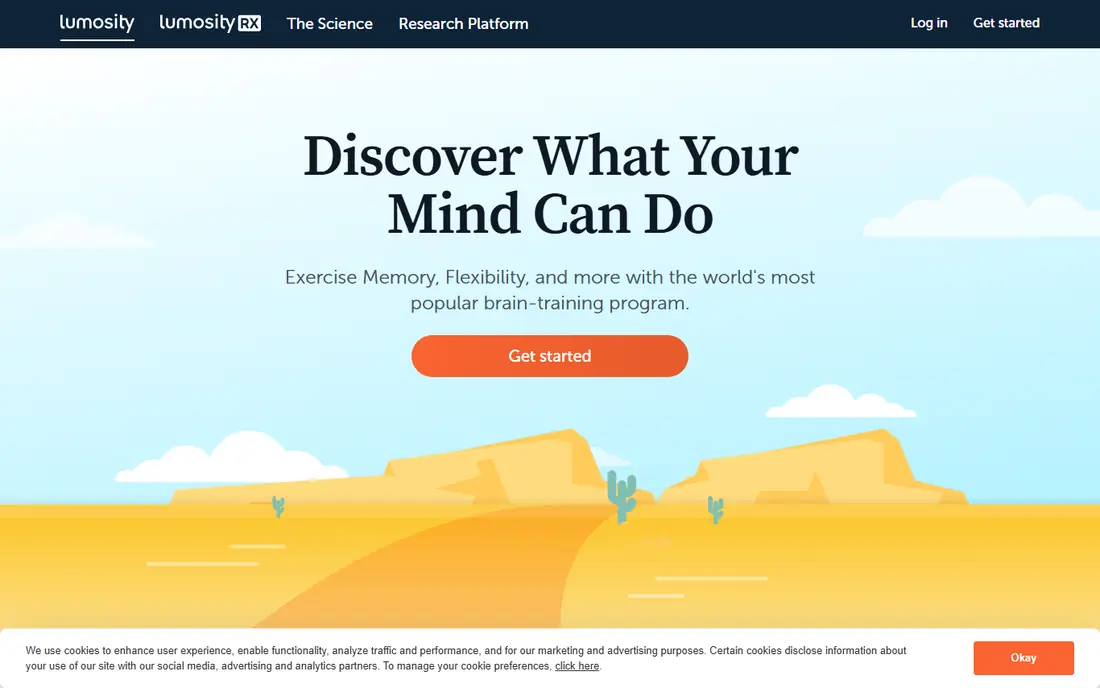
Lumosity is the best-known name in this category, and its structure explains why. You start with a baseline set of games, then get a daily workout that mixes memory, attention, speed, flexibility, and problem solving. Sessions are short, which makes it easier to keep the habit going for weeks rather than days.
The free tier gives a limited daily workout, while a subscription opens the full game library and deeper progress views. Lumosity suits people who want variety and a set routine, rather than a single type of drill. Do not expect it to replace study, sleep, or real-world practice for skills you need at work.
- Large game library across memory, speed, and problem solving
- Daily workout structure
- Progress tracking over time
- Free tier limits you to a small daily set
- Subscription is needed for the full library
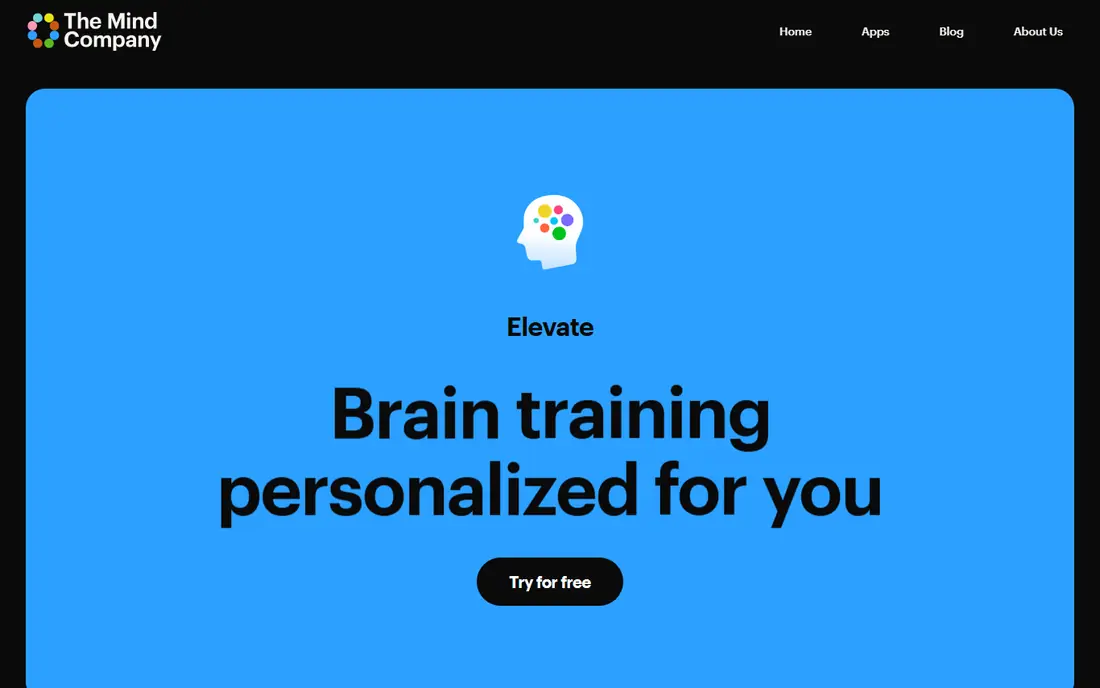
Elevate feels different from most brain apps because its games target everyday skills. You practice comprehension, writing, speaking, math, and processing speed through quick exercises that look closer to real tasks than abstract puzzles. That makes it a natural pick for students and professionals who want training that transfers to reading reports or doing mental math.
The free version offers a limited daily program, with a subscription adding the full library and detailed analytics. Elevate is our pick for most adults who want memory improvement as part of broader mental sharpness, rather than memory games alone. If you want only classic memory matching games, Peak or Memorado may suit you better.
- Focus on skills used at work and school
- Short personalized daily program
- Clear performance tracking
- Less focused on pure memory drills than some rivals
- Full game library needs a subscription
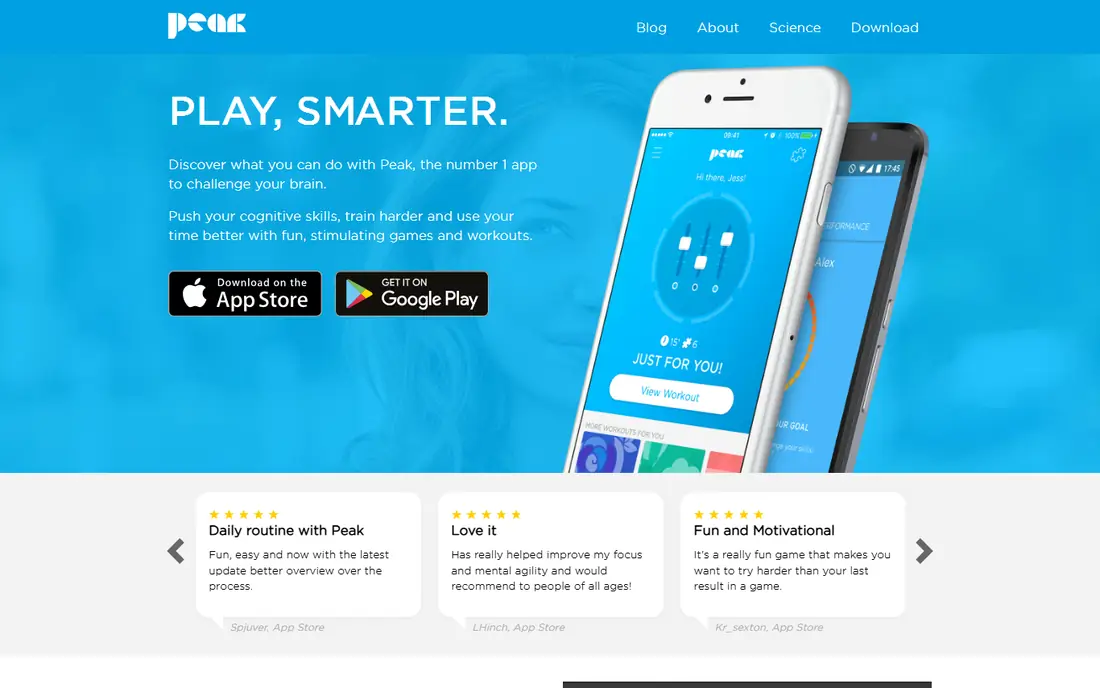
Peak combines a large set of mini-games with a clean, game-like design. You pick focus areas such as memory, mental agility, language, and attention, then work through short sessions and a daily challenge. Progress views show your strengths across areas, which helps you spot where you struggle most.
The free tier is genuinely usable, though sessions are capped and a subscription adds a personalized plan and the full experience. Peak is a good choice for people who quit other apps because they felt like homework. It is less suited to people who want a clinical assessment or a structured program set by a professional.
- Attractive design and smooth gameplay
- Daily challenge and goals
- Covers memory, language, and attention
- Free version caps sessions
- Some games feel more like casual games than training
CogniFit starts with measurement rather than games. An initial assessment profiles skills such as memory, attention, and reasoning, then builds a training plan around the results. That structure appeals to people who want to know where they stand before they start practicing, and to track change over time.
The free tier covers an initial assessment and limited games, while full training needs a subscription. CogniFit is the pick if you like a plan that adapts to your scores and you do not mind a more serious tone. If you want light, playful sessions, Lumosity or Peak will feel more inviting.
- Starts with a cognitive assessment
- Personalized training plan
- Wide range of games and tasks
- Subscription pricing is higher than many rivals
- Interface can feel clinical rather than playful
BrainHQ comes from Posit Science and takes a research-first approach. Its exercises target processing speed, attention, and memory through adaptive tasks that get harder as you improve. The tone is calm and focused, with less emphasis on streaks and bright game rewards than Peak or Lumosity.
Access is subscription-based, with a free daily exercise to try before paying. BrainHQ suits older adults and anyone who wants exercises with a research background rather than a large casual game library. Younger users who want variety and social features may find it quiet by comparison, and that quiet focus is exactly why some people prefer it.
- Exercises built around processing speed and attention
- Published research behind several exercises
- Popular with older adults
- No full free plan, only a daily trial exercise
- Design is plainer than gamified rivals
NeuroNation builds a personal training plan from your strengths and weaknesses, with a clear focus on memory and concentration. Exercises adapt as you progress, and the app adds short explanations of what each exercise targets, which helps you understand why you are doing a given task.
The free tier includes an assessment and core exercises, while a subscription opens the full plan. NeuroNation is a solid middle ground: more structured than Peak, less clinical than CogniFit, and focused enough that memory work does not get lost among dozens of unrelated games. It is a good fit for adults who want a steady routine without a large game catalog.
- Personalized plan based on an initial profile
- Strong focus on working memory
- Available on web and mobile
- Full program needs a subscription
- Game variety is narrower than Lumosity
Memorado keeps things simple. Its games center on memory, concentration, and reaction, with a daily routine that takes only a few minutes. There is little setup friction, which matters if you have tried larger apps and bounced off their menus and settings.
The free tier lets you try the core games, with a subscription adding more content and features. Memorado is best for beginners and for seniors who want a gentle, uncluttered app rather than a sprawling platform. Power users who want dozens of games and detailed analytics will outgrow it sooner.
- Clear focus on memory and concentration
- Simple to start
- Short daily sessions
- Smaller game library than leading rivals
- Less depth in progress reporting
Impulse is built around short, focused games for attention, memory, and logic. Sessions fit into a break, and the app tracks progress without burying you in settings. It works well as a low-commitment starting point, especially if you are not sure brain training apps are for you at all.
The free tier covers core play, with a subscription adding more games and features. Impulse is not the deepest memory tool here, and it does not replace structured programs such as BrainHQ or CogniFit. It is the pick for people who want a quick daily mental warm-up and nothing more complicated.
- Very short sessions
- Focus on attention and logic
- Free tier is usable
- Narrower scope than full brain training platforms
- Less emphasis on long-term memory drills
How we picked these
We compared official app pages, pricing pages, and app store listings, and we kept only apps that exist and work in October 2026 and truly target memory or closely related skills such as attention and processing speed. We favored apps with a usable free tier or trial, a clear daily structure, and progress tracking, and we mixed broad platforms with focused options for seniors and beginners. Where pricing varied across sources, we wrote See website rather than publishing a disputed number.
How to choose a brain training app
Start with your real goal. If you want general mental sharpness and a habit you will keep, pick a broad, playful app such as Lumosity or Peak. If you want practical skills for work or study, Elevate fits better. If you want measurement and a structured plan, look at CogniFit or BrainHQ. A game count alone tells you little; the daily routine and whether you enjoy opening the app matter more.
Try the free tier for at least a week before paying. Check whether the daily session length fits your day, whether difficulty adapts sensibly, and whether progress reports mean anything to you. Cancel easily if it does not stick, since most value here comes from regular use over months, not from a single month of intense play.
A note on claims and safety
Brain training apps can help you practice specific tasks and build a daily habit, but they do not promise medical benefits, and scores in an app do not equal real-world memory ability. If you notice serious or worsening memory problems, talk to a clinician rather than relying on an app. For seniors, also check text size, contrast, and whether a family member can help with setup and subscriptions.
Keep the habit small
Pick a fixed time, such as after breakfast or during a lunch break, and keep sessions to a few minutes. Pair the app with proven habits: sleep, physical activity, reading, and learning real material you care about. An app works best as one small part of that routine, not as a replacement for it.
Frequently asked questions
What are the best brain training apps for memory?
Lumosity, Peak, and NeuroNation are strong starting points for memory-focused play, while CogniFit and BrainHQ add more structure and assessment. The best choice depends on whether you want playful variety or a measured program.
What are the best free brain game apps?
Peak, Elevate, Lumosity, and Impulse all offer free tiers you can use daily, though each limits games or sessions. Try two free tiers side by side for a week, then pay only for the one you actually open.
Are brain training apps good for seniors?
Yes, for light daily practice, and BrainHQ and Memorado are good fits because of their calmer design and clearer structure. Check text size, ease of setup, and subscription terms, and keep expectations modest: these are practice tools, not treatment.
Do memory apps really improve memory?
They improve performance on the tasks you practice, and some people find the routine helps focus and attention. Evidence for broad, real-world memory gains is mixed, so treat app scores as practice results, not as a medical measure.
What is the best brain app for everyday skills?
Elevate, since it targets reading, writing, math, and processing speed used at work and school. It is less about abstract memory drills and more about skills you use in daily tasks.
How long should I train each day?
A few minutes a day is enough to start, and most apps here are built around short daily sessions. Consistency over weeks matters more than long single sessions.
Sources
- https://www.plasticitycenters.com/blog/best-free-brain-training-apps
- https://makeheadway.com/blog/the-best-brain-training-apps/
- https://www.itechguides.com/best/brain-training-apps/
- https://nibble-app.com/blog/lumosity-alternatives
- https://www.lumosity.com
- https://www.elevateapp.com
- https://www.peak.net
- https://www.cognifit.com
- https://www.brainhq.com
- https://www.neuronation.com
- https://www.memorado.com
- https://impulseapp.com
See where you really rank - block by block
ProMapRanker scans Google Maps across a grid of your service area. Simple monthly plans from $19, white-label on every plan.
Start freeKeep reading
 github alternatives
Best GitHub Alternatives in 2026
Explore the best GitHub alternatives in 2026, from GitLab and Bitbucket to self-hosted Gitea and Forgejo, with prices and trade-offs for developers for readers.
Read → cineby alternatives
Cineby Alternatives in 2026
We compared legal cineby alternatives for licensed streaming, including Netflix, Hulu, Disney Plus, and free options, so you can watch without piracy sites.
Read → best visibility analysis software
Best Visibility Analysis Software in 2026
Compare the best visibility analysis software for search and AI answers. We review 8 tools that track brand mentions, citations, and rankings Updated for 2026.
Read →