 ProMapRanker
Best Apps for Making Friends in 2026

Key takeaways
- Meetup remains the most reliable route to recurring friendships, since shared activities give you a reason to meet the same people again.
- Bumble For Friends works best for one-to-one matching in cities, but you still need to move from chat to a real meetup quickly.
- Timeleft and 222 remove the planning burden by setting the group and the time for you, which helps people who keep postponing a first hangout.
- Peanut is the clearest pick for mothers, while Nextdoor suits people who want to know neighbors rather than build a whole new circle.
- No app can make a stranger safe, so meet in public, share your plans with someone you trust, and keep personal details private at first.
Quick comparison
| Pick | Great for | Pricing starts at | Free tier | |
|---|---|---|---|---|
 Bumble For Friends | One-to-one friend matching | Free | Yes | Visit |
 Meetup | Recurring interest groups | Free | Yes | Visit |
 Timeleft | Curated group dinners | See website | No | Visit |
 Peanut | Mothers finding local friends | Free | Yes | Visit |
 Nextdoor | Meeting neighbors | Free | Yes | Visit |
 Discord | Ongoing interest communities | Free | Yes | Visit |
 Friender | Platonic matching by interests | Free | Yes | Visit |
 222 | Planned group nights out | See website | No | Visit |
 Meet5 | Group activities for people over 40 | Free | Yes | Visit |
 Atleto | Sports partners and pickup games | Free | Yes | Visit |
The best apps for making friends
We compared friend-making apps on how they actually turn a match into a meeting, how active they are outside big cities, and what safety and moderation tools they offer.
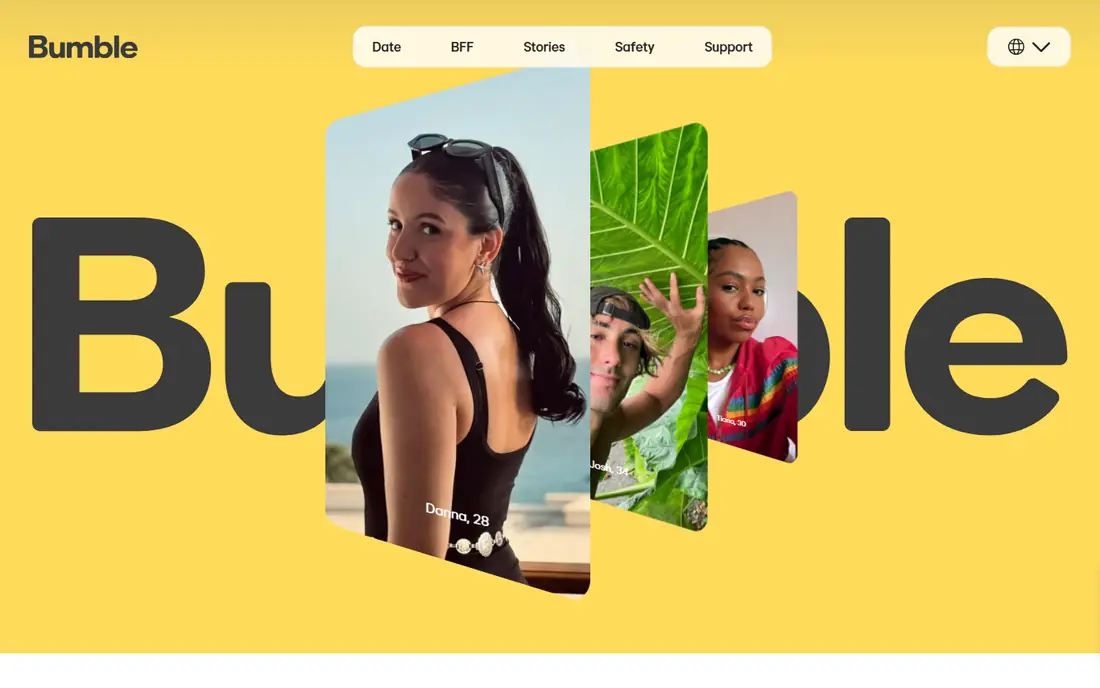
Bumble For Friends, formerly Bumble BFF, applies the familiar swipe-and-match model to platonic friendship. Profiles focus on interests, lifestyle, and what you like to do, rather than romantic compatibility, and you can also join interest groups within the app. That structure suits people who prefer to chat one-to-one before meeting, and it works best in cities where enough people are actively swiping.
The honest catch is conversion. Like dating apps, Bumble For Friends can produce matches that never become meetups, especially when both people wait for the other to suggest a plan. Our advice is simple: propose a short public meetup within the first few exchanges, such as coffee or a walk, and keep it low pressure.
- Large user base in cities
- Friends-only mode separate from dating
- Interest-based profiles
- Activity varies outside cities
- Premium features cost extra
- Matches can stall in chat
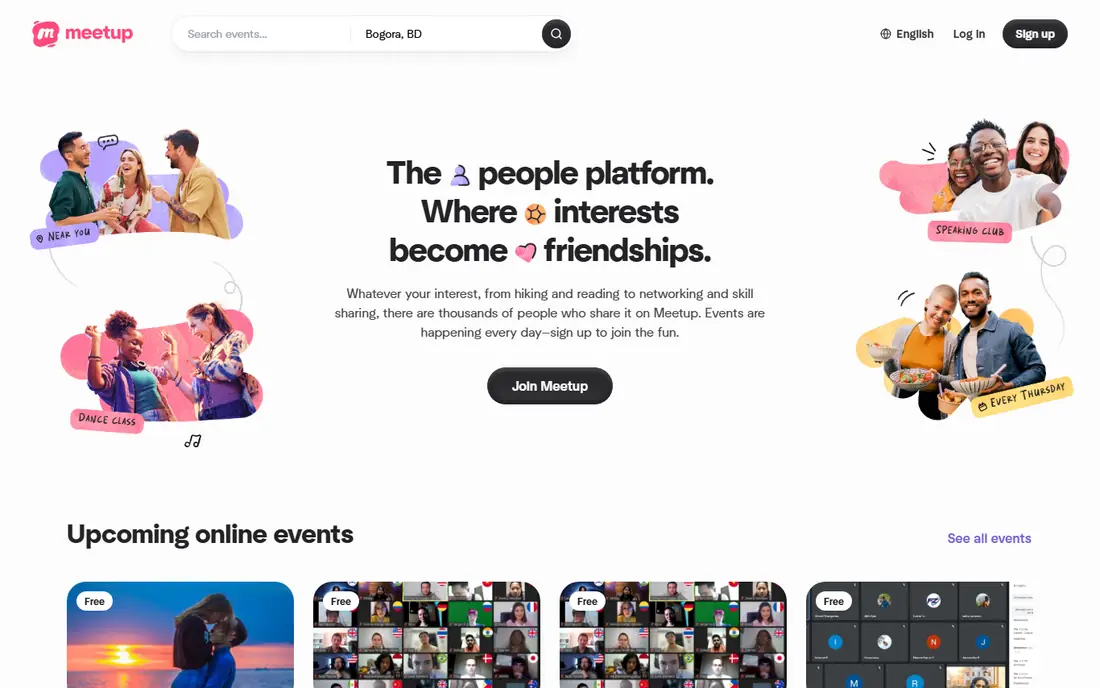
Meetup is still the workhorse of adult friendship, because it is built around showing up rather than swiping. You join groups for hiking, board games, language practice, professional networking, or almost any hobby, then attend events on a regular schedule. Seeing the same faces week after week is what turns an acquaintance into a friend, and Meetup makes that repetition easy.
Quality depends on the organizer, so try a few groups before judging the platform. Look for groups with regular attendance, clear event descriptions, and organizers who welcome newcomers. Most events are free to attend, though organizers pay to host groups and some events charge a fee to cover venue costs. If you live in a smaller town, coverage will be thinner, and you may need to start a group or travel to a nearby city.
- Huge range of local groups
- Recurring events build familiarity
- Free for most attendees
- Group quality varies by organizer
- Some events carry a fee
- Thin coverage in small towns
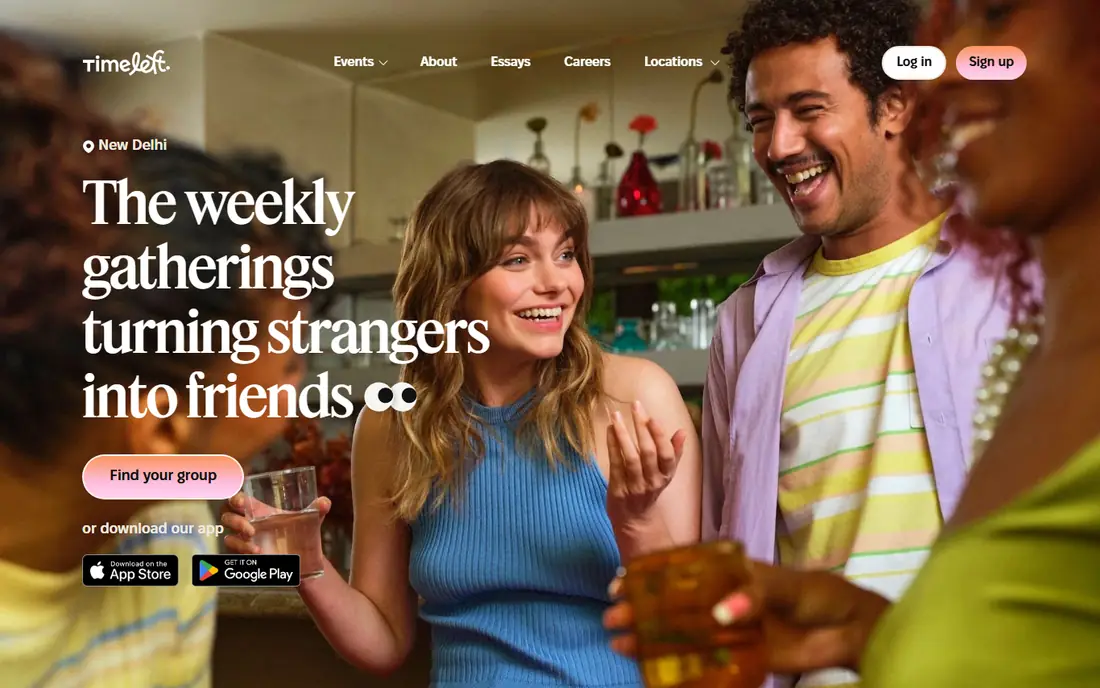
Timeleft matches you with a small group of strangers, usually four to six people, for a dinner at a set time and place. You answer personality questions, Timeleft handles the matching and the booking, and you meet the group in person without chatting beforehand. That format removes the awkward planning stage that kills many friend-making plans, and it suits people who like structure.
The trade-offs are clear. Timeleft charges per dinner, so it costs more than free apps over time, and you cannot vet your group in advance. You also need to be comfortable meeting strangers with no prior conversation, which is the point for some people and a drawback for others. If you want a planned hangout this month rather than another app to browse, Timeleft is one of the strongest options.
- Personality-matched groups of strangers
- No planning needed
- In-person from the start
- Paid per dinner
- No pre-chat with your group
- City coverage varies
Peanut connects women through motherhood, fertility, and menopause life stages, with swipe matching, text and voice chat, community groups, and local events. Its focus is its strength. Two new mothers in the same neighborhood share an immediate set of topics, schedules, and challenges, which makes first conversations easier than a general friend app. Groups and events add a recurring structure beyond one-to-one matching.
Peanut is not a general friend app, and it does not try to be one. Its audience is women navigating those life stages, so it will not fit everyone reading this list. Outside larger cities, local matches may be sparse. For mothers looking for peers nearby, though, Peanut is more targeted than any general app here.
- Focused on motherhood life stages
- Groups and local events
- Swipe matching plus community
- Limited to women in relevant life stages
- Smaller reach outside cities
Nextdoor organizes people by verified neighborhood, which makes it useful for meeting the people who actually live near you. You can join local groups, find neighborhood events, ask for recommendations, and meet neighbors at community gatherings. For someone who just moved, Nextdoor answers a different question from Bumble For Friends: not who shares your hobbies, but who lives on your street.
That local focus is also its limit. Nextdoor builds neighborhood familiarity rather than a curated friend circle, and the tone of each neighborhood feed depends on its members. Use it to find a local walking group, a neighborhood event, or a nearby class, then build the friendship from there.
- Verified neighborhood network
- Local events and groups
- Free to join
- Better for local contacts than deep friendships
- Tone varies by neighborhood
Discord hosts thousands of interest communities, from gaming and study groups to local city servers and hobby clubs. You can join a server, take part in text and voice chats, and become a regular voice in a community over time. For remote workers and people with niche interests, Discord fills a gap that location-based apps cannot, since it connects you by interest first and location second.
Discord friendships often stay online unless you take a deliberate step toward meeting. Many servers organize local meetups or voice hangouts, but the platform itself does not plan them for you. Server moderation also varies, so choose well-run servers with clear rules and active moderators. Discord works best alongside a local app: one for daily community, one for in-person plans.
- Free to join servers
- Voice and text community
- Huge range of interests
- Online-first, so in-person meetups need extra effort
- Server quality varies widely
Friender is built only for platonic friendship, which removes the romantic ambiguity that sometimes complicates general social apps. You set your interests and location, match with people who share them, and message freely once matched. That clarity suits people who want a friend app without any dating overlap at all.
The main limit is scale. Friender has a smaller user base than Bumble For Friends or Meetup, so matches depend heavily on your city. If your area has an active Friender crowd, it is a clean and focused option. If it does not, pair it with Meetup so you are not waiting on one small pool of users.
- Platonic by design
- Interest-based matching
- Unlimited messaging after matching
- Smaller user base than Bumble
- IOS availability has been more prominent
222, pronounced two-two-two, plans a night out with a matched group of about six people. Like Timeleft, it removes the planning work and gives you a set time, place, and group. The group-outing format suits people who find one-to-one first meetings awkward and prefer the lower pressure of a small group. A shared activity also gives everyone something to talk about beyond introductions.
Coverage is the constraint. 222 operates in selected cities, so check availability where you live before getting attached to the idea. Pricing is paid, and you have less control over the group mix than a self-organized Meetup event. Where it runs, though, it is one of the easiest ways to turn an app download into a real evening out.
- Matched group outings planned for you
- Small-group format
- In-person focus
- Limited city coverage
- Paid model
- Less control over who attends
Meet5 focuses on group activities for people over 40, letting users join or create activities and chat with the group before and after. That age focus matters, since many general friend apps skew younger and their events reflect that. Meet5 activities range from meals and walks to cultural outings, and the group format keeps first meetings low pressure.
Reach is uneven, with stronger coverage in some European cities and larger urban areas than in smaller towns. If your area has active Meet5 groups, it is a thoughtful pick for this age group. If not, Meetup groups aimed at similar ages can fill the same role, and you can use both in parallel.
- Focused on people over 40
- Group activities and chat
- Create or join activities
- Smaller reach outside Europe and larger cities
- Group quality varies
Atleto connects people who want sports partners, pickup games, and training buddies. You pick your sports and skill level, find nearby players, and join games or training sessions. Sport is a strong friendship engine, since it gives you a recurring activity, a shared goal, and natural conversation without forced small talk. Atleto turns that idea into a simple matching tool.
Atleto only helps if sport is how you want to socialize. It will not suit people looking for dinner companions or study partners, and coverage depends on your city and sport. For active people, though, it pairs well with Meetup sports groups and gives you a direct route to regular playing partners.
- Sport-based matching
- Pickup games and training partners
- Activity-first friendships
- Only fits people who want sport-based socializing
- Coverage varies by city and sport
How we picked these
We compared official product pages, app store listings, and current friend-app guides for apps active in October 2026. We required each app to be genuinely built for platonic friendship, local community, or shared activities, not a dating app with a friendship label added as an afterthought. We favored apps that lead to in-person meetings or ongoing community, and we noted safety and moderation features where they matter. We did not claim hands-on testing. Our ranking rests on published features, pricing, and coverage notes.
Staying safe when you meet people from apps
Meeting strangers takes a little planning, and the habits below cost nothing. Meet in public places for the first few hangouts, such as a cafe, a park in daylight, or a group event with other people around. Tell a friend where you are going, who you are meeting, and when you expect to be back. Keep your full address, workplace details, and financial information private until you trust someone, and do not share them in app chats early on.
Use the app tools available to you. Check whether profiles are verified, use blocking and reporting when someone behaves badly, and trust your instincts if a conversation feels off. You can leave any meetup early, and you do not owe a stranger an explanation for doing so. For group apps such as Timeleft or 222, the group setting already adds a layer of safety, but the same rules apply: public venue, someone knows your plans, and your own transport home. If an app has weak moderation or a pattern of complaints, drop it and use a better-run alternative.
What actually turns an app match into a friend
Pick the format that matches how you like to meet, not the app with the most downloads. If you like structure, choose a curated group app that sets the time and place. If you like hobbies, choose Meetup and attend the same group weekly. If you prefer one-to-one chats, choose Bumble For Friends or Friender and propose a short meetup within a week. Format matters more than brand, since the same app can work well for one person and stall for another.
Consistency beats volume. Two or three connections pursued steadily will beat twenty matches you never meet. After a good first hangout, suggest a second one before you part, even a vague plan such as the same group next week. Share an activity rather than only chatting, since a walk, a class, or a game gives you something to do together and takes pressure off conversation. Finally, be patient with geography. Friend apps work best in cities, and smaller towns may need a mix of apps, local classes, volunteering, and community events to build the same result.
Frequently asked questions
What is the best app for making friends as an adult?
There is no single best app, since the format matters more than the brand. Meetup suits recurring hobby groups, Bumble For Friends suits one-to-one matching, and Timeleft suits curated group dinners. Pick the format that matches how you like to meet, then give it a few weeks of consistent use.
Are friend apps free?
Many friend apps are free for core features, including Bumble For Friends, Meetup for attendees, Peanut, and Nextdoor. Curated dinner apps such as Timeleft charge per event, and some apps sell premium features such as extra matches or filters. Start free, check local activity, and only pay once you know the app works where you live.
How do I stay safe meeting someone from a friend app?
Meet in a public place, tell a friend your plans, keep personal details private at first, and arrange your own transport. Use verified profiles where available, and use blocking and reporting tools when needed. Leave early if anything feels wrong, and do not feel obliged to continue a meeting that makes you uncomfortable.
What is the best app for making friends in a new city?
A mix works best in a new city. Use Meetup for recurring local groups, Nextdoor to learn your neighborhood, and Bumble For Friends or Timeleft for faster one-to-one or group introductions. Joining a class, sports league, or volunteering group alongside the apps will speed up the process.
Can I make friends online without meeting in person?
Yes, and Discord is a strong option for ongoing online community around shared interests. Online friendships can be real and lasting, but they need regular contact to survive. If you also want local friends, pair an online community with a local app so you have both kinds of connection.
Are there friend apps that are not dating apps?
Yes. Meetup is built around groups and events, Friender is platonic by design, Timeleft and 222 plan group outings, and Nextdoor is neighborhood-based. Bumble For Friends is a friends-only mode kept separate from the dating side of Bumble. Choose a platonic-first app if you want to avoid romantic ambiguity.
Sources
See where you really rank - block by block
ProMapRanker scans Google Maps across a grid of your service area. Simple monthly plans from $19, white-label on every plan.
Start freeKeep reading
 github alternatives
Best GitHub Alternatives in 2026
Explore the best GitHub alternatives in 2026, from GitLab and Bitbucket to self-hosted Gitea and Forgejo, with prices and trade-offs for developers for readers.
Read → cineby alternatives
Cineby Alternatives in 2026
We compared legal cineby alternatives for licensed streaming, including Netflix, Hulu, Disney Plus, and free options, so you can watch without piracy sites.
Read → best visibility analysis software
Best Visibility Analysis Software in 2026
Compare the best visibility analysis software for search and AI answers. We review 8 tools that track brand mentions, citations, and rankings Updated for 2026.
Read →