 ProMapRanker
Best App to Meet Friends in 2026

Key takeaways
- Meetup is our pick for most people, because repeated in-person activities build friendships better than endless chat.
- Bumble BFF suits people who prefer to chat first and match one-on-one, and its core features are free in the US.
- Peanut, Timeleft and Hey Vina serve specific groups or formats, such as mothers, dinner groups and women seeking friends.
- No app can make a stranger safe, so meet in public, tell a friend where you are going, and keep personal details private at first.
Quick comparison
| Pick | Great for | Pricing starts at | Free tier | |
|---|---|---|---|---|
 Bumble BFF | One-on-one friend matching | Free | Yes | Visit |
 Meetup | Interest groups and local events | Free | Yes | Visit |
 Peanut | Mothers and women seeking community | Free | Yes | Visit |
 Timeleft | Stranger dinner groups | See website | No | Visit |
 Nextdoor | Neighbourhood connections | Free | Yes | Visit |
 Discord | Interest communities and group chat | Free | Yes | Visit |
 Hey Vina | Women seeking platonic friends | Free | Yes | Visit |
 Friender | Activity-based friend matching | Free | Yes | Visit |
The best app to meet friends
We compared these apps on how they help adults meet in person, how active they are in US cities, safety features, and cost. Our pick for most people is Meetup, while Bumble BFF suits those who prefer matching first, and the niche apps suit specific life stages or formats.
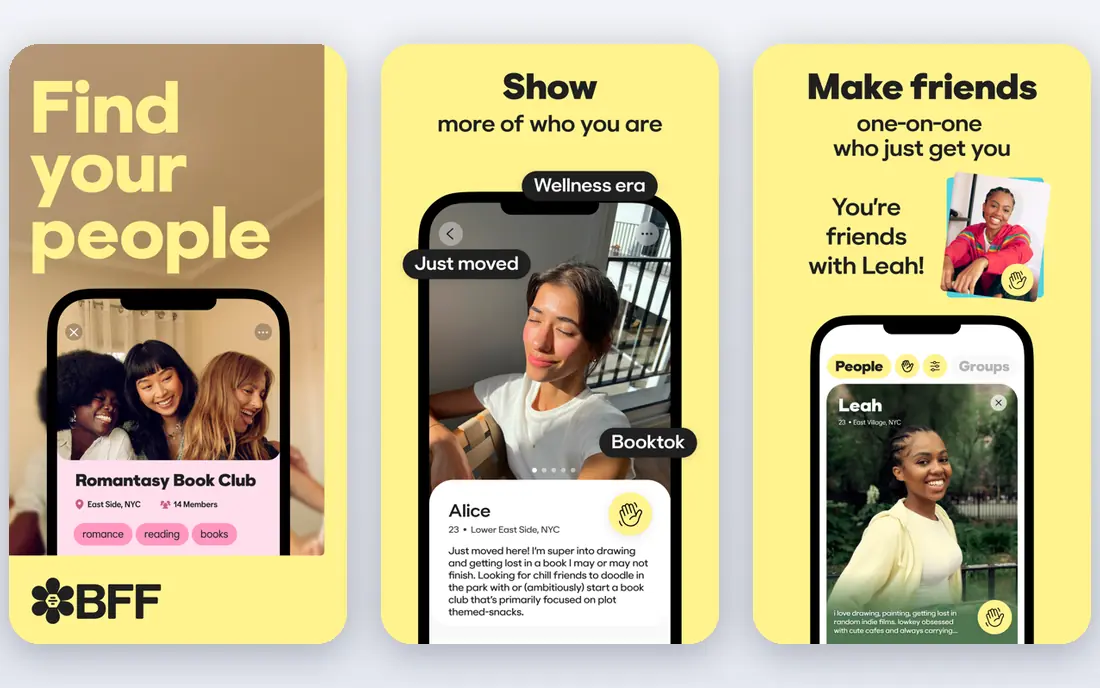
Bumble BFF, relaunched as a standalone app in 2025, uses the familiar swipe model for platonic friendship. You build a profile with interests and photo prompts, swipe on people nearby, and chat when you both match. Groups add a second path, letting you join a community around a shared interest and plan meetups with several people at once.
The main weakness is the same as any matching app: a match is not a friendship until you meet. Many chats stall after a few messages, so set a simple rule for yourself, such as suggesting a coffee within a week of a good chat. Activity also varies by city, so check how many profiles and groups are active near you before relying on it alone.
- Familiar swipe matching for friends
- Photo verification for matches
- Groups alongside one-on-one chat
- Core features free in the US
- Chat can stall without a plan to meet
- Activity varies by city
- Separate from the dating side, which can confuse new users
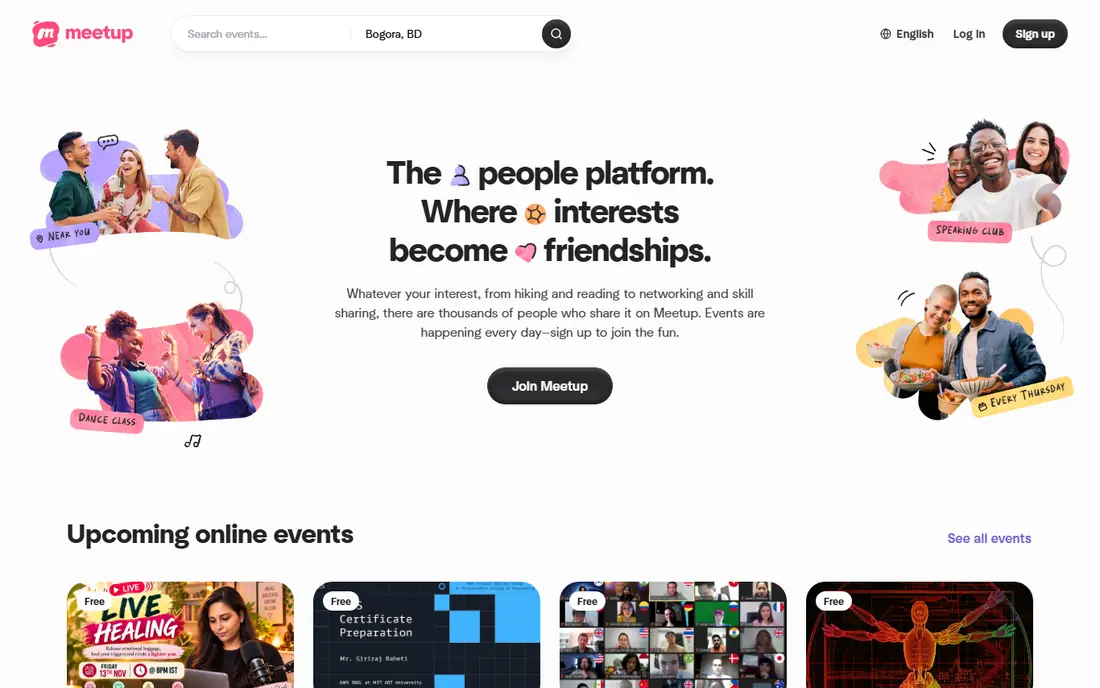
Meetup works because it solves the repetition problem. You join a hiking group, a book club or a board game night, and you see the same people week after week. That repeated contact, around a shared activity, is what turns acquaintances into friends. The range of groups is also wide, from fitness and arts to professional networking and parenting.
The catch is local variation. A large city may offer hundreds of active groups, while a small town may offer only a few. Some groups charge a small event fee, and group quality depends on the organiser. Try three different groups before judging the platform, and give each group at least three visits. The group that fits is often the third one you try.
- Thousands of local groups by interest
- Repeated meetings build real friendships
- Most groups are free to join
- Wide city coverage
- Some groups charge event fees
- Group quality varies
- Larger cities have far more choice than small towns
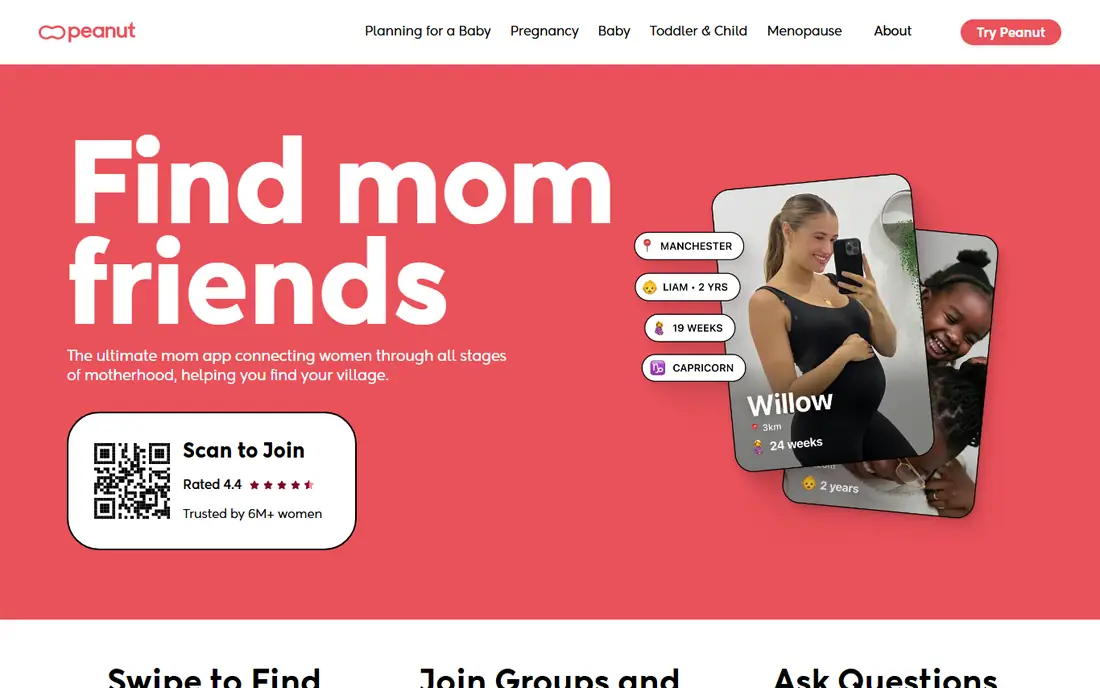
Peanut connects women through shared life stages, including motherhood, fertility and menopause, with swipe matching, community groups and local events. That focus is its strength. When everyone in a group shares a similar stage of life, conversation starts more easily, and practical help, such as childcare tips or local playgroups, flows naturally.
The niche focus is also a limit. Peanut will not suit everyone, and activity depends on how many women in your city and life stage use the app. A free core experience covers matching and community use, while some features sit behind a paid tier. For mothers and women seeking a focused community, it is one of the best options on this list.
- Focused community for mothers and women
- Swipe matching plus groups and local events
- Shared life stage makes conversation easier
- Niche focus limits the audience
- Some features need a paid tier
- Activity varies by city and life stage
Timeleft takes a different approach: instead of matching and messaging, it places you at a dinner table with strangers matched by age and interests. You book a dinner, show up, and meet five or so people in person over a meal. For newcomers to a city, or for people who dislike app chat, that direct format can be a relief.
The cost model needs checking. Timeleft requires a subscription before you book, and you pay for your own food and drinks at the venue, so the total cost is higher than a free app. Availability also varies by city and by week. If your city has regular dinners and you like structured social events, Timeleft is a distinctive and often effective choice.
- Skips endless chat and goes straight to dinner
- Groups matched by age and interests
- Good for newcomers to a city
- Structured format reduces awkwardness
- Requires a subscription before booking
- You pay for your own food and drinks
- Availability varies by city and week
Nextdoor is less about matching strangers across a city and more about meeting the people who live near you. Neighbours post about local events, recommendations, lost pets and community help, and those posts can lead to real connections. For someone who wants friends nearby, rather than across town, that local focus is useful.
The limit is that Nextdoor is a neighbourhood network first, not a dedicated friend app. The feed can include complaints and local disputes, and the depth of friendship depends on whether neighbours organise events or just post updates. Use it alongside Meetup or Bumble BFF, and look for local groups and events rather than expecting matches.
- Connects you with actual neighbours
- Useful for local events, recommendations and help
- Free to join
- Verification tied to neighbourhood
- More neighbourhood network than friend-matching app
- Feed can include local complaints
- Friendship depth depends on local activity
Discord hosts thousands of servers for gaming, hobbies, study, creative work and local communities. You can join a server for an interest, chat daily, join voice calls, and build familiarity with regular members before suggesting a meetup. For people whose friendships start online around a shared interest, Discord is a natural home.
The challenge is scale. A server with thousands of members can feel impersonal, and turning an online connection into an in-person friendship needs deliberate planning. Moderation also varies by server, so choose servers with clear rules and active moderators. For interest-led friendships, especially for younger adults and hobby communities, Discord is a strong free option.
- Huge range of interest servers
- Voice, video and text chat
- Free core use
- Good for gaming, hobbies and study groups
- Large servers can feel impersonal
- Meeting in person needs extra planning
- Moderation quality varies by server
Hey Vina is a women-only app for platonic friendship, with matching based on interests, lifestyle and life stage. The women-only design is intentional, offering a space where users can seek friends without the romantic crossed wires that can appear on mixed apps. Community features and group options add a path beyond one-on-one matching.
As with Peanut, the focused audience is both a strength and a limit. Activity varies by city, and a smaller user base in some areas means fewer matches. Check how active the app is near you before committing time to it. For women seeking a dedicated friend app, Hey Vina is a clear and focused choice.
- Women-only platonic matching
- Profile matching by interests and life stage
- Community features for groups
- Free core use
- Women-only focus limits the audience
- Activity varies by city
- Some features may need a paid tier
Friender matches people by the activities they want to do together, such as hiking, coffee, gaming or exploring a city, rather than by photos alone. That activity focus helps move a match toward a real plan, since you already share something to do. Messaging after a match is unlimited in the free experience, which removes a common friction point.
The main limit is reach. Friender has a smaller user base than the largest apps, and some listings describe it as iOS-only, so Android users should check current availability. Activity also varies by city. For users who like its activity-first model and live in an active area, it is a simple and friendly option.
- Matches by shared activities, not just photos
- Unlimited messaging after a match
- Platonic by design
- Simple to use
- IOS-only availability in some listings
- Smaller user base than Bumble BFF or Meetup
- Activity varies by city
How we picked these
We compared official app listings, product pages and public reviews, and we kept only apps that exist and work in October 2026 and that truly fit making friends, not dating. We favoured apps with clear safety and moderation practices, a path to in-person meeting, and an active US presence. We excluded apps aimed at teenagers, since this list is for adults meeting in person. Prices that could not be verified from a vendor or app store page are listed as See website.
Safety note: meet in public places at first, such as a cafe or a group event, and tell a friend where you are going and when you expect to be back. Keep your full address, workplace details and financial information private until you trust someone. Use the app's reporting and blocking tools if a conversation feels wrong, and leave any meeting that feels unsafe. No app can guarantee that a stranger is safe, so trust your judgment over politeness.
How to actually make friends with an app
Pick two apps, not ten. A good pairing is Meetup for repeated group activities plus Bumble BFF or a niche app for one-on-one matches. Using too many apps spreads your time thin and makes follow-up harder. Set a weekly goal, such as attending one group event and suggesting one coffee, and keep that goal for a month before judging the result.
Follow up quickly and concretely. When a chat goes well, suggest a specific plan, such as coffee on Saturday morning at a named cafe, rather than a vague plan to meet sometime. After a group event, message one person you enjoyed talking to and suggest the next event together. Friendships grow from repeated, specific plans, not from a long list of matches.
Finally, be patient with the process. Adult friendship takes repeated contact, and the first group or match may not fit. Try different groups, vary the activity, and give a promising connection several meetings before deciding. If an app feels inactive in your city, switch to the one with the most local activity, even if it was not your first choice.
Frequently asked questions
What is the best app to meet friends?
Meetup is our pick for most people, because repeated group activities build friendships more reliably than chat alone. Bumble BFF suits people who prefer one-on-one matching, while Peanut and Hey Vina suit women seeking a focused community. The best app for you is the one with the most active users near you.
Are there free apps to meet friends?
Yes. Bumble BFF's core features are free in the US, Meetup is free to join most groups, and Nextdoor, Discord and Friender offer free core use. Timeleft is the exception here, since it requires a subscription before booking. Check the app store listing for your country, since free features can vary by region.
What are the best apps for making friends as an adult?
Adults often do best with a mix of group and one-on-one tools. Meetup covers group activities, Bumble BFF covers one-on-one matching, and Nextdoor covers neighbours. Niche apps such as Peanut and Hey Vina help when a shared life stage matters. The common factor is repeated in-person contact, not the app itself.
Is Bumble BFF still available?
Yes. Bumble relaunched BFF as a standalone app in September 2025, with groups alongside one-on-one chats. In the US, the new app's listing describes every feature as free. Availability and features can vary by country, so check the current app store listing for your region.
How do you safely meet up with someone from a friend app?
Meet in a public place during the day for a first meeting, tell a friend where you are going, and keep personal details private at first. Use a group event or a busy cafe rather than a private home. If anything feels wrong, leave and use the app's blocking and reporting tools. Trust your judgment over politeness.
Do friendship apps actually work?
They can, but only if digital matches turn into repeated in-person meetings. Apps that bring you back to the same group each week tend to work better than apps that leave scheduling to chat. Set a weekly meeting goal, follow up with specific plans, and give promising connections several meetings before judging them.
Sources
See where you really rank - block by block
ProMapRanker scans Google Maps across a grid of your service area. Simple monthly plans from $19, white-label on every plan.
Start freeKeep reading
 best chat tool for website
Best Chat Tool for Website in 2026
Best chat tool for website owners compared, with live chat, AI agents, free plans, and pricing for small stores, SaaS teams, and support teams of all sizes.
Read → best birdwatching app
Best Birdwatching App in 2026
Best birdwatching app picks for 2026: nine free and paid apps for bird ID by sight and sound, checklists, hotspots, and finding birds near you for all birders.
Read → best bird identification app
Best Bird Identification Apps in 2026
Find the best bird identification app for photos, songs and calls. We compare 9 bird apps, including Merlin, BirdNET and Audubon, to help you choose today.
Read →