 ProMapRanker
Best App to Learn Chinese in 2026

Key takeaways
- HelloChinese is the best structured starting app for complete beginners, with tones, pinyin and character work in one course.
- No single app covers everything: pair a course app with Pleco for lookup, Du Chinese for reading and a speaking tool for conversation.
- Duolingo is best for daily habit building, not depth, while Skritter is the strongest tool for learning to write characters.
- Most apps offer a free tier, so test two or three before paying for a full year.
Quick comparison
| Pick | Great for | Pricing starts at | Free tier | |
|---|---|---|---|---|
 HelloChinese | Structured beginner course | See website | Yes | Visit |
 Duolingo | Daily habit building | Free | Yes | Visit |
 Pleco | Dictionary and lookup | Free | Yes | Visit |
 Du Chinese | Graded reading | See website | Yes | Visit |
 Skritter | Writing characters | $15 per month | Free trial | Visit |
 SuperChinese | Short daily lessons | See website | Yes | Visit |
 ChinesePod | Audio lessons | $14 per month | Yes | Visit |
 italki | Live speaking practice | See website | No | Visit |
The best apps to learn Chinese
Chinese rewards a mix of tools, since tones, characters, grammar, reading and speaking each need different practice. We compared course structure, HSK coverage, speaking feedback, reading material and price, and we favored apps that are actively maintained and useful for US learners in 2026.
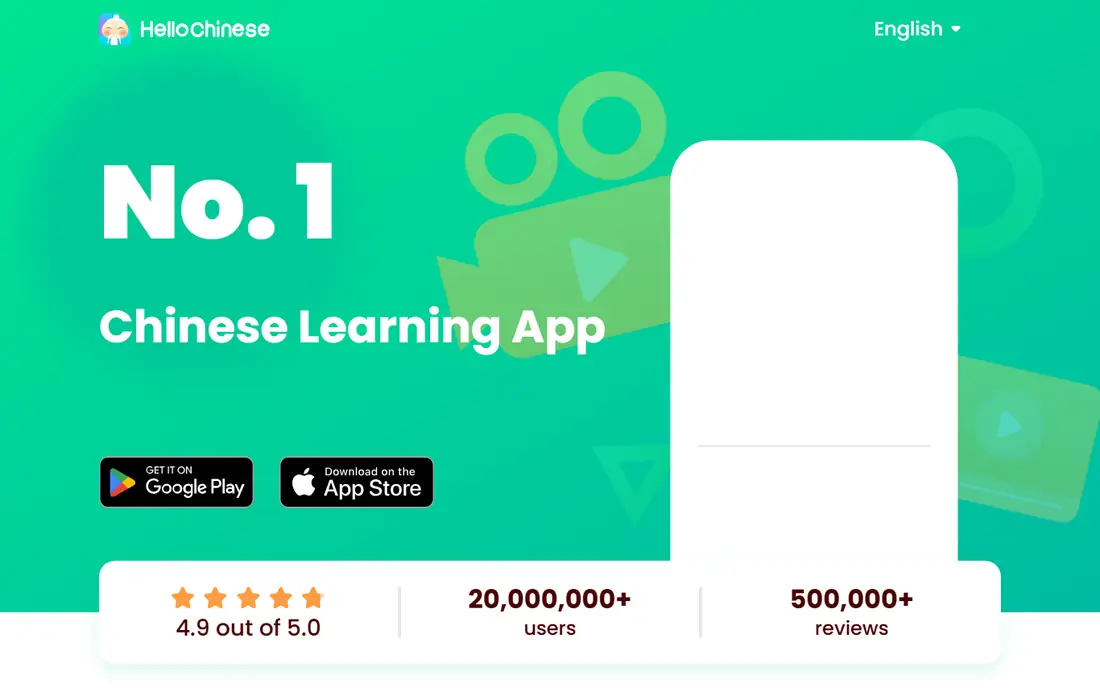
HelloChinese is the app we would give to a complete beginner first. It teaches pinyin, tones, vocabulary, grammar, reading, writing and speaking in a clear order, rather than dropping you into random phrases. Speech recognition gives quick feedback on pronunciation, and character writing practice helps you learn stroke order from the start.
The honest limit is the ceiling. HelloChinese is strongest through the beginner and lower intermediate levels, and advanced learners will need reading and speaking tools to keep growing. Premium pricing varies by plan and region, so we have used See website for the current US figure. As a first course, though, it is the most complete single starting point here.
- Built only for Mandarin
- Speech recognition for tones and pronunciation
- Character writing and grammar in one course
- Content thins out at higher levels
- Drills can feel repetitive
- Best features sit behind premium
Duolingo works best as a habit tool, not a full course. Its short, game-like lessons make it easy to practice for ten minutes a day, and streaks and rewards keep many learners coming back when a heavier app would feel like work. For basic vocabulary, pinyin and simple sentences, it is a friendly first step.
Depth is the trade-off. Grammar is explained lightly, tones and character writing get less attention than in HelloChinese, and the course does not go far into intermediate Chinese. Use Duolingo to build a daily habit beside a structured course, not as your only study tool, and you will get real value from it.
- Free to start
- Game-like streaks keep daily practice going
- Good for basic vocabulary and pinyin
- Grammar explanations are thin
- Chinese course depth is limited
- Speaking practice is shallow
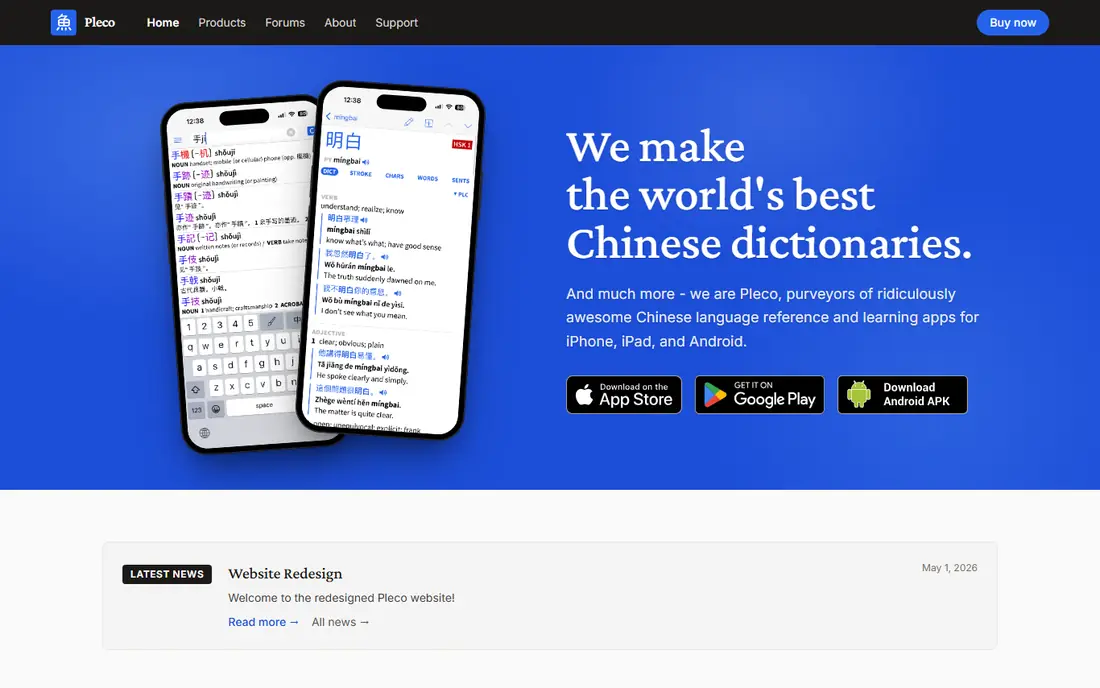
Pleco is the tool almost every serious learner ends up using, even if it is not a course. Look up a word by typing, handwriting or pointing your camera at text, hear native audio, see stroke order and save words to flashcards. That lookup power matters constantly, since Chinese text is full of characters you have not met yet.
Pleco will not teach you in order, and it will not set your daily lessons. Think of it as a companion: use HelloChinese or Du Chinese for study, and Pleco whenever you meet a new word in the wild. The base app is free, with paid add-ons for flashcards, readers and extra dictionaries, so start free and add only what you use.
- Best Chinese dictionary for learners
- Handwriting input and camera lookup
- Flashcards and reader add-ons
- Not a taught course
- Paid add-ons add cost
- Interface looks plain next to modern course apps
Du Chinese solves a specific problem: reading real Chinese at your level. Its stories are sorted by HSK level, so you can read interesting text without drowning in unknown characters. Tapping a character shows its meaning and pronunciation, and native audio lets you read and listen together, which builds both skills at once.
It does not teach grammar or speaking, so it works best beside a course app. Pricing also varies by plan, so we have used See website rather than a single figure. For learners who can already handle basic sentences and want to read more, Du Chinese is the most enjoyable way to build vocabulary in context.
- Stories graded by HSK level
- Tap any character for meaning and audio
- Flashcards export to other tools
- Reading only, with no grammar course or speaking practice
- Premium price is high for a single-skill app
- Story taste varies
Skritter is unmatched for one job: learning to write Chinese characters by hand and remember them. It teaches stroke order, tests you with spaced repetition and gives feedback on tones and readings, so characters you learn tend to stay learned. For learners who want to write, take handwritten notes or pass an exam with a writing section, that focus pays off.
The price reflects that specialization. At $15 per month, Skritter costs as much as a full course app while covering only characters and vocabulary. Learners who only want to speak and read can skip it. If writing matters to you, though, Skritter is the tool that turns character study from a chore into a system.
- Focused character writing practice
- Spaced repetition for long-term recall
- Stroke order and tone feedback
- Narrow focus on characters and vocabulary
- Monthly price is high for one skill
- Less useful if you only want to speak
SuperChinese suits learners who want short, steady lessons that fit into a busy day. Its bite-sized sessions cover listening, speaking, reading and writing in small steps, with AI review to revisit weak words. That structure helps beginners who find longer lessons hard to finish, and the app covers HSK levels from beginner upward.
Depth is the limit, as with most short-lesson apps. Fast learners may want more challenge sooner, and advanced content is thinner than the beginner path. Pricing varies by region and plan, so check the current US price in the app. For a gentle daily routine that still teaches tones and characters, SuperChinese is a solid choice.
- Bite-sized lessons around ten minutes
- AI review and speaking practice
- Structured path for beginners
- Less depth than HelloChinese at higher levels
- Pricing varies by region
- Content style may feel slow for fast learners
ChinesePod is the best audio-first option for learners who study by ear. Its library covers many levels and everyday topics, with hosts who explain language and culture in a way that plain textbook audio does not. Transcripts, vocabulary lists and review tools help you turn a commute into real study time.
It is not a tightly sequenced course, so beginners may need to choose lessons carefully rather than following one path. There is also no live teacher, so speaking practice must come from elsewhere. The Basic plan starts at $14 per month in recent reports, with a free plan for sampling. For commuters and listeners, ChinesePod is a strong companion app.
- Large library of audio lessons across levels
- Real-life topics and cultural notes
- Transcripts and vocabulary tools
- No live speaking practice
- Lessons can feel loosely linked
- Full value needs regular listening time
italki fills the gap no course app can: real conversation with a real person. You choose a tutor by price, availability and teaching style, then practice speaking, get corrections and ask questions that an app cannot answer. That live feedback is the fastest way to improve tones, fluency and confidence.
The cost is the catch, since lessons are priced per session and regular tutoring adds up. Tutor quality also varies, so try a trial lesson before committing to a package. Pricing is per tutor rather than a single plan, so we have used See website. For speaking, italki is the most direct investment you can make.
- One-to-one lessons with native tutors
- Choose teacher, price and schedule
- Real conversation from the first lesson
- Costs add up with regular lessons
- Quality varies by tutor
- No fixed curriculum unless your tutor provides one
How we picked these
We compared course structure, HSK alignment, speaking and writing tools, reading material and current pricing from vendor pages and October 2026 guides. We favored apps that cover a distinct skill, since Chinese learning works best as a stack, and we left out apps that were no longer maintained or that duplicated another pick without a clear advantage. Where pricing varied by region or tutor, we used See website rather than a misleading single figure.
What to check before you pay
Match the app to your weakest skill, not to the app with the longest feature list. A beginner needs structure and tones, a reader needs graded stories, and a speaker needs live practice. Testing free tiers for a week will tell you more than any review, since daily habit fit matters as much as content quality.
Plan for two or three apps, not ten. A practical stack is HelloChinese for structure, Pleco for lookup, Du Chinese for reading and italki for speaking, with Duolingo or SuperChinese for daily habit if you need it. Also check whether you want simplified or traditional characters, since most apps here focus on simplified Mandarin, and confirm HSK level coverage before buying a yearly plan.
Frequently asked questions
What is the best app to learn Mandarin?
HelloChinese is our pick for most beginners, thanks to its structured Mandarin-only course with tone and character practice. Pair it with Pleco for lookup and a speaking tool for conversation to cover all skills.
What are the best apps to learn Chinese for beginners?
HelloChinese and SuperChinese offer the clearest beginner paths, while Duolingo is best for building a daily habit. Start with HelloChinese for structure, and add Duolingo only if you need extra motivation to practice daily.
What is the best Chinese learning software for characters?
Skritter is the strongest choice for writing characters, with stroke order practice and spaced repetition. Pleco also helps with character lookup and flashcards, but Skritter is the dedicated writing tool.
What is the best platform to learn Chinese for speaking?
italki is the best platform for speaking, since live tutors give real conversation and corrections. HelloChinese and SuperChinese include speaking exercises, but they cannot replace a live teacher for fluency.
Can I learn Chinese for free?
Yes, to a point. Duolingo, Pleco and HelloChinese all offer free tiers, and Du Chinese and ChinesePod offer free sampling. You will need a paid plan or tutor for deeper content and live speaking, but free tools can carry you through the early stages.
How long does it take to learn Chinese with an app?
It depends on daily time and goals. A learner practicing 20 to 30 minutes a day can usually hold basic conversations within several months, while reading fluency and advanced speaking take longer. Consistency matters more than the specific app you choose.
Sources
- https://www.hellochinese.cc
- https://www.duolingo.com
- https://www.pleco.com
- https://www.duchinese.net
- https://skritter.com
- https://www.superchinese.com
- https://chinesepod.com
- https://www.italki.com
- https://www.wukongsch.com/blog/best-app-to-learn-chinese-post-33695/?amp=1
- https://www.italki.com/en/blog/best-websites-to-learn-chinese
- https://mandarinmosaic.com/blog/best-mandarin-learning-app
See where you really rank - block by block
ProMapRanker scans Google Maps across a grid of your service area. Simple monthly plans from $19, white-label on every plan.
Start freeKeep reading
 top custom software development company
Top Custom Software Development Company in 2026
Looking for a top custom software development company? We compare 9 firms for web, mobile, and enterprise software, covering strengths and fit for 2026.
Read → tableau alternatives
Tableau Alternatives in 2026
Compare the best Tableau alternatives for 2026, from Power BI to Metabase, with prices, hosting options, and picks for small teams and enterprises today.
Read → microsoft teams alternatives
Best Microsoft Teams Alternatives in 2026
Looking for microsoft teams alternatives? We compare 9 chat and video tools for 2026, covering free plans, pricing, meetings, and integrations for teams.
Read →