 ProMapRanker
Best App Monetization Strategy in 2026

Key takeaways
- The best app monetization strategy usually mixes two models, such as a free tier with subscriptions, rather than relying on one revenue source.
- Ad mediation suits high-volume free apps, while subscription tools suit apps people return to weekly and pay to keep using.
- Paywall testing and pricing by market can matter as much as the model itself, so measure trial conversion and churn from the start.
- Store fees, privacy rules and user experience all shape revenue, so a model that annoys users will rarely hold up over time.
Quick comparison
| Pick | Great for | Pricing starts at | Free tier | |
|---|---|---|---|---|
 Google AdMob | Ad revenue for broad free apps | Free | Yes | Visit |
 AppLovin MAX | Ad mediation for mobile games | See website | Yes | Visit |
 Unity LevelPlay | Monetization for Unity games | See website | Yes | Visit |
 RevenueCat | Subscriptions and paywall analytics | See website | Yes | Visit |
 Adapty | Paywalls and subscription growth | See website | Yes | Visit |
 Chartboost | Game ads and offer walls | See website | Yes | Visit |
 InMobi | In-app ads with global reach | See website | Yes | Visit |
 Paddle | Web and app payment monetization | See website | No | Visit |
The best app monetization strategy tools and platforms
This article covers app monetization strategies through the tools and platforms that help apps earn revenue, rather than through abstract tips alone. We look at ad mediation, subscription management, paywall testing and payments, so you can match a model to how people actually use your app.
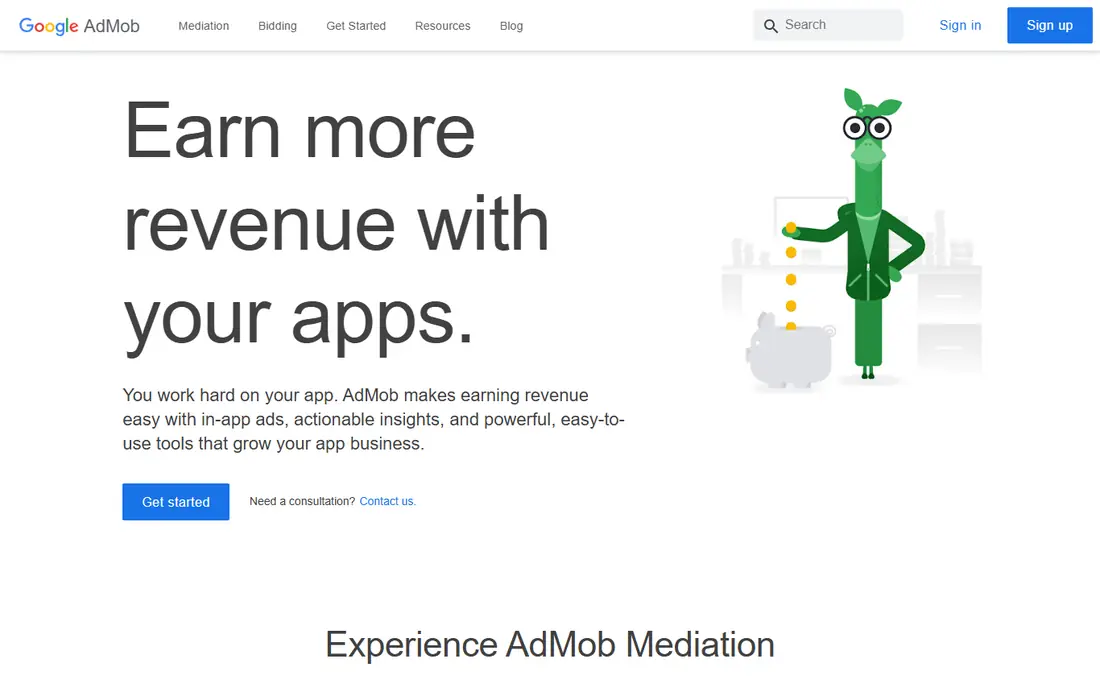
AdMob is the default starting point for many free apps because it is easy to add and it brings broad advertiser demand. A news, utility or casual game app can serve banner, interstitial, native or rewarded ads through one SDK, and mediation lets other networks compete for the same inventory. For apps with large, frequent audiences, that simplicity is hard to beat.
The catch is that ad revenue rewards volume first. An app with a small audience or users in lower-paying markets may earn very little, even with good placement. AdMob also gives publishers less auction detail than some dedicated mediation platforms, so teams that want fine control over floors and demand sources often pair it with a mediation layer or move to a specialist tool as they grow.
- Large advertiser demand
- Banner, interstitial, native and rewarded formats
- Mediation with other networks
- Revenue depends heavily on volume and geography
- Reporting is less detailed than some mediation rivals
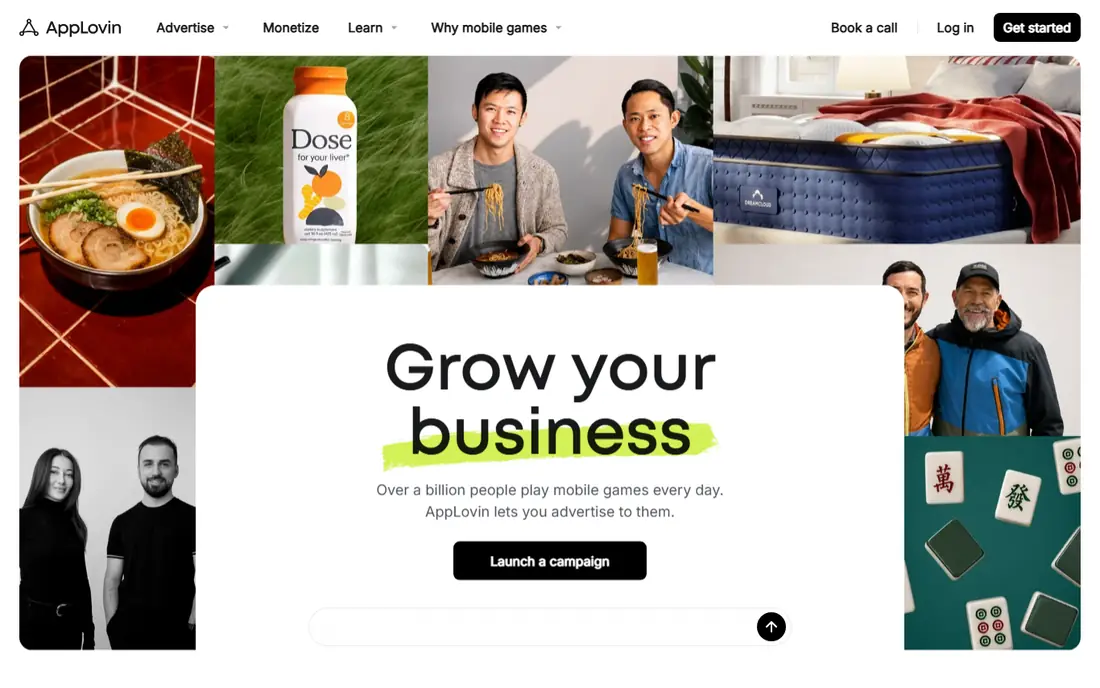
AppLovin MAX is built for games that live on ad revenue. It runs in-app bidding so many demand sources compete at once for each impression, rather than calling networks in a fixed order. That auction approach can lift earnings for games with steady sessions, and its analytics help teams see which formats and placements perform best.
It is less natural for non-game apps. The tooling, formats and optimization advice assume game sessions, rewards and progression, so a utility or content app may find a simpler network a better fit. MAX also rewards teams that test placements and tune floors over time, so it suits publishers who treat ad monetization as an ongoing job, not a one-time setup.
- In-app bidding across many networks
- Strong game-focused analytics
- Rewarded and interstitial formats
- Best suited to games
- Setup is more involved than a single network SDK
Unity LevelPlay, formerly ironSource mediation, is the natural monetization layer for games built in Unity. It combines mediation, in-app bidding, rewarded video, interstitials and offer walls in a single SDK, and it connects to Unity Ads demand. For a Unity team, that native fit removes integration work and keeps monetization close to development.
The limitation is scope. A team that builds in another engine, or a non-game app that happens to use Unity, may not need this depth. LevelPlay also works best when a game has enough sessions to feed its optimization, so very small games may see modest early returns. As with any mediation platform, placement and reward design matter as much as the network choice.
- Native fit for Unity projects
- Mediation, bidding and ad formats in one SDK
- Audience tools for optimization
- Tied closely to the Unity ecosystem
- Less appealing outside Unity games
RevenueCat helps apps sell subscriptions without building the full receipt, renewal and cross-platform plumbing themselves. It handles in-app purchases, tracks subscribers, supports paywall experiments and reports on trial conversion, churn and revenue. For fitness, productivity, education and media apps, that infrastructure can save weeks of engineering time.
It does not remove store fees, and its own pricing is tied to usage tiers, so growing apps should check the current pricing page before scaling. RevenueCat also works best when the app already has a clear paid tier. If the free experience is weak, no paywall tool will fix conversion, and the team should improve the core product first.
- Subscription handling across iOS and Android
- Paywall testing and analytics
- Churn and revenue reporting
- Store fees still apply on top
- Pricing depends on tracked revenue tiers
Adapty focuses on the moment a user decides whether to pay. Its visual paywall builder lets teams design and test paywalls, prices and onboarding flows without shipping a new app version for every change. Built-in analytics and localization support help teams test different prices in different markets, which can matter a lot for global apps.
The scope is narrower than a full monetization suite. Adapty does not run ad mediation, and it will not help an app that earns mainly from ads or one-time purchases. For subscription apps that already have traction, though, faster paywall testing is often the highest-return improvement available, and Adapty makes that testing practical for smaller teams.
- Visual paywall builder
- A and B testing without app releases
- Subscription analytics and localization tools
- Focused on subscriptions, not ads
- Smaller ecosystem than RevenueCat
Chartboost has long served mobile games with ad formats built around play. Playable ads let users try a game before installing it, and offer walls reward users for completing tasks in partner apps. Those formats can work well for casual and mid-core games where a rewarded interaction feels like part of the game rather than an interruption.
It is not a general-purpose monetization platform. Non-game apps will find little use for its formats, and its demand pool is smaller than the largest mediation platforms, so many publishers use it as one network inside a mediation stack rather than as the sole source of ads. Used that way, it adds variety to a game ad mix.
- Game-focused ad formats including playables
- Offer walls for rewarded engagement
- Cross-promotion options
- Narrower demand than the largest mediation platforms
- Game-only fit
InMobi is an in-app advertising platform with particular strength outside the United States, including Asia-Pacific and Latin American markets. It offers video, native and display formats, along with mediation and exchange access for publishers that want broader demand. For apps with a global audience, that reach can fill inventory that a US-focused network leaves thin.
The trade-off is familiarity and reporting. Teams based in the United States may find its tools and support less centered on their market, and reporting depth can vary across its products. InMobi works best as part of a mediation mix for a global app, or as a primary network for an app whose audience is concentrated in the regions where it is strongest.
- Strong demand in Asia-Pacific and other global markets
- Video and native formats
- Mediation and exchange options
- Reporting depth varies by product
- US-focused apps may prefer a US-led network
Paddle is a merchant-of-record platform for selling software and subscriptions on the web. It handles checkout, sales tax, invoicing and subscription billing, which matters for apps that also sell a web plan, a team plan or a lifetime option outside the app stores. Many apps use a web purchase flow alongside store subscriptions to reach users who prefer paying on a website.
It is not a direct replacement for Apple or Google in-app purchases inside an app, and store rules about linking and external payments must be checked carefully for each platform. Paddle also charges transaction fees, so teams should compare its total cost with building their own billing. For web-led monetization, though, it removes a large compliance burden.
- Handles checkout, tax and compliance for web sales
- Subscription billing
- Useful alongside store purchases
- Not a store in-app purchase replacement
- Fees apply to transactions
How we picked these
We compared official product pages, pricing pages and recent monetization guides, favoring platforms that are actively used in 2026 and that cover a distinct revenue model, from ads to subscriptions to web payments. We treated each platform as a tool for a strategy, not as a guarantee of income, and we wrote See website where pricing depended on revenue tiers, transaction volume or a sales conversation.
How to choose the best monetization model for your app
Start with how often people use your app and what they get from it. An app used daily by many free users can support ads, especially rewarded video in games. An app used weekly for a clear ongoing benefit, such as fitness, learning or productivity, usually fits a subscription better. An app with a one-time job, such as a converter or a single-purpose utility, may fit a paid download or a one-time purchase.
Test one model properly before adding a second. Launch with a simple free tier and one paid option, measure trial conversion, churn and revenue per user, and only then add ads for free users or a second paid tier. Adding every model at once makes it hard to tell what is working, and it often makes the app feel cluttered. The strongest apps we see in this space usually run two models well, not five models badly.
Finally, protect the experience that earns the revenue. Place ads where they do not block core tasks, make the paid tier clearly better without crippling the free tier, and be plain about what a subscription includes and how to cancel. Users who trust the pricing are more likely to stay, and retention is what turns a good monetization strategy into steady revenue.
Frequently asked questions
What is the best app monetization strategy?
The best app monetization strategy matches the model to usage. Frequent free use suits ads, ongoing value suits subscriptions, and a one-time job suits a paid download or one-time purchase. Most successful apps combine two models, such as free with ads plus a paid subscription that removes them.
What is the best mobile app monetization platform for games?
AppLovin MAX and Unity LevelPlay are strong for games because both offer in-app bidding, rewarded video and mediation in one SDK. Google AdMob is a solid starting point for broader audiences, while Chartboost adds game-specific formats such as playables and offer walls.
What is the best way to monetize an app with subscriptions?
Use a subscription platform such as RevenueCat or Adapty to handle purchases, paywalls and analytics, then test trial length, price and paywall design. Keep the free tier useful, explain the paid benefits plainly, and track trial conversion and churn before raising prices.
What are the best app monetization strategies for a small app?
Start simple: a free tier with one paid option, or a small set of rewarded ads if the app has frequent sessions. Avoid building a complex stack before you have traction, since store fees, mediation setup and paywall testing all cost time that a small team may need for the product itself.
What app monetization best practices should new developers follow?
Be transparent about pricing and cancellation, avoid ads that block core tasks, and measure revenue per user alongside retention. Test prices and paywalls in small steps, follow store rules on payments, and do not rely on a single network or a single price point.
Sources
- https://blog.sevio.com/app-monetization-platforms/
- https://www.technbrains.com/blog/app-monetization-strategies/
- https://admob.google.com
- https://www.applovin.com/max
- https://unity.com/products/levelplay
- https://www.revenuecat.com
- https://adapty.io
- https://www.chartboost.com
- https://www.inmobi.com
- https://www.paddle.com
See where you really rank - block by block
ProMapRanker scans Google Maps across a grid of your service area. Simple monthly plans from $19, white-label on every plan.
Start freeKeep reading
 best user research tools
Best User Research Tools in 2026
Best user research tools compared for 2026: eight live platforms for testing, interviews, recruiting, and research synthesis to help your team choose wisely.
Read → best spa booking software
Best Spa Booking Software in 2026
Looking for the best spa booking software? We compare eight spa and salon booking tools on price, marketplace fees, and features for spas in 2026 today.
Read → best software for editing video podcasts
Best Software for Editing Video Podcasts in 2026
Best software for editing video podcasts compared for 2026: eight live editors for recording, transcript edits, and polished episodes for creators today.
Read →