 ProMapRanker
Best App for Learning Italian in 2026

Key takeaways
- Duolingo is the best free starting point for daily Italian practice, with a full core course supported by ads.
- Babbel and Pimsleur suit learners who want structure or speaking practice, with Babbel leaning toward grammar and Pimsleur toward audio.
- Busuu and Memrise add native-speaker content and feedback that help listening and vocabulary stick.
- No single app takes a learner to fluency alone, so pair a core app with real conversation practice as you progress.
Quick comparison
| Pick | Great for | Pricing starts at | Free tier | |
|---|---|---|---|---|
 Duolingo | free daily practice | Free | Yes | Visit |
 Babbel | structured grammar-led lessons | See website | No | Visit |
 Rosetta Stone | immersion-style learning | See website | No | Visit |
 Busuu | native-speaker feedback | See website | Yes | Visit |
 Memrise | vocabulary and native videos | $8.99 per month | Yes | Visit |
 Pimsleur | audio-first speaking practice | $20.95 per month | Free trial | Visit |
 Mondly | short practical lessons | $12.90 per month | Yes | Visit |
 LingQ | reading and listening to real content | $14.99 per month | Yes | Visit |
The best app for learning italian
Italian learners have different goals, from a holiday trip to a move, a family connection, or a long-term study plan, and no single app serves all of them equally. The eight apps below cover the main approaches: gamified daily practice, structured grammar, immersion, audio speaking, and learning from real reading and listening material.
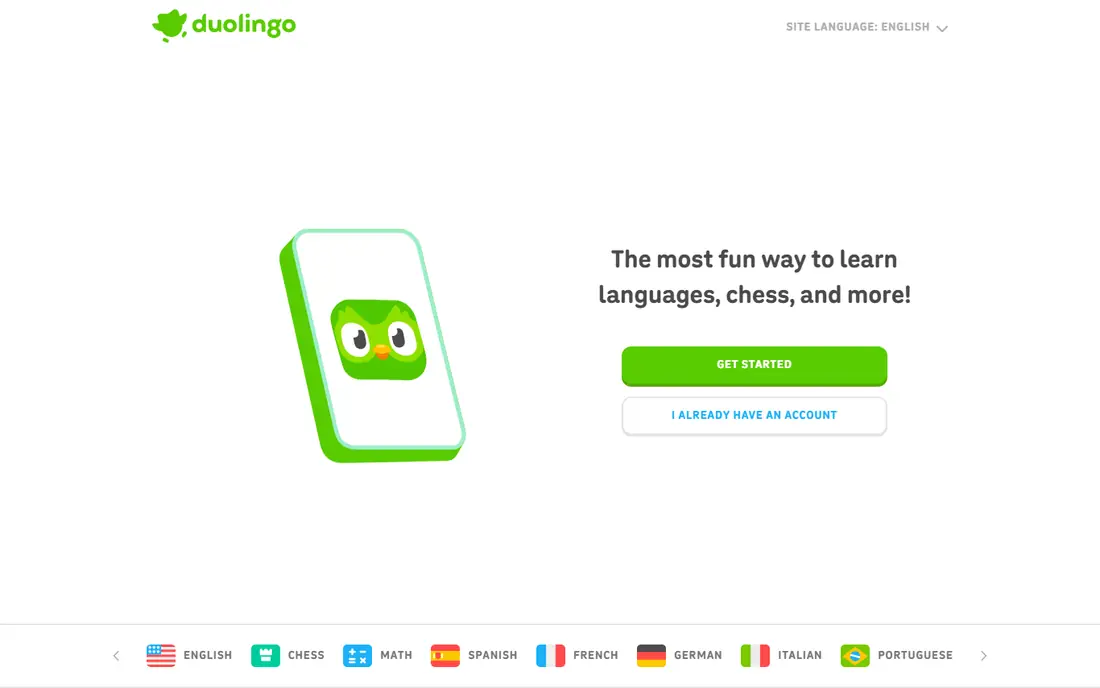
Duolingo is the easiest place to start Italian for free, because its core course is available without payment, supported by ads, and its short lessons fit into a few minutes a day. The gamified structure, with streaks, levels, and bite-sized exercises, helps beginners build a daily habit, which is often the hardest part of language learning. Vocabulary, basic grammar patterns, and listening exercises arrive in small steps, so a new learner can make visible progress in the first weeks.
The limit is depth. Duolingo teaches patterns more than it explains grammar rules, and its speaking practice does not replace conversation with a real person. Paid Super and Max tiers remove ads and add features, but the free course already covers the basics well. For a beginner who wants a free, habit-forming start, Duolingo is our pick, with a plan to add a more structured app or conversation practice later.
- Full core course free with ads
- Short daily lessons
- Streaks keep habits going
- Grammar explanations are light
- Speaking practice is limited compared with tutors
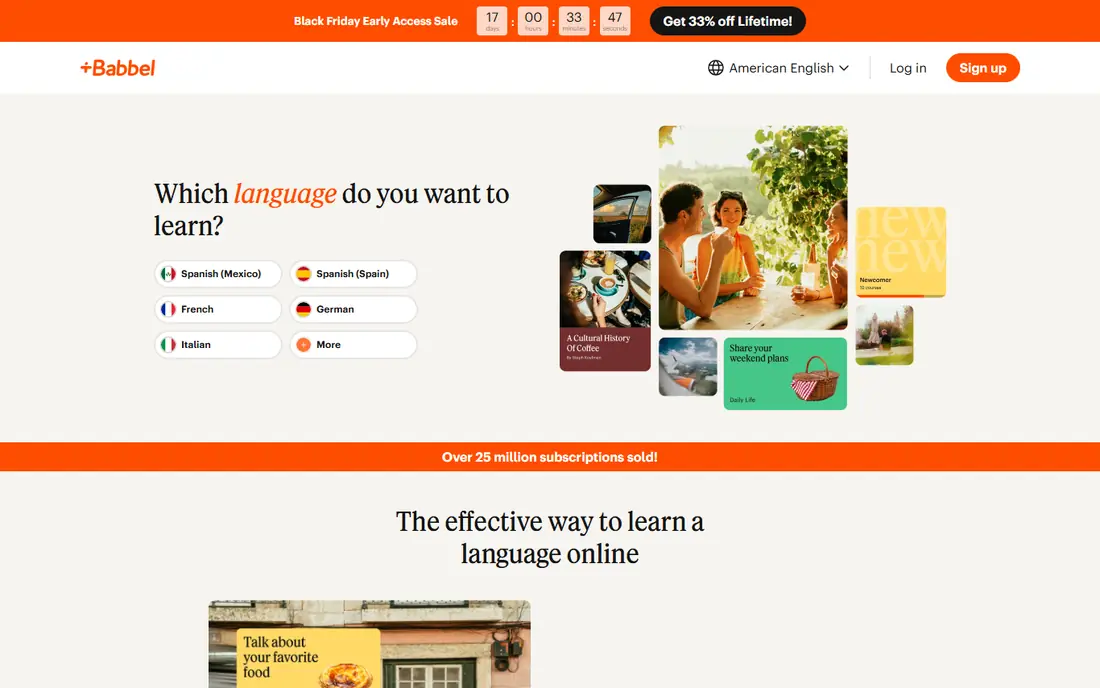
Babbel suits learners who want to understand Italian grammar rather than just repeat phrases. Its lessons are built by language experts, explain sentence structure and verb forms as you go, and include review sessions and speaking practice to reinforce what you learn. That structure helps a learner who plans to study seriously for months, since the course builds in a clear order rather than jumping between topics.
The pricing needs checking at checkout, since recent listings show different monthly and annual figures by region and promotion, so we list it as See website rather than quoting a figure that may not match your plan. Only the first lesson of each course is free, so a trial is limited. For a learner who values a clear, grammar-led path and is willing to pay for it, Babbel is a strong core app.
- Lessons built by language experts
- Grammar explained clearly
- Review and speaking practice
- Prices vary by plan and region
- First lesson only is free
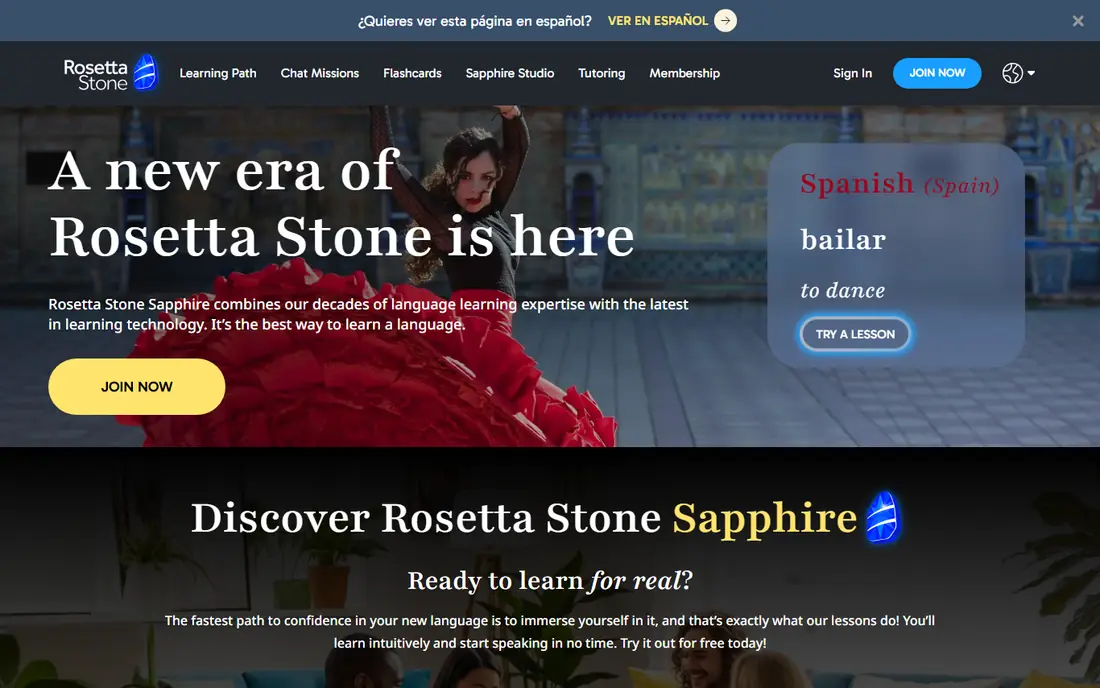
Rosetta Stone takes an immersion approach, teaching Italian through images, audio, and context rather than translation, which suits learners who want to think in Italian from the start. Its pronunciation feedback helps with accent and listening, and its lessons build vocabulary and sentence patterns through repetition and visual cues. For a learner who dislikes grammar drills and prefers to absorb the language by using it, that method can feel natural and engaging.
The trade-off is explicit grammar. Rosetta Stone explains less about why a sentence works than Babbel does, so some learners feel lost at intermediate levels and need a grammar reference alongside it. Pricing also varies by plan, with monthly, annual, and lifetime options listed in recent sources, so check the current offer. For immersion-style learners, Rosetta Stone remains a well-known and credible choice.
- Immersion method with no translation crutch
- Pronunciation feedback
- All languages in some plans
- Higher price on some plans
- Less explicit grammar teaching
Busuu stands out for community feedback, because learners can submit writing and speaking exercises and receive corrections from native Italian speakers. That human feedback catches mistakes an automated app would miss, and it gives a learner a sense of real communication early on. Lessons are levelled to the Common European Framework, so progress maps to a recognized scale, and the free plan offers a useful taste of the course before paying.
The main friction is pricing transparency. Recent listings note that full Premium pricing is shown inside the app rather than on the public pricing page, so we list it as See website. Advanced lessons and offline mode also require a paid plan. For a learner who values human feedback and a clear level structure, Busuu is our pick for the community angle.
- Feedback from native speakers
- CEFR-levelled lessons
- Offline mode on paid plans
- Full pricing shown in the app rather than on the public page
- Advanced content is paid
Memrise is built around memory and real language, using videos of native speakers and scenario-based lessons to teach phrases you can actually use. That approach helps vocabulary stick, because you hear Italian as people speak it, not just as a textbook voice reads it, and the app adds AI conversation features on paid plans for extra speaking practice. The free version offers a solid introduction, with core lessons and vocabulary practice, before the paid tier opens the full course.
The limit is grammar depth. Memrise explains less grammar than Babbel, and some long-time users miss the depth of its former community-created courses. Pro pricing is listed at $8.99 per month or $59.99 per year in recent listings, with offline access and expanded content on the paid tier. For a learner who wants to build vocabulary and listening confidence fast, Memrise is an engaging and practical pick.
- Native-speaker videos
- Scenario-based lessons
- Engaging vocabulary practice
- Grammar explanations are limited
- Former community courses are reduced
Pimsleur is the audio-first choice, built around 30-minute lessons that teach speaking and listening through recall and repetition. That format suits commuters, walkers, and anyone who learns better by speaking than by tapping a screen, and its method has a long track record for building spoken confidence. A seven-day trial lets a learner test the audio style before paying, which matters, since audio learning is not for everyone.
The price is higher than most apps here, at $20.95 per month for All Access in recent listings, and the focus on audio means reading and writing practice is lighter than in Babbel or Duolingo. Learners who want to read Italian newspapers or write emails will need another resource alongside Pimsleur. For speaking confidence on the go, especially before a trip, Pimsleur is our pick.
- 30-minute audio lessons
- Strong speaking and recall method
- Works while commuting
- Higher monthly price
- Less reading and writing practice
Mondly suits a learner who wants quick, practical Italian for travel or daily life, with lessons that focus on ordering food, asking directions, and handling common situations. Lessons are short, often five to ten minutes, and the app adds chatbot dialogues and speech recognition practice to build speaking confidence in a low-pressure setting. A limited free version lets a learner try the style before paying, and Premium is listed at $12.90 per month or $58.50 per year in recent listings.
The limit is depth for advanced learners. Mondly covers practical vocabulary well but does not go as deep into grammar or advanced conversation as Babbel or Pimsleur, so serious learners will need to move on or supplement it. Some user reviews also report mixed experiences with support. For a traveler or a beginner who wants fast, practical phrases, Mondly is a friendly and affordable pick.
- Short lessons focused on practical phrases
- Chatbot dialogues
- Speech recognition
- Depth is limited for advanced learners
- Support reviews are mixed
LingQ takes a different path from the course apps: it lets you read and listen to real Italian content, from articles and books to podcasts, and tracks the vocabulary you meet along the way. That approach suits intermediate learners who have the basics and want to move toward real Italian, since the content library and import tools let you study material you actually care about. Vocabulary review is built in, so words you meet in reading come back for practice until they stick.
The trade-off is structure. LingQ is less guided than Babbel or Duolingo, and its interface takes time to learn, so beginners may feel lost without a core course alongside it. Premium pricing is listed at $14.99 per month or $119.88 per year in recent listings, with a limited free plan. For a learner ready to move from lessons to real Italian, LingQ is our pick for reading and listening growth.
- Learn from real books, articles, and audio
- Strong vocabulary tracking
- Large content library
- Less structured than a course app
- Interface takes time to learn
How we picked these
We compared official product pages, app store listings, and recent independent reviews checked in October 2026, and we favored apps that still offer a full Italian course, not just a phrasebook. We checked free plans, trial options, and starting prices, and we noted where pricing varies by store or region. Where prices differed across sources, we used the most recent listing or wrote See website rather than presenting a disputed figure as fact.
How to choose for your goal
Match the app to your next milestone, not to a vague idea of fluency. For a trip in a few weeks, shortlist Mondly, Pimsleur, and Memrise for practical phrases and speaking confidence. For a serious study plan, start with Babbel or Duolingo as a core course, then add Busuu for feedback or LingQ for reading as you reach intermediate level. Whatever you choose, add real conversation as soon as you can, since no app alone replaces speaking with a person.
Frequently asked questions
What is the best app to learn Italian for free?
Duolingo is the best free app for learning Italian, because its core course is free with ads and covers beginner material in short daily lessons. Busuu, Memrise, Mondly, and LingQ also offer free tiers, but those are more limited than Duolingo's core course.
What is the best app to learn Italian for travel?
Mondly and Pimsleur are the best travel picks, since both focus on practical phrases and speaking confidence. Mondly covers everyday situations in short lessons, while Pimsleur builds spoken recall through audio lessons that work while commuting or walking.
What is the best Italian learning app for beginners?
Duolingo is the best starting point for most beginners, thanks to its free course and habit-forming lessons. Babbel is a better choice for beginners who want clear grammar explanations and a structured course from the start.
Can an app alone make me fluent in Italian?
No app alone takes most learners to fluency, since fluency needs real conversation, reading, and listening over time. Apps build vocabulary, grammar, and confidence well, but pair a core app with conversation practice, Italian media, and, when possible, a tutor or language exchange.
How much do Italian learning apps cost?
Most paid plans here range from about $9 to $21 per month, with annual billing lowering the monthly average. Duolingo's core course is free, while Babbel, Rosetta Stone, and Busuu prices vary by plan and region, so check the checkout price before you commit.
Sources
See where you really rank - block by block
ProMapRanker scans Google Maps across a grid of your service area. Simple monthly plans from $19, white-label on every plan.
Start freeKeep reading
 top custom software development company
Top Custom Software Development Company in 2026
Looking for a top custom software development company? We compare 9 firms for web, mobile, and enterprise software, covering strengths and fit for 2026.
Read → tableau alternatives
Tableau Alternatives in 2026
Compare the best Tableau alternatives for 2026, from Power BI to Metabase, with prices, hosting options, and picks for small teams and enterprises today.
Read → microsoft teams alternatives
Best Microsoft Teams Alternatives in 2026
Looking for microsoft teams alternatives? We compare 9 chat and video tools for 2026, covering free plans, pricing, meetings, and integrations for teams.
Read →