 ProMapRanker
Best API Management Platforms in 2026


Multi-cloud gateways and plugins · Pricing starts at: $25 per month
Key takeaways
- A gateway routes traffic, while a full platform adds a developer portal, policies, versioning, analytics, and monetization around it.
- Cloud-native teams often start with their cloud provider gateway, while multi-cloud teams tend to pick a portable gateway such as Kong or Tyk.
- Per-call pricing looks cheap at prototype volume and can grow fast, so model your real request volume before choosing.
- Several enterprise platforms are quote-only, which means the sales process and contract terms matter as much as the feature list.
Quick comparison
| Pick | Great for | Pricing starts at | Free tier | |
|---|---|---|---|---|
| Kong Konnect | Multi-cloud gateways and plugins | $25 per month | Yes | Visit |
 Apigee | Google Cloud enterprises | See website | No | Visit |
 Amazon API Gateway | AWS-native APIs | See website | No | Visit |
 Azure API Management | Microsoft-centric teams | See website | No | Visit |
 MuleSoft | Enterprise integration and APIs | See website | No | Visit |
 Tyk | Self-hosted and hybrid gateways | See website | Yes | Visit |
 Gravitee | Event-driven and multi-protocol APIs | $2,500 per month | Yes | Visit |
 Postman | API design, testing, and portals | $19 per user per month | Yes | Visit |
The best api management platforms
We focused on platforms that can run in production today, with a gateway, security policies, and a way for developers to discover and use APIs. The list mixes cloud services, open-source gateways, and enterprise suites.
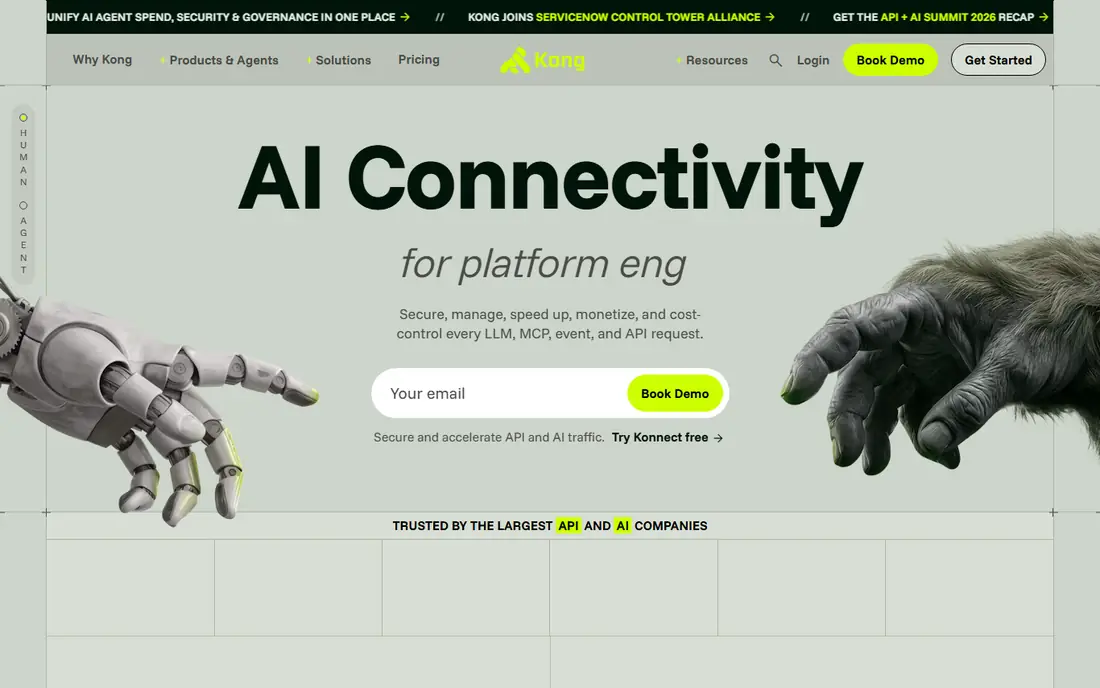
Kong starts with a fast, widely used gateway and adds a cloud control plane in Konnect for managing gateways across clouds, data centers, and Kubernetes clusters. Plugins cover authentication, rate limiting, request transformation, logging, and traffic control, which lets teams add behavior without changing each service. For teams running microservices in several places, that portability is the main draw.
The open-source gateway keeps entry costs low if your team can run it, while Konnect adds centralized control, analytics, and enterprise controls. The catch is operational care: plugins run on every request, so a faulty plugin can affect live traffic. Test plugin changes in staging, and keep the plugin count as small as the job allows.
- Open-source gateway option
- Large plugin library
- Runs across clouds and Kubernetes
- Advanced enterprise features need paid tiers
- Plugin-heavy setups need care in testing
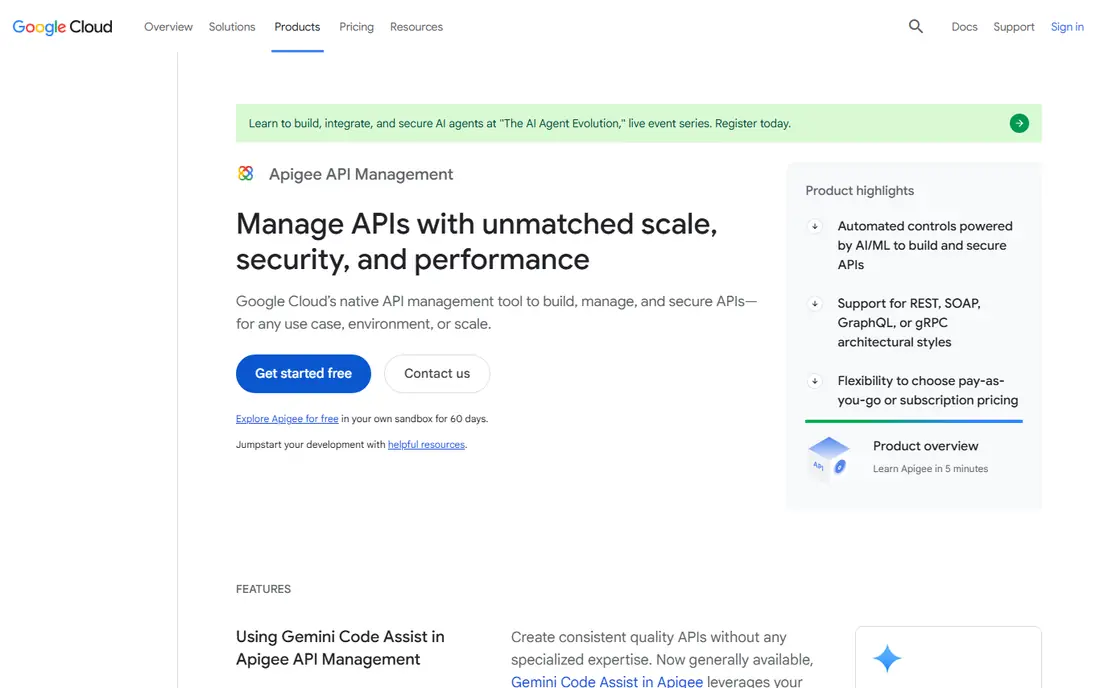
Apigee is Google Cloud's full API management platform, built for organizations that need governance, partner onboarding, analytics, and monetization in one place. It handles API proxies, security policies, traffic management, and developer portals, and it fits teams already standardized on Google Cloud. Large enterprises with many APIs and external partners get the most from it.
The trade-off is cost and complexity. Apigee pricing combines subscription or pay-as-you-go elements with per-environment costs, so a small team can find it hard to budget without a sales conversation. If you run a handful of internal APIs, a lighter gateway will be faster and cheaper. If you run a partner API program, Apigee's depth is hard to match.
- Deep analytics and policy controls
- Strong monetization tools
- Google Cloud integration
- Pricing is complex and can be costly at scale
- Setup takes longer than a simple gateway
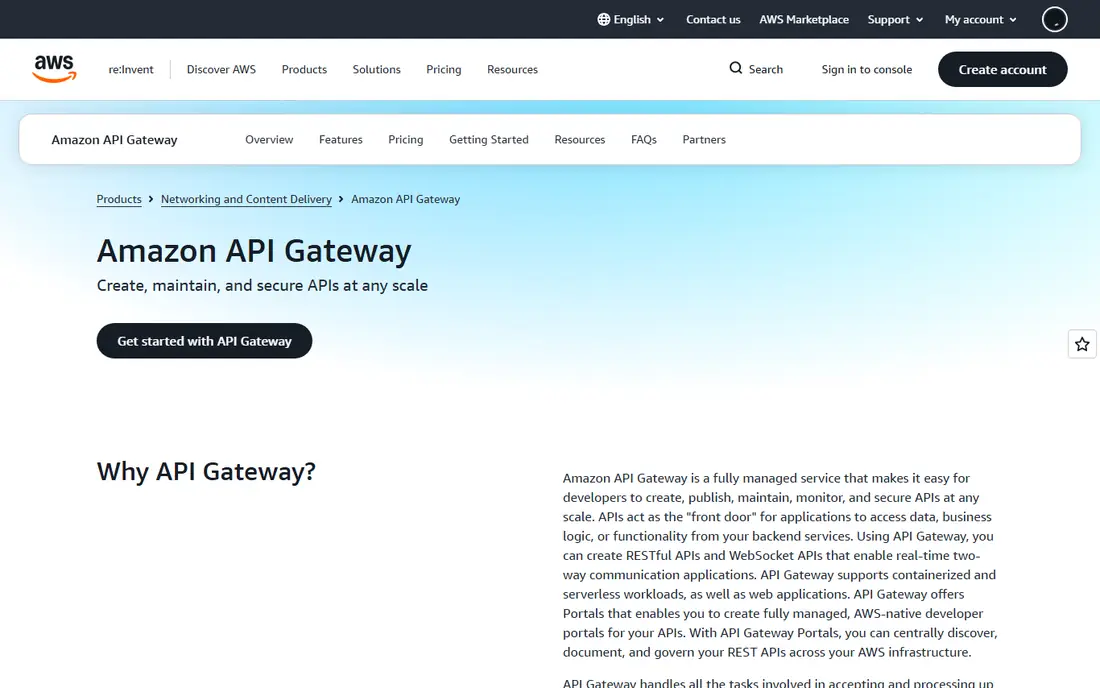
Amazon API Gateway is the default choice for teams already building on AWS. It fronts Lambda functions, containers, and HTTP backends, handles authentication, throttling, and usage plans, and bills per million requests, with REST APIs and HTTP APIs priced differently. For a new AWS product, that means almost no fixed cost at low volume.
The limit is portability and breadth. Moving to another cloud later means reworking integrations, and teams that need a polished developer portal, full lifecycle governance, or monetization may add other tools. For AWS-native products with variable traffic, it remains a practical and low-friction pick.
- Pay-per-request pricing
- Tight AWS Lambda integration
- Built-in throttling and keys
- Tied closely to AWS services
- Portal and governance features are thinner than full suites
Azure API Management suits teams that already live in Azure, Active Directory, and Microsoft 365. It provides a gateway, a developer portal, policy enforcement, versioning, and analytics, and its consumption tier gives small projects a low-cost entry point. Enterprises can also run a self-hosted gateway for services that must stay inside their own network.
Pricing rises with tier, and the richer portal, analytics, and multi-region features sit on higher plans. That makes the entry tier good for a pilot but less complete for a full partner program. If your stack is Microsoft-based, the integration savings often outweigh those limits.
- Strong Azure and Microsoft 365 fit
- Developer portal included
- Consumption tier for low volume
- Full features need higher tiers
- Self-hosted gateway adds operational work
MuleSoft, part of Salesforce, treats APIs as part of a wider integration platform. It connects legacy systems, SaaS apps, and databases through reusable APIs, and it adds design, management, and governance tools around them. For a large organization modernizing many systems at once, that combined approach can reduce one-off integrations.
The cost is the main barrier. Pricing is quote-based and typically reaches enterprise levels, and projects often need trained MuleSoft developers or a partner. Smaller teams with a single API product will find it far more than they need. Large enterprises with complex integration work are its natural audience.
- API-led integration across systems
- Broad connector library
- Strong governance tools
- Quote-only enterprise pricing
- Implementation often needs specialist skills
Tyk offers an open-source gateway plus a paid dashboard and cloud options for teams that want control over where the gateway runs. It supports REST, GraphQL, and other protocols, provides authentication, rate limiting, and analytics, and works well for hybrid setups where some services run on-premises and others in the cloud. Teams without a large DevOps function can start with the cloud version.
The ecosystem is smaller than Kong's, so some niche plugins may need custom work. Tyk is a good middle ground: more control than a cloud-only gateway, less operational load than building your own, and a clear path from open source to a managed plan.
- Open-source gateway
- Flexible deployment options
- Good dashboard and analytics
- Enterprise features are paid
- Smaller plugin ecosystem than Kong
Gravitee stands out for teams whose APIs are not only REST calls. It manages synchronous APIs alongside event-driven traffic such as Kafka and MQTT, which matters for real-time data, IoT, and streaming products. Its policy studio and developer portal cover the usual management tasks, and it runs across clouds and on-premises environments.
The entry paid tier is priced for mid-size and enterprise teams, so startups should start with the open-source edition or a trial conversation. If your product mixes REST APIs with event streams, Gravitee covers both in one platform where many rivals would need two tools.
- Supports REST, event streams, and messaging protocols
- Strong policy design
- Good for multi-cloud use
- Entry paid price is high for small teams
- Learning curve for event-driven features
Postman is where many teams design, test, and document APIs before they ever reach a gateway. Collections, mock servers, automated tests, and workspaces make collaboration simple, and its public network helps developers discover APIs. Paid team plans add collaboration controls, governance rules, and private workspaces.
Postman is not a full replacement for a production gateway on its own, and teams usually pair it with Kong, a cloud gateway, or another runtime. For design-first teams, or for an organization that needs a developer portal and testing workflow more than a new gateway, it is the most practical starting point on this list.
- Best-in-class design and testing workflow
- Large public API network
- Easy team collaboration
- Gateway and runtime management are not its core strength
- Costs grow per seat
How we picked these
We compared official pricing pages, product documentation, and current October 2026 pricing summaries, and we favored platforms with a production gateway, security policies, and developer-facing tooling. We did not claim hands-on testing of every platform. We weighed deployment flexibility, protocol support, portal quality, and pricing transparency, since those points decide total cost more than any single feature.
What to check before you commit
Start by mapping your traffic and your audience. Internal APIs for a few services need far less than a public partner program with monetization, versioning, and support. Count your expected requests per month, your peak traffic, and the number of developers who will use the portal, then price each option against those numbers rather than the headline tier.
Test security and failure behavior before launch. Check authentication options, rate limiting, request validation, and what happens when a backend fails or a policy changes. A gateway sits in front of everything, so a misconfigured policy can block all traffic at once. Roll out policy changes in stages, and keep a rollback plan ready.
Decide on deployment first
Cloud-managed gateways reduce operations work but tie you to one provider. Self-hosted and hybrid gateways give portability at the cost of running and patching the gateway yourself. If your team has no dedicated platform engineer, lean managed. If you run in several clouds or on-premises, lean portable.
Price the whole program
Add portal hosting, analytics retention, support tiers, and any per-seat costs for design tools. Enterprise quotes often exclude implementation and training, so ask for a total first-year figure in writing. A cheaper gateway with a costly design and testing stack can end up more expensive than a fuller suite.
Frequently asked questions
What is the difference between an API gateway and API management?
A gateway routes, secures, and rate-limits live traffic. API management adds the full lifecycle around it: design, versioning, a developer portal, analytics, policies, and monetization. Many teams need both, but a small internal project may only need a gateway.
Which API management platform is best for startups?
Start with your cloud provider gateway or an open-source gateway such as Kong or Tyk, and add Postman for design and testing. That keeps fixed costs low until traffic and partner needs justify a paid platform.
How much does API management cost?
Costs range from free open-source gateways and per-request cloud pricing to thousands of dollars per month for enterprise suites. Model your request volume, seat count, and environment count before comparing prices, since each vendor charges differently.
Is Apigee or Kong better for multi-cloud use?
Kong is usually easier for multi-cloud and hybrid deployments, since the same gateway runs in many environments under one control plane. Apigee fits best when the team is already committed to Google Cloud and needs its analytics and monetization depth.
Do I need a developer portal?
Yes, if anyone outside your team will use the API. A portal with docs, keys, and examples reduces support work and onboarding time. For purely internal APIs, a shared Postman workspace or internal docs may be enough.
Sources
See where you really rank - block by block
ProMapRanker scans Google Maps across a grid of your service area. Simple monthly plans from $19, white-label on every plan.
Start freeKeep reading
 twitch alternatives
Twitch Alternatives in 2026
Explore the best Twitch alternatives in 2026 for live streaming, with free platforms, monetisation options, audiences, chat tools, and tips for new streamers.
Read → firebase alternatives
Best Firebase Alternatives in 2026
Looking for Firebase alternatives? We compare 9 backend platforms for auth, databases, realtime, storage, functions, self-hosting, and pricing for your app.
Read → companies with best work life balance
Companies With Best Work Life Balance in 2026
See companies with best work life balance in 2026, ranked by employee ratings, with flexible work options, benefits, and what to check before applying.
Read →