 ProMapRanker
Best Alternatives to GitHub Advanced Security in 2026


Developer-first dependency and code security · Pricing starts at: $25 per developer per month
Key takeaways
- Snyk, Semgrep, and SonarQube are the most direct replacements, covering code scanning, dependency risk, and quality gates in different mixes.
- GitHub Advanced Security bundles CodeQL, secret scanning, and Dependabot for GitHub teams, so a replacement often needs two tools, not one.
- Semgrep suits teams that want custom rules and fast CI scans, while SonarQube suits teams that want quality and security gates in one platform.
- Checkmarx and Veracode suit enterprise compliance programs, while Aikido, Codacy, and Mend suit teams that want broader platform coverage at lower complexity.
- GitLab Ultimate suits teams already on GitLab, since its security scanners run inside GitLab CI without a separate vendor.
Quick comparison
| Pick | Great for | Pricing starts at | Free tier | |
|---|---|---|---|---|
| Snyk | Developer-first dependency and code security | $25 per developer per month | Yes | Visit |
 Semgrep | Custom rules and fast SAST | $30 per contributor per month | Yes | Visit |
 SonarQube | Quality gates plus security | See website | Yes | Visit |
 Checkmarx | Enterprise AppSec programs | See website | No | Visit |
 Veracode | Audit-ready enterprise security | See website | No | Visit |
 GitLab | GitLab-native security | See website | Free trial | Visit |
 Mend | Open source at scale | See website | Free trial | Visit |
 Aikido | Broad platform security | See website | Yes | Visit |
 Codacy | Affordable quality plus security | See website | Yes | Visit |
The best alternatives to GitHub Advanced Security
We compared code security tools on static analysis, dependency scanning, secret scanning, container and infrastructure checks, CI integration, and pricing. GitHub Advanced Security itself is not listed, since this guide covers alternatives to it, and we note where a tool covers only part of the GitHub bundle.
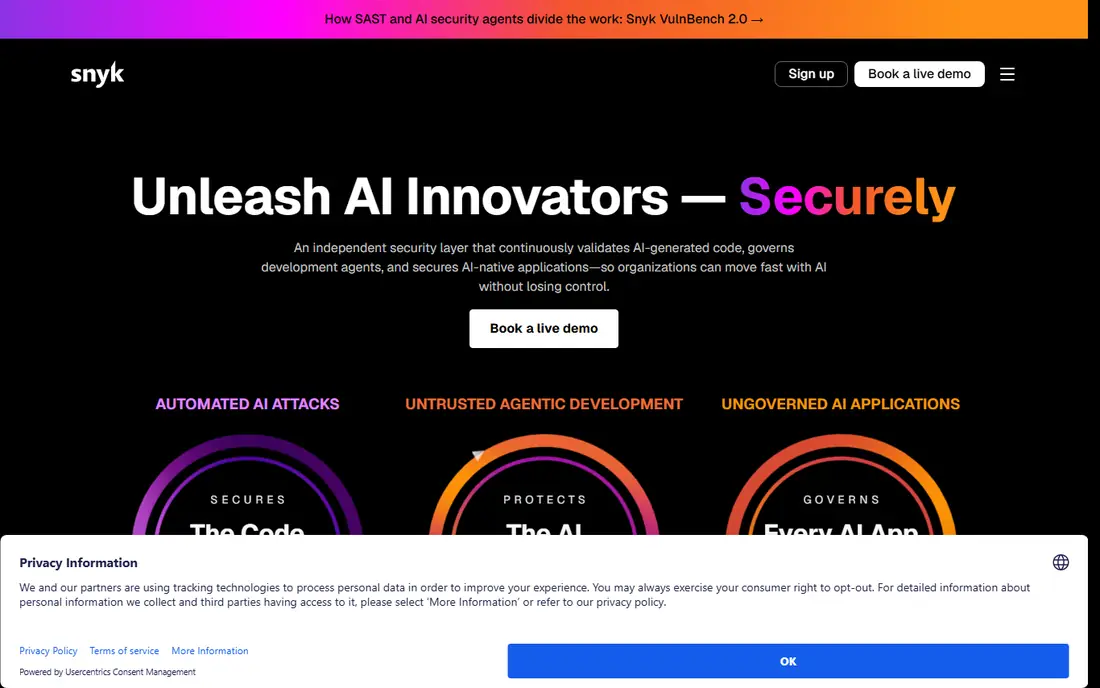
Snyk is the most common developer-first replacement for GitHub Advanced Security, especially for dependency risk. Snyk Open Source finds vulnerable dependencies and suggests fixes, while Snyk Code scans your own code for security flaws. Together they cover much of what Dependabot and CodeQL cover, with a workflow that fits pull requests and developer tools.
The cost model needs attention. Team pricing starts per developer per month for Code, but adding open source, container, and infrastructure modules increases the total, and enterprise pricing uses credits. Start with the modules you actually need, test fix pull request volume on a real repository, and check how Snyk handles your main languages before you commit to the full platform.
- Strong open source dependency scanning plus Snyk Code
- Fix pull requests with remediation guidance
- Broad ecosystem and CI coverage
- Full platform pricing grows with each product module
- Enterprise tier moves to a credit model that needs careful budgeting
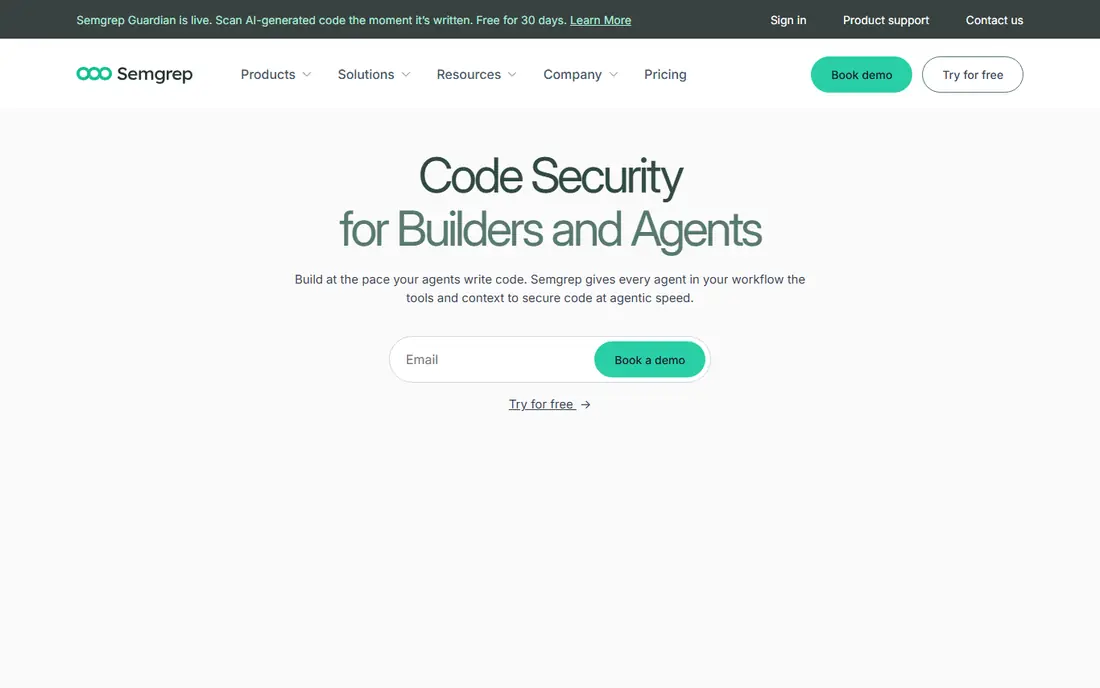
Semgrep suits teams that want to own their security rules. Its open source engine scans code quickly in CI, and writing a custom rule for an internal pattern is far simpler than writing a CodeQL query. That control helps teams with specific frameworks, internal APIs, or compliance rules that generic scanners miss. Paid tiers add cross-file analysis, supply chain scanning, and secrets scanning.
The trade-off is rule maintenance. A custom rule set that no one updates will drift from the codebase it protects, so assign an owner and review rules each quarter. For teams that value speed, transparency, and custom coverage, Semgrep is a strong CodeQL alternative, especially when paired with a dependency scanner for full coverage.
- Fast CI scans with an open source engine
- Custom rules are easy to write
- Supply chain and secrets modules available alongside code scanning
- Cross-file analysis and some advanced features need a paid tier
- Custom rules need upkeep to stay useful
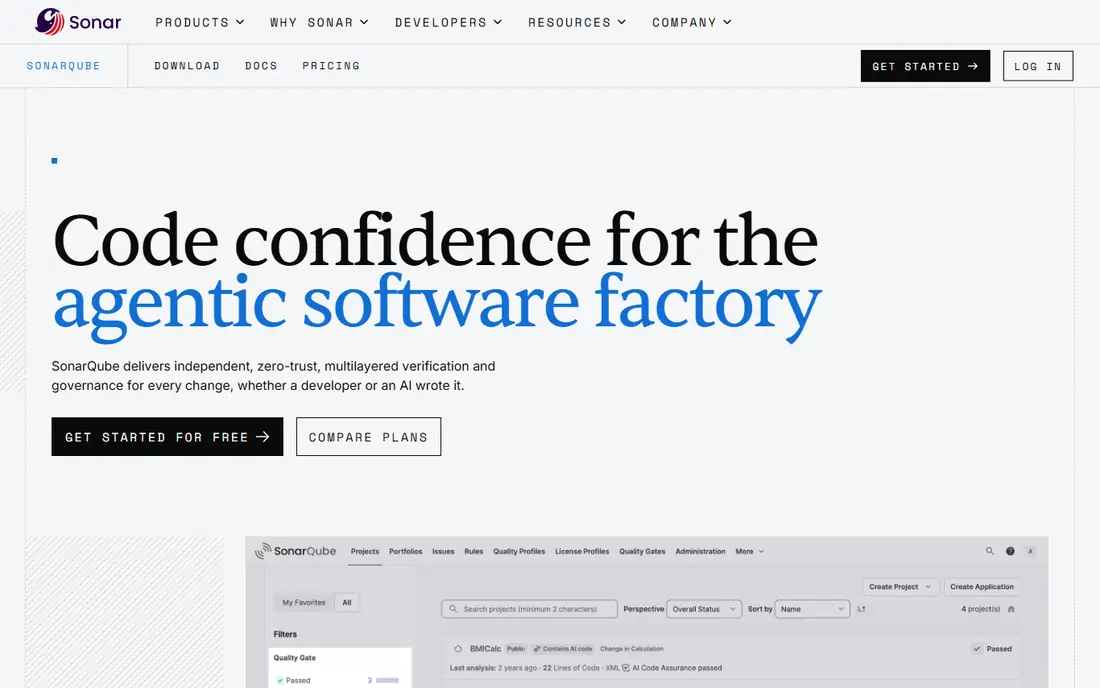
SonarQube is the pick for teams that want quality and security in the same gate. It scans code for bugs, vulnerabilities, and code smells, and its quality gates block merges that fail a defined standard. That shared gate helps developers and auditors read the same result, rather than juggling separate quality and security reports.
The free Community Build is generous for self-hosted use, though it lacks pull request analysis in some configurations, so check the edition that fits your workflow. Paid Cloud and Server tiers add deeper security analysis and advanced features, priced by lines of code. For teams that already care about code quality, SonarQube often replaces both a quality tool and a basic SAST tool in one move.
- Combines code quality and security in one platform
- Quality gates enforce standards at pull request time
- Community Build is free and self-hosted
- Self-hosting adds admin work
- Paid cloud and server pricing varies by lines of code and tier
Checkmarx suits enterprises that need a full application security platform with audit-ready reporting. Its static analysis goes deep on data flow, and its platform adds dependency, infrastructure, API, and container scanning alongside code analysis. Custom queries let AppSec teams encode internal standards, which matters in regulated industries.
Smaller teams will likely find Checkmarx heavier and costlier than they need, since pricing is quote based and setup benefits from a dedicated team. For large firms with compliance duties, many languages, and a need for one vendor across AppSec categories, Checkmarx is a serious GitHub Advanced Security replacement, especially when CodeQL alone does not cover the full program.
- Deep static analysis with custom queries
- Covers SAST, SCA, infrastructure, API, and containers in one platform
- Strong compliance reporting
- Quote based enterprise pricing
- Setup and tuning suit dedicated AppSec teams
Veracode appeals to firms that need externally verifiable security testing for audits and customers. It scans source and binaries, runs dynamic tests, and checks dependencies, with reporting that supports compliance programs and vendor security reviews. Binary analysis is a distinct strength when you need to test code you did not write or cannot easily rebuild.
The workflow is less GitHub-native than CodeQL, since analysis runs in Veracode cloud rather than inside GitHub Actions by default, though CI integrations exist. Pricing is quote based, so budget for a sales conversation and a pilot on your largest repositories. For regulated firms where attestation matters, Veracode is a strong enterprise alternative.
- Static and dynamic analysis plus dependency scanning
- Binary analysis for compiled code
- Strong attestation and compliance reporting
- Quote based pricing
- Cloud analysis workflow differs from GitHub-native scanning
GitLab Ultimate is the natural replacement for teams whose code already lives in GitLab. Its CI pipelines include static analysis, dependency scanning, secret detection, container scanning, and dynamic testing, with results in merge requests and a security dashboard. That single platform view avoids adding a separate security vendor for GitLab teams.
Teams on GitHub gain less, since GitLab security value ties to GitLab CI and repositories. Moving repositories to GitLab just for security is a larger change than adding a scanner to GitHub. For GitLab teams, though, Ultimate often covers the GitHub Advanced Security bundle in one tier, with the added benefit of a unified DevSecOps workflow.
- Security scanners built into GitLab CI
- SAST, dependency, secret, container, and dynamic scanning in Ultimate
- Single DevSecOps platform
- Full security coverage needs the Ultimate tier
- Value drops if your code does not live in GitLab
Mend, formerly WhiteSource, suits firms where open source risk is the main concern. It tracks dependencies, licences, and vulnerabilities at scale, and Renovate automates dependency updates with pull requests that keep libraries current. SBOM support helps firms that need to show customers and auditors what open source their products contain.
Code scanning exists in the Mend platform, but dependency depth is its clearest strength, so teams that need deep SAST may pair Mend with Semgrep or SonarQube. Pricing is quote based, so ask for a breakdown by module and developer count. For firms with large open source footprints, Mend is a strong Dependabot and SCA replacement.
- Strong dependency and licence risk coverage
- Renovate for automated dependency updates
- SBOM support for supply chain transparency
- Quote based pricing
- Full platform depth needs several Mend modules
Aikido suits teams that want broad coverage without stitching many tools together. It scans repositories for code flaws, dependency risk, secrets, and infrastructure issues, and it extends to containers and cloud posture, with prioritization that tries to surface reachable risks first. A free developer tier lets small teams start without a budget discussion.
As a newer platform, Aikido has less enterprise track record than Checkmarx or Veracode, so larger firms should pilot it on real repositories and check support and compliance reporting before a full rollout. For startups and mid-size teams that want one security platform rather than five point tools, Aikido is a practical GitHub Advanced Security alternative.
- Covers code, dependencies, secrets, containers, cloud, and infrastructure in one platform
- Free developer tier for small teams
- Low-noise prioritization
- Newer vendor than Checkmarx or Veracode
- Paid pricing details need verification at checkout
Codacy suits smaller teams that want quality and security gates at a lower price than enterprise platforms. It analyzes pull requests, flags quality and security issues, and can block merges that fail a defined standard. That gate workflow mirrors much of what GitHub Advanced Security offers in pull requests, without a large enterprise contract.
Depth is the limit. Complex data flow analysis and enterprise compliance reporting are thinner here than in Checkmarx, Veracode, or SonarQube Enterprise. For a small or mid-size team that needs a practical, affordable gate on every pull request, Codacy is a strong pick, and it pairs well with a dedicated dependency scanner for full supply chain coverage.
- Combines quality and security analysis
- Pull request gates
- Per-developer pricing that suits smaller teams
- Depth is below enterprise SAST tools for complex codebases
- Advanced security features vary by tier
How we picked these
We compared official product and pricing pages for code security tools that cover a meaningful part of the GitHub Advanced Security bundle, including static analysis, dependency scanning, and secret detection. We kept tools that are live in October 2026, that integrate with CI and pull requests, and that fit a clear use case, from developer-first scanning to enterprise compliance. We excluded generic code quality tools without security scanning, since those do not replace the security functions in the bundle.
How to replace the bundle without gaps
Map the bundle first. GitHub Advanced Security includes CodeQL code scanning, Dependabot dependency alerts and updates, and secret scanning with push protection. No single tool on this list matches all three in exactly the same way, so plan for a combination: a SAST tool for code, a dependency tool for open source, and a secrets tool for credentials. Snyk plus Semgrep, SonarQube plus Mend, or Aikido alone are common combinations, depending on your stack.
Next, test on your noisiest repositories. A scanner that looks clean on a small demo may flood pull requests on a legacy codebase, which trains developers to ignore alerts. Tune rules, set severity thresholds, and assign triage ownership before you enforce blocking gates. Finally, check secret scanning separately, since code and dependency tools do not always cover push protection and historical secret cleanup. A replacement plan that covers code and dependencies but misses secrets leaves a real gap.
Frequently asked questions
What are the best GitHub Advanced Security alternatives?
Snyk, Semgrep, and SonarQube are the leading direct replacements, with Checkmarx and Veracode for enterprise compliance, GitLab Ultimate for GitLab teams, and Mend, Aikido, and Codacy for broader or more affordable coverage. The best pick depends on whether you need code scanning, dependency risk, secret scanning, or all three, and on where your code lives.
Is Snyk a good replacement for GitHub Advanced Security?
Yes, for many teams. Snyk Code covers code scanning, Snyk Open Source covers dependency risk, and fix pull requests help developers remediate quickly. Snyk does not match GitHub secret scanning and push protection in the same way, so pair it with a secrets tool if secret protection is a core requirement for your team.
Can Semgrep replace CodeQL?
Semgrep can replace CodeQL for many SAST needs, especially when custom rules and fast CI scans matter. CodeQL offers deeper semantic analysis for complex data flow, while Semgrep offers simpler custom rules and faster runs. Teams with deep data flow needs may keep CodeQL or choose Checkmarx, while teams that value custom rules and speed often prefer Semgrep.
Is there a free alternative to GitHub Advanced Security?
Yes, in part. Semgrep offers a free open source engine, SonarQube offers a free Community Build, Snyk and Codacy offer limited free tiers, and Aikido offers a free developer tier. GitHub secret scanning and Dependabot remain free on public repositories, and some features are free on private repositories depending on plan. Free tiers suit small teams, while larger teams usually need a paid tier for full coverage.
Do I need GitHub Advanced Security if I use Snyk or Semgrep?
Not necessarily. Many teams run Snyk or Semgrep alongside GitHub without Advanced Security, using pull request checks and CI gates from the external tool. GitHub Advanced Security adds value when you want CodeQL, secret scanning, and Dependabot in one GitHub-native bundle, especially on GitHub Enterprise. If an external tool already covers code and dependencies well, Advanced Security may duplicate that spend.
Which alternative is best for GitLab users?
GitLab Ultimate is the best pick for GitLab users, since its SAST, dependency, secret, container, and dynamic scanners run inside GitLab CI. External tools such as Snyk and Semgrep also integrate with GitLab, but Ultimate gives a single platform view without a separate vendor. Check the Ultimate tier pricing against your user count before you commit.
Sources
See where you really rank - block by block
ProMapRanker scans Google Maps across a grid of your service area. Simple monthly plans from $19, white-label on every plan.
Start freeKeep reading
 who has best internet service
Who Has the Best Internet Service in 2026
Who has best internet service for US homes? We compare fiber, cable, fixed wireless and satellite providers on speed, price, availability and terms today.
Read → which survey tool has the best analytics
Which Survey Tool Has the Best Analytics in 2026
Find which survey tool has the best analytics in 2026, comparing Qualtrics, SurveyMonkey, Typeform, Alchemer, and more on reports, text, and stats today.
Read → which streaming service has the best movies
Which Streaming Service Has the Best Movies in 2026
Answering which streaming service has the best movies, with Netflix, Max, Criterion and more compared on libraries, prices and free options in this guide.
Read →