 ProMapRanker
Best AI Writing Tools for Nonprofit Grant Writers in 2026
Direct answer
Writesonic leads the list, best for tracking AI search visibility. Listed starting prices: Writesonic from $79 a month, Copy.ai from $24 a month and Rytr from $9 a month. Copy.ai is the stronger choice for automating repetitive writing tasks, while Rytr suits follow-ups and relationship context. Details, prices and limits for the rest of the 6 tools are below.
ProMapRanker compared 6 AI writing tools for nonprofit grant writers. The goal is a practical shortlist: published prices, free plan facts, best-fit use cases and honest limits for every entry.
Key takeaways
- Writesonic sits first on this list: tracking AI search visibility.
- Starting prices begin at $9 per month with Rytr.
- Rytr is the only tool of the 6 with a free plan.
- What to know about Writesonic first: not a grant drafting tool.
Quick comparison
| Pick | Great for | Pricing starts at | Free tier | |
|---|---|---|---|---|
 Writesonic | Tracking AI search visibility | $79 a month | Free trial | Visit |
 Copy.ai | Automating repetitive writing tasks | $24 a month | Not stated | Visit |
 Rytr | Follow-ups and relationship context | $9 a month | Yes | Visit |
 Jasper | Structured multi-step writing workflows | $59 per seat a month | Free trial | Visit |
 Anyword | Copy testing and performance insight | $39 a month | Free trial | Visit |
 Sudowrite | Narrative and story-driven writing | $10 a month | Free trial | Visit |
AI Writing Tools for Nonprofit Grant Writers compared in detail
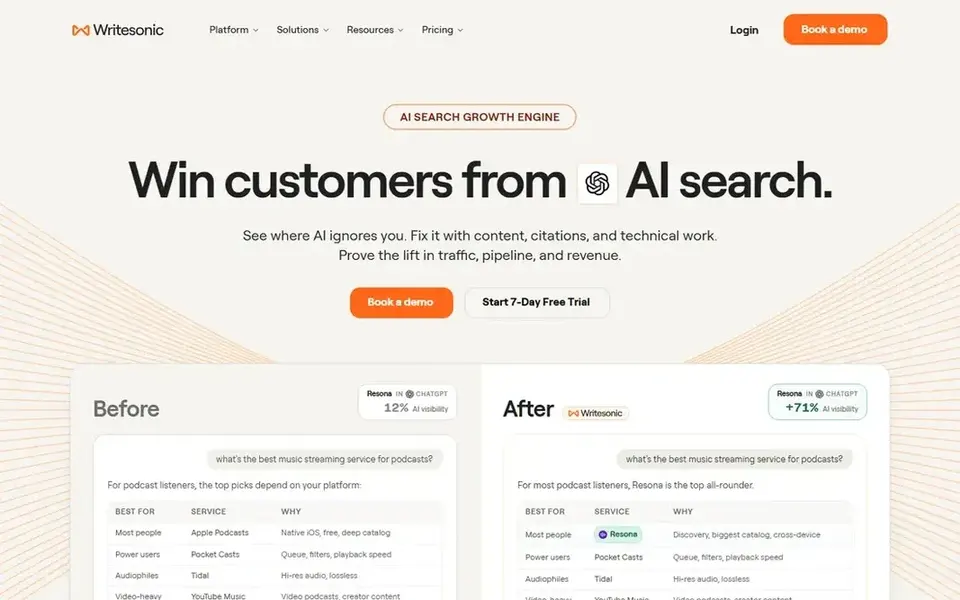
Writesonic is a good fit for tracking AI search visibility. Grant writers researching how funders and causes appear in AI answers may find that monitoring handy for background context. It is a research-adjacent tool instead of a drafting assistant.
From a buyer's view, the system's focus is search visibility, not proposal writing, so it does little for narrative structure, budgets or compliance language. Nonprofits expecting grant-specific drafting help should look elsewhere. It may still serve communications staff who want to understand how their organization surfaces in AI-generated answers. Writesonic cost at the entry level: $79 per month. Trial and free access: Free trial.
Where it is weaker: Restricted fit for proposal prose.
- Search visibility focus
- Spots content gaps
- Not a grant drafting tool
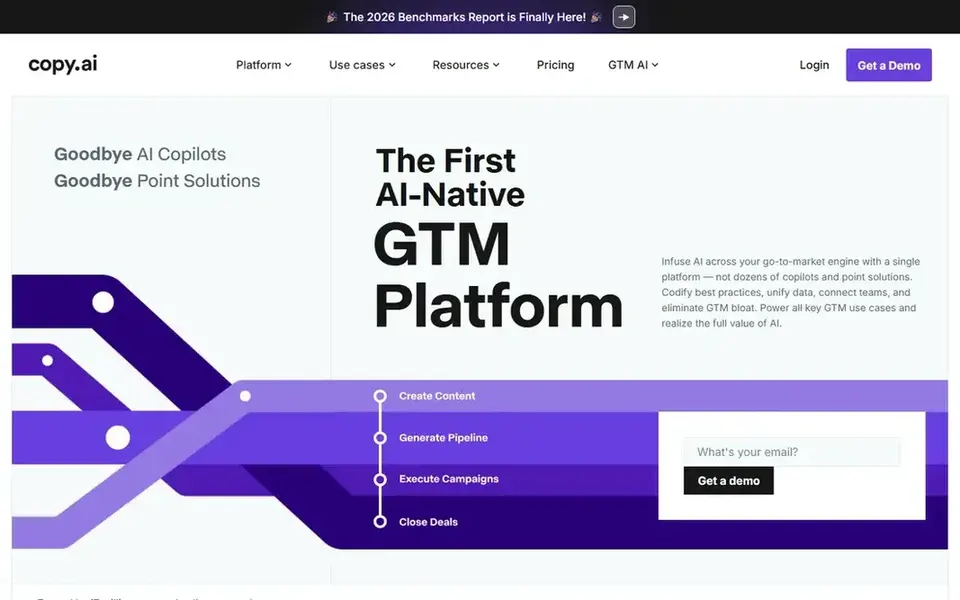
Choose Copy.ai for automating repetitive writing tasks. Copy.ai describes itself as a go-to-market AI system that automates hundreds of tedious, repetitive tasks so teams can scale success.
As for the details, writers should expect to define their own prompts and structures. The system is oriented toward business go-to-market work, so nonprofit proposal conventions are not built in. Copy.ai cost at the entry level: $24 per month. Free options: Not stated.
Where it falls short: Needs configuration for best results.
- Automates many repetitive tasks
- Positioned for scaling team output
- Grant writing is not its stated focus
Rytr is designed for follow-ups and relationship context. Rytr presents itself as an AI relationship manager and follow-up assistant that gathers context from email, messaging, calendars and meeting notes into one brief, prepares meetings and drafts follow-ups in your voice.
Writers needing full draft generation should pair it with a dedicated writing product. It performs best as a complement for stewardship and communication tasks. Rytr cost at the entry level: $9 per month. Rytr includes a free tier.
Drawbacks to consider: Relationship focus, not proposal drafting.
- Prepares meetings
- Drafts follow-ups in your voice
- Restricted structure for long narratives
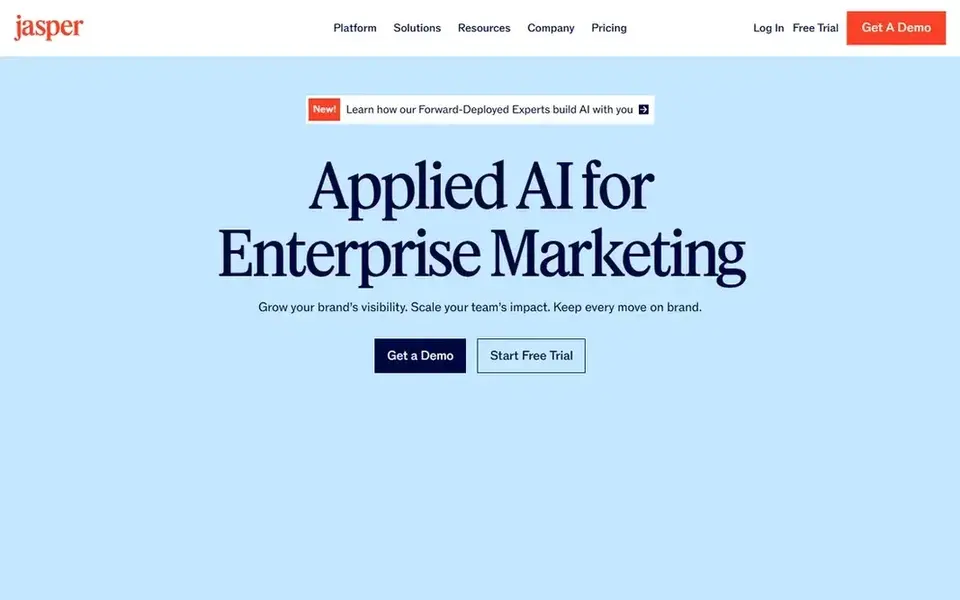
Choose Jasper for structured multi-step writing workflows. Jasper presents itself as a product for orchestrating intelligent agents that run end-to-end marketing workflows with speed, control and measurable impact.
Its framing is marketing workflow automation, so grant-specific structures like logic models or budget narratives are not native. Beyond that, teams needing straightforward editing help may find it heavier than necessary. Starting cost for Jasper: $59 per seat per month. Free access: Free trial.
Honest limits: May need setup for proposal templates.
- Supports speed and control in drafting
- Agent-based workflow orchestration
- Marketing-oriented instead of grant-specific
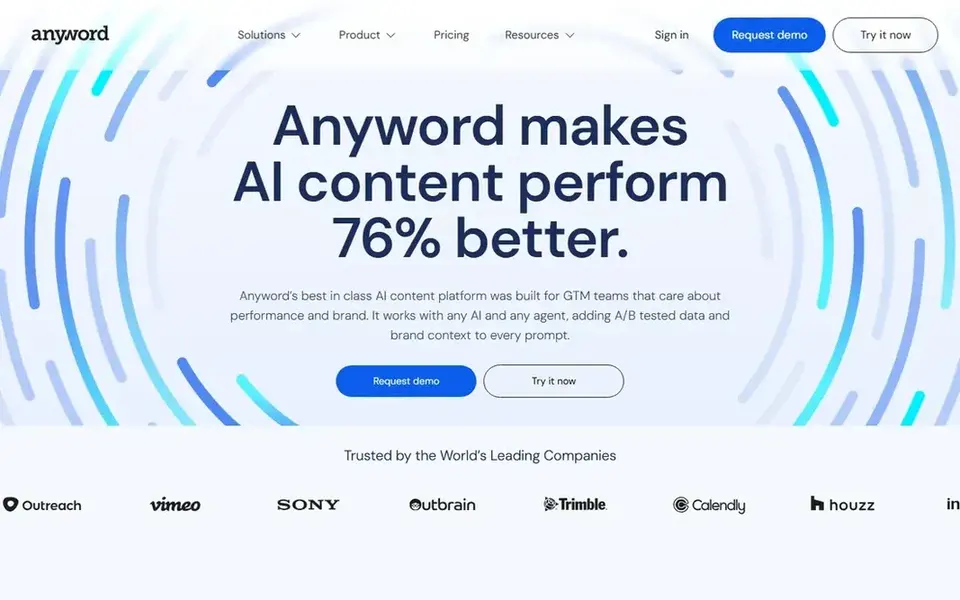
Anyword serves copy testing and performance insight. Anyword describes AI writing that predicts and boosts copy performance using real A/B test data, usable on its own or within tools like Claude, ChatGPT, Gemini and Copilot. Also, for grant writers, that data-driven angle can help sharpen persuasive passages like appeal letters and executive summaries.
Downsides: Grant compliance is not addressed.
Its performance orientation is built around marketing copy, and grant applications seldom allow A/B testing of submitted text. Teams that largely need grammar and clarity checks may prefer a dedicated editing assistant. Anyword pricing: $39 per month. As for free access: Free trial.
- Uses A/B test data for copy guidance
- Focus on improving copy performance
- Performance focus is marketing-centric
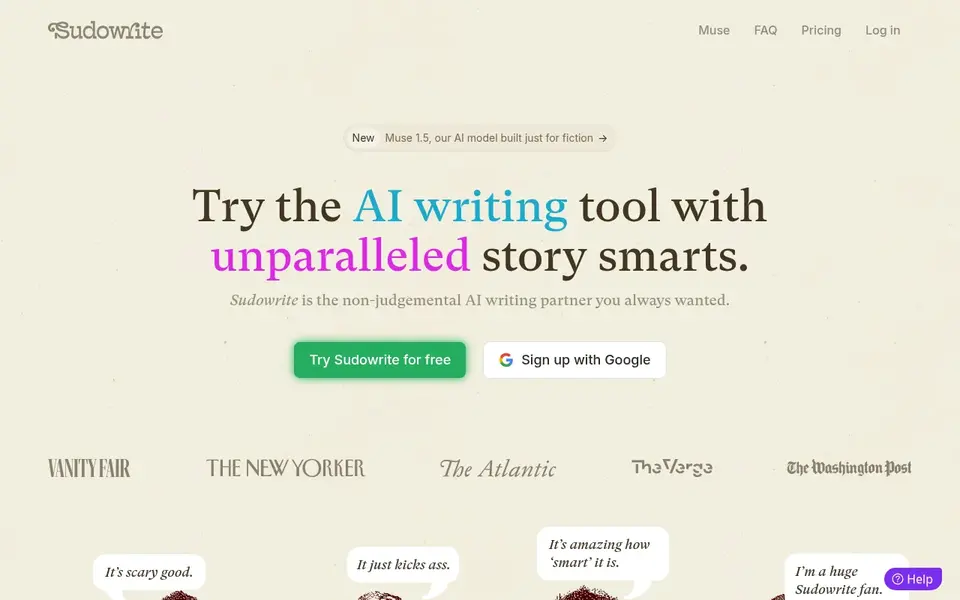
Sudowrite works best for narrative and story-driven writing. Sudowrite markets itself as an AI writing partner for fiction, targeted at helping novelists write quicker. For everyday use, formal grant sections still need separate drafting and review.
Worth adding: since it is designed for fiction, Sudowrite does not address proposal structures, funder guidelines or budget narratives. In daily use, grant writers who craft story-driven case studies or donor-facing narratives may find its narrative strengths handy for compelling human-interest sections. The starting price for Sudowrite: $10 per month. Free access: Free trial.
Limits to weigh: Structure differs from grant formats.
- Solid narrative drafting support
- Recognized by literary press
- Fiction focus, not formal proposals
Our selection method
The comparison looks at four things: starting price, free access, how well the feature set matches AI writing tools for nonprofit grant writers, and the main limit of each tool. Figures are shown as the vendors publish them. Billing terms, seat minimums and add-ons can change the real cost. We ordered the tools by general fit, then by how clearly pricing is shown, then by free access. A buyer with unusual needs may reorder them.
Pre-purchase checklist
- Confirm the entry price on the vendor page: Rytr starts at $9 per month, but seat counts and billing terms change the total.
- Look at the free plan from Rytr closely: its caps decide whether it is usable for real work.
- Use real work to test the free trial from Writesonic, Jasper, Anyword and Sudowrite, rather than a demo project.
- Before choosing Writesonic, weigh its main limit: not a grant drafting tool.
- Look at which plan of Copy.ai unlocks the features you need; entry tiers are often cut down.
- Find out what support Jasper includes on your plan, and whether onboarding help costs extra.
Frequently asked questions
Is Writesonic the right pick for everyone comparing AI writing tools for nonprofit grant writers?
No single tool suits every team. Writesonic comes first because it fits tracking AI search visibility, while Copy.ai suits automating repetitive writing tasks and Rytr suits follow-ups and relationship context. Match the tool to your own size, budget and workflow before deciding.
What is the cheapest option for AI writing tools for nonprofit grant writers in this list?
On published monthly entry prices, Rytr is the lowest here at $9 per month. Entry price is only part of the cost, because seats, add-ons and billing terms can change the total. Prices, free plan details and limits for all 6 tools in this AI writing tools for nonprofit Grant writers roundup sit on the individual cards above.
Which options for AI writing tools for nonprofit grant writers have a free plan?
Rytr is the only tool in this list with a free plan. Free plans usually cap users, projects or features, so check the limits on the vendor page. Several others offer a trial instead. Each of the 6 options in this AI writing tools for nonprofit Grant writers guide has its own card above with the price, free plan and limits.
How should a nonprofit evaluate these tools before committing?
Confirm data handling practices, integration with your existing apps and any limits on output length. A short internal trial on a past proposal can reveal fit before wider adoption.
Do grant writers need marketing-oriented AI products?
Not necessarily, but systems like Jasper and Copy.ai can help teams standardize repeatable drafting and automate routine documents. Their marketing framing means you will define grant-specific prompts and structures yourself.
How are the tools for AI writing tools for nonprofit grant writers ordered?
The order follows typical fit for AI writing tools for nonprofit grant writers, with Writesonic first and Sudowrite last, then price clarity and free access. It is editorial judgement, not a score, so another team could rank the tools differently.
Sources
See where you really rank - block by block
ProMapRanker scans Google Maps across a grid of your service area. Simple monthly plans from $19, white-label on every plan.
Start freeBrowse all guides
← Best AI Tools to Make Presentation (2026)Best Creative Writing Platforms in Israel in 2026 →
 best ai text editor software
AI Text Editor Software: Best Picks of 2026
Need the best AI text editor software? We compare 6 tools on cost, free access and who each suits. Fit and flaws are laid out for each entry. Details below.
Read → best ai presentation tools for educators
5 Best AI Presentation Tools for Educators in 2026
Best AI presentation tools for educators in 2026: 5 contenders with entry costs and free tiers. Every profile names its biggest catch. See the full list.
Read → best text to speech app for visually impaired
Best Text to Speech App for Visually Impaired in 2026
Need the best text to speech app for visually impaired? We compare 5 tools on cost, free access and who each suits. Each pick lists its main limit. No hype.
Read → best content management software
Best Content Management Software in 2026
Compare the best content management software for websites, blogs and multi-channel publishing, with current pricing and honest trade-offs for teams in 2026.
Read → best blog writing services providers
Top 5 Blog Writing Services Providers for 2026, Compared
Best blog writing services providers: 5 contenders ranked by fit, with entry costs and free tiers. Every pick includes one clear drawback. Read the profiles.
Read → best pdf compressor tools
Best PDF Compressor Tools in 2026
Compare the best pdf compressor tools for shrinking files without losing quality, with free plans, batch tools, desktop apps and pricing reviewed today.
Read →More in Writing, PDFs & Documents · All guides A to Z by date · Latest guides