 ProMapRanker
Best AI Visibility Tools for B2B Companies in 2026

Key takeaways
- AI visibility tools track how often AI assistants mention, cite and recommend your brand across engines such as ChatGPT, Gemini and Perplexity.
- Otterly.AI and Peec AI offer the lowest published entry prices, while Profound, Scrunch AI and AthenaHQ suit larger enterprise programs.
- Semrush, Ahrefs Brand Radar and SE Ranking make sense if your team already pays for those SEO suites.
- Entry tiers often cover fewer engines than the marketing page maximum, so count engines and prompts at the tier you would actually buy.
- Our pick for most B2B teams is to start with one tool, a fixed prompt list of buyer questions, and a monthly review of trends rather than single answers.
Quick comparison
| Pick | Great for | Pricing starts at | Free tier | |
|---|---|---|---|---|
 Profound | Enterprise AI visibility | See website | No | Visit |
 Semrush AI Visibility Toolkit | Existing Semrush users | See website | No | Visit |
 Ahrefs Brand Radar | Existing Ahrefs users | $199 per month | No | Visit |
 Peec AI | Daily tracking, unlimited seats | $95 per month | No | Visit |
 Otterly.AI | Low-cost entry tracking | $29 per month | No | Visit |
 AthenaHQ | Broad engine coverage | $295 per month | Yes | Visit |
 Scrunch AI | Crawler and agent diagnostics | $250 per month | No | Visit |
 SE Ranking AI Visibility Tracker | SEO teams adding AI tracking | $99 per month | No | Visit |
The best ai visibility tools for b2b companies
These tools track brand mentions, citations, sentiment and competitor share inside AI answers. We did not list ProMapRanker itself, and we left out tools that are retired or unavailable in October 2026.
Profound is the enterprise name most B2B teams meet first in this category. It runs buyer-style prompts through AI engines, reports how often your brand appears, which sources get cited, and which competitors appear instead. Higher tiers add more engines, larger prompt volumes and agent workflows for acting on the findings.
Pricing is the main friction. Profound no longer publishes a simple entry price on its public pages at last check, and older published figures no longer match the current sales-led model. That makes it a fit for teams with procurement budgets and a dedicated operator, and a harder sell for a small team that wants a self-serve start.
- Broad engine coverage on higher tiers
- Daily prompt tracking
- Citation and competitor analysis
- No public price at last check
- Entry tier covers fewer engines than enterprise tiers
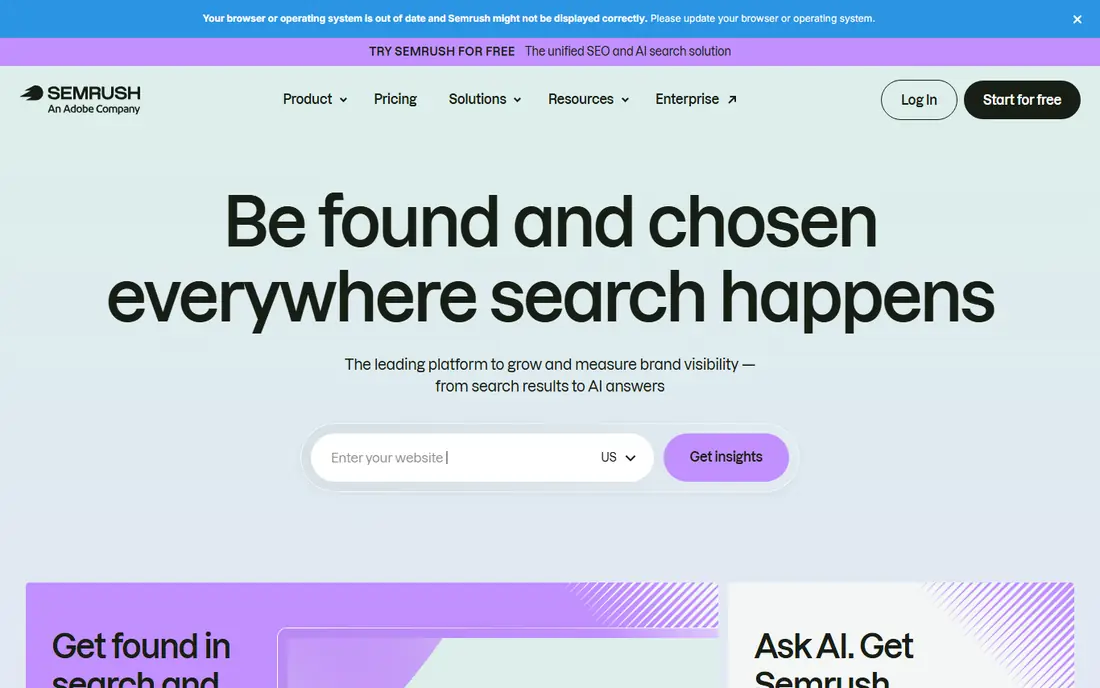
Semrush's AI Visibility Toolkit adds AI answer tracking to a suite many B2B teams already use for search. It reports brand mentions and citations across AI surfaces, with competitor context alongside traditional search data. That single-dashboard view saves time for teams that already live in Semrush.
The cost structure needs care. The toolkit is an add-on rather than a standalone product, and published prices differ across comparison sources, so we list it as "See website". If your team does not already pay for Semrush, a standalone tracker below may cost less for the same AI tracking job.
- Sits inside a familiar SEO suite
- Tracks AI Overviews and major engines
- Competitor comparisons
- Add-on pricing on top of a Semrush plan
- Published entry figures vary across sources
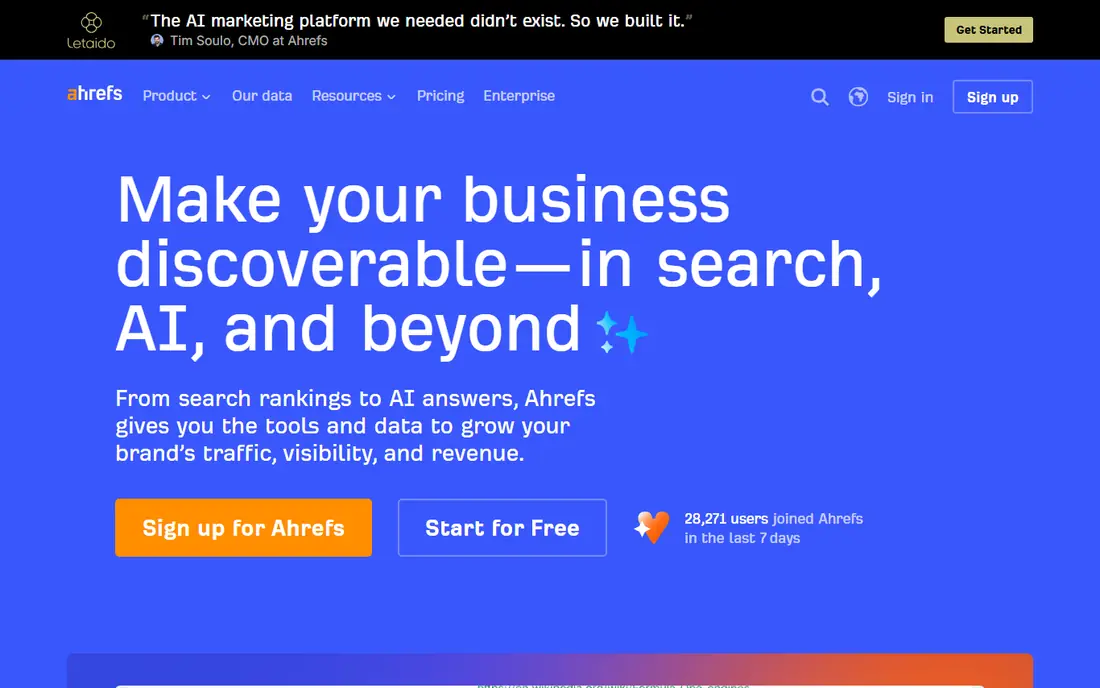
Ahrefs Brand Radar brings AI brand tracking into the Ahrefs suite, which suits SEO teams that already use Ahrefs for backlinks, keywords and content gaps. It tracks how AI assistants mention your brand and competitors, with prompt packages that scale with volume. The $199 per month add-on figure appears in several October 2026 comparisons, with smaller prompt packages also listed.
The catch is stacking costs. You pay for Ahrefs plus the Brand Radar add-on, so the total bill is higher than a standalone tracker for a team that only wants AI visibility. For teams already inside Ahrefs, that trade is easy to accept.
- Inside the Ahrefs ecosystem
- Prompt packages available
- Clear brand mention tracking
- Add-on cost on top of an Ahrefs plan
- Prompt limits need checking per package
Peec AI is a straightforward tracker for brand teams that want daily AI visibility data without a long setup. Starter plans cover a set of prompts across chosen engines, with unlimited seats that help agencies and larger marketing teams share one account. Daily refreshes make trends visible within weeks, not quarters.
Its limits are honest ones. Starter covers fewer engines than the full set, and Peec AI provides analytics rather than content generation or agent workflows to fix gaps. Pair it with your content team, and treat its reports as a brief for new pages, reviews and PR, not as a fix by itself.
- Daily updates
- Unlimited seats on brand plans
- Clear prompt tiers
- Starter covers a limited set of engines
- Analytics only, no content generation
Otterly.AI is the cheapest way to start tracking AI visibility in this list, at $29 per month for its Lite plan. That plan covers a small prompt set across base engines, with daily tracking and citation data that suit a small B2B team testing the category. A free trial period is offered on some plans.
Scale is where the price rises. Outgrowing 15 prompts or adding engines such as Claude or Gemini moves you to much higher tiers, so map your prompt list before you subscribe. For a team with 15 to 30 core buyer questions, Otterly.AI is a sensible first tool.
- Lowest published entry price here
- Daily tracking
- Citation and share-of-voice data
- Lite plan covers only 15 prompts
- Extra engines cost more
- Higher tiers jump in price
AthenaHQ stands out for engine breadth, with many models covered on paid plans and a free credit tier for a first look. It connects AI visibility data with GA4 and Search Console, which helps B2B teams link AI mentions to real traffic and conversions. Its recommendation features point toward fixes rather than only reporting scores.
Credit billing is the learning curve. Costs depend on credits used, not just a flat prompt count, so a team that runs many prompts across many models can burn credits faster than expected. Track credit use in the first month, and set a cap before expanding the prompt list.
- Free credit tier
- Broad model coverage
- GA4 and Search Console connections
- Credit-based billing takes learning
- Entry price is high for small teams
Scrunch AI goes beyond mention counts into diagnostics for how AI crawlers and agents reach your site. Its Agent Experience Platform reports crawler activity, bot traffic and citation patterns, which suits engineering-led B2B teams that want to fix technical barriers to AI visibility. Core plans cover a set of engines with a defined prompt volume.
That depth costs setup time and money. Core pricing starts at $250 per month, and some engines and API access sit on enterprise tiers. Teams that only want a weekly mention score will find simpler tools faster, while teams fixing crawl and content structure will value Scrunch AI's diagnostics.
- Agent experience diagnostics
- Crawler and log insights
- Multi-engine monitoring
- Core covers fewer engines than enterprise
- Setup is heavier than simple trackers
SE Ranking's AI Visibility Tracker, also called SE Visible, adds AI answer tracking to its SEO platform at $99 per month for its basic tier. That tier includes a defined prompt count and project allowance, with the same engine set across plans in published comparisons. For SEO teams already using SE Ranking, adding AI tracking in the same dashboard is convenient.
As with other suite tools, the value depends on whether you use the rest of the suite. A team that only wants AI tracking may find a standalone tool cheaper, while a team that already runs SE Ranking for rank tracking and audits gets AI visibility at a modest extra step.
- Inside SE Ranking suite
- Fixed prompt tiers
- Same engines across plans
- AI tracking is part of a broader SEO product
- Prompt tiers cap volume
How we picked these
We compared official feature pages, pricing pages and October 2026 comparison sources for AI visibility tools that are live and purchasable now. We checked engine coverage, prompt limits, seat rules and entry prices at the tier a B2B buyer would actually use, and we left out retired tools and tools with no live product. Prices we could not verify on the vendor's own page are listed as "See website" rather than guessed.
How to choose the right AI visibility tool
Start with your buyer questions, not with a vendor's engine count. Write 25 to 50 prompts a real buyer would ask, covering your category, your brand and your main competitors. The tool that tracks those prompts well, on the engines your buyers use, is the right one, even if another tool lists more engines in total.
Count engines at your tier
Marketing pages list maximum engine coverage, while entry tiers often cover fewer engines. Profound's entry tier tracked ChatGPT only in past comparisons, Peec AI lets starter users pick a subset of models, and Otterly.AI charges extra for some engines. Ask each vendor to confirm engine coverage in writing for the exact tier you plan to buy.
Treat answers as trends, not scores
AI answers change from run to run, so a single day's mention rate means little. Review weekly trends over at least a month, and look for patterns such as competitors appearing on comparison prompts or citations pointing to review sites you lack. A tool that stores full answer history helps here more than one that shows only a score.
Turn findings into content work
No tracker fixes visibility by itself. Use its citation gaps to brief new comparison pages, customer stories, review profiles and documentation. Then watch whether those pages start appearing as cited sources in later runs. That loop, tracking plus publishing, is where B2B teams see real gains.
Frequently asked questions
What are the best ai visibility tools for b2b companies?
Profound, Semrush AI Visibility Toolkit, Ahrefs Brand Radar, Peec AI, Otterly.AI, AthenaHQ, Scrunch AI and SE Ranking are the strongest live options in October 2026. The best pick depends on budget, existing SEO tools and engine coverage at your tier. Start with one tool and a fixed prompt list rather than buying several at once.
How much do AI visibility tools cost?
Published entry prices in this list run from $29 per month for Otterly.AI to $295 per month for AthenaHQ, with several tools in the $95 to $250 range. Profound and Semrush do not publish a simple current entry price, so check their sales or pricing pages. Prompt volume, engine count and seats drive the final bill more than the headline price.
What is AI visibility, in plain terms?
AI visibility is how often AI assistants mention, cite or recommend your brand when buyers ask category questions. A brand can rank well on Google yet stay invisible in ChatGPT or Gemini answers, because AI answers draw on different sources. Tracking shows which prompts name you, which name competitors, and which sources get cited.
Which AI engines should a B2B company track?
ChatGPT, Perplexity and Gemini cover most B2B buyer research, with Google AI Overviews and AI Mode mattering for search-driven buyers. Claude matters for some technical and professional audiences. Track the engines your buyers actually use, and confirm coverage at your tier before paying.
How often should we check AI visibility?
Weekly tracking with a monthly review works for most B2B teams. Daily data helps during a launch or a PR push, but daily noise can mislead if you react to every swing. Fix your prompt list, review trends monthly, and judge progress over a quarter rather than a single week.
Can one tool replace traditional SEO tracking?
No. AI visibility tools track answers inside AI assistants, while SEO tools track rankings, traffic and links on search engines. Most B2B teams need both, since buyers still use search alongside chatbots. Suite tools such as Semrush, Ahrefs and SE Ranking bundle both views, which is part of their appeal.
Sources
See where you really rank - block by block
ProMapRanker scans Google Maps across a grid of your service area. Simple monthly plans from $19, white-label on every plan.
Start freeKeep reading
 best subscription manager app
Best Subscription Manager App in 2026
Find the best subscription manager app for your budget with our 2026 comparison of 8 apps, covering automatic detection, renewal alerts and free plans.
Read → best stock picking service
Best Stock Picking Service in 2026
Compare the best stock picking service options for 2026, with 8 stock recommendation services for long-term, dividend, quant, growth and income investors.
Read → best software wallet
Best Software Wallet in 2026
Compare the best software wallet options for 2026, with 8 crypto wallets for desktop and mobile, covering self-custody, supported chains, fees and security.
Read →