 ProMapRanker
Best AI Trading App for Beginners Free in 2026

Key takeaways
- Magnifi and Danelfin are the most beginner-friendly starting points, with free tiers that explain holdings and stock scores in plain terms.
- Most tools here are research aids, not brokers, so you may still need a separate brokerage account to place a trade.
- Free tiers usually limit scores, alerts, portfolios or deeper analysis, which is enough to learn but not enough for heavy daily use.
- No AI score or signal removes risk. This article is general information only, not financial advice, and trading can lead to losses.
Quick comparison
| Pick | Great for | Pricing starts at | Free tier | |
|---|---|---|---|---|
 Magnifi | Conversational portfolio help | Free | Yes | Visit |
 Danelfin | Simple AI stock scores | Free | Yes | Visit |
 Tickeron | Pattern and trend ideas | Free | Yes | Visit |
 Kavout | AI-ranked stock lists | Free | Yes | Visit |
 Incite AI | Ask-and-answer market research | Free | Yes | Visit |
 Prospero.ai | Daily AI stock picks | Free | Yes | Visit |
 WallStreetZen | Factor-based stock ratings | Free | Yes | Visit |
 AltIndex | Alternative-data stock signals | Free | Yes | Visit |
 TradingView | Charts and idea testing | Free | Yes | Visit |
The best ai trading apps for beginners
We compared official pricing pages, feature pages and app store listings for AI trading and research tools that offer a genuinely free tier in October 2026. We favored tools a beginner can open without paying, understand without a finance degree, and use to learn before risking real money. Tools that were trial-only were left out.
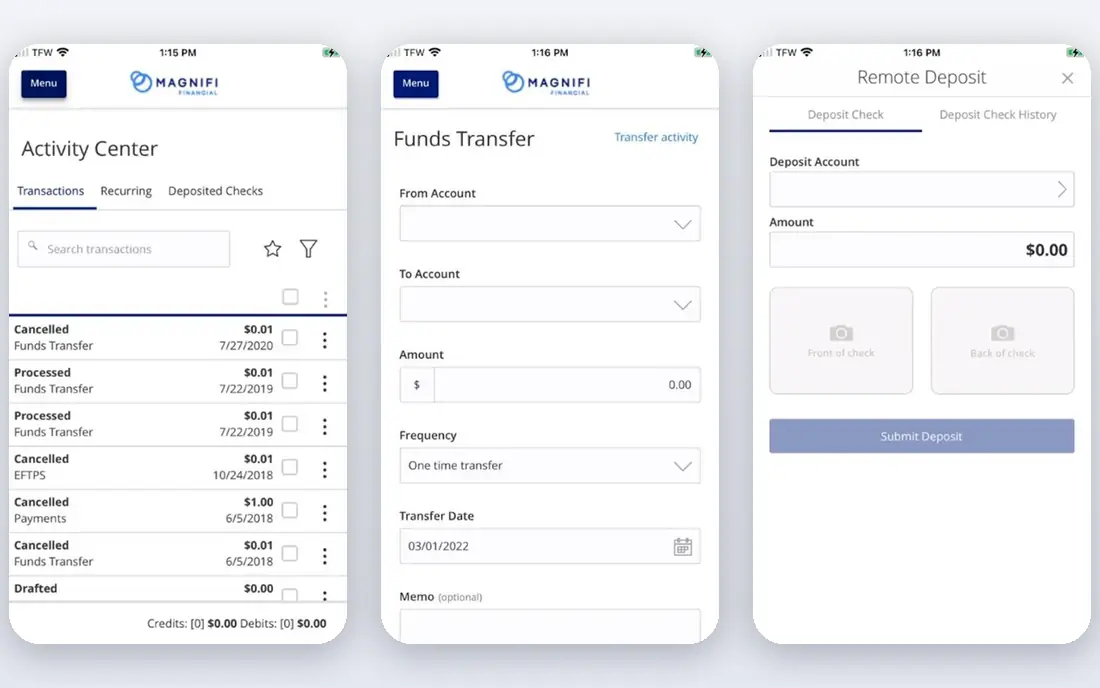
Magnifi feels closest to a beginner assistant in this list. You can ask questions in ordinary words, such as if you are diversified enough, and get answers tied to your holdings. The free tier covers an account overview, portfolio performance, risk and exposure views, and investment discovery, which is a solid base for learning.
The catch is that the deeper tools, including scenario testing and forecasts, sit in the paid Premium plan. That is fine for a first month of learning, since the free tier already shows where your money sits and what it is exposed to. Check the current Premium price on the vendor site before you upgrade, and remember that a forecast is a model output, not a promise.
- Plain-language questions about your portfolio
- Free tier covers account overview and basic analysis
- Commission-free trading on its platform
- Premium analysis sits behind a paid plan
- Insight quality depends on the accounts you connect
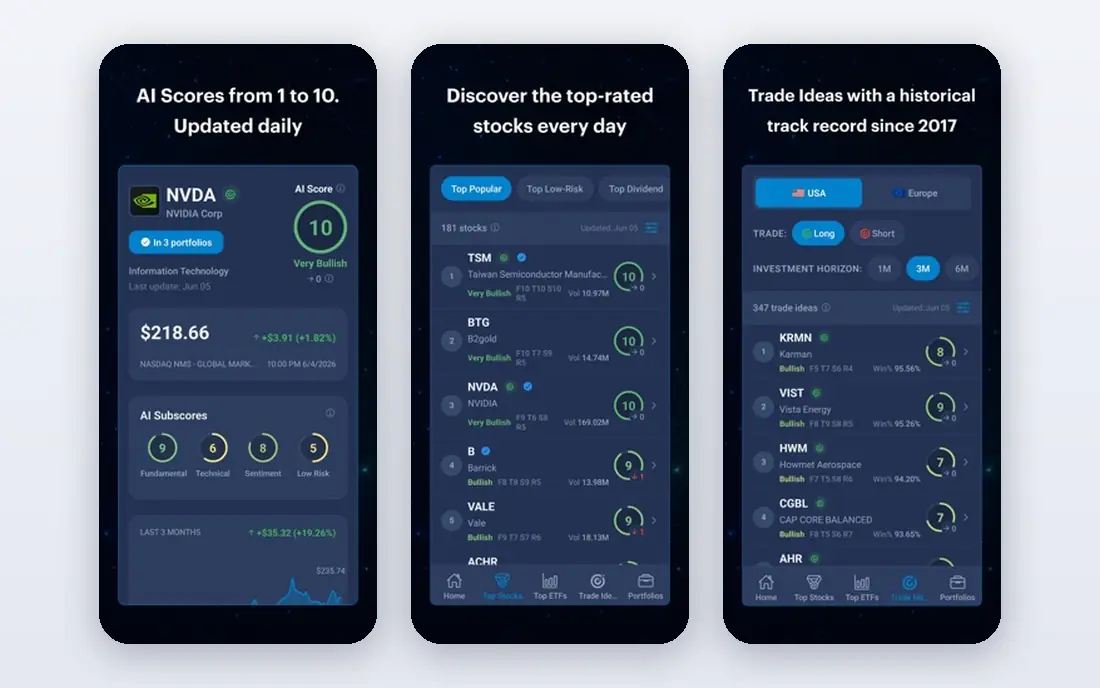
Danelfin turns a large set of indicators into a single score for each stock, which helps a beginner compare stocks without reading a full chart first. A high score is not a buy order, but it gives you a place to start your own reading. The free tier is genuinely useful for shortlisting and learning how scores move over time.
The honest limit is transparency. You can see the score, but you cannot always see exactly why it moved on a given day. Use Danelfin to shortlist, then read the company news, earnings and risks before you act. That two-step habit matters more than any single score.
- Daily AI scores from 1 to 10
- Covers many fundamental and technical inputs
- Free tier is useful for learning
- Scores do not explain every input in full
- Free tier limits depth and real-time data
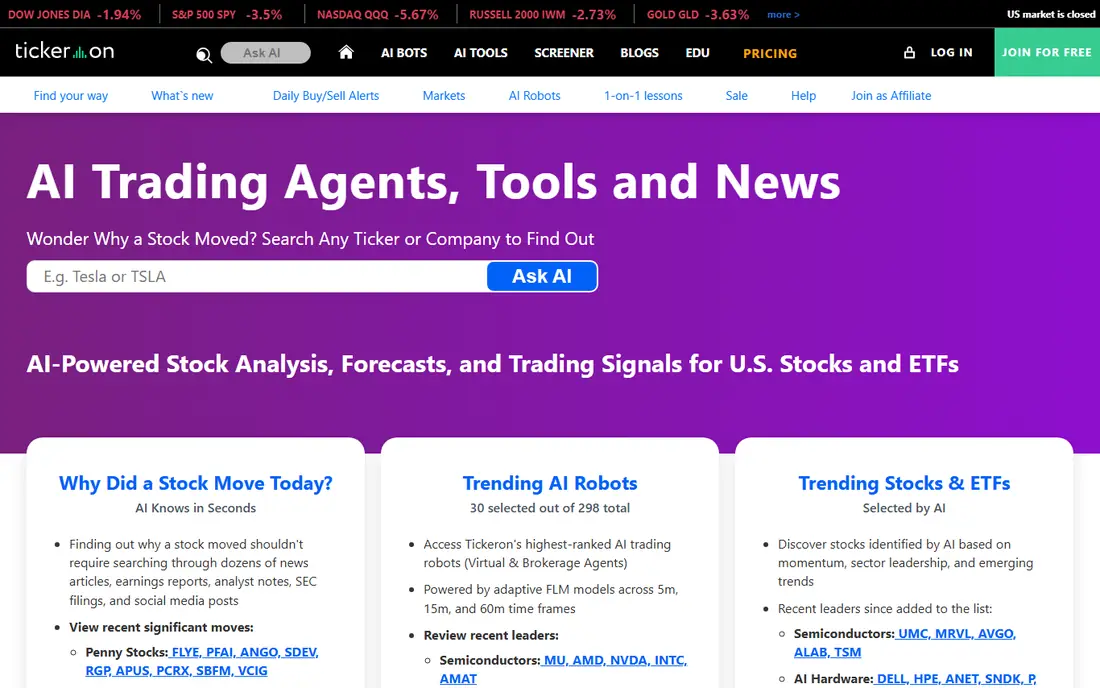
Tickeron suits beginners who want to learn chart patterns without drawing every line by hand. Its AI tools highlight patterns and trend views, and add confidence-style signals that help you see why an idea was flagged. That visual approach can make technical analysis less intimidating at first.
Patterns still fail often, especially in fast or news-driven markets. Treat a pattern as a hypothesis to test, not as proof. Start by watching ideas on paper, checking how often they played out, and only then deciding if this style of research fits how you invest.
- Chart pattern recognition
- Trend and trade idea views
- Broad asset coverage
- Paid plans are needed for the full feature set
- Pattern accuracy varies with market conditions
Kavout ranks stocks with its Kai Score, which is built from multiple factors rather than a single price trend. For a beginner, a ranked list is easier to scan than a blank screener, and it can help you notice stocks outside the few names you already know. The free basic tier is enough to try the ranking style.
The trade-off is opacity. A ranking hides many choices about which factors matter most, and those choices may not match your goals. Use Kavout as one input among several, and ask if a highly ranked stock fits your time horizon, risk tolerance and need for cash.
- Kai Score ranking for stocks
- Free basic tier
- Portfolio-focused views
- Paid tiers vary and can be hard to compare
- Ranking method is not fully open
Incite AI works like a market research chat tool. You ask about a stock, sector or market move, and it pulls together news, sentiment and technical context into one answer. That can save a beginner from opening ten tabs just to get oriented on a single company.
The risk is over-trust. An AI summary can smooth over uncertainty, miss a key risk, or present an old fact as current. Always click through to earnings reports, company filings or trusted news sources before you trade on an answer. Use Incite AI to orient yourself, not to decide for you.
- Conversational market questions
- Combines news, sentiment and technical views
- Free starting access
- Answers need checking against primary sources
- Coverage and limits can change
Prospero.ai gives retail investors daily picks built from institutional-style signals, sentiment and machine learning models. For a beginner, the appeal is clear: you get a short list to study each day instead of facing the whole market at once. The free access makes it easy to follow the list for a while before you commit money.
Daily picks still need a filter. A pick that fits a short-term trader may not fit someone saving for years, and a list cannot know your tax situation, debts or cash needs. Track picks on paper for a few weeks, note what worked and what did not, and only then judge if the style suits you.
- Daily actionable-style picks
- Institutional-style signals in plain views
- Free access
- Picks are research, not personal advice
- Short-term picks can be volatile
WallStreetZen rates stocks using many factors, which gives a beginner a broader view than price momentum alone. It suits buy-and-hold learners who want to compare quality, value and other factors before they buy. The free limited tier lets you test the rating style on stocks you already follow.
As with other scoring tools, the rating is a model, not a verdict. Factors that helped in one market phase can hurt in another, and a good rating does not protect you from a bad earnings report. Pair the rating with your own reading on the business, its debts and its competition.
- Multi-factor Zen Ratings
- Free limited tier
- Long-term investor focus
- Free tier limits depth
- Ratings still reflect model choices, not certainty
AltIndex adds signals many beginners miss, such as web traffic, app data, hiring trends and social discussion. Those signals can hint at momentum in a business before it shows up in earnings, which is why alternative data has grown popular. The free account lets you see how these signals look in practice.
Noise is the catch. Social buzz can spike for reasons that have nothing to do with a business, and hiring data can lag or mislead. Use AltIndex to add context to a company you already understand, not as a shortcut around understanding the business itself.
- Social, web and hiring signals
- Free account to start
- AI scoring for stocks
- Alternative data can be noisy
- Deeper features sit behind paid plans
TradingView is less of a pick service and more of a workshop. Its free plan gives charts, screeners and community ideas, which help a beginner learn how price, volume and indicators relate. You can test an idea on a chart, save a layout, and compare your view with other traders.
That breadth can overwhelm at first. Start with one chart, one time frame and one or two indicators, and ignore the rest until you are comfortable. TradingView is best paired with a scoring or research tool from this list, so you get both a shortlist and a place to study it.
- Strong free charting
- Large community ideas
- Screeners and alerts
- AI-style tools are part of a broad platform, not a simple pick service
- Advanced features are paid
How we picked these
We compared official pricing and feature pages for AI trading and research tools with a genuinely free tier in October 2026. We kept tools that a beginner can use without a trial clock running out, and we favored clear scoring, plain-language research or strong free charting. We left out trial-only tools, even if they are popular with active traders. Fees, spreads and exchange rates vary by broker and product, so check your broker terms before you trade.
How to use a free AI tool without over-trusting it
Start with learning, not trading. Pick one tool, follow its scores or ideas for two to four weeks, and keep a simple paper log of what you would have done and what happened next. That log teaches you more than any marketing claim, because it shows how the tool behaves in real market conditions.
Keep your money rules separate from the tool. Decide in advance how much you can afford to lose, how long you plan to hold, and when you will sell, and write those rules down. An AI tool can suggest an idea, but it cannot know your rent, debts or need for cash next month. If a tool pushes you toward frequent trading, ask if the fees and taxes are eating any edge it claims.
Check the source behind every strong claim. A score, pick or summary should lead you to news, earnings or filings you can read yourself. If you cannot find the source, treat the claim as unproven. That habit protects you from both bad models and confident-sounding summaries.
Frequently asked questions
What is the best free ai trading app for beginners?
Magnifi is a strong first choice for portfolio questions, and Danelfin is a strong first choice for simple stock scores. The best pick depends on your need: portfolio help, a shortlist, chart study or daily ideas. Try one free tier for a few weeks before you pay for anything.
Can a free AI tool trade for me?
Some platforms offer automation or broker links, but most free tiers here are research tools. Even where automation exists, you stay responsible for the trades, fees and losses. Start with research and paper tracking, and only use automation if you fully understand its rules and risks.
Do AI stock scores predict future returns?
No. Scores summarize past and current data through a model, and markets change. A high score can fall, and a low score can rise. Use scores to shortlist and study, then make your own decision based on the business, valuation and your own risk tolerance.
How much money do I need to start?
That depends on your broker, the assets you buy and any account minimums, which change often. Many brokers allow small starting amounts, but small trades still carry risk and fees. Only use money you can afford to lose, and check your broker fee schedule first.
Is this article financial advice?
No. This article is general information only, not financial advice, and it does not promise returns. Trading and investing carry risk, including possible loss of principal. Consider speaking with a qualified financial adviser about your own situation.
Sources
See where you really rank - block by block
ProMapRanker scans Google Maps across a grid of your service area. Simple monthly plans from $19, white-label on every plan.
Start freeKeep reading
 who has best internet service
Who Has the Best Internet Service in 2026
Who has best internet service for US homes? We compare fiber, cable, fixed wireless and satellite providers on speed, price, availability and terms today.
Read → which survey tool has the best analytics
Which Survey Tool Has the Best Analytics in 2026
Find which survey tool has the best analytics in 2026, comparing Qualtrics, SurveyMonkey, Typeform, Alchemer, and more on reports, text, and stats today.
Read → which streaming service has the best movies
Which Streaming Service Has the Best Movies in 2026
Answering which streaming service has the best movies, with Netflix, Max, Criterion and more compared on libraries, prices and free options in this guide.
Read →