 ProMapRanker
Best AI Tools for Private Equity Investment Memos in 2026

Key takeaways
- Hebbia, Rogo and BlueFlame AI are the closest fits for memo drafting, because they link output back to source documents.
- Most tools in this group are quote-only, so a deal team should budget for a sales process and an implementation phase.
- PitchBook, Grata and AlphaSense strengthen the research behind a memo, even though they are not memo writers on their own.
- DealCloud and Affinity help a memo stay tied to pipeline, relationships and deal history.
- Daloopa is useful when the memo depends on clean, auditable financial statement data in Excel.
Quick comparison
| Pick | Great for | Pricing starts at | Free tier | |
|---|---|---|---|---|
 Hebbia | Cited diligence research | See website | No | Visit |
 BlueFlame AI | Private markets deal workflows | See website | No | Visit |
 Rogo | Finance analyst drafting | See website | No | Visit |
 AlphaSense | Document and expert research | See website | No | Visit |
 PitchBook | Private market data | See website | No | Visit |
 DealCloud | Deal pipeline and CRM | See website | No | Visit |
 Affinity | Relationship intelligence | See website | No | Visit |
 Grata | Private company sourcing | See website | No | Visit |
 Daloopa | Auditable financial data | See website | Yes | Visit |
The best ai tools for private equity investment memos
This is general information only, not financial advice, and no tool here promises returns or guarantees an investment outcome. We compared official product pages and public documentation for tools that help private equity teams research companies, test a thesis and draft investment committee memos. A memo still needs human judgment, verified numbers and partner review before any decision.
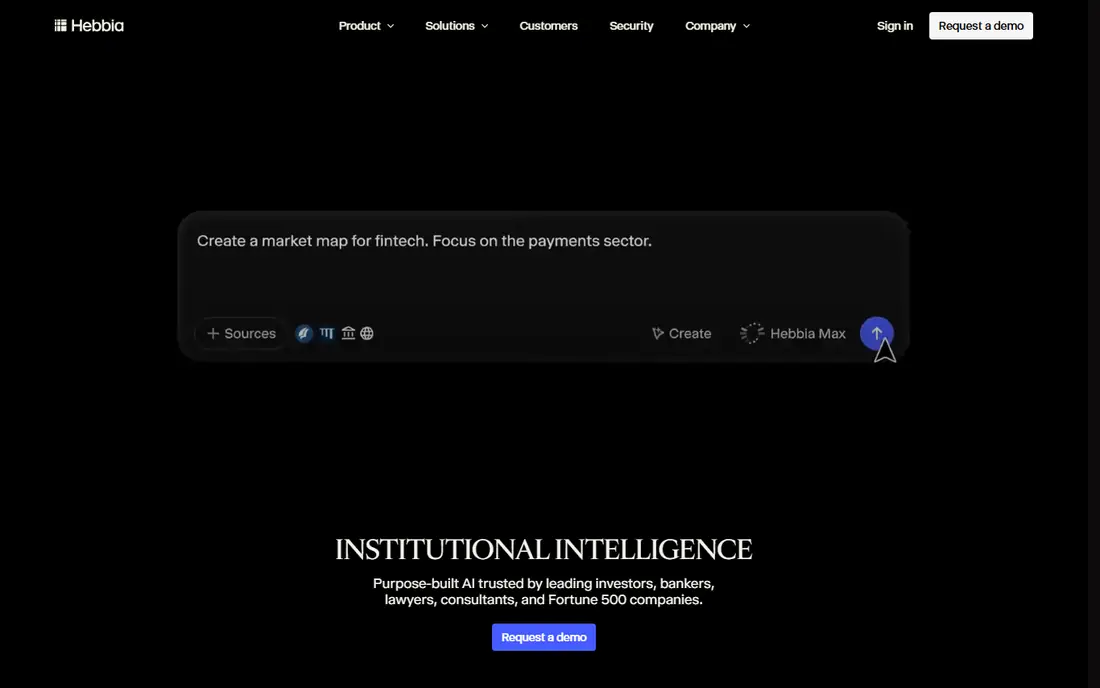
Hebbia stands out for memo work because it ties answers to sources. Its Matrix product can process many documents at once and present extracted facts with citations, which helps an analyst check a claim before it reaches an investment committee draft. That traceability matters when a memo will be challenged on numbers or wording. The limit is that Hebbia is a broad research platform, not a private equity-only memo writer. A firm still needs to define its memo structure, required checks and approval steps. Teams should test it on a real data room, with messy filings, before judging speed or accuracy.
- Cell-level citations for extracted data
- Handles large document sets across data rooms
- Multi-agent research for complex questions
- Quote-only pricing
- Generalist design may need firm-specific workflows
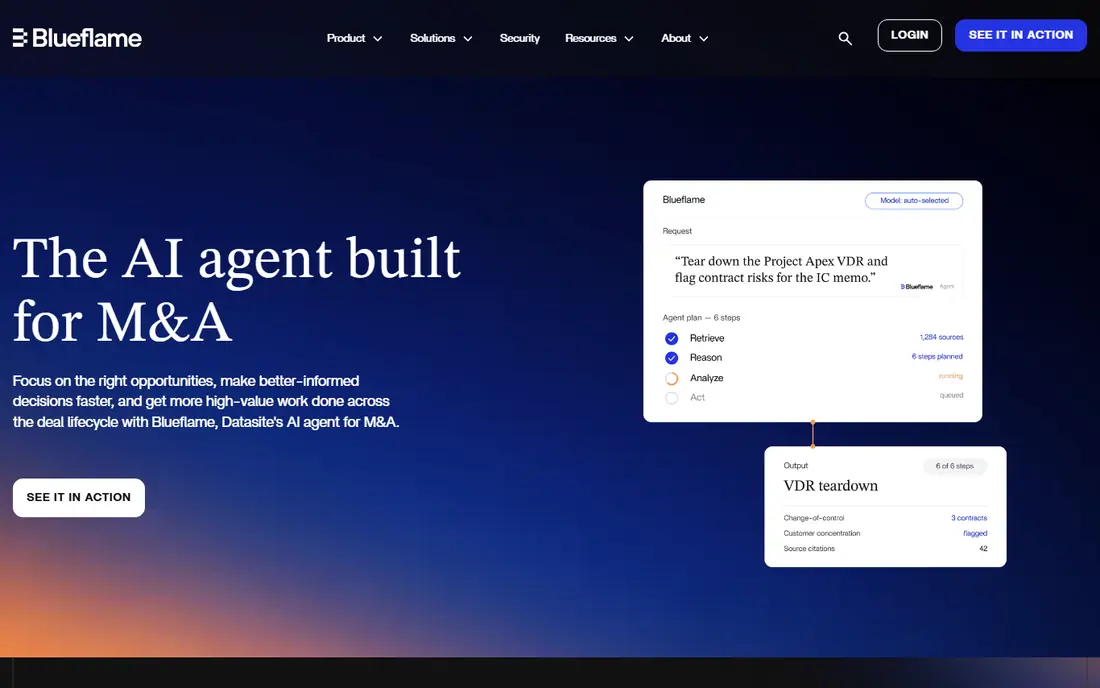
BlueFlame AI is designed around private markets deal work, including investment committee memos and decks, data room review, sourcing and portfolio monitoring. Its agent can run multi-step tasks across connected systems, which suits a team that wants one layer across deal execution rather than a single document tool. The honest catch is integration effort. The value grows when Datasite rooms, CRM records, file systems and market data are connected cleanly. A firm with scattered files may need a longer setup phase, and should ask for a pilot that mirrors a real deal, not a tidy demo set.
- Built for private equity and private credit workflows
- Connects to data rooms, CRMs and market data
- Agent workflows for memos, models and monitoring
- Quote-only pricing
- Depth depends on integrations being set up well
Rogo works like an AI analyst for finance teams, turning documents and data into models, decks and memo-style outputs. Its workflow library and customization options help a firm encode how it likes a deliverable to look, which can cut first-draft time on recurring deal work. The weakness is scope. Rogo is strong on polished, banker-prepared materials, but teams that need deep, deterministic spreading of messy Excel models should test that specific job carefully. As with every tool here, figures in a draft must be rechecked against source files before they go to committee.
- Outputs into Excel and PowerPoint
- Firm-specific workflows and prompt libraries
- Handles banker-prepared materials well
- Quote-only pricing
- Less suited to messy multi-tab model interrogation than some specialist tools
AlphaSense strengthens the evidence behind a memo. It lets analysts search company filings, earnings transcripts, broker research and expert calls, then synthesize findings with links back to sources. That is useful for market context, risks, customer views and competitive checks. It is not, on its own, a memo writer that assembles a committee-ready document. A team will still need to structure the thesis, valuation discussion and risks in its own template. The best use is early research and fact-checking, paired with a drafting tool or a disciplined manual process.
- Search across filings, transcripts and research libraries
- Expert transcript library through Tegus
- Source-linked summaries
- Quote-only pricing
- Research strength, not a full memo assembly tool
PitchBook is a standard source for the market data inside many memos. Deal histories, valuation multiples, fund activity and investor profiles help a team place a target in context and support comparable analysis. It is also useful for portfolio reviews and fundraising context. The limit is coverage bias. Larger, disclosed deals are better represented than small or family-owned companies, so a memo on a lower-middle-market target may need extra primary research. Teams should also confirm which data modules their licence includes, since pricing is quoted by scope.
- Deep private company, deal and fund data
- Comparable transactions and valuations
- Investor and fund tracking
- Quote-only pricing
- Coverage is thinner for small, undisclosed private companies
DealCloud helps a memo stay connected to the deal itself. Pipeline stages, contacts, meetings, documents and fundraising activity live in one system built for private capital firms, so an analyst can trace how a deal arrived and who touched it. That context reduces the risk of a memo that reads well but misses deal history. The trade-off is implementation time. Large, complex firms may face a long setup and data migration phase, and the platform rewards teams that invest in configuration and training. Smaller firms may find a lighter CRM faster to deploy, even if it offers less private equity depth.
- Built for private capital deal, relationship and fundraising workflows
- Highly configurable for large firms
- Strong pipeline and reporting views
- Quote-only pricing
- Implementation can take months for complex firms
Affinity helps deal teams answer a practical memo question: who already knows this company, founder or intermediary, and how strong is that link. It captures email and calendar activity automatically and surfaces relationship paths, which supports sourcing, warm introductions and diligence calls. It does not write the memo, and it should not be bought for that job alone. Its value shows when a firm relies on networks and repeat intermediaries, and when manual CRM updates have left deal history incomplete. Data quality still needs review, since captured activity is only as useful as the connections behind it.
- Automatic activity capture from email and calendar
- Relationship strength signals for sourcing
- Faster deployment than large enterprise CRMs
- Quote-only pricing
- Focus is relationships, not memo drafting itself
Grata helps a team find and screen private companies before a memo exists. Its company intelligence, transaction data and similar-company search support market mapping, target lists and buyer research, especially for middle-market deals. Integrations can push companies and notes into a connected CRM. The main limit is geographic scope, with coverage centered on North America in many public descriptions. A team focused on other regions should test coverage for its own target universe first. Enrichment speed and data depth also vary by company, so early targets need manual verification.
- Private company discovery for middle-market targets
- Buyer and market mapping tools
- CRM integrations for pipeline handoff
- Quote-only pricing
- Coverage leans toward North America
Daloopa earns a place here for the financial section of a memo, where a wrong number can undermine the whole document. It extracts financial statement data into Excel models with links back to sources, which helps analysts audit figures rather than retyping them. That discipline is valuable for public comparables and listed peers. The limit is fit. Its strength is public-company financial data, so it cannot fill gaps for a private target with limited filings. A private equity team should use it for comparables and market context, while private target numbers still need data room documents and direct verification.
- Source-linked financial statement data into Excel
- Covers thousands of public tickers
- Free tier available for basic use
- Public-company focus limits private deal use
- Paid scope needs a quote for full access
How we picked these
We compared official product pages, platform documentation and public guides for tools used by private equity and investment teams in October 2026. We kept tools that support memo-related work: research, sourcing, financial data, pipeline context or drafting with source links. We excluded tools that only promise returns or that lack a live, verifiable product page. Pricing is shown as quoted where vendors do not publish a list price.
What to check before you buy
Start with the memo template, not the vendor demo. List the sections your committee actually challenges: thesis, market, risks, valuation, management and downside cases. Then ask each vendor to produce a draft section from your own redacted documents, so you can see citation quality, number accuracy and formatting effort on real material. Next, check security and data handling. Ask whether the tool trains on your data, how documents are stored, who can access deal files, and what audit trails exist. Private deal information is sensitive, and a fast draft is not worth a weak permission model. Confirm single sign-on, role controls and data residency options before a firm-wide rollout. Finally, agree on human review. No AI draft should reach an investment committee without an analyst checking every figure, source and claim, and a partner reviewing the thesis and risks. Build that review into the timeline, and treat time saved on first drafts as time gained for deeper diligence, not as a reason to skip checks.
Frequently asked questions
What are the best ai tools for investment memos private equity teams use?
Teams often combine tools: Hebbia or Rogo for research and drafting, PitchBook or AlphaSense for market evidence, and DealCloud or Affinity for deal context. No single tool covers sourcing, research, modeling and committee drafting equally well.
Can AI write a full investment committee memo on its own?
It can produce a useful first draft, but it should not be treated as finished. Analysts must verify figures, check sources, test the thesis and add judgment on risks and management. A committee memo is a decision document, not a summary exercise.
Is AI memo output financial advice?
No. The content here is general information only, and these tools do not provide financial advice or promise returns. Investment decisions need licensed advice where required, plus firm review and compliance checks.
How much do these tools cost?
Most are quote-only and priced by firm size, users, data scope and modules. Daloopa offers a free tier for basic use, while the rest require a sales quote. Ask for implementation, data and support costs separately from the platform fee.
How do we keep confidential deal data safe?
Use tools with clear data controls, role-based access, audit trails and a stated policy on training. Limit pilot documents to redacted or non-sensitive deals first, and confirm retention and deletion rules in writing before uploading live deal files.
What should a good memo draft include?
A strong draft covers thesis, market, business model, financials, risks, valuation context, management and next diligence steps, with sources for key claims. If a tool cannot show where a number came from, treat that number as unverified until checked.
Sources
See where you really rank - block by block
ProMapRanker scans Google Maps across a grid of your service area. Simple monthly plans from $19, white-label on every plan.
Start freeKeep reading
 who has best internet service
Who Has the Best Internet Service in 2026
Who has best internet service for US homes? We compare fiber, cable, fixed wireless and satellite providers on speed, price, availability and terms today.
Read → which survey tool has the best analytics
Which Survey Tool Has the Best Analytics in 2026
Find which survey tool has the best analytics in 2026, comparing Qualtrics, SurveyMonkey, Typeform, Alchemer, and more on reports, text, and stats today.
Read → which streaming service has the best movies
Which Streaming Service Has the Best Movies in 2026
Answering which streaming service has the best movies, with Netflix, Max, Criterion and more compared on libraries, prices and free options in this guide.
Read →