 ProMapRanker
Best AI Tools for Marketing Content Creation in 2026

Key takeaways
- Jasper and Copy.ai suit different content jobs: Jasper for brand-led long-form work, Copy.ai for go-to-market and short-form workflows.
- Writesonic, Frase and Surfer add SEO research and scoring, which matters when ranking is a goal, not just drafting speed.
- Anyword stands out for performance copy, because it scores variations for ads and landing pages before you spend.
- Descript and Canva cover formats that writers alone cannot: audio, video and visual design.
- Rytr is the budget option for solo writers, but its output needs more editing for long-form work.
Quick comparison
| Pick | Great for | Pricing starts at | Free tier | |
|---|---|---|---|---|
 Jasper | Brand-led long-form content | $69 per month | Free trial | Visit |
 Copy.ai | Go-to-market content | $29 per month | Yes | Visit |
 Writesonic | SEO articles and visibility | $79 per month | Free trial | Visit |
 Frase | SEO research and briefs | See website | Free trial | Visit |
 Surfer | Content optimization | $49 per month | Free trial | Visit |
 Anyword | Predictive performance copy | $39 per month | Free trial | Visit |
 Descript | Audio and video content | $16 per month | Yes | Visit |
 Canva | Visual marketing content | $15 per month | Yes | Visit |
 Rytr | Budget short-form drafting | $9 per month | Yes | Visit |
The best ai tools for marketing content creation
We compared official pricing pages, product documentation and public reviews for tools that help marketing teams plan, draft, optimize and repurpose content. The list below covers blog writing, SEO, ad copy, social, audio, video and design, so you can pick by format rather than by hype.
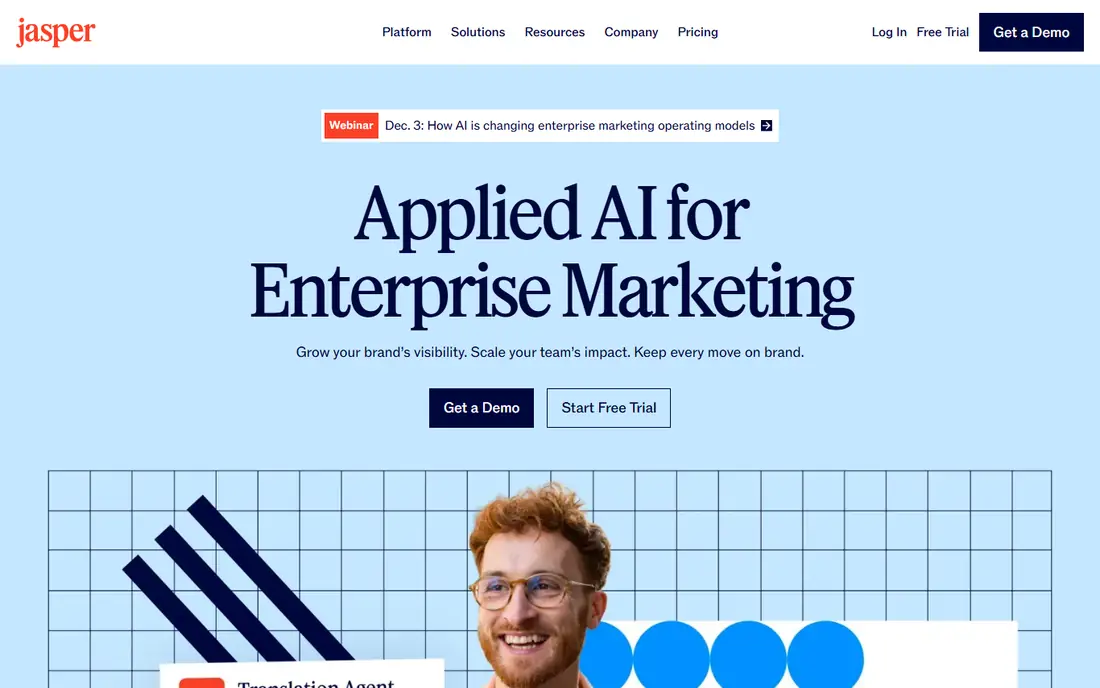
Jasper remains a strong choice for marketing teams that publish long-form content under a strict brand voice. Writers can train voice settings from approved samples, build campaigns from a brief, and keep tone consistent across blog posts, emails and landing pages. That consistency is hard to get from a generic chat tool. The price is the main barrier. A Pro seat costs $69 per month, so a team needs real publishing volume to justify several seats. Test during the trial whether brand voice reduces editing time on your own drafts, and check whether you need Business features before scaling seats.
- Brand voice and knowledge assets
- Campaign workflows for teams
- Unlimited words on paid plans
- No free plan, only a trial
- Per-seat pricing adds up quickly
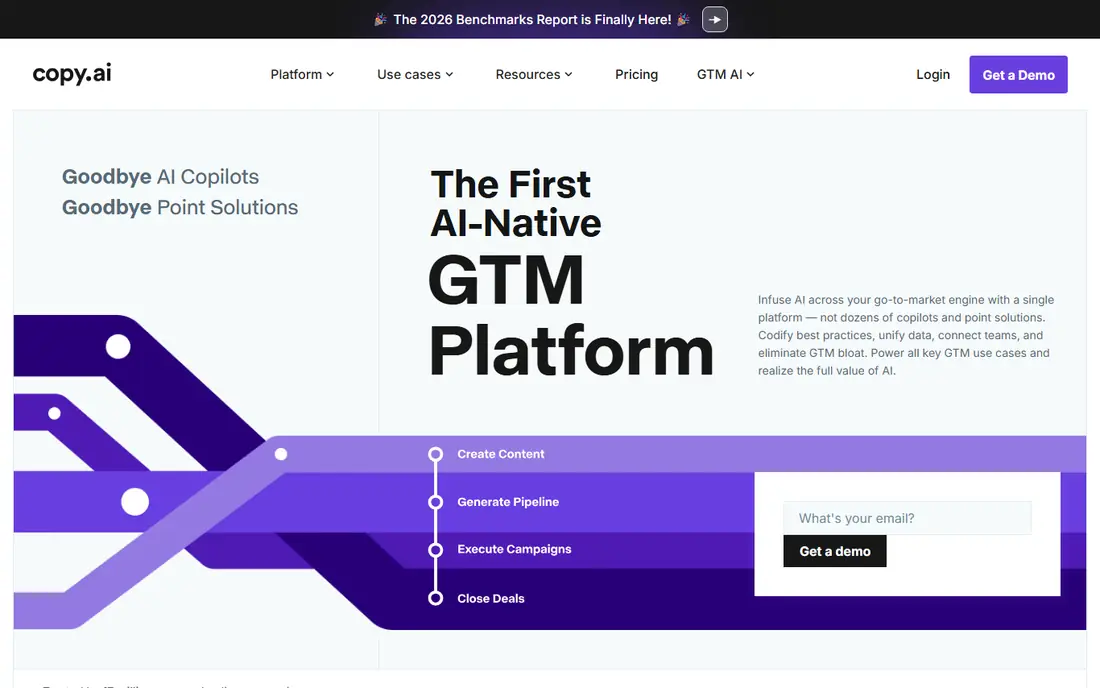
Copy.ai fits teams that need marketing content tied to sales motion: outreach emails, product messaging, social posts and sales enablement. Its chat workspace handles everyday drafts, while workflows can research accounts and produce sequences at volume. That mix suits go-to-market teams more than pure editorial teams. The pricing jump to the workflow tier is the key risk. A team that starts on Chat and then needs full workflows should budget for a much higher plan. Map the workflows you will run each week before upgrading, and keep long-form brand work in a tool built for that job if needed.
- Affordable Chat plan with several seats
- Workflows for outbound and sales content
- Free plan for basic drafting
- Workflow tier is a large price jump
- Less focused on long-form brand publishing
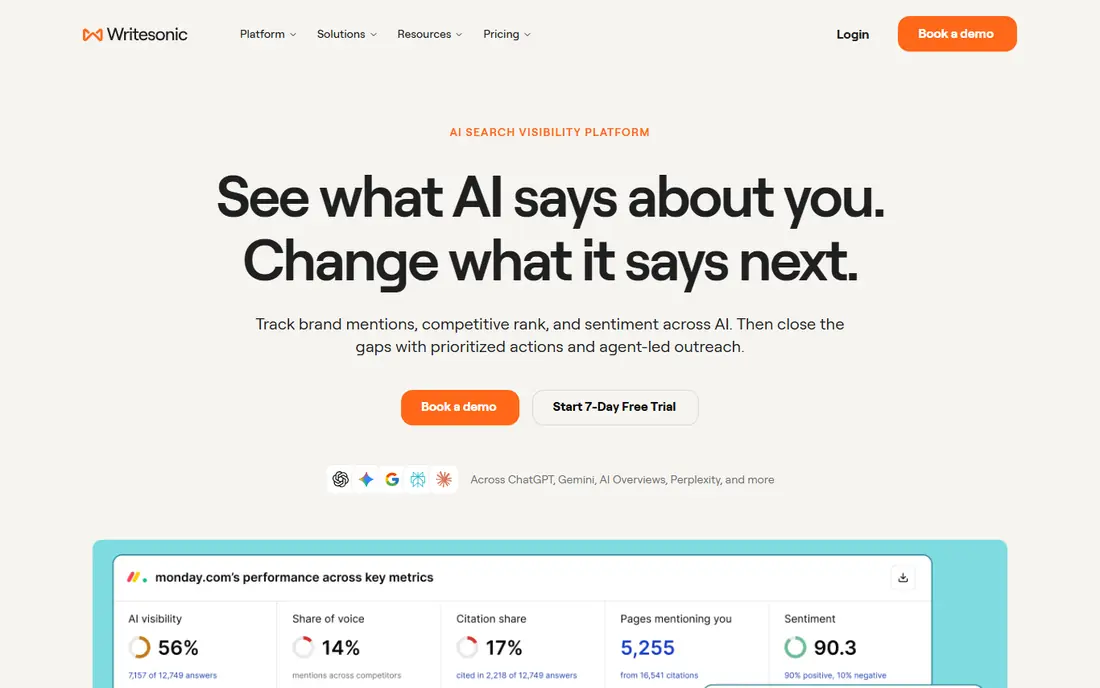
Writesonic has moved from a simple AI writer toward SEO and AI search visibility, which changes who should buy it. Its Starter plan supports article production plus tracking in AI search results, so a content team can see whether its pages appear in chat answers and overviews, not just in classic search results. That breadth can be wasteful for a writer who only needs drafts. At $79 per month for Starter, casual users pay for tracking they may not use. It fits best when a team publishes SEO articles at volume and needs visibility reporting as part of the same workflow.
- SEO article workflows plus AI search visibility tracking
- Chat and image tools in the same account
- Structured plans for content volume
- Entry Starter price is high for casual writers
- Product focus has shifted toward visibility tracking
Frase helps a team plan content before writing it. It analyzes top-ranking pages for a topic, suggests headings and questions, and builds a brief a writer can follow. That research step reduces the risk of publishing a post that misses the questions readers actually ask. The limit is that Frase is not a complete long-form writer on its own. It works best paired with a drafting tool or a human writer who follows the brief. Check current pricing on the vendor page, since published figures vary, and confirm how many articles your plan includes each month.
- Research, outlines and briefs from search results
- Content scoring against competing pages
- Useful for planning before drafting
- Pricing varies by source and plan
- More of a research tool than a full writer
Surfer is the optimization layer many SEO teams add after drafting. Its Content Editor scores a draft against competing pages, suggests terms, headings and structure, and helps editors see gaps before publishing. That scoring can improve a good draft, but it cannot rescue a weak idea. The learning curve is real. New users need time to interpret scores in context, rather than chasing a number by stuffing terms. Surfer also works best when paired with a writer, since its own AI drafting is secondary to its analysis. Budget for that pairing when comparing total cost.
- Detailed content scoring from search results
- Content editor and audit tools
- AI visibility tracking as a separate product
- Optimizes drafts, does not write them from scratch well
- Learning curve for content scores
Anyword is different from the writers above because it tries to predict which copy variation will perform better. Marketers can generate several ad headlines, email subject lines or landing page versions, compare predicted scores, and then test the strongest options in real campaigns. That workflow suits paid acquisition teams. The honest limit is that a score is not a result. Predicted performance still needs live A/B testing, and a high score does not fix a weak offer or a poor landing page. Use Anyword to shortlist variations faster, then let real campaign data make the final call.
- Predictive scores for ad and landing page copy
- Variations for testing across channels
- Audience targeting for tone and message
- Focus is performance copy, not long-form articles
- Scores are predictions, not guarantees
Descript covers a format that text writers cannot: spoken content. It transcribes audio and video, lets you edit by deleting words in the transcript, and helps turn long recordings into clips, captions and show notes. For podcasts, webinars and social video, that text-based editing saves real time. The trade-off is scope. Descript will not plan or draft a blog strategy, and its best features sit in audio and video workflows. It belongs in a content stack alongside a writer, not as a replacement for one, especially for teams that repurpose talks into many formats.
- Edit audio and video by editing text
- Transcription and filler-word tools
- Good for podcasts and social clips
- Less useful for written blog content
- Higher tiers needed for heavier video work
Canva helps marketing teams turn written ideas into visual content: social posts, ads, infographics, decks and short videos. Its templates and brand kit keep visuals consistent, while Magic Design can start a design from a prompt or file. That speed matters when a campaign needs many formats at once. The limit is written quality. AI-generated text inside Canva designs often needs rewriting for accuracy and tone, and a pretty post cannot fix a weak message. Use Canva for design and repurposing, and keep drafting and SEO work in tools built for those jobs.
- Large template library for social, ads and decks
- Magic Design for fast visual starts
- Easy brand kit and sharing tools
- AI text output needs editing
- Visual breadth can distract from a clear content plan
Rytr is the budget pick for solo writers and small teams that need short-form drafts without a large subscription. Its free tier covers occasional use, and the Unlimited plan costs $9 per month, which is far below most rivals. Templates for emails, social posts and product descriptions help start a draft quickly. The catch is quality at length. Short copy is generally competent, but long articles need heavier editing, fact-checking and restructuring. Rytr fits best as a first-draft helper for social and email copy, while long-form brand content still benefits from a stronger writer or a human editor.
- Very low price with a usable free tier
- Many templates for short-form copy
- Supports many languages
- Output needs more editing for long-form work
- Less brand control than Jasper or Writer
How we picked these
We compared official pricing pages, product documentation and public reviews for marketing content tools available in October 2026. We kept tools that cover a distinct content job, from drafting and SEO to performance copy, audio, video and design, and that publish enough pricing detail to judge value. Where pricing varied across sources, we used the most recent vendor-linked figure and noted See website for unclear plans.
What to check before you buy
Start with format and volume. A blog-heavy team needs a writer plus SEO scoring, while a paid ads team needs performance copy and testing, and a social team needs visual and video tools. Count how many pieces you publish each month by format, then match the tool to the largest group first. Next, test editing time, not just generation speed. Draft the same brief in two tools, then time how long it takes to fact-check, rewrite and approve each version. A tool that generates fast but needs heavy correction may cost more in staff time than a slower, cleaner tool. Finally, set content rules before scaling. Define approved claims, tone examples, source requirements and review steps, especially for AI-generated facts and statistics. Keep a human editor in the loop for published work, and track which pieces actually drive traffic, leads or sales, not just how many drafts were produced.
Frequently asked questions
What are the best ai content creation tools for marketing?
Jasper suits brand-led long-form work, Copy.ai suits go-to-market content, and Writesonic, Frase and Surfer suit SEO-led publishing. Descript covers audio and video, Canva covers visual design, and Anyword covers performance copy. The best mix depends on your main formats.
What is the best ai tool for marketing content creation for a small team?
A small team often does well with one writer such as Jasper or Copy.ai, plus Canva for visuals and a free or low-cost SEO check. Add Frase or Surfer only when search traffic becomes a core goal, rather than paying for every tool at once.
Can AI tools replace human writers?
No. They speed up first drafts, research and variations, but humans still need to set strategy, verify facts, shape voice and make final editorial calls. Published content that skips human review risks errors and generic messaging.
How do SEO tools differ from AI writers?
AI writers produce drafts, while SEO tools research topics, build briefs and score drafts against competing pages. Many teams use both: a writer for the draft and Frase or Surfer for planning and optimization before publishing.
What is the best ai marketing content creation tool for ads?
Anyword is a strong fit for ad and landing page copy because it scores variations before testing. Pair its predictions with live A/B tests, since real campaign data should decide which version wins.
Is Rytr good enough for marketing content?
Rytr is good enough for short-form drafts and tight budgets, especially for social and email copy. For long-form brand articles, expect more editing time or pair it with a stronger writer and a human editor.
Sources
See where you really rank - block by block
ProMapRanker scans Google Maps across a grid of your service area. Simple monthly plans from $19, white-label on every plan.
Start freeKeep reading
 who has best internet service
Who Has the Best Internet Service in 2026
Who has best internet service for US homes? We compare fiber, cable, fixed wireless and satellite providers on speed, price, availability and terms today.
Read → which survey tool has the best analytics
Which Survey Tool Has the Best Analytics in 2026
Find which survey tool has the best analytics in 2026, comparing Qualtrics, SurveyMonkey, Typeform, Alchemer, and more on reports, text, and stats today.
Read → which streaming service has the best movies
Which Streaming Service Has the Best Movies in 2026
Answering which streaming service has the best movies, with Netflix, Max, Criterion and more compared on libraries, prices and free options in this guide.
Read →