 ProMapRanker
Best AI Sales Automation Tools in 2026


All-in-one prospecting and sequences on a budget · Pricing starts at: $49 per user per month
Key takeaways
- Apollo is the best all-in-one starting point for small teams, because it pairs prospect data with sequences.
- HubSpot Sales Hub suits teams already using HubSpot, while Outreach and Salesloft suit larger teams with formal sales processes.
- Clay stands out for enrichment and personalization, and Lemlist and Reply.io suit multichannel outbound.
- Enterprise tools often use custom pricing, so request a quote and check seat and add-on costs before you compare totals.
Quick comparison
| Pick | Great for | Pricing starts at | Free tier | |
|---|---|---|---|---|
| Apollo | All-in-one prospecting and sequences on a budget | $49 per user per month | Yes | Visit |
 HubSpot Sales Hub | Teams already running on HubSpot CRM | See website | Yes | Visit |
 Outreach | Enterprise sales engagement at scale | See website | Free trial | Visit |
 Salesloft | Cadences plus coaching and forecasting | See website | Free trial | Visit |
 Clay | AI enrichment and programmatic personalization | See website | Yes | Visit |
 Lemlist | Personalized cold email with visual touches | See website | Free trial | Visit |
 Reply.io | Multichannel outreach with an AI assistant | $49 per month | Free trial | Visit |
 Instantly | High-volume cold email infrastructure | $37 per month | Free trial | Visit |
The best ai sales automation tools
We compared prospect data, sequencing, AI writing and scoring, CRM integration, and price, using vendor pricing and feature pages. The best tool depends on team size, deal size, and how much of the workflow you want in one place.
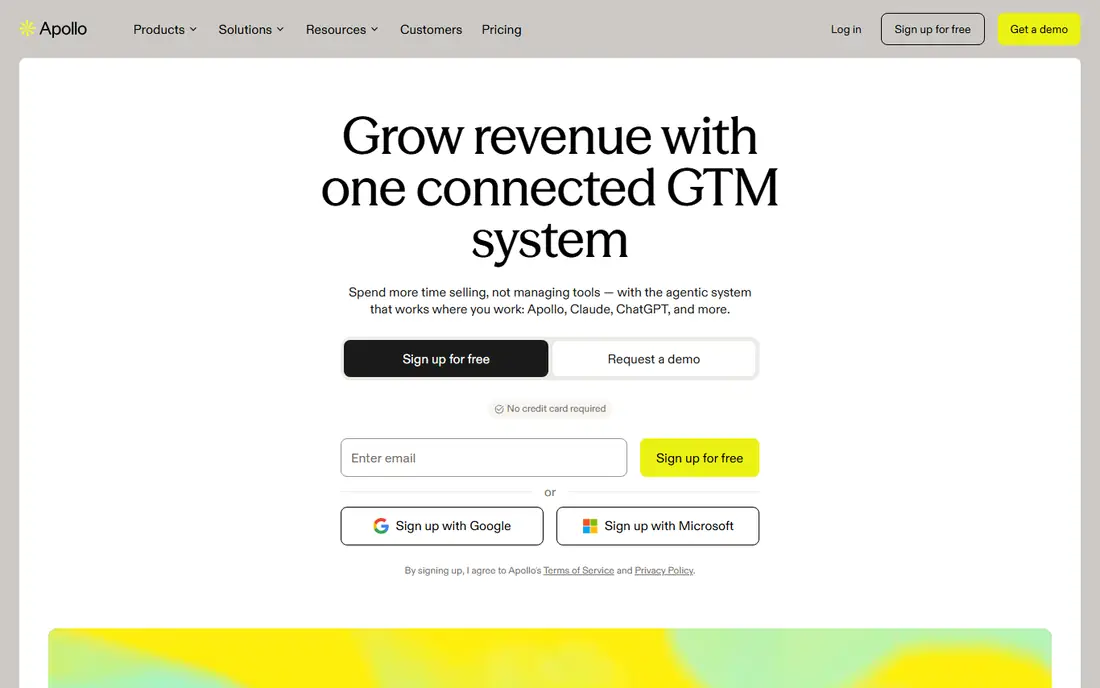
Apollo appeals to small and midsize teams because it removes the need for a separate data vendor and a separate sequencer. You can find contacts, enrich them, build a sequence, and track replies without switching tools. AI research helps draft a relevant opening line, and lead scoring helps reps focus on the most promising accounts first.
The limit is data depth in narrow markets. Apollo covers broad business roles well, but very small niches may need a second source. Credit limits also matter, so check how many contacts and emails your plan allows before you build a large campaign around it.
- Large prospect database plus sequences in one tool
- AI research and lead scoring
- Built-in dialer and deliverability controls
- Data quality varies by niche
- Higher tiers needed for larger credit allowances
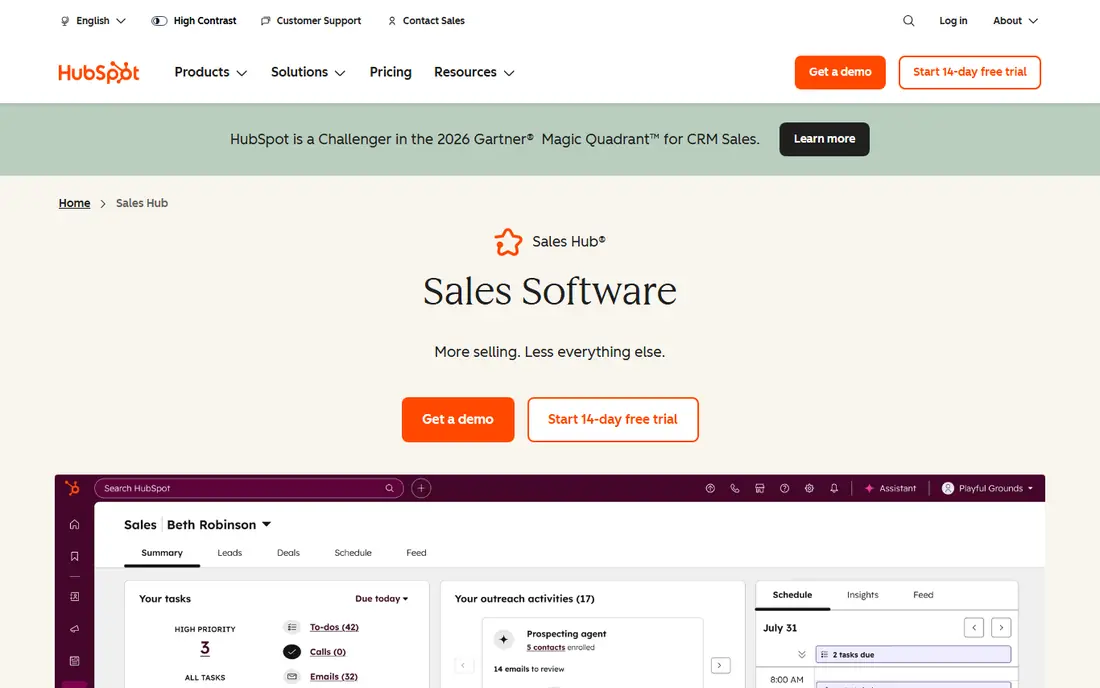
HubSpot Sales Hub makes sense when your CRM is already HubSpot. Sequences, templates, meeting links, and deal tracking live in the same place as your contact records, so reps spend less time syncing data between tools. AI drafts and summaries cut down on admin work after calls and emails.
The trade is lock-in and price growth. Teams that do not use HubSpot for marketing may pay for a wider platform than they need, and advanced features sit on higher tiers. If your team already lives in HubSpot, though, the native fit is hard to beat.
- CRM, sequences, and inbox in one system
- AI email drafts and note summaries
- Smooth handoff from marketing to sales
- Costs rise quickly on higher tiers
- Best value only inside the HubSpot system
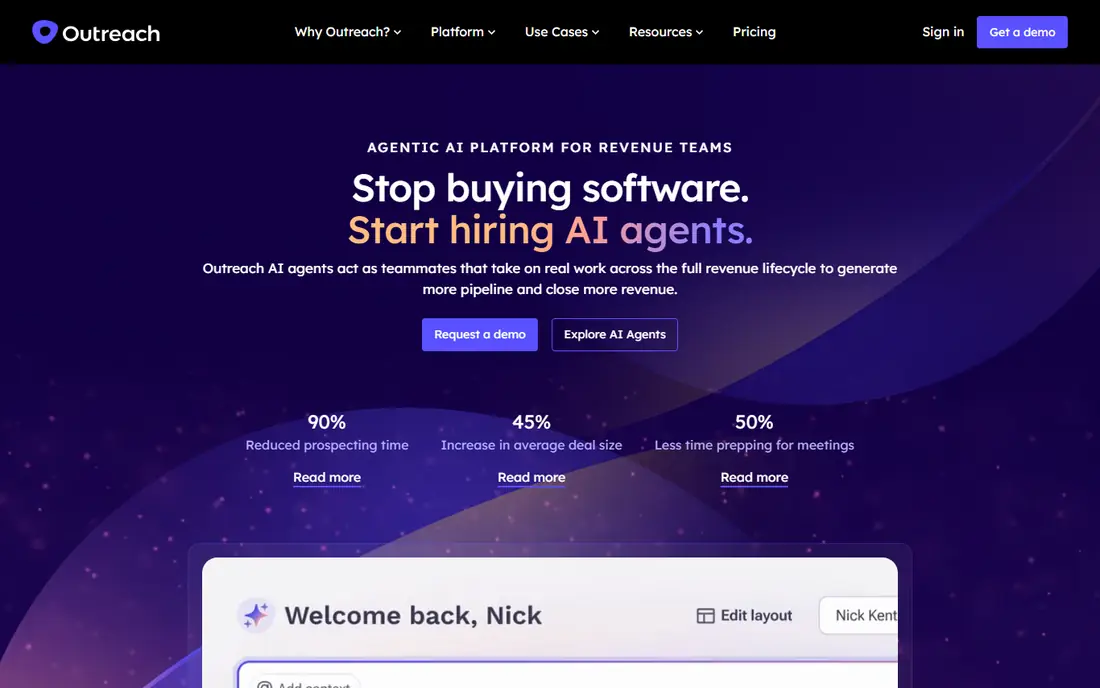
Outreach is built for larger sales organizations with formal processes. It manages sequences across email, calls, and social touches, tracks deal health, and gives managers a clear view of pipeline risk. AI assistance flags deals that need attention and suggests next steps based on activity.
Small teams may find the setup and price hard to justify. Outreach works best when you have enough reps, managers, and CRM discipline to use its governance features. For a team of two or three, a simpler tool will move faster and cost far less.
- Mature sequences and deal governance
- AI help with risks and next steps
- Deep CRM sync
- Custom pricing and longer setup
- More tool than a small team needs
Salesloft pairs outreach cadences with call recording, conversation analysis, and coaching tools. Managers can review calls, spot patterns, and coach reps on real conversations rather than guesses. Forecasting features help leaders see which deals are likely to close and which need help.
The cost and setup reflect that scope. Salesloft is priced for mid-market and enterprise teams, and a small team may use only a fraction of it. Teams that value coaching and pipeline visibility, and that already run a structured sales process, will get the most from it.
- Strong cadence tools and conversation intelligence
- Coaching analytics
- Forecasting features
- Custom pricing
- Implementation takes time for larger teams
Clay is less a sequencer and more a data workshop. You pull contacts from many sources, enrich them with company and role details, run AI research, and build personalized messages at scale. RevOps teams use it to build lists that a sequencer alone cannot produce.
The learning curve is real. Building a good Clay workflow takes thought about sources, fields, and credit use, and costs scale with usage. Teams that already have a sequencer and need better lists and personalization will benefit most. Teams that want a simple send-and-track tool should start elsewhere.
- Many data sources in one workflow
- AI research and scoring
- Flexible tables and automations
- Usage-based credits can be hard to budget
- Learning curve for complex workflows
Lemlist suits teams that win replies through personalization. It helps tailor opening lines, images, and landing pages to each prospect, and it includes warm-up tools to protect sender reputation. Multichannel steps add LinkedIn touches alongside email.
It is an outbound tool, not a CRM. You will still need a CRM or a spreadsheet system to track deals once replies arrive. For prospecting teams that already have a CRM, Lemlist fills the outreach gap well. For teams that need pipeline management too, pair it with a CRM.
- AI personalization and inbox warm-up
- Email plus LinkedIn steps
- Visual personalization options
- Focused mainly on outbound
- Less of a full CRM replacement
Reply.io covers many channels in one sequence, which helps teams reach prospects where they actually respond. Its AI assistant can draft messages and handle parts of the follow-up process, and reporting shows which steps and messages drive replies.
The honest catch is review. AI drafts still need a human check, especially for senior buyers and regulated industries, and add-ons can push the monthly cost above the entry price. Used with a clear review step, Reply.io gives small and midsize teams a broad outbound toolkit without enterprise pricing.
- Email, LinkedIn, calls, SMS, and WhatsApp steps
- AI SDR help
- Clear sequence reporting
- Add-ons raise the price at scale
- AI features need review before sending
Instantly is built for volume. It manages many mailboxes, warms them up, rotates sending, and classifies replies so reps focus on interested prospects. Teams that send large cold email campaigns value that infrastructure, because it protects domains and keeps sending steady.
It does not replace a CRM or a full sales platform. You will need another system for pipeline tracking, and no sending tool can fix a poor list or weak message. For teams with a proven offer and a need to scale email safely, Instantly is a practical, lower-cost option.
- Mailbox management and warm-up at scale
- Reply classification
- Inbox rotation
- Not a full CRM
- Deliverability still depends on list quality and copy
How we picked these
We compared official pricing pages, feature pages, and public documentation, and we favored tools that are still sold and supported in October 2026. We looked at prospect data, sequencing, AI features, CRM integration, and total cost, and we kept a mix of all-in-one platforms and focused outbound tools. Each pick had to automate a real sales step, not just store contacts.
How to choose the right sales automation tool
Start with your current stack. If you already use HubSpot or Salesforce, a native or deeply integrated tool will save sync work. If you have no CRM, an all-in-one tool such as Apollo reduces the number of vendors you manage. Next, count seats and credits honestly. A low per-user price can still become expensive when credits, dialer add-ons, and extra seats stack up.
Check deliverability and compliance before you scale. Warm-up, domain setup, unsubscribe handling, and opt-out rules matter, and they differ by tool and by market. Finally, test with a small campaign. Send to a limited list, review replies, and check whether the AI drafts sound like your team. A tool that looks strong in a demo can still fail on your real prospects.
AI features worth checking
AI writing, scoring, and summaries help, but they are not equal across tools. Ask whether AI drafts are editable before sending, whether scoring uses your own deal history, and whether summaries appear in your CRM. A feature that only works inside one vendor dashboard will help less than one that flows into the system your reps already open.
Avoiding tool sprawl
Many teams buy a data tool, a sequencer, a dialer, and a coaching tool, then pay for overlap. Map your workflow first, then buy the smallest set that covers it. An all-in-one platform may cost more per seat but less in total than four separate subscriptions with four logins.
Frequently asked questions
What is the best AI sales automation software for small teams?
Apollo is a strong starting point for small teams, because it combines prospect data and sequences in one affordable plan. HubSpot Sales Hub also works well if your CRM is already HubSpot. Small teams should avoid enterprise platforms until they have enough reps to use the governance features.
What is the best AI sales automation tool for prospecting?
Apollo and Clay lead for prospecting, but in different ways. Apollo gives you a database and sequences in one place, while Clay gives you deeper enrichment and personalization across many data sources. Choose Apollo for simplicity and Clay when list quality and tailored outreach matter most.
How much do AI sales automation tools cost?
Entry prices in this list range from free plans to about $49 per user per month, while enterprise tools use custom pricing. Total cost depends on seats, credits, dialer add-ons, and CRM tier. Always ask for a full quote that includes those extras before you compare vendors.
Do AI sales tools replace sales reps?
No. These tools automate research, sequencing, follow-up reminders, and admin work, but they do not close deals on their own. Replies still need human judgment, especially for larger deals and complex buying groups. The best results come when reps review AI drafts and focus their time on live conversations.
What is the best sales automation software with AI for email outreach?
Lemlist, Reply.io, and Instantly all focus on email outreach with AI help. Lemlist suits personalized campaigns, Reply.io suits multichannel sequences, and Instantly suits high-volume sending. Pick based on volume, channels, and how much personalization each campaign needs.
Is HubSpot Sales Hub a good AI sales automation platform?
Yes, for teams already using HubSpot. It offers sequences, AI drafts, and summaries inside the CRM, which reduces sync work. Teams outside HubSpot may find a standalone sequencer cheaper and simpler, since HubSpot value grows with wider use of its platform.
Sources
See where you really rank - block by block
ProMapRanker scans Google Maps across a grid of your service area. Simple monthly plans from $19, white-label on every plan.
Start freeKeep reading
 best video editing apps for affiliate marketing
Best Video Editing Apps for Affiliate Marketing in 2026
Compare the best video editing apps for affiliate marketing, from fast short-form editors to full desktop suites, with current pricing and honest trade-offs.
Read → best shift scheduling software
Best Shift Scheduling Software in 2026
Compare the best shift scheduling software, from Homebase and Deputy to When I Work and 7shifts, with free plans and per-user pricing explained for teams.
Read → best salon booking software
Best Salon Booking Software in 2026
Compare the best salon booking software for 2026, from free solo tools to premium multi-chair platforms, with current pricing, trials and honest limits.
Read →