 ProMapRanker
Best AI Red Teaming Tools in 2026

Key takeaways
- Open source tools such as Garak, PyRIT and Promptfoo suit engineering teams that want red teaming inside development and CI.
- Managed platforms such as Mindgard, Lakera Red and HiddenLayer suit teams that need maintained attack libraries and reporting.
- The best platform for ai red teaming depends on whether you test a single model, a retrieval pipeline or a full agent.
- Red teaming is for lawful, authorised testing of systems you own or have permission to test, and for defence, not for attacking other people's systems.
Quick comparison
| Pick | Great for | Pricing starts at | Free tier | |
|---|---|---|---|---|
 Mindgard | Continuous automated red teaming | See website | No | Visit |
 Lakera Red | Managed adversarial testing | Free | Yes | Visit |
 Giskard | Model and retrieval scanning | Free | Yes | Visit |
 Promptfoo | CI red teaming and evals | Free | Yes | Visit |
 Garak | Broad vulnerability scanning | Free | Yes | Visit |
 PyRIT | Multi-turn attack campaigns | Free | Yes | Visit |
 DeepTeam | Open source framework testing | Free | Yes | Visit |
 HiddenLayer | Enterprise automated red teaming | See website | No | Visit |
The best ai red teaming tools
AI red teaming means probing your own model, chatbot or agent with jailbreaks, prompt injection, data extraction and other attacks, so you can fix weaknesses before release. The tools below differ in depth, automation and price, but all of them are meant for authorised testing and defence. Use them only on systems you own or have written permission to test, and treat findings as a prompt to fix prompts, filters, tool permissions and data access.
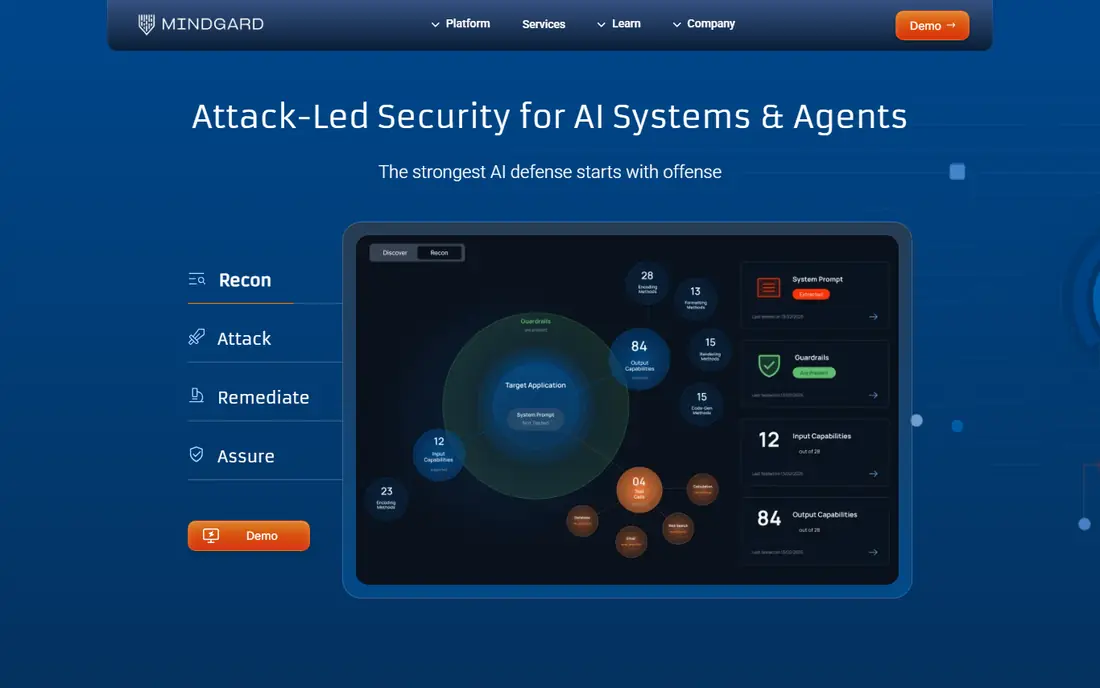
Mindgard is built for security teams that want red teaming to run again and again, not just once before launch. It plans and runs multi-step attacks against an AI app through its API, which suits agents that call tools, read files or take actions across several turns. Results map to risk categories, so engineers can see which failures matter most and track whether fixes hold.
The main limit is access and price. Mindgard is a commercial platform with quoted pricing, so a small team may prefer a free scanner for a first pass and return to Mindgard when testing needs to be continuous. For a company with several production AI apps, the automation and reporting can justify that step.
- Automated multi-step attack workflows
- Black-box testing by API
- CI integration
- Enterprise pricing is quoted
- Smaller teams may need a simpler scanner first
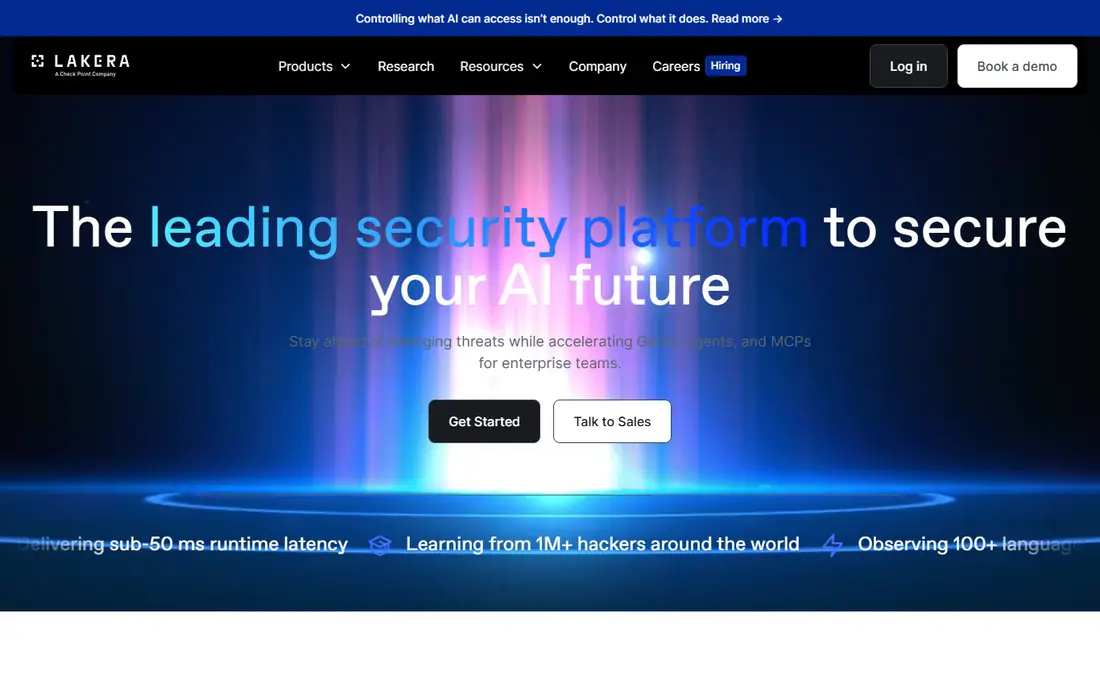
Lakera Red gives teams a managed way to run adversarial tests without building every attack from scratch. Its community tier includes a free monthly request allowance, which makes it a practical way to test a chatbot or assistant before a paid commitment. The platform covers common attack classes such as prompt injection and jailbreaks, and it pairs naturally with Lakera Guard for teams that also want runtime protection.
Lakera Red is not a substitute for human review of edge cases in a high-risk product. Automated attacks catch known patterns well, but novel abuse tied to your own data and tools still needs expert review. Use the free tier to learn the workflow, then scale to a paid plan if you need larger volumes and support.
- Community tier with free requests
- Maintained attack library
- Clear reporting
- Enterprise pricing is quoted
- Deep custom scenarios need paid plans
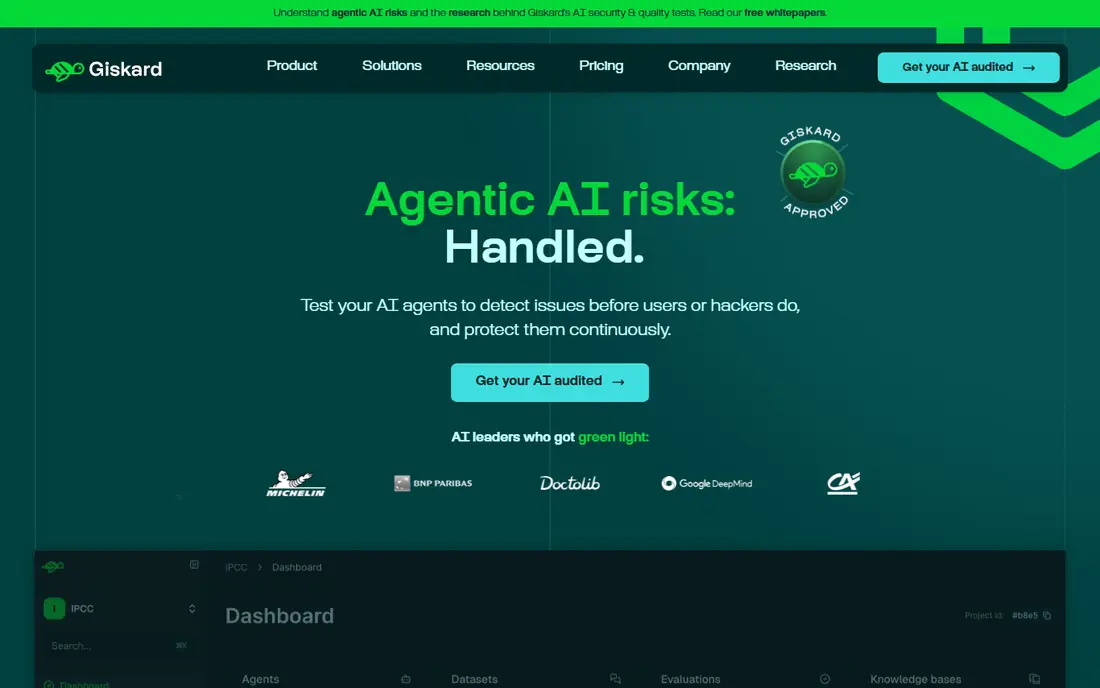
Giskard combines an open source testing library with a Hub for continuous red teaming in larger organisations. It suits teams that test language models and retrieval-augmented generation pipelines, where hallucination, bias and adversarial weakness can all appear. Tests can run against a model or an agent API, and results can be tracked over time as prompts and data change.
The open source core is free, while the Hub is priced by quote, so buyers should confirm what reporting, deployment and support the Hub adds. Giskard also needs engineering effort to wire into a pipeline well. Teams that invest that effort gain a repeatable scan that catches regressions when a model or prompt changes.
- Open source testing library
- Scans models and retrieval pipelines
- Enterprise Hub option
- Hub pricing is quoted
- Setup needs engineering time
Promptfoo is a favourite for developers who want red teaming inside normal development work. Tests, providers and assertions are defined in configuration files, so a red team suite can run in continuous integration on every change. That makes it easy to catch a prompt change that reopens a jailbreak or weakens output handling before it reaches users.
Promptfoo is a framework, not a managed service, so the quality of results depends on the tests you write. Its community version includes a published monthly probe allowance, while enterprise plans add controls such as single sign-on and on-premises options at quoted prices. For engineering teams, it is one of the most practical ways to make red teaming a routine check.
- Declarative test configs
- CI friendly
- Broad provider support
- Enterprise features are quoted
- Writing good tests still takes skill
Garak, from NVIDIA, works as a vulnerability scanner for language models. It fires a broad set of probes at a target, covering jailbreak styles, encoding tricks, glitch tokens and other known attack patterns. That breadth makes it a strong first sweep: it finds obvious weaknesses quickly and cheaply, before a team spends time on deeper multi-turn campaigns.
Garak is less suited to nuanced agent testing on its own, because it focuses on model behaviour rather than tool permissions and long workflows. Results also need review, since a flagged response is not always a real risk in context. Run Garak first, then use a framework such as PyRIT for the issues that need a longer conversation.
- Wide probe coverage
- Open source
- Fast first sweep
- Command line focus
- Results need triage by a human
PyRIT, the Python Risk Identification Toolkit from Microsoft, is built for orchestrating attacks that unfold over several turns. It supports attacker models that adapt to a target's replies, converters that transform prompts, and scorers that judge whether an attack succeeded. That design suits agents and chat systems where a single prompt rarely tells the full story.
PyRIT is powerful but technical. Teams need Python skill to build campaigns, and token costs can grow because attacker, target and judge models all consume tokens. It is also not a production filter, so it should sit beside runtime controls rather than replace them. For security engineers, it is one of the deepest open source options available.
- Multi-turn and multi-modal attacks
- Flexible scoring
- Microsoft open source
- Needs Python skill
- Token costs rise with attacker and judge models
DeepTeam offers framework-style red teaming for language model applications, with attacks mapped to risk categories that teams can report against. It suits engineers who want a structured open source tool rather than a single scanner, and it can connect to the Confident AI cloud platform for storing and sharing results. That combination helps a team move from ad hoc jailbreak tries to a documented test set.
DeepTeam is still an engineering tool, so expect setup and tuning time. It also works best when paired with clear ownership: someone must review failures, fix prompts or controls, and rerun the suite. For teams that already use evaluation frameworks, DeepTeam fits naturally into that workflow.
- Framework style red teaming
- Open source
- Risk category mapping
- Commercial cloud features are separate
- Setup takes engineering time
How we picked these
We compared official documentation, pricing pages and public comparisons for attack coverage, agent support, CI use, reporting and price transparency. We favoured tools that are live in October 2026, that support authorised testing of models or agents, and that cover a clear use case, from a fast scanner to a managed platform. Where pricing is quoted, we wrote See website rather than repeating an estimate.
How to choose a red teaming tool
Start by naming the system you will test and the harm you most want to prevent. A customer chatbot needs prompt injection and data leakage tests, while an agent with tool access needs tests for excessive agency, tool misuse and data exposure. A model alone can be scanned with Garak, while an agent usually needs multi-turn tools such as PyRIT or a managed platform.
Set scope and permission first
Write down what is in scope, who owns the system and what data the tests may touch. Never test a live system that holds real customer data without a safe test copy, and never use findings to attack another organisation. Keep attack prompts and outputs in a controlled store, because red team results can contain sensitive examples.
Make results repeatable
Pin tool versions, attack sets and model versions, and rerun the same suite after each fix. A pass rate that moves because the attack set changed tells you nothing about whether the system improved. Track failures by category, assign an owner and retest before release, so red teaming becomes a regression check rather than a one-off report.
Pair testing with fixes
Red teaming alone does not make a system safe. Pair it with prompt design, output checks, least-privilege tool access, data minimisation and human review for high-risk actions. If a test shows that an agent can read data it should not reach, fixing the permission matters more than adding another filter on top.
Frequently asked questions
What is the best platform for ai red teaming?
The best platform depends on your team and system. Mindgard and HiddenLayer suit continuous enterprise testing, Lakera Red suits managed testing with a free starting tier, and Promptfoo suits CI-based engineering teams. For a first open source sweep, Garak is a strong start, followed by PyRIT for multi-turn cases.
What are the best ai red teaming tools that are free?
Garak, PyRIT, DeepTeam, Promptfoo community and the Giskard open source library are free to use, with costs limited to compute and model tokens. Lakera Red also offers a free community tier. Free tools still need engineering time for setup, test design and triage, so budget for people as well as tokens.
How is AI red teaming different from penetration testing?
Penetration testing targets infrastructure and application code, looking for flaws such as broken authentication. AI red teaming targets model behaviour, looking at what a model says or does under adversarial prompts. Because model responses are probabilistic, red team results need repeated trials and category-based reporting rather than a single pass or fail.
How often should an AI system be red teamed?
Test before launch, after major prompt or model changes, and on a regular schedule for production systems. Continuous or CI-integrated testing suits agents and frequently updated chatbots, because a small prompt change can reopen a fixed weakness. At minimum, rerun the core suite after any change to prompts, tools or data access.
Is AI red teaming legal?
Red teaming is lawful when you test a system you own or have clear written permission to test, for defence and improvement. Testing other people's systems without permission, or using attacks to steal data or cause harm, is not red teaming and can break the law. Keep scope, permission and data handling in writing before you start.
Do I need a managed platform or an open source tool?
Choose open source if you have engineering time, a small number of apps and a CI workflow. Choose a managed platform if you need maintained attack libraries, dashboards and support across many apps. Many teams use both: an open source scanner in CI, plus a managed platform for scheduled deep testing and reporting.
Sources
See where you really rank - block by block
ProMapRanker scans Google Maps across a grid of your service area. Simple monthly plans from $19, white-label on every plan.
Start freeKeep reading
 who has best internet service
Who Has the Best Internet Service in 2026
Who has best internet service for US homes? We compare fiber, cable, fixed wireless and satellite providers on speed, price, availability and terms today.
Read → which survey tool has the best analytics
Which Survey Tool Has the Best Analytics in 2026
Find which survey tool has the best analytics in 2026, comparing Qualtrics, SurveyMonkey, Typeform, Alchemer, and more on reports, text, and stats today.
Read → which streaming service has the best movies
Which Streaming Service Has the Best Movies in 2026
Answering which streaming service has the best movies, with Netflix, Max, Criterion and more compared on libraries, prices and free options in this guide.
Read →