 ProMapRanker
Best AI Rank Tracking Software in 2026


AI tracking inside a familiar SEO suite · Pricing starts at: $129 per month
Key takeaways
- SE Ranking and Semrush suit teams that want AI visibility inside a familiar SEO suite.
- Profound, Otterly.AI, and Rankability suit teams that need dedicated AI search analytics and reporting.
- Ahrefs Brand Radar suits teams already paying for Ahrefs, while LLMrefs suits small brands that need cross-platform tracking.
- AI answers vary from run to run, so treat prompt results as samples over time, not as fixed rankings.
Quick comparison
| Pick | Great for | Pricing starts at | Free tier | |
|---|---|---|---|---|
| SE Ranking | AI tracking inside a familiar SEO suite | $129 per month | Free trial | Visit |
 Semrush | All-in-one SEO plus AI visibility | $139 per month | Yes | Visit |
 Ahrefs Brand Radar | Ahrefs users adding AI tracking | See website | No | Visit |
 Profound | Enterprise AI search analytics | See website | No | Visit |
 Otterly.AI | Affordable AI visibility tracking | $29 per month | Free trial | Visit |
 Rankability | Agency AI reporting and share of voice | See website | Free trial | Visit |
 LLMrefs | Small brands tracking many AI platforms | $79 per month | No | Visit |
 Nightwatch | Rank tracking plus AI search features | See website | No | Visit |
The best ai rank tracking software
We compared AI platform coverage, prompt tracking, citation analysis, competitor views, reporting, and price, using vendor pricing and feature pages. We did not include our own product in this list. AI rank tracking here means measuring brand mentions and citations in AI answers, not just classic Google positions.
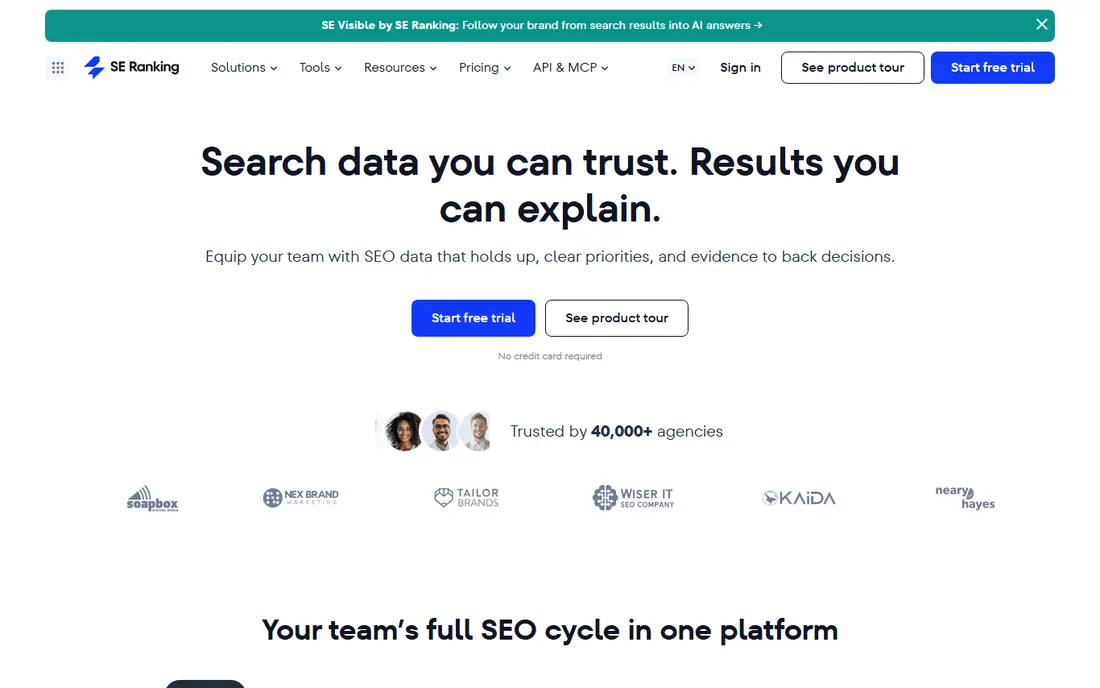
SE Ranking is a practical choice for agencies that already track Google rankings and now need AI visibility too. The base plan covers rankings, audits, and research, while the AI search add-on tracks prompts across major AI platforms. Keeping both in one subscription simplifies reporting for clients.
The combined price needs a straight comparison with standalone AI tools. The add-on is priced separately, and prompt limits depend on the tier you choose. For agencies that want one bill and one dashboard, that trade is often worth it. For a brand that only needs AI tracking, a dedicated tool may be cheaper.
- Daily SEO tracking plus an AI search add-on
- Published add-on pricing
- White-label agency reports
- AI features cost extra on top of the base plan
- Prompt allowances vary by tier
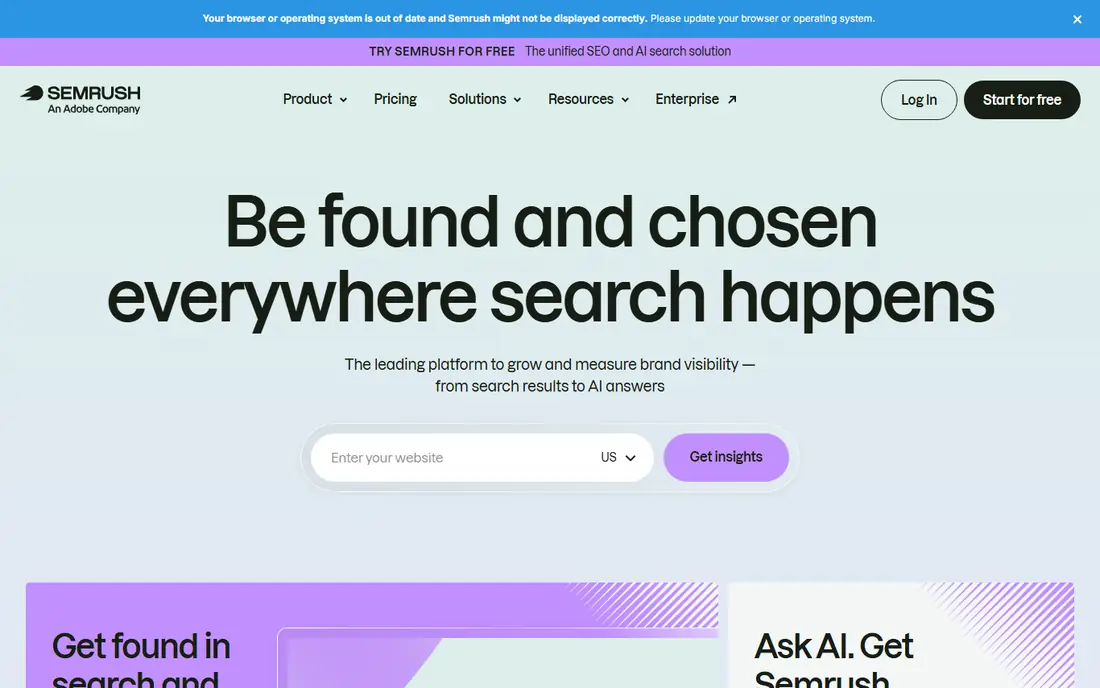
Semrush now bundles AI visibility into its wider platform, tracking how brands appear in AI Overviews, AI Mode, and major chat tools. That coverage helps teams see whether AI answers mention them, cite them, or favor competitors. The data sits next to classic rankings, so teams can compare both views.
Metering is the watch point. Prompt allowances depend on plan tier, and heavy AI tracking can need a higher plan. A limited free account helps with basic checks, but ongoing AI tracking needs a paid plan. For teams already using Semrush, the AI layer is a natural extension.
- AI visibility across Google AI features, ChatGPT, Perplexity, and Gemini
- Huge keyword and backlink data
- PPC tools alongside SEO
- AI prompt allowances are metered by tier
- Seats and add-ons raise the bill
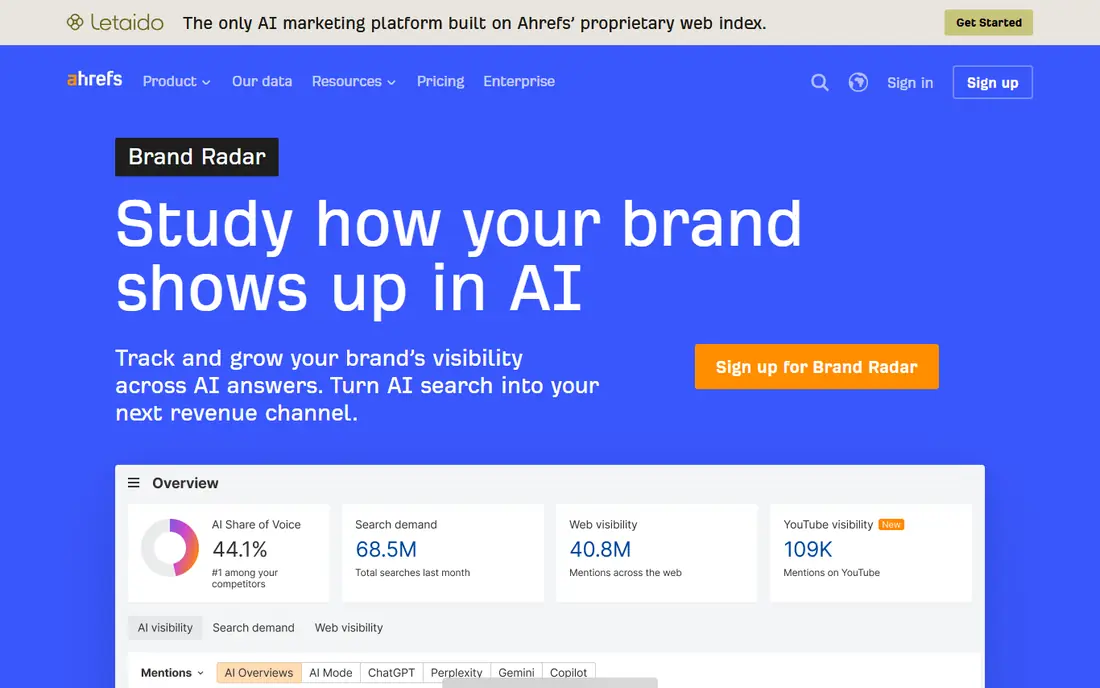
Ahrefs Brand Radar tracks brand visibility in AI Overviews, AI Mode, ChatGPT, Perplexity, Gemini, and Copilot. For teams already paying for Ahrefs, it adds AI tracking without a new vendor or a new dashboard. The link to backlink data also helps explain which pages AI answers cite.
The add-on price can be significant, and it makes less sense for teams that do not use Ahrefs for other SEO work. If your team already relies on Ahrefs for research, Brand Radar is a clean extension. If you only need AI tracking, compare standalone tools first.
- Tracks AI mentions across major platforms
- Connects to Ahrefs backlink and keyword data
- Familiar reporting
- Priced as an add-on
- Best value only inside Ahrefs plans
Profound is built only for AI search. It tracks prompts, brand mentions, citations, and sentiment across AI platforms, with reporting suited to large brands and agencies. That focus gives deeper AI analytics than a general SEO suite, especially for teams managing many prompts and competitors.
Pricing is custom, and the platform is aimed at enterprises rather than solo users. Small brands may find the cost and setup hard to justify for a handful of prompts. For a large brand where AI answers shape buying decisions, Profound offers depth that general tools cannot match.
- Dedicated AI search platform with deep prompt analytics
- Competitor and citation views
- Enterprise reporting
- Custom pricing
- More than a small brand needs
Otterly.AI suits small brands and freelancers who want to start tracking AI visibility without an enterprise budget. It runs automated prompt audits, shows where your brand appears, and compares you with competitors. The low entry price makes it easy to test AI tracking for a month or two.
Depth is the trade. Enterprise tools offer richer citation analysis and reporting, while Otterly.AI focuses on core visibility metrics. For a small team that needs a clear answer to whether AI tools mention them, that focus is enough. For an agency with complex reporting needs, a larger platform may fit better.
- Low entry price
- Automated prompt audits
- Competitor tracking
- Shallower analytics than enterprise platforms
- Prompt limits by plan
Rankability is built for agencies that need to report AI visibility to clients. It tracks prompts across platforms, measures share of voice, shows trends over time, and produces white-label reports. That reporting focus helps agencies explain AI results without building custom dashboards.
Pricing depends on plan and prompt volume, so agencies should quote based on their client count and prompt load. The platform is newer than Semrush or Ahrefs, so its classic SEO features are thinner. For AI reporting as the main job, Rankability is a strong specialist choice.
- White-label reports
- Share of voice and trend analytics
- Competitor tracking
- Pricing varies by plan and volume
- Newer than the big SEO suites
LLMrefs tracks brand mentions across several large language models, with citation reports that show which sources AI answers reference. That cross-platform view matters, because a brand can appear in ChatGPT but not in Perplexity, or vice versa. Setup is simple compared with enterprise platforms.
The lack of a free plan means you pay to test it, though trials and demos may be available on request. Analytics depth also varies by platform, since each AI system exposes different signals. For a small brand that wants one dashboard for many AI tools, LLMrefs offers a clear middle ground.
- Multi-LLM tracking in one dashboard
- Citation reports
- Simple setup
- No free plan
- Analytics depth varies by platform
Nightwatch adds AI search tracking to a rank tracker agencies already know for local SEO. Teams can follow classic Google rankings and AI visibility in the same reports, which helps when clients ask why traffic changed even though Google positions look stable. Unlimited seats on some plans help agencies share access.
Dedicated AI platforms still offer deeper prompt and citation analytics. Nightwatch suits agencies that want AI tracking as an extension of rank tracking, rather than as a separate enterprise project. For a team already using Nightwatch, the AI layer is a low-friction upgrade.
- Classic rank tracking plus AI search tracking
- Local tracking strengths
- Unlimited seats on some plans
- AI features are newer than dedicated AI platforms
- Pricing varies by plan
How we picked these
We compared official pricing pages, feature pages, and AI coverage lists, and we kept only tools that were still sold in October 2026. We looked at which AI platforms each tool covers, how it handles prompts and citations, whether it offers competitor views, and what it costs. Each pick had to track AI visibility as a real feature, not just mention AI in marketing copy.
How to choose AI rank tracking software
Start with the prompts your buyers actually ask. A tool that tracks generic brand queries will miss the comparison and problem-solving questions that shape purchases. Build a prompt list from sales calls, support tickets, and search data, then check whether each tool can track those prompts across the platforms your buyers use.
Next, check citation data. A mention without a citation is weaker than a mention linked to your site, because citations drive clicks and trust. Finally, watch results over time. AI answers change with each run, so a single check can mislead. Look for trends across weeks, not one-day wins or losses.
Suites versus dedicated AI tools
A suite suits teams that already pay for SEO tracking and want AI data in the same dashboard. A dedicated tool suits teams that need deeper prompt analytics, sentiment, and citation reporting. Many teams start with a suite add-on, then move to a dedicated tool when AI visibility becomes a core metric.
What AI tracking cannot tell you
AI tracking shows mentions and citations, but it does not prove that AI answers caused a sale. Pair AI visibility data with traffic, search console data, and sales records before you change strategy. A rise in mentions is useful, but only when it connects to real visits and conversions.
Frequently asked questions
What is the best AI rank tracking tool for small businesses?
Otterly.AI and LLMrefs suit small businesses, depending on budget. Otterly.AI offers a lower entry price, while LLMrefs offers broader multi-platform tracking. SE Ranking and Semrush also work when a small team already uses those suites for classic SEO.
What is the best AI rank tracking software for agencies?
Rankability, SE Ranking, and Profound suit agencies for different reasons. Rankability offers white-label AI reporting, SE Ranking offers AI tracking inside a full SEO suite, and Profound offers deep enterprise analytics. Choose based on client count, prompt volume, and reporting needs.
How does AI rank tracking differ from classic rank tracking?
Classic tracking measures your position in a list of links on a search results page. AI tracking measures whether an AI answer mentions your brand, cites your pages, or favors a competitor. The two views complement each other, because AI answers can shape clicks even when classic positions stay the same.
Which AI platforms should I track?
Track the platforms your buyers actually use, which usually include ChatGPT, Google AI features, Perplexity, and Gemini. Add Copilot if your buyers use Microsoft tools, and add others only when they matter to your market. Tracking every platform at once raises cost without adding decisions.
How often should I check AI visibility?
Weekly or monthly trend checks suit most teams, because AI answers vary from run to run. Daily checks help during a launch or a reputation issue, but they can create noise. Look for sustained changes over several weeks before you rewrite content or change strategy.
Can AI rank tracking improve my AI visibility?
Tracking alone does not improve visibility, but it shows which prompts, pages, and competitors matter. Use that data to improve pages, add clear facts and citations, and cover buyer questions more fully. Then track again to see whether mentions and citations move in the right direction.
Sources
See where you really rank - block by block
ProMapRanker scans Google Maps across a grid of your service area. Simple monthly plans from $19, white-label on every plan.
Start freeKeep reading
 best employee time tracking app
Best Employee Time Tracking Apps in 2026
We compare the best employee time tracking app options for teams, from simple timers to shift tools, with honest notes on privacy and consent in 2026.
Read → best employee recognition software
Best Employee Recognition Software in 2026
We compared the best employee recognition software for peer praise, rewards, and service awards, with pricing, integrations, and honest limits for teams.
Read → best ehr software
Best EHR Software in 2026
Compare the best EHR software in 2026 for small practices, specialty groups and hospitals, with pricing models, charting and billing features compared in full.
Read →