 ProMapRanker
Best AI Orchestration Platforms for Scaling (2026)

Building and governing agents on Google Cloud · Pricing starts at: See website
Direct answer
Start with Google Vertex AI if you need building and governing agents on Google Cloud. Listed starting prices: UiPath from $25 a month and LangSmith from $39 per seat a month. UiPath is better for business orchestration of agents, robots, and people, and Databricks is better for data-centric AI at enterprise scale. The full list of 6 tools follows, with prices and free plan facts.
Short on time? The summary and table above give the quick view of 6 tools for AI orchestration platforms for scaling, and the profiles that follow give the detail behind each entry.
Key takeaways
- Google Vertex AI takes the first slot, best suited to building and governing agents on Google Cloud.
- Microsoft Azure AI Foundry is the one to check for cloud-native AI app and agent development.
- UiPath has the lowest monthly starting price in this list: $25 per month.
- UiPath, LangSmith: these are the 2 tools out of 6 that offer a free plan.
- One limit worth knowing about UiPath: automation-centric approach may not suit pure AI research.
Quick comparison
| Pick | Great for | Pricing starts at | Free tier | |
|---|---|---|---|---|
| Google Vertex AI | Building and governing agents on Google Cloud | See website | Not stated | Visit |
 UiPath | Business orchestration of agents, robots, and people | $25 a month | Yes | Visit |
 Databricks | Data-centric AI at enterprise scale | See website | Not stated | Visit |
 LangSmith | Agent and LLM observability at scale | $39 per seat a month | Yes | Visit |
 Dataiku | Uniting people, orchestration, and governance | See website | Not stated | Visit |
 Microsoft Azure AI Foundry | Cloud-native AI app and agent development | See website | Not stated | Visit |
The full AI orchestration platforms for scaling list
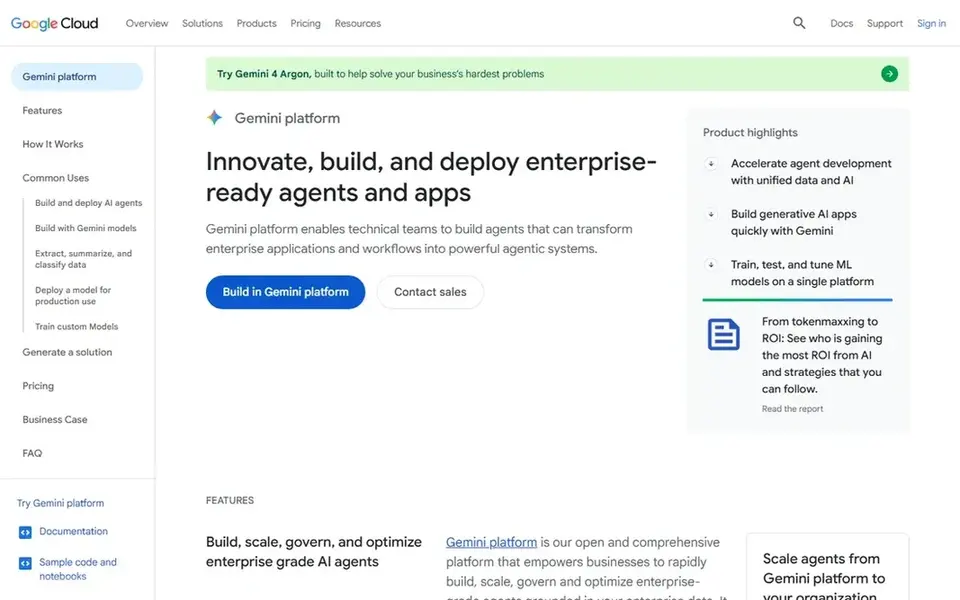
Google Vertex AI is aimed squarely at building and governing agents on Google Cloud. Google Vertex AI is described as the Gemini system, a full environment for developers to build, scale, govern, and optimize agents.
Where it is weaker: Wide feature set may overwhelm smaller teams.
In practice, consider Vertex AI when agent governance and scaling within Google Cloud are priorities, and look elsewhere if you need a cloud-agnostic orchestration layer. Vertex AI is closely tied to Google Cloud, so teams standardized on other clouds may find integration less natural. Google Vertex AI shows no starting price here, so confirm the cost on the vendor site. As for free access: Not stated.
- Optimize agents on Google Cloud
- Full agent development product
- Tied to Google Cloud ecosystem
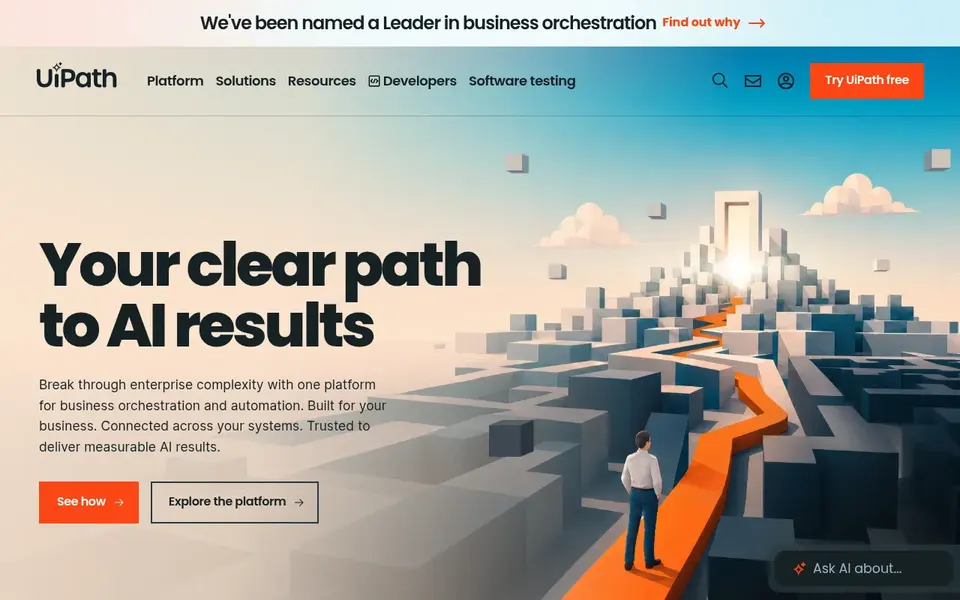
Pick UiPath if this describes you: business orchestration of agents, robots, and people. UiPath supplies the UiPath Platform for business orchestration and automation, enabling AI agents, robots, and people to deliver secure, compliant outcomes at scale.
Select UiPath when scaling needs secure, compliant coordination of agents, robots, and people across enterprise operations. UiPath is oriented toward business orchestration and automation, so teams focused purely on model experimentation may find it indirect. UiPath cost at the entry level: $25 per month. UiPath offers a free plan.
Limits to weigh: Automation-centric approach may not suit pure AI research.
- Orchestrates AI agents, robots, people
- Secure and compliant outcomes at scale
- Full value relies on broader automation strategy
Databricks is designed for data-centric AI at enterprise scale. For everyday use, since Databricks spans data engineering, analytics, and AI, teams without data system experience may face a ramp-up time.
It is not a light agent-only tool. Pick Databricks when your scaling plan relies on unifying data pipelines, governance, and AI workloads instead of on isolated agent tracing. Databricks shows no starting price here, so confirm the cost on the vendor site. On free options: Not stated.
The main drawbacks: Orchestration is one part of a larger stack.
Where it shines: AI system.
- Data-centric approach to building AI
- Eases ETL, warehousing, governance
- Broad system may need data engineering expertise
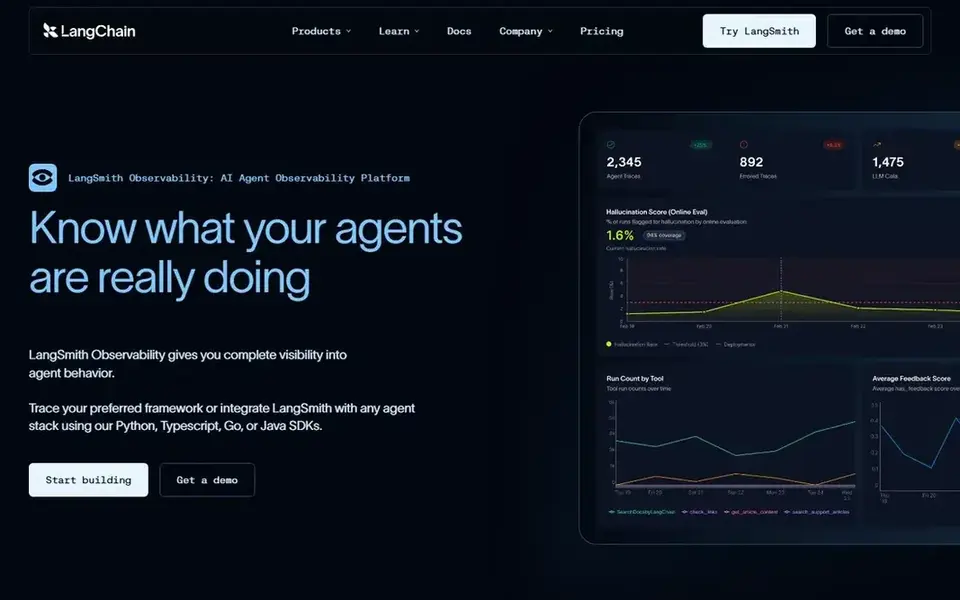
For agent and LLM observability at scale, LangSmith is a natural candidate. LangSmith is an agent and LLM observability system designed for teams that require to see what their AI applications are doing in production.
Downsides: Concentrated on observability instead of full data system.
It supplies tracing and live monitoring so you can debug agents, find failures rapidly, and track costs and latency. For everyday use, teams that need wide data engineering, warehouse, or governance capabilities may prefer a wider product. LangSmith pricing: $39 per seat per month. A free plan is available with LangSmith.
- Track costs and latency
- Tracing and real-time monitoring
- May need pairing with a model hosting stack
Think of Dataiku for uniting people, orchestration, and governance. The product targets scaling through coordinated people, processes, and orchestration instead of isolated model deployment. Adoption may also need change management across teams.
Beyond that, pick Dataiku when your scaling challenge is aligning people and governance around AI initiatives, not just running agents. For everyday use, Dataiku presents itself as the system for AI success, uniting people, orchestration, and governance to turn AI investments into measurable business outcomes. No starting price is listed for Dataiku here; confirm pricing on the vendor site. As for free access: Not stated.
Where it is weaker: May need change management for cross-team adoption.
- Aims at measurable business outcomes
- Governance for AI investments
- Not a dedicated agent observability tool
Microsoft Azure AI Foundry
Great for: Cloud-native AI app and agent development
Choose Microsoft Azure AI Foundry for cloud-native AI app and agent development. Choose it when your scaling strategy centers on Azure services and you want an integrated agent development experience. In practice, Microsoft Azure AI Foundry is positioned as an AI app and agent factory built to accelerate AI-driven, cloud-native development across industries.
Points against: Best fit within the Azure ecosystem.
Azure AI Foundry is most valuable inside the Microsoft Azure ecosystem, so multi-cloud or on-premises-first teams may need extra integration work. It is a wide development system instead of a narrow orchestration utility. Microsoft Azure AI Foundry shows no starting price here, so confirm the cost on the vendor site. Free plan details: Not stated.
- Accelerates AI-driven development
- AI app and agent factory
- Orchestration features are part of a bigger system
How the list was put together
We compared the tools on published pricing, free plan or trial availability, feature coverage for AI orchestration platforms for scaling, and the limits each vendor documents. Seat minimums, billing terms and add-ons can move the real cost, so the starting prices here are a guide and not a quote. We ordered the tools by general fit, then by how clearly pricing is shown, then by free access. A buyer with unusual needs may reorder them.
Before you commit
- Get a written quote from Google Vertex AI, Databricks, Dataiku and Microsoft Azure AI Foundry; the list shows no starting price for them.
- Check what the free option really includes: UiPath and LangSmith offer a free plan, and usage caps differ.
- Before choosing Google Vertex AI, weigh its main limit: tied to Google Cloud ecosystem.
- A short pilot of UiPath with your real workflow tells you more than a feature table.
- Test the integrations you rely on with LangSmith before committing; some connectors sit on upper tiers.
Frequently asked questions
How are the tools for AI orchestration platforms for scaling ordered?
The order follows typical fit for AI orchestration platforms for scaling, with Google Vertex AI first and Microsoft Azure AI Foundry last, then price clarity and free access. It is editorial judgement, not a score, so another team could rank the tools differently.
Which options for AI orchestration platforms for scaling have a free plan?
On this list, UiPath and LangSmith include a free plan. Caps on seats, usage or features are common, so test the free plan against your real workload.
How do observability tools like LangSmith differ from broader AI products?
Broader products for example Databricks or Vertex AI combine data, model development, and governance in one environment. Numerous teams pair an observability tool with a wider product to include both insight and infrastructure.
Is Google Vertex AI the right pick for everyone comparing AI orchestration platforms for scaling?
No single tool suits every team. Google Vertex AI comes first because it fits building and governing agents on Google Cloud, while UiPath suits business orchestration of agents, robots, and people and Databricks suits data-centric AI at enterprise scale. Match the tool to your own size, budget and workflow before deciding.
Can I try these tools before paying?
Often, yes. UiPath and LangSmith have a free plan. Use your own data and a real task during the test, and check what the free tier or trial limits before you rely on it.
Sources
See where you really rank - block by block
ProMapRanker scans Google Maps across a grid of your service area. Simple monthly plans from $19, white-label on every plan.
Start freeBrowse all guides
← Best AI Culling Software for Quick Turnaround (2026)AI Quote Management Software: 5 Options Compared in 2026 →
 best ai agent frameworks platforms
AI Agent Frameworks Platforms in 2026: Top 6 Compared
Compare 6 best AI agent frameworks platforms, with prices, free plans and who each fits. Where a tool struggles is spelled out. Budget notes included.
Read → plus ai alternatives
Top Plus AI Alternatives for 2026, With Prices
Compare 5 picks for Plus AI alternatives, with prices, free plans and who each fits. Every profile names its biggest catch. Current for November 2026.
Read → magnific alternatives
Top Magnific Alternatives for 2026, With Prices
Magnific alternatives in 2026: 5 contenders with entry costs and free tiers. Our number one: Luminar Neo, for AI-assisted editing for PC and Mac. Details below.
Read → notion ai alternatives
Replacing Notion AI: 6 Alternatives Compared
6 options for Notion AI alternatives, with entry costs, free tiers and the buyer each one serves. Top pick: Craft, aimed at beautiful docs. See the full list.
Read → granola ai alternatives
Best Granola AI Alternatives (2026)
Shortlisting Granola AI alternatives? 7 products compared on cost, free access and ideal buyer. Fit, price and catches for every tool. Jump to the table.
Read → best grok ai alternatives
Best Grok AI Alternatives in 2026
Compare the best grok ai alternatives for writing, coding, research, and everyday help, with free plans, prices, and strengths for each assistant here.
Read →More in AI Tools · All guides A to Z by date · Latest guides