 ProMapRanker
Best AI Novel Writing Software in 2026


Fiction prose, scenes, and revision · Pricing starts at: $10 per month
Key takeaways
- Sudowrite is the strongest fiction-first pick, with a Story Bible, scene tools, and drafting features built for novels.
- NovelCrafter suits plotters and series writers, thanks to its Codex for characters, lore, and scene beats.
- Claude and ChatGPT are strong general assistants for brainstorming and editing, but they lack novel-specific story memory.
- AI output always needs human editing, and authors should disclose AI use honestly where a publisher, platform, or contest asks for it.
Quick comparison
| Pick | Great for | Pricing starts at | Free tier | |
|---|---|---|---|---|
| Sudowrite | Fiction prose, scenes, and revision | $10 per month | Free trial | Visit |
 NovelCrafter | Plotters and series writers | $4 per month | Free trial | Visit |
 NovelAI | Genre fiction writers wanting unlimited text | $10 per month | Free trial | Visit |
 Claude | Brainstorming, drafting help, and editing | $20 per month | Yes | Visit |
 ChatGPT | Outlining, ideas, and revision help | $20 per month | Yes | Visit |
 Squibler | Beginner novelists and visual plotters | Free | Yes | Visit |
 ProWritingAid | Self-editing a finished draft | $10 per month | Yes | Visit |
 Inkfluence AI | Structured book creation and export | $9.99 per month | Yes | Visit |
 Jasper | Writers who also need marketing copy | See website | Free trial | Visit |
The best ai novel writing software
We compared tools that help with the actual work of writing a novel: planning, drafting scenes, tracking characters and lore, revising prose, and editing a finished draft. Our pick for most novelists is Sudowrite for drafting, with NovelCrafter close behind for series planning. Note that AI output needs human editing, and honest authorship disclosure matters wherever a publisher, platform, or contest asks how a book was made.
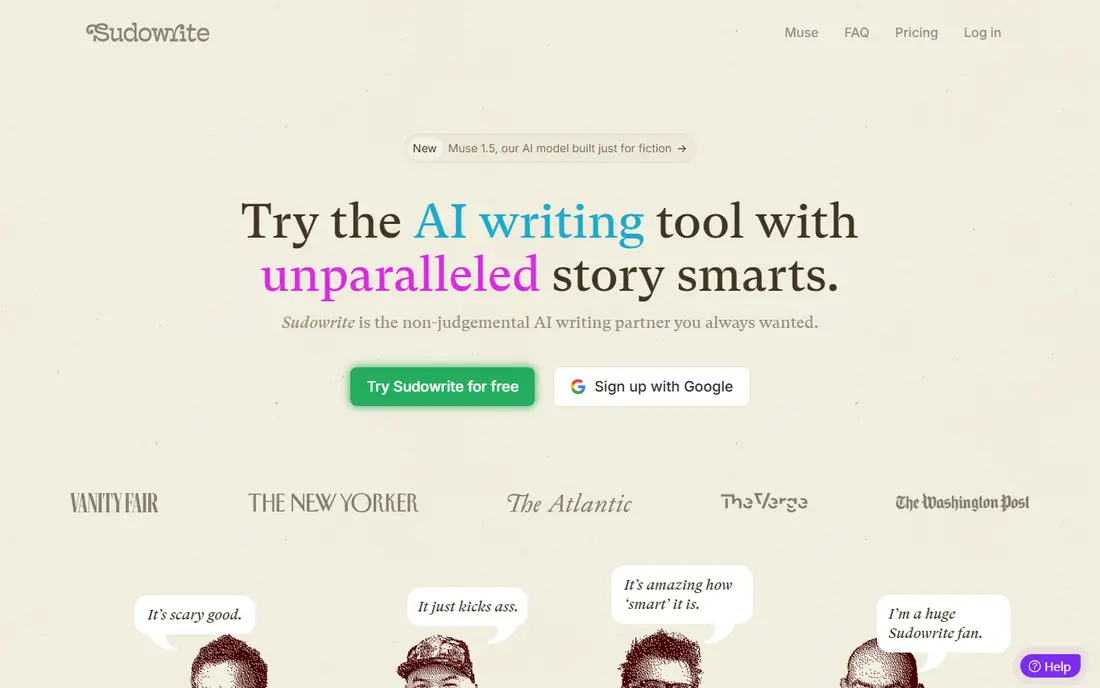
Sudowrite is a fiction writing workspace with its own fiction-tuned model, Muse, plus a Story Bible that stores synopsis, genre, style, characters, worldbuilding, and outline so the model drafts with the whole book in context. Tools such as Write, Describe, Expand, Rewrite, and Feedback help with continuing a scene, adding texture, revising a passage, and spotting weaknesses. Canvas offers story structure templates, and a Series Folder carries one Story Bible across books in a series.
The honest catch is credits. Plans start at $10 per month on annual billing for Hobby and Student, $22 for Professional, and $44 for Max, and only Max rolls unused credits over for 12 months. A writer who drafts heavily in the first week can burn credits quickly, so trial the free offer and watch usage before committing to a tier. For a novelist who wants a fiction-first tool, Sudowrite is still the strongest single pick.
- Fiction-specific tools such as Write, Describe, Rewrite, and Feedback
- Story Bible keeps the book in mind
- Series support
- Monthly credit limits
- New users can spend credits faster than expected
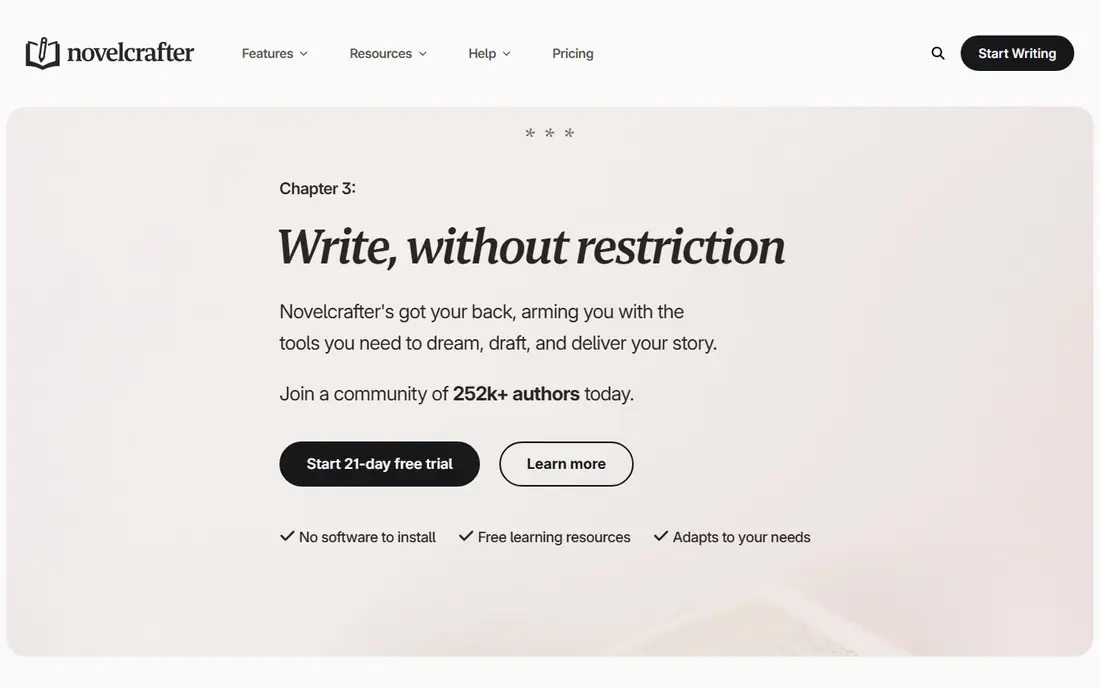
NovelCrafter is a planning-first workspace that connects to a model you pay for separately through your own API key. Scribe at $4 per month has no AI, while Hobbyist at $8, Artisan at $14, and Specialist at $20 add AI access, with OpenAI or Anthropic usage billed on top. The Codex stores characters and lore as a linked wiki, scene beats organize chapters, and series tools keep continuity across books.
The trade-off is setup. There is no model of its own, so prose quality depends on the key you connect, and configuration takes time. The payoff is control: a series writer can pick a model per task, keep lore consistent, and pay a low fixed fee plus API use. For plotters, fantasy and science fiction writers, and series authors, NovelCrafter is the best planning tool on this list.
- Codex for characters, lore, and worldbuilding
- Scene beats and series tools
- Pick your own AI model
- AI plans need a separate API key and bill
- Setup takes an afternoon of configuration
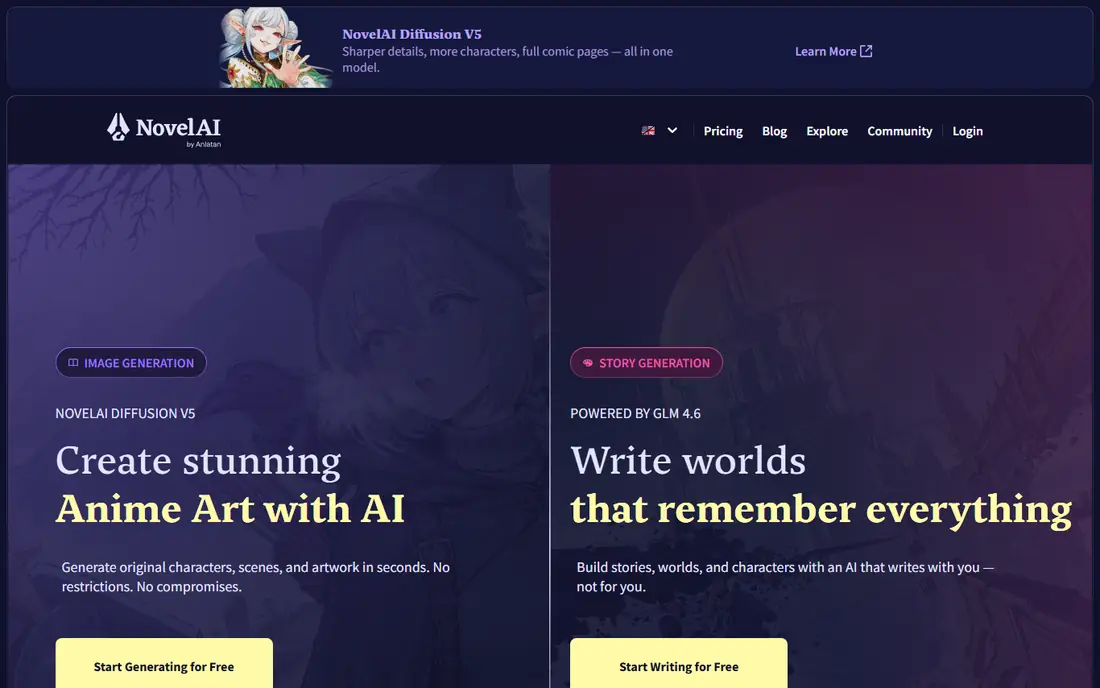
NovelAI is a fiction writing platform with its own models and a Lorebook that stores story facts the model can recall while drafting. Paid plans at $10, $15, and $25 per month offer unlimited text generation, which suits writers who draft in long sessions and dislike credit meters. It is popular with genre fiction writers who want a tool that stays in story mode without frequent interruptions.
The honest catch is guidance. NovelAI gives writers powerful controls but less step-by-step help than Sudowrite, so beginners may need time to learn its settings. It also lacks the broader planning and editing suite of NovelCrafter or ProWritingAid. For a genre writer who wants unlimited drafting with lore memory, NovelAI is a strong specialist choice.
- Its own fiction models
- Lorebook for story facts
- Unlimited text generation on paid plans
- Less hand-holding than Sudowrite
- Interface favors experienced users
Claude is a general AI assistant that many novelists use for brainstorming, outlining, drafting help, and editing, thanks to its strong prose quality and long context window. It can read a chapter, suggest cuts, spot inconsistencies, and help untangle a plot problem with thoughtful, well-structured replies. The free plan is a useful starting point, and Pro at $20 per month raises limits for regular use.
The trade-off is persistence. Claude remembers only the current conversation well, so a novelist must paste or re-summarise story facts for each new session, unlike Sudowrite or NovelCrafter. It also has no manuscript, chapter, or codex system built in. Use Claude as a thinking partner and editor alongside a fiction tool, not as a replacement for one.
- Strong natural prose and careful editing
- Long context for chapters
- Good for plot problem-solving
- No novel-specific story memory across sessions
- No built-in manuscript tools
ChatGPT is a flexible general assistant for novel work, from brainstorming premises and outlining chapters to revising scenes and writing blurbs. The free plan covers everyday use, and Plus at $20 per month adds higher limits and more advanced models. Custom GPTs can store repeat instructions for tasks such as chapter summaries or character sheets, which helps a writer reuse a workflow.
The honest catch is continuity. ChatGPT has no built-in Story Bible or Codex, so long novels drift unless the writer keeps a separate story document and pastes key facts into each session. Its prose can also feel generic without specific direction on voice, scene, and character. For ideas, outlines, and revision help, ChatGPT is excellent; for a full novel system, pair it with Sudowrite or NovelCrafter.
- Flexible brainstorming and outlining
- Custom GPTs for repeat tasks
- Voice and file help
- Weak novel continuity across sessions
- Prose can feel generic without careful prompting
Squibler is a beginner-friendly writing app for novels and screenplays, with templates, visual plotting, and elements for characters and settings. The free tier lets a new writer start a book without paying, and Plus from $15.83 per month on annual billing adds AI features and higher limits. That gentle learning curve suits writers who want structure without a complex setup.
The trade-off is AI depth. Squibler covers planning and drafting well, but its AI tools are lighter than Sudowrite for prose generation and lighter than NovelCrafter for lore tracking. For a first novel, or for a writer who values a clear outline over heavy AI drafting, Squibler is a friendly and low-risk start.
- Free tier for starting out
- Book and screenplay templates
- Visual plotting and element tracking
- AI features are lighter than Sudowrite
- Paid plans cost more per month than some rivals
ProWritingAid is an editing tool, not a drafting tool, and it earns its place here because a finished novel draft still needs a careful editing pass. It checks grammar, style, readability, pacing, repeated words, and sentence variety, with reports that help a writer see patterns across a whole manuscript. It works in Word, Google Docs, and Scrivener, plus a web editor, and Premium starts from $10 per month with a free tier for basic checks.
The honest catch is scope. ProWritingAid will not plan a novel or draft scenes, and its many reports can feel overwhelming until a writer learns which ones matter for fiction. Use it after drafting, ideally after a human beta read, and treat its suggestions as prompts for judgment, not as automatic fixes. For the editing pass, it is the best value tool on this list.
- Detailed style, grammar, and readability reports
- Works in Word, Docs, and Scrivener
- AI-assisted editing help
- Not a drafting tool
- Reports can overwhelm a first-time user
Inkfluence AI is a structured book writing tool that combines a story bible with outline-driven chapters, aiming to keep plot continuity across a full book. It offers export to PDF, EPUB, and DOCX, which helps writers who want a clean manuscript file without extra conversion tools. Plans start from $9.99 per month, with a free tier that covers a limited number of chapters.
The trade-off is maturity. Inkfluence is newer and smaller than Sudowrite or NovelCrafter, so its community, templates, and long-term track record are thinner. Free-plan limits also vary across sources, so check the current offer before planning a full book on it. For a writer who wants structure plus export in one tool, it is worth a trial.
- Story bible plus chapter-by-chapter structure
- PDF, EPUB, and DOCX export
- Free tier for starting
- Newer platform with a smaller community
- Free-plan details vary by source
Jasper is an AI writing platform known for marketing copy, with templates, brand voice controls, and team workflows that suit authors who also write blurbs, ads, newsletters, and social posts. A novelist can use it for outlining, scene revision, and promotional copy, and its document tools handle longer pieces better than a bare chatbot. A 7-day trial lets writers test it before paying.
The honest catch is focus. Jasper is built for marketing teams first, so it lacks the Story Bible, Codex, and lore tracking that make Sudowrite and NovelCrafter strong for novels. Its price also runs higher than fiction-first tools. Pick Jasper if marketing copy is half the job; pick a fiction tool if the novel itself is the main work.
- Strong templates for blurbs, ads, and summaries
- Brand voice controls
- Team features
- Built mainly for marketing, not novels
- Higher price than fiction-first tools
How we picked these
We compared official feature pages, pricing pages, and trial terms, and we kept only tools live in October 2026 that genuinely help with novel planning, drafting, or editing. We favored fiction-specific tools alongside general assistants that novelists actually use, and we marked unclear pricing as See website. We did not claim hands-on testing; our comparison rests on vendor pages and current pricing guides. We also applied a plain safety note: AI output needs human editing, and authors should disclose AI use honestly where asked.
What to check before you buy
Start with how you write. A plotter who plans every chapter will get more from NovelCrafter, while a discovery writer who drafts scene by scene will get more from Sudowrite. A writer who mainly needs editing help should spend on ProWritingAid instead of a drafting subscription, and a writer on a tight budget can start with Claude or ChatGPT free plans plus Squibler.
Next, check credit and API costs, not just the headline price. Sudowrite and NovelAI use different models, NovelCrafter adds an API bill on top of its subscription, and general assistants have usage limits. Trial one tool on a real chapter, including a revision pass, and judge it on whether the draft still sounds like you after editing. Finally, read the terms of any publisher, platform, or contest you plan to submit to, and disclose AI use honestly where required.
Frequently asked questions
What is the best AI tool for writing novels?
Sudowrite is our pick for fiction drafting, thanks to its Story Bible and scene tools, while NovelCrafter is best for planning and series lore. Claude and ChatGPT work well as brainstorming and editing partners alongside either tool.
What are the best AI novel writing tools for beginners?
Squibler is the easiest start, with a free tier and templates, and Sudowrite offers a free trial for fiction drafting. Start with a free plan, finish one chapter, and pay only for the tool that fits how you actually write.
What are the best AI tools for novel writing with story memory?
Sudowrite uses a Story Bible, NovelCrafter uses a Codex, and NovelAI uses a Lorebook to keep characters and facts in mind. General assistants such as Claude and ChatGPT lack that persistent story memory across sessions.
Can AI write a whole novel on its own?
AI can draft scenes, outlines, and chapters, but the result still needs human editing for voice, plot logic, and consistency. Treat AI as a drafting and editing helper, and keep creative decisions, revisions, and final judgment with the human author.
Do I need to disclose AI use in a novel?
Disclosure rules vary by publisher, platform, and contest, so read the terms before submitting. Where disclosure is asked for, state plainly what AI helped with, such as brainstorming, drafting, or editing, and confirm that you edited and take responsibility for the final text.
Sources
See where you really rank - block by block
ProMapRanker scans Google Maps across a grid of your service area. Simple monthly plans from $19, white-label on every plan.
Start freeKeep reading
 venmo alternatives
Venmo Alternatives in 2026: 8 Apps Compared
Venmo alternatives compared for sending money to friends, paying businesses and sending abroad, with fees, speed, limits and free plans explained here.
Read → splunk alternatives
Splunk Alternatives in 2026: 8 Tools Compared
Splunk alternatives compared for log search, observability and security analytics, with open source and managed options, free tiers and prices for teams.
Read → microsoft access alternatives
Microsoft Access Alternatives in 2026
Looking for microsoft access alternatives? We compare 8 database tools for teams that need web access, sharing, and apps without old desktop limits in 2026.
Read →