 ProMapRanker
Best AI Marketing Automation Platform in 2026


CRM plus marketing in one system · Pricing starts at: $15 per seat per month
Key takeaways
- HubSpot suits teams that want CRM, marketing and sales data in one system, with AI features layered on top.
- ActiveCampaign offers the deepest automation logic for the money, especially for small and mid-sized businesses.
- Klaviyo is the strongest pick for online stores, where purchase data drives email and SMS flows.
- Brevo is the budget pick for large lists, since pricing follows sending volume rather than contact count on its entry plans.
Quick comparison
| Pick | Great for | Pricing starts at | Free tier | |
|---|---|---|---|---|
| HubSpot Marketing Hub | CRM plus marketing in one system | $15 per seat per month | Yes | Visit |
 ActiveCampaign | Deep automation for small teams | $15 per month | Free trial | Visit |
 Klaviyo | Online stores and ecommerce flows | $20 per month | Yes | Visit |
 Mailchimp | Beginners and newsletters | $13 per month | Yes | Visit |
 Brevo | Large lists on a small budget | $9 per month | Yes | Visit |
 Customer.io | SaaS lifecycle messaging | $100 per month | Free trial | Visit |
 Iterable | Cross-channel campaigns at scale | See website | No | Visit |
 Braze | Mobile-first customer engagement | See website | No | Visit |
The best ai marketing automation platforms
We compared platforms on automation depth, AI features, channel coverage, pricing basis and ease of use. AI features vary a lot: some tools write subject lines and draft emails, while others predict send times, segment audiences or score leads. Judge each platform by the automation you will actually run every week, not by the longest AI feature list.
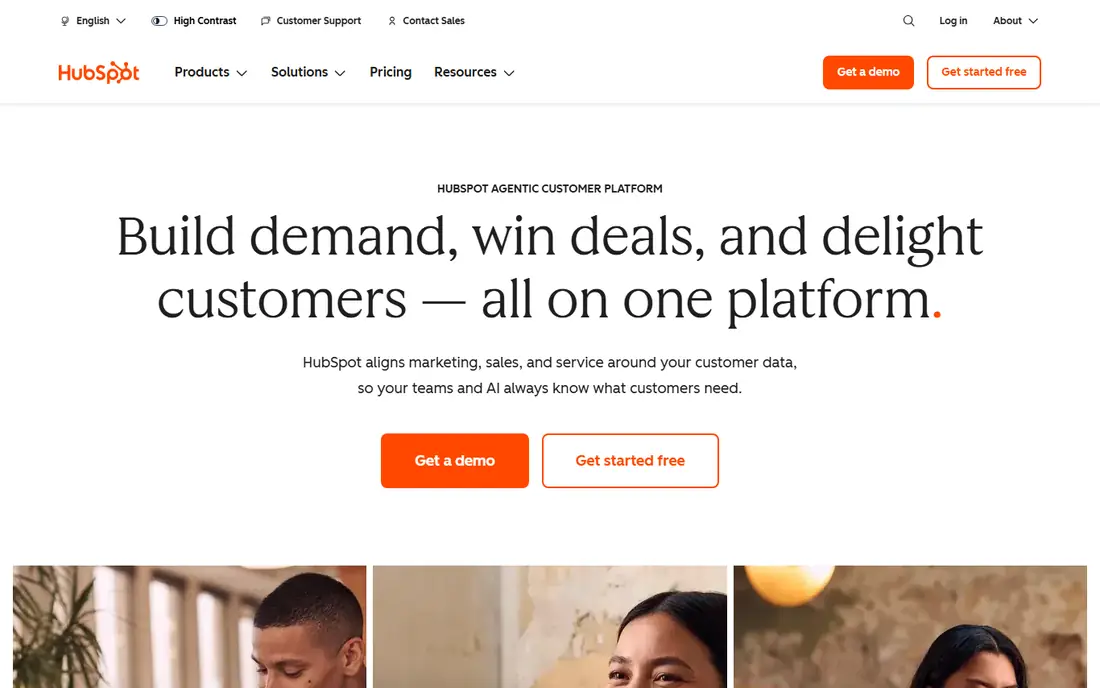
HubSpot is the all-in-one choice. Marketing Hub sits on the same CRM as sales and service, so a contact record, a deal and a support ticket all feed the same automation. AI tools help draft emails, summarize records and build reports, and the free CRM gives small teams a real starting point before they pay for Marketing Hub Starter.
The catch is the pricing model. Starter is listed from $15 per seat per month, but the bill grows with seats and marketing contacts, and the deeper automation, testing and reporting features sit on higher tiers. HubSpot suits teams that will use the whole system. If you only need email automation, a cheaper specialist will do the same job for less.
- Free CRM with marketing tools included
- AI drafting, reporting and content tools
- Strong sales and service integration
- Costs rise fast with seats and marketing contacts
- Advanced automation needs higher tiers
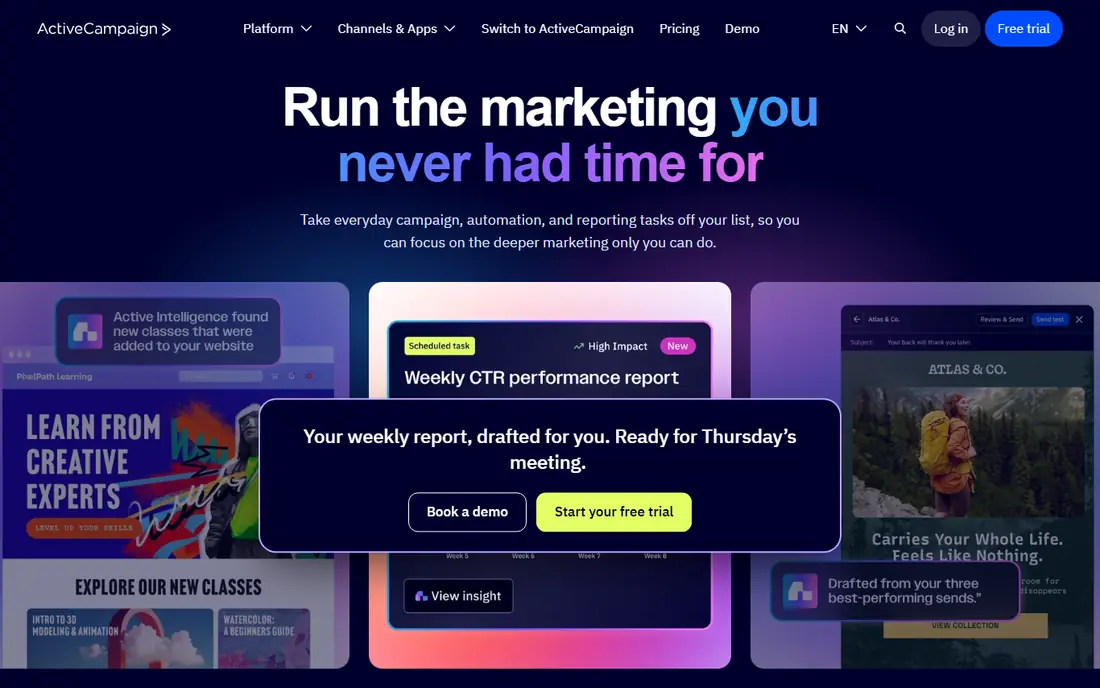
ActiveCampaign gives small teams automation power that used to require an enterprise tool. The visual builder handles branching logic, tagging, scoring and multi-step flows, and AI features help with subject lines, content and send-time prediction. Starter is listed at $15 per month billed annually for 1,000 contacts, which is strong value for the depth on offer.
There is no free plan, only a 14-day trial, so you need to test quickly. The builder is also deep enough to confuse new users who only need a welcome series and a newsletter. For teams that will build real lifecycle flows, ActiveCampaign is the best value here. For a simple newsletter, it is more tool than you need.
- Strong visual automation builder
- AI content and predictive sending features
- Good CRM and sales automation included
- No free plan, only a 14-day trial
- Interface takes time to learn at full depth
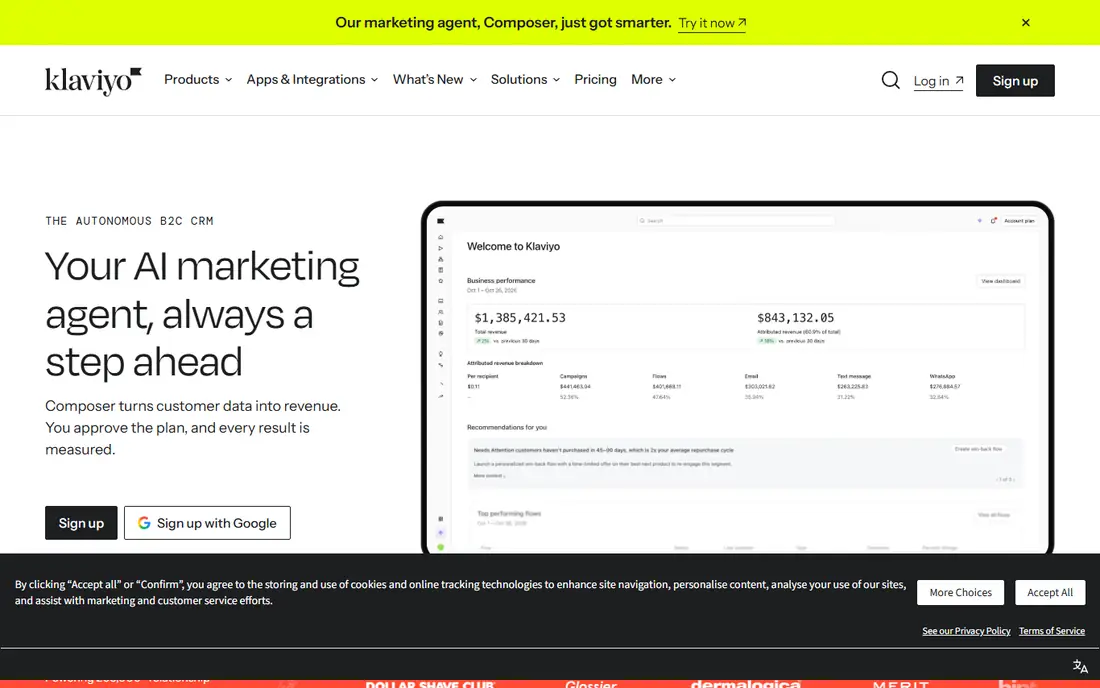
Klaviyo is built around store data. It pulls purchase history, browsing and product data into segments, then runs flows for abandoned carts, welcome series, post-purchase follow-up and win-back campaigns. AI tools help with subject lines, content and predicted customer value, and the free plan covers up to 250 profiles for small stores testing the platform.
The weakness is cost at scale. Email starts at $20 per month for 500 profiles, and the bill climbs as active profiles grow, with SMS charged separately. Stores that earn real revenue from email usually cover that cost easily, but a store with a large, inactive list should clean its profiles before paying. For ecommerce, Klaviyo is still the benchmark.
- Deep store data for segmentation
- Proven abandoned cart, welcome and post-purchase flows
- AI subject lines and predictive analytics
- Pricing rises steeply as active profiles grow
- SMS is billed separately
Mailchimp remains the easiest starting point for a small business that mainly sends newsletters and simple automations. The editor is friendly, templates look polished, and AI tools help draft content and pick send times. The free plan covers up to 250 contacts, and Essentials starts at $13 per month for 500 contacts.
The limit is automation depth. Branching flows, scoring and behavior-based journeys are thinner than on ActiveCampaign, and pricing rises sharply at larger list sizes. Mailchimp suits beginners and small audiences who value ease over power. Teams that outgrow simple flows usually move to ActiveCampaign or Klaviyo.
- Easy editor and templates
- AI-assisted content and send-time tools
- Free plan for very small lists
- Automation depth lags behind ActiveCampaign and Klaviyo
- Pricing jumps as contacts grow
Brevo, formerly Sendinblue, is the budget pick for senders with large lists. The free plan allows 300 emails per day with unlimited contacts, and Starter is listed at $9 per month for 5,000 emails per month. Email, SMS and WhatsApp campaigns live in one system, and AI tools help with subject lines, content and send-time optimization.
Automation is the trade-off. Flows cover welcome series, transactional messages and behavior triggers, but the logic is simpler than ActiveCampaign, and some plans cap contacts in ways that need checking. For a business that sends a lot to a large list and wants one low bill, Brevo is hard to beat. For complex lifecycle logic, pay more elsewhere.
- Free plan with unlimited contacts
- Email, SMS and WhatsApp in one bill
- AI-assisted campaigns and send-time tools
- Automation is simpler than ActiveCampaign
- Contact caps appear on some lower tiers
Customer.io is built for SaaS and app businesses that message users based on what they do inside a product. A signup, a missed onboarding step or a subscription change can trigger email, SMS or push flows, and segmentation follows real product events rather than list uploads. Essentials starts at $100 per month for 5,000 profiles, with a 14-day trial for testing.
The price and setup are the barriers. Small businesses and simple newsletter senders will not need this depth, and getting product data flowing takes technical work. For a SaaS team running onboarding, trial conversion and retention flows, Customer.io is one of the best fits in this list, because the whole tool is designed around behavior.
- Behavior-triggered email, SMS and push flows
- Strong data and API-driven segmentation
- Good for product-led teams
- Starting price of $100 per month rules out small businesses
- Setup needs technical input
Iterable suits larger brands that run the same campaign across email, SMS, push and in-app messages. The journey builder handles cross-channel logic, AI tools help with content, send-time and audience optimization, and enterprise controls cover permissions, approvals and data handling. That breadth matters when a campaign touches millions of users across several channels.
The drawback is access. Pricing is quote-based, with no public starting price, and the platform is built for teams with dedicated marketers and technical support. Small businesses should not start here. Mid-sized and large brands that need true cross-channel journeys, and can justify an enterprise contract, will get more from Iterable than from a single-channel email tool.
- Email, SMS, push and in-app messaging in one journey builder
- AI tools for content and optimization
- Strong enterprise controls
- Quote-based pricing with no public starting price
- Overkill for small teams
Braze is the mobile-first pick. It focuses on push notifications, in-app messages, SMS and email as one customer journey, with real-time data driving which message a user sees and when. AI tools help optimize timing, content and channel choice, which matters for apps and brands where mobile engagement drives revenue.
Like Iterable, Braze uses quote-based pricing and suits larger teams with product and data resources. A small business sending a weekly newsletter will find it too much tool and too much contract. An app, retailer or media brand with a large mobile audience and a team to run it will find Braze one of the strongest engagement platforms available.
- Strong mobile push, in-app and SMS tools
- Real-time personalization
- AI optimization for timing and content
- Quote-based pricing
- Setup and data work suit larger teams better
How we picked these
We compared official pricing pages, product documentation and public reviews for AI marketing automation platforms still operating in October 2026. We kept only platforms that offer automation plus AI-assisted features, such as content drafting, predictive sending or audience optimization, and we noted where pricing is quote-based. We mixed all-in-one platforms, ecommerce specialists and SaaS-focused tools because marketing automation buyers come from all three groups.
How to choose an AI marketing automation platform
Start with your data, not the AI label. A platform is only as useful as the customer data it can use, so check how it connects to your store, CRM or product. Klaviyo wins for store data, HubSpot wins for CRM data, and Customer.io wins for product event data. A tool with weak data connections will produce generic automation, no matter how strong its AI features look.
Next, map the flows you will run in the first 90 days. Welcome series, abandoned cart, onboarding, re-engagement and post-purchase follow-up cover most value for most businesses. Build those five flows first, and judge the platform by how easy they are to build, test and measure. Fancy AI features that you never use should not decide the purchase.
Finally, price the platform at your real list size in 12 months, not today. Contact-based pricing punishes list growth, send-based pricing punishes volume, and seat-based pricing punishes team growth. Run the numbers for each model at the size you expect, and clean inactive contacts before you migrate, since paying to message people who never open is the fastest way to waste a budget.
Frequently asked questions
What is the best AI marketing automation platform for a small business?
ActiveCampaign is our pick for small businesses that want deep automation at a fair price, starting at $15 per month. Brevo suits tighter budgets with large lists, and Mailchimp suits beginners who mainly send newsletters. HubSpot is better when you also need a full CRM.
What are the best AI marketing automation tools for ecommerce?
Klaviyo leads for online stores, with purchase-driven flows for abandoned carts, welcome series and post-purchase follow-up. Mailchimp and Brevo also work for stores, but their ecommerce segmentation is thinner. Check store integrations before you choose, since data depth decides flow quality.
What is the best AI software for marketing automation at scale?
Iterable and Braze suit larger brands running cross-channel campaigns at scale, with AI optimization across email, SMS, push and in-app messages. HubSpot also scales well for B2B teams that need CRM, sales and marketing in one system. All three need a larger budget and team than the entry tools here.
How much does AI marketing automation cost?
Entry plans start around $9 to $20 per month for small lists, mid-range plans run $15 to $100 per month depending on contacts and features, and enterprise platforms are quote-based. Always price at your expected list size, since contact, send and seat models grow very differently.
Do I need AI features in a marketing automation platform?
AI helps with drafting, subject lines, send-time prediction and audience segments, but it does not replace a clear offer and a clean list. Start with solid flows and good data, then use AI to improve them. A platform with weak automation and strong AI marketing will disappoint faster than a solid automation tool with modest AI.
What is the best AI tool for automation in marketing for SaaS companies?
Customer.io suits SaaS teams best, because flows trigger from product behavior such as signups, onboarding steps and subscription changes. ActiveCampaign also works for smaller SaaS teams that want strong automation without a $100 starting price. Choose Customer.io when product events drive most of your messaging.
Sources
See where you really rank - block by block
ProMapRanker scans Google Maps across a grid of your service area. Simple monthly plans from $19, white-label on every plan.
Start freeKeep reading
 best video editing apps for affiliate marketing
Best Video Editing Apps for Affiliate Marketing in 2026
Compare the best video editing apps for affiliate marketing, from fast short-form editors to full desktop suites, with current pricing and honest trade-offs.
Read → best shift scheduling software
Best Shift Scheduling Software in 2026
Compare the best shift scheduling software, from Homebase and Deputy to When I Work and 7shifts, with free plans and per-user pricing explained for teams.
Read → best salon booking software
Best Salon Booking Software in 2026
Compare the best salon booking software for 2026, from free solo tools to premium multi-chair platforms, with current pricing, trials and honest limits.
Read →