 ProMapRanker
Best AI Language Learning App in 2026

Key takeaways
- Duolingo Max is our pick for daily habit building, because short lessons and AI roleplays fit easily into a busy day.
- TalkPal and Langua suit learners who want open conversation practice, with roleplays, debates, and feedback on mistakes.
- Speak is the strongest pick for speaking first practice, especially for English learners who want structured speaking drills.
- Babbel and Memrise add structure and vocabulary depth that pure chat tools often lack.
- ELSA Speak and ChatGPT fill useful gaps, for pronunciation work and for flexible grammar questions in any language.
Quick comparison
| Pick | Great for | Pricing starts at | Free tier | |
|---|---|---|---|---|
 Duolingo Max | Daily habit and short lessons | Free | Yes | Visit |
 TalkPal | Open AI conversation practice | See website | Yes | Visit |
 Langua | Conversation with mistake feedback | $19.99 per month | Yes | Visit |
 Speak | Speaking first English practice | $17.99 per month | Free trial | Visit |
 Babbel | Structured courses and grammar | See website | Yes | Visit |
 Memrise | Vocabulary and native speaker video | See website | Yes | Visit |
 ELSA Speak | Pronunciation and accent work | See website | Yes | Visit |
The best AI language learning apps
AI language apps differ in one important way: some teach a course, and some let you talk. Course apps give structure, while conversation apps give speaking time, and most learners need both. We compared AI conversation features, curriculum, language coverage, free plans, and pricing, and we kept only apps that are still active in 2026 and offer real AI feedback, not just recorded lessons labeled as AI.
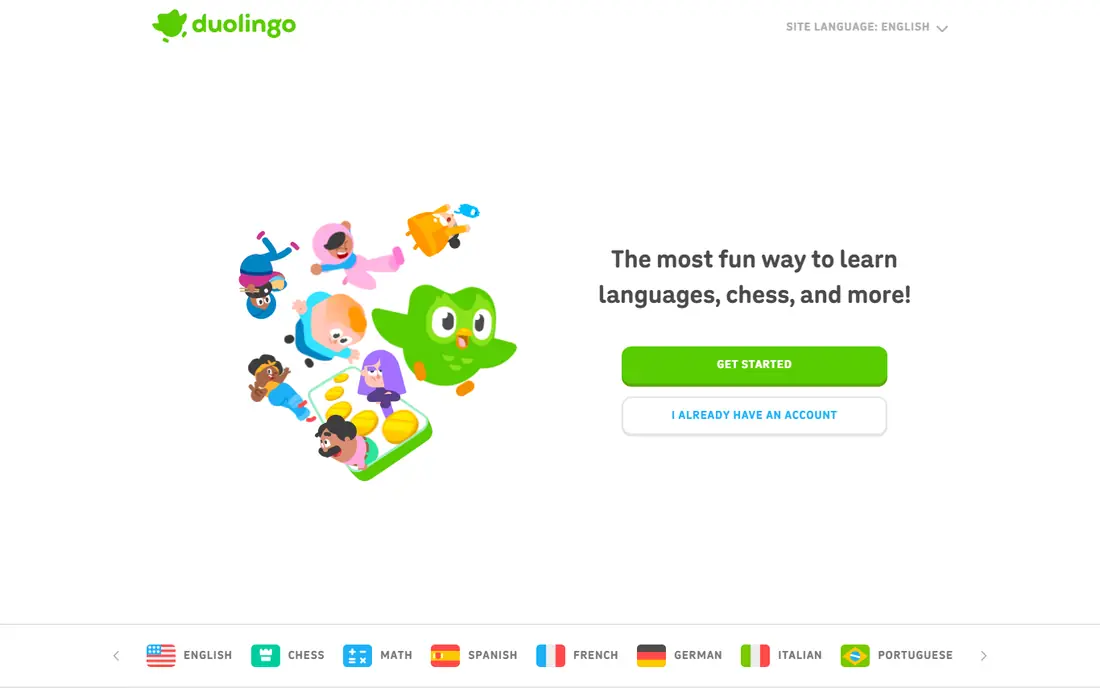
Duolingo Max builds on the free Duolingo course with AI features such as roleplay scenarios and video calls with a character tutor. That makes it easy to practice speaking in short, low pressure bursts, without booking a lesson or finding a partner. The streak system, short lessons, and clear progress path help beginners stay consistent, which is often the hardest part of language learning.
The limit is depth. Roleplays are short and scripted compared with open conversation in TalkPal or Langua, and advanced learners may find the course pace slow. Use Duolingo Max as a daily habit builder and vocabulary base, and add a conversation app when you are ready to speak in longer, unscripted sentences.
- Huge language library and gamified streaks
- AI roleplays and video calls on Max plans
- Free core course for many languages
- Conversation depth is limited compared with dedicated tutors
- Max features are mobile only in many cases
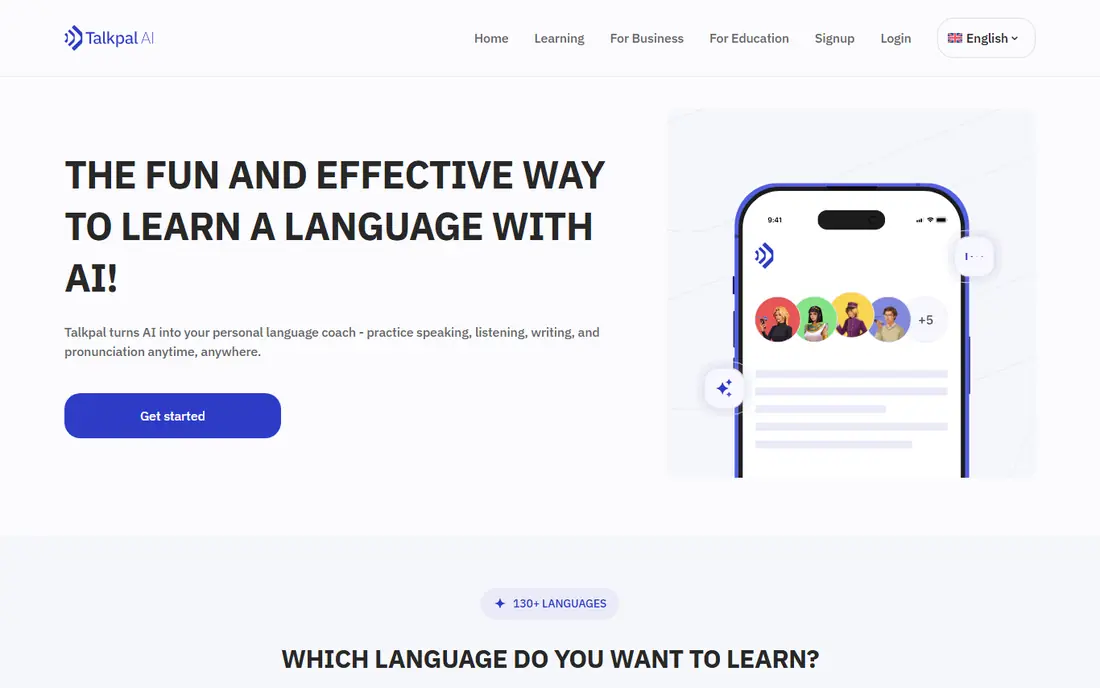
TalkPal is built for learners who want to talk rather than just complete exercises. You can chat by text, call an AI tutor, try roleplays for travel or work situations, and join debates that force you to form opinions in the target language. That range makes it useful for intermediate learners who already know basic grammar and need speaking confidence.
It is less structured than a full course app, so beginners may feel unsure what to practice next. Pair TalkPal with a course app for grammar and vocabulary, and use TalkPal for the speaking time that courses often lack. Its wide language coverage is also a plus if you are learning a less common language.
- Chat, calls, roleplays, and debates in many languages
- Free daily practice time
- Feedback on grammar and vocabulary
- Less structured curriculum than Babbel
- Free tier is limited for heavy daily use
Langua stands out for feedback. After a conversation, it reports your mistakes, explains corrections, and builds practice drills from the words and grammar you got wrong. That loop turns a chat into a lesson, which is more useful than a conversation that simply ends with praise. It also offers flashcards and listening tools, so you can review between speaking sessions.
The price is higher than TalkPal or Duolingo, and absolute beginners may struggle to hold a conversation long enough to benefit. Langua works best once you can form basic sentences and want targeted correction. If speaking accuracy matters more than lesson variety, Langua is a strong pick.
- AI conversations with detailed mistake reports
- Drills built from your own errors
- Podcast and flashcard tools
- Higher monthly price than some rivals
- Conversation focus suits intermediate learners more than absolute beginners
Speak takes a speaking first approach, with lessons built around talking rather than reading and tapping. You practice real situations, repeat phrases, and get feedback on how you sound and how natural your phrasing is. That focus helps English learners who understand a lot but freeze when they need to speak.
Coverage is the trade off. Speak supports fewer languages than general apps, so it is mainly a choice for English learners and a small set of other languages. If English is your target language and speaking is your weak point, Speak is one of the most focused AI language learning tools available. If you are learning another language, TalkPal or Langua will suit you better.
- Speaking focused lessons and roleplays
- AI tutor feedback on pronunciation and phrasing
- Structured paths for learners
- Language coverage is narrower than Duolingo or TalkPal
- No free plan beyond a trial in many cases
Babbel suits learners who want a clear course path. Lessons follow levels, explain grammar in plain terms, and build vocabulary around real situations such as travel, work, and daily life. Speech recognition helps you practice pronunciation, and review sessions bring back words before you forget them.
Babbel is less exciting than gamified apps, and its AI speaking tools do not replace a dedicated conversation tutor. Use Babbel when you want structure and grammar depth, and add TalkPal or Langua for open speaking. That combination covers both the rules of a language and the confidence to use them.
- Structured, level based courses
- Grammar explanations and cultural notes
- Speech recognition for pronunciation
- Fewer languages than Duolingo
- AI speaking features are newer and less central than in TalkPal or Speak
Memrise focuses on learning words the way people actually say them. Short videos of native speakers help you hear natural speed, accent, and phrasing, which is hard to get from text only lessons. Spaced repetition schedules reviews so vocabulary sticks, and newer AI chat features add a speaking option without leaving the app.
Grammar learners may find Memrise lighter than Babbel, and some languages have more content than others. It works best as a vocabulary and listening companion alongside a course or conversation app. If you struggle to remember words, or you want to understand real speakers faster, Memrise earns its place.
- Native speaker videos show real pronunciation and usage
- Spaced repetition for vocabulary
- AI chatbot practice on some plans
- Less grammar depth than Babbel
- Course structure varies by language
ELSA Speak is a specialist tool, and that focus is its strength. It listens to your speech, identifies which sounds need work, and gives drills for those sounds, rather than offering general conversation. That detail helps learners whose grammar is solid but whose accent makes them hard to understand, or who need clear speech for work and study.
It is not a complete language course, so you will still need vocabulary, grammar, and conversation practice elsewhere. Use ELSA Speak as a pronunciation add on, especially if you are preparing for presentations, interviews, or exams in English. For that specific job, few AI language apps give more precise feedback.
- Detailed phoneme level pronunciation feedback
- Targeted drills for difficult sounds
- Clear progress tracking
- Focused on English pronunciation, so it is not a full language course
- Advanced features need a paid plan
How we picked these
We compared official feature pages, AI conversation modes, language coverage, free plans, and pricing, and we favored apps that offer real AI feedback on speech or writing, not just pre recorded lessons. We included course apps, conversation apps, and a pronunciation specialist, because language learning needs more than one skill. Where pricing varies by billing period or plan, we used See website rather than presenting one figure as fixed.
How to build a routine that works
Start with fifteen to twenty minutes a day, split between a course lesson and speaking practice. Use Duolingo or Babbel for structure, then spend ten minutes talking in TalkPal, Langua, or Speak, even if the conversation feels awkward at first. Review mistakes the next day, because correction only helps if you revisit it.
Match the app to your level
Beginners should prioritize a course app and short AI roleplays, while intermediate learners should prioritize open conversation and mistake feedback. Advanced learners benefit most from debate, work roleplays, and pronunciation drills, plus real reading and listening outside any app. No app alone will make you fluent, but a daily mix of input, speaking, and review will move you further than any single tool.
Frequently asked questions
What is the best AI app for language learning?
Duolingo Max is our pick for most learners, because it combines a full course with AI roleplays and a habit system that keeps you returning. TalkPal and Langua are better if speaking practice is your main goal, while Babbel is better for structured grammar. The best AI language learning app depends on whether you need habit, conversation, or structure most.
Can AI apps replace a human tutor?
AI apps are useful for daily practice, instant feedback, and low pressure speaking, but they do not fully replace a human tutor for advanced conversation, cultural nuance, or exam preparation. Use AI apps for volume and routine, and add human lessons or language exchange when you need real world interaction and detailed correction.
Which AI language app is best for speaking practice?
TalkPal suits open conversation in many languages, Langua suits conversation with detailed mistake feedback, and Speak suits structured English speaking practice. Try the free tiers first, and choose the app where you actually speak the most, because speaking time matters more than feature lists.
Are AI language learning apps free?
Most offer a free plan or trial, but AI conversation features often sit behind paid plans or daily limits. Duolingo has a broad free course, while TalkPal and Langua offer limited free practice. Check daily limits before you commit, because a free tier that only allows a few minutes a day may not suit a serious routine.
How long does it take to learn a language with an app?
Progress depends on your starting level, target language, and daily time, not on the app alone. Daily practice over months will build vocabulary and basic conversation, while fluency usually needs additional reading, listening, and real conversation. Set a weekly speaking goal, such as three AI conversations a week, rather than judging progress by streaks alone.
Do AI apps work for less common languages?
Coverage varies a lot. Duolingo and TalkPal cover many languages, while Speak and ELSA Speak focus on fewer languages. Check the official language list before subscribing, and test a conversation in your target language during the free trial, because depth and voice quality can differ by language.
Sources
See where you really rank - block by block
ProMapRanker scans Google Maps across a grid of your service area. Simple monthly plans from $19, white-label on every plan.
Start freeKeep reading
 zoominfo alternatives
ZoomInfo Alternatives in 2026
Compare the best ZoomInfo alternatives in 2026 for B2B contact data, enrichment, and prospecting, including Apollo, Lusha, and Clay tools, with pricing.
Read → best trip planning app
Best Trip Planning App in 2026
Compare the best trip planning apps in 2026 for itineraries, road trips, group travel, and bookings, from Wanderlog to TripIt and Roadtrippers, with pricing.
Read → best recruiting tools
Best Recruiting Tools in 2026
Compare the best recruiting tools in 2026, from Greenhouse and Lever to Workable and Ashby, for hiring, sourcing, and candidate tracking today, with pricing.
Read →