 ProMapRanker
Best AI Investing App for Beginners in 2026


Goal based automated investing · Pricing starts at: 0.25% per year
Key takeaways
- Betterment and Wealthfront are the simplest automated picks for beginners, both charging 0.25 percent per year for managed portfolios with automatic rebalancing.
- Schwab Intelligent Portfolios charges no management fee but needs a 5,000 dollar minimum and holds part of the portfolio in cash.
- Magnifi and similar research tools help you learn and screen stocks, but they do not manage your money for you, so they suit a different kind of beginner.
- This is not financial advice, and investing carries risk, including the risk of losing money, so start with money you can leave invested for years.
Quick comparison
| Pick | Great for | Pricing starts at | Free tier | |
|---|---|---|---|---|
| Betterment | Goal based automated investing | 0.25% per year | No | Visit |
 Wealthfront | Automated investing plus planning | 0.25% per year | No | Visit |
 Schwab Intelligent Portfolios | No fee automated portfolios | Free | No | Visit |
 SoFi Automated Investing | Low cost automated investing | Free | No | Visit |
 Acorns | Round up micro investing | $3 per month | Free trial | Visit |
 Fidelity Go | Beginner robo advisor | Free | No | Visit |
 Magnifi | AI stock research help | Free | Yes | Visit |
 Composer | Automated trading strategies | See website | Free trial | Visit |
The best ai investing app for beginners
We split this list into automated portfolios that manage money for you and AI research tools that help you choose, since a beginner needs to know which kind they are buying.

Betterment is our pick for most beginners who want to set a goal and let software handle the rest. You answer questions about your goal and time horizon, and Betterment builds a diversified ETF portfolio, rebalances it and harvests tax losses in taxable accounts. The goal view makes it easy to see separate pots for retirement, a house deposit or a holiday fund.
Fees need a close read. The Digital tier is listed at 0.25 percent per year, but smaller balances can face a flat fee unless you hold a qualifying balance or set a recurring deposit, so check the current fee page for your balance before opening an account. That detail aside, the experience is one of the cleanest for a first time investor.
- Clear goal setup for retirement and savings
- Automatic rebalancing and tax loss harvesting
- No account minimum for Digital
- Small balances can face a flat monthly fee without a recurring deposit
- Human advice needs the higher Premium tier
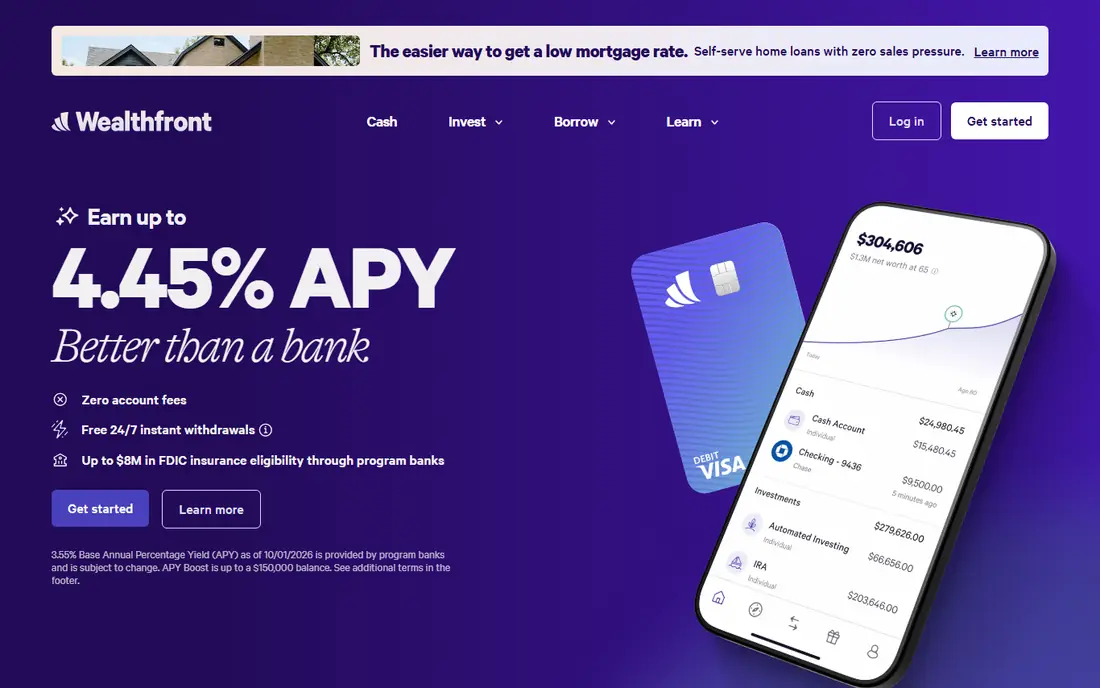
Wealthfront charges a flat 0.25 percent per year for its Automated Investing Account, with no flat monthly alternative, which makes its cost easy to predict as your balance grows. Its Path tool projects retirement, home purchase and college scenarios from your linked accounts, which helps beginners see how a monthly contribution changes a long term plan. Tax loss harvesting is included in the standard fee.
The 500 dollar minimum for the managed account is the main barrier, though its Cash Account has no minimum. If you have 500 dollars to start and want planning tools alongside automation, Wealthfront is a strong rival to Betterment, and the choice often comes down to which interface you prefer.
- Flat 0.25 percent annual fee
- Path planning tool for retirement and college
- Tax loss harvesting included
- 500 dollar minimum for the managed account
- Direct indexing needs a much larger balance
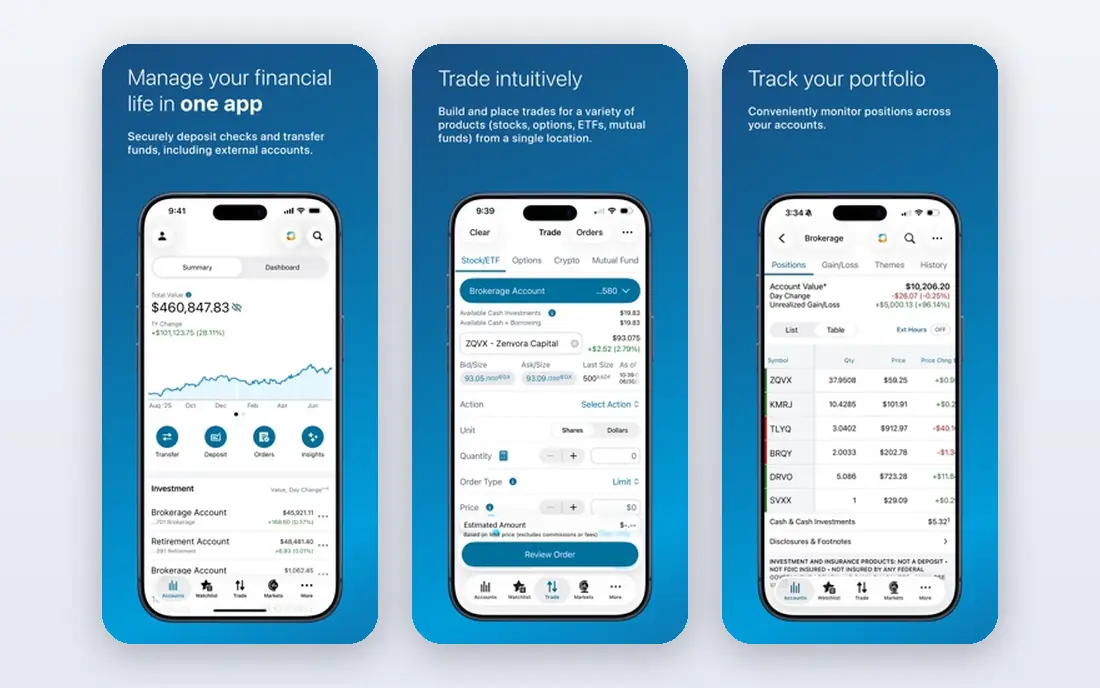
Schwab Intelligent Portfolios is the best free ai investing platform for beginners who already have 5,000 dollars to commit. There is no percentage management fee and no monthly fee, and the portfolio rebalances automatically across US and international equities, bonds, real estate and commodities. For a beginner who dislikes fees on principle, that is a real draw.
The catch is the cash holding. Schwab keeps part of each portfolio in cash, which can lower returns when markets rise, and the 5,000 dollar minimum rules out very small starters. If you meet the minimum and value zero fees over maximum market exposure, it is worth a place on your shortlist.
- No management fee
- Automatic rebalancing
- Wide ETF range across asset classes
- 5,000 dollar minimum
- Cash allocation can drag returns in strong markets
SoFi Automated Investing builds a diversified portfolio for you with no management fee, which makes it one of the cheapest ways to start automated investing. The low minimum means a beginner can open an account with a small amount and add to it over time, and SoFi members can also use its broader banking and planning tools in the same app.
Portfolio choice is narrower than at Betterment or Wealthfront, and tax loss harvesting detail is less central to its pitch. If low cost and a simple start matter most, SoFi is a good fit. If you want deep tax optimization, compare it closely with Wealthfront first.
- No management fee for automated investing
- Low 1 dollar minimum in many cases
- Access to SoFi financial planning help
- Smaller ETF and portfolio range than larger robo advisors
- Planning depth varies by account
Acorns is the best ai investing app for beginners who struggle to save a lump sum. Its Round Ups feature rounds card purchases up to the next dollar and invests the change, so investing happens without a monthly decision. Portfolios are diversified ETFs set by risk level, which keeps choices simple for someone who has never picked a fund.
The monthly fee is the honest catch. At 3 dollars per month for the base tier, a very small balance can pay more in fees than it earns, so Acorns works best once Round Ups and recurring deposits build a balance worth the fee. Treat it as a habit builder, not as a way to beat the market.
- Round Ups turn spare change into investments
- Simple portfolios for new investors
- Family and retirement options in higher tiers
- Monthly fee can outweigh returns on tiny balances
- Portfolio control is limited
Fidelity Go is a robo advisor from Fidelity that builds and manages a portfolio based on your goals and risk level. Its appeal for beginners is the Fidelity name, the simple setup and the published no fee treatment for smaller balances, with fees applying at higher tiers. If you already bank or trade with Fidelity, keeping everything in one app is convenient.
Check the current balance tiers before you open an account, since the fee free threshold and coaching options have changed over time. Fidelity Go suits a beginner who wants a trusted brand and a hands off portfolio without paying a percentage fee from the first dollar.
- No advisory fee for small balances in its published offer
- Backed by a large, established broker
- Simple onboarding for Fidelity customers
- Fee terms change by balance tier
- Human coaching is limited at the base level
Magnifi is a different kind of best ai investment tool: an AI research assistant rather than a robo advisor. Ask it a plain language question about a stock, ETF or theme, and it returns screening results, comparisons and data to help you judge the idea. That makes it useful for a beginner who wants to learn how to research before buying individual stocks.
The limit is clear. Magnifi will not build, rebalance or manage a diversified portfolio for you, and its paid tier, listed around 8.25 dollars per month in recent comparisons, is needed for deeper features. Use it to learn and to check ideas, and pair it with a robo advisor or a broad ETF if you want automation too.
- Conversational AI search for stocks and ETFs
- Screening and comparison tools
- Free tier for basic research
- Does not manage a portfolio for you
- Paid tier needed for full research features
Composer lets users build automated trading strategies from rules and conditions, then runs those strategies in a brokerage account. Its visual editor and backtesting tools help a curious beginner understand how a strategy would have behaved in the past, without writing code. For someone moving from a robo advisor toward more active ideas, that is a useful next step.
This is not a set and forget pick for a first time investor. Automated strategies can trade more often, carry more risk and need regular review, and a strong backtest says nothing about next year. Start with a robo advisor for core savings, and only use Composer with money you can afford to lose while you learn.
- Build rules based strategies without coding
- Backtesting helps you see past behavior
- Automation runs the strategy for you
- Strategy investing suits confident beginners, not true first timers
- Past backtest results do not predict future returns
How we picked these
We compared official fee pages, minimums, portfolio methods and app store listings, and we kept only products that still operate in the US in 2026 and truly use automation or AI for investing or research. We favored clear fees, low minimums and simple onboarding for beginners, and we separated managed portfolios from research tools so readers do not mistake one for the other.
How to choose your first investing app
Start with the question of who manages the money. If you want automation, pick a robo advisor such as Betterment, Wealthfront, Schwab Intelligent Portfolios, SoFi or Fidelity Go, and compare fee, minimum and cash holding, not just the brand. If you want to pick stocks yourself, pick a research tool such as Magnifi and a low cost broker, and keep individual stock bets small next to a diversified core.
Check fees, minimums and risk before you fund
Read the fee page for your exact balance, since flat fees, percentage fees and cash holdings change the real cost. Set a recurring deposit you can sustain, even a small one, and choose a risk level you can hold through a market fall. Avoid borrowed money trades, options and concentrated bets until you understand them, and remember that no AI tool can promise returns.
Frequently asked questions
What is the best ai investing app for beginners?
Betterment is our pick for most beginners, because its goal based automation, rebalancing and tax loss harvesting are easy to use and its fee is clear at 0.25 percent per year. Wealthfront is a close second for planning tools, and Schwab Intelligent Portfolios wins on fees if you meet its minimum.
What is the best ai investment tool for learning about stocks?
Magnifi is the best ai investment tool for learning, since its conversational search helps you screen and compare stocks and ETFs. It does not manage money for you, so pair it with a robo advisor or a broad ETF for your core portfolio.
What is the best ai investing platform for beginners with no fees?
Schwab Intelligent Portfolios and SoFi Automated Investing both offer automated investing with no management fee, but Schwab needs a 5,000 dollar minimum and holds cash in the portfolio. SoFi suits smaller starters who want a low minimum.
What are the best ai investing apps for beginners with small amounts?
Acorns suits very small starters through Round Ups, while Betterment and SoFi suit small recurring deposits with low minimums. Watch flat monthly fees on tiny balances, since a 3 dollar monthly fee can outweigh early gains.
Is there a best free ai investing app for beginners?
There is no fully free managed option without trade offs, but Schwab Intelligent Portfolios, SoFi Automated Investing and the free tier of Magnifi all give useful free starting points. Check minimums, cash holdings and paid tiers before you commit, and remember this is not financial advice.
Sources
See where you really rank - block by block
ProMapRanker scans Google Maps across a grid of your service area. Simple monthly plans from $19, white-label on every plan.
Start freeKeep reading
 best tour operator software
Best Tour Operator Software in 2026
Compare the best tour operator software for bookings, channel management, waivers and payments, with pricing models for day tours and multi-day trips.
Read → best time clock app for small business
Best Time Clock App for Small Business in 2026
We compare the best time clock app for small business options, with free plans, GPS clock ins, scheduling and payroll links for hourly teams and payroll help.
Read → best test automation tools
Best Test Automation Tools in 2026
Compare the best test automation tools, from Playwright and Selenium to Cypress, Katalon and BrowserStack, with prices, languages and best uses explained.
Read →