 ProMapRanker
Best AI Governance Platforms in 2026


Large enterprises with complex model portfolios · Pricing starts at: See website
Key takeaways
- Most of these platforms use quote-only enterprise pricing, so budget for implementation as well as licences.
- A policy tool and a monitoring tool often work better together than either one alone.
- IBM is the partial exception here, with some published metered pricing for watsonx.governance.
- Check whether a vendor covers your frameworks, such as the EU AI Act, NIST AI RMF, or ISO 42001, before you shortlist it.
Quick comparison
| Pick | Great for | Pricing starts at | Free tier | |
|---|---|---|---|---|
| IBM watsonx.governance | Large enterprises with complex model portfolios | See website | Free trial | Visit |
 Credo AI | Policy-led AI governance programs | See website | No | Visit |
 Holistic AI | Risk testing and audit support | See website | No | Visit |
 OneTrust AI Governance | Privacy and GRC-led organizations | See website | No | Visit |
 Saidot | Transparent AI governance and registers | See website | No | Visit |
 Monitaur | Auditability and regulatory documentation | See website | No | Visit |
 Asenion | Responsible AI assessments and EU compliance | See website | No | Visit |
 ModelOp | Enterprise AI lifecycle governance | See website | No | Visit |
The best AI governance platforms
The best AI governance platforms in this guide cover policy, risk testing, audit evidence, and lifecycle control, so you can match the tool to the job your program actually needs.
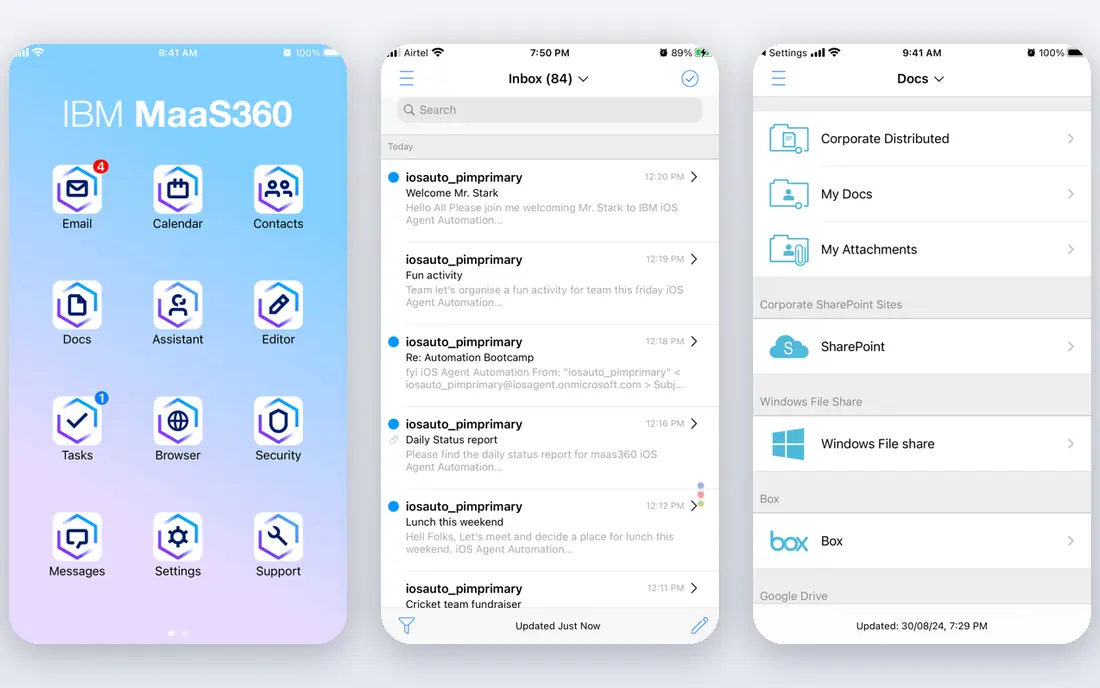
IBM watsonx.governance is the enterprise option for teams that need one place to record models, prompts, and AI use cases, then follow each one from request through production and retirement. Its factsheets gather metadata, versions, and evidence in a form that reviewers and auditors can follow without chasing files across teams. That structure is the main reason large, regulated organizations shortlist it first, even when smaller tools look simpler at first glance.
Monitoring covers quality, fairness, drift, and generative AI risks, and governance workflows handle approvals and tasks in the same system. The catch is scale: pricing is quoted for most setups, implementation takes real planning, and a small team may find the depth more than it needs. It fits best when model risk is a board-level concern and the portfolio is large enough to justify a formal program.
- Model inventory and factsheets
- Risk and compliance workflows
- Monitoring for quality, fairness, and drift
- Enterprise pricing and setup effort
- Best suited to larger teams with governance staff
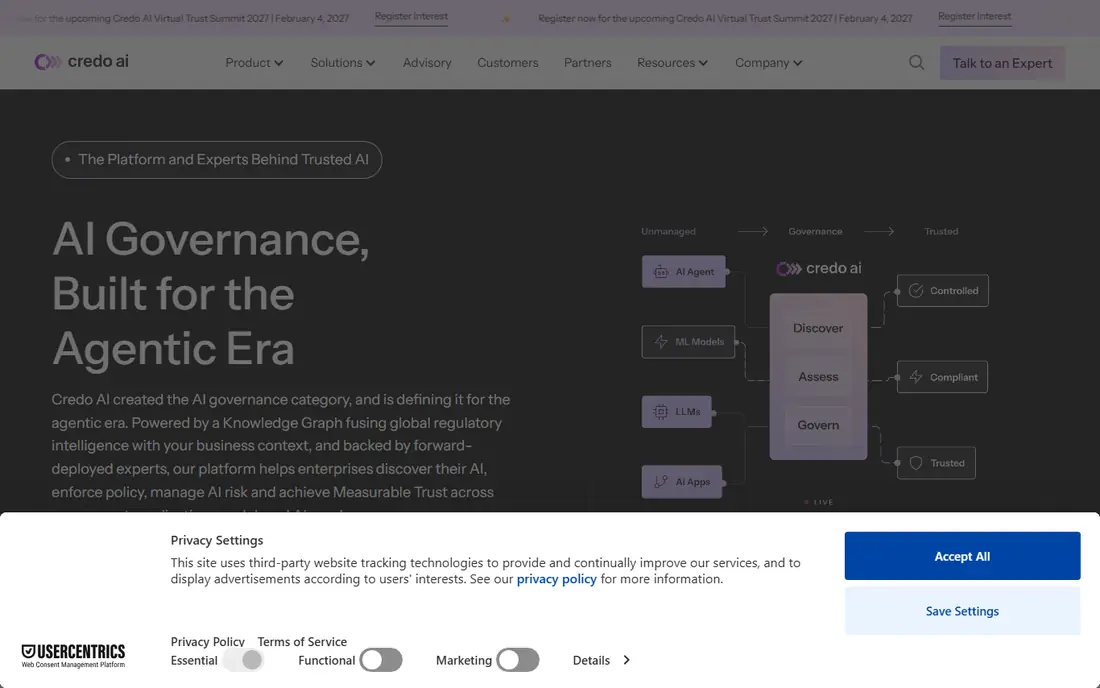
Credo AI works as a central control plane for AI governance, with a registry for models, applications, and agents, plus assessments that map to frameworks such as the EU AI Act, NIST AI RMF, and ISO 42001. Policy packs turn those requirements into controls, reviews, and approvals that teams can actually follow. For an organization that must show its work to regulators, customers, or an audit team, that evidence trail is the strongest selling point.
The platform is built for governance teams rather than for casual self-serve use, and pricing is enterprise only, so smaller companies should expect a sales conversation and a serious budget discussion. It also focuses on program governance more than on runtime enforcement, so some teams pair it with monitoring tools. Our pick for most large programs is Credo AI when policy coordination across divisions is the main job.
- AI use-case registry
- Policy packs mapped to major frameworks
- Audit-ready evidence generation
- Quote-only enterprise pricing
- Needs a dedicated governance owner
Holistic AI centers on assessing, testing, and documenting risk across an AI portfolio, with workflows that suit finance, health care, and insurance teams that face close scrutiny. Its reports give leaders a readable view of risk posture, and its testing helps teams find problems in models before those problems reach customers. That audit focus makes it a strong fit when documentation matters as much as the model itself.
Pricing is not published, and complex deployments need time to set up well, so buyers should plan for discovery and integration work in the first months. It is less of a quick, self-serve purchase and more of a program investment. Still, for teams that need independent-style risk evidence and a disciplined assessment process, Holistic AI earns a place on the shortlist.
- Structured AI risk assessments
- Bias and safety testing
- Clear risk reporting
- No public pricing
- Implementation can take time for complex estates
OneTrust AI Governance appeals to organizations that already manage privacy, risk, and compliance in one place, because it connects AI inventory and assessments to that wider program. Teams can run risk assessments, track accountability, and keep AI decisions tied to existing controls rather than building a separate system from scratch. That link is valuable when the same data and the same reviewers cover both privacy and AI.
The breadth of the wider OneTrust suite is also its drawback: smaller teams may find more platform than they need, and pricing requires a quote. Buyers should check which AI governance features sit in the base offer and which need added modules. It fits best for GRC-led organizations that want AI governance inside an established compliance home.
- Links AI governance to privacy and compliance work
- Risk assessments
- Accountability controls
- Broad suite can feel heavy
- Quote-only pricing
Saidot provides governance, risk assessment, and compliance management for enterprise AI systems, with a register that makes AI use visible across the organization. Visibility is the point: when leaders, reviewers, and affected teams can see what systems exist and how they were assessed, decisions get easier to defend. Saidot also supports public-facing transparency work, which suits public sector and highly scrutinized organizations.
As an enterprise tool, it is not a quick trial-and-buy product, and public pricing detail is limited, so procurement should allow time for demos and scoping. Its strength is structured governance and clear records rather than deep model monitoring. Choose Saidot when a credible register and defensible assessment process are the top priorities.
- AI system registers
- Risk assessment workflows
- Compliance management
- Enterprise focus
- Limited self-serve detail in public pricing
Monitaur focuses on making AI systems auditable, with risk management and documentation that help teams answer regulator and customer questions with records rather than recollection. That emphasis suits organizations where an audit can arrive at any time and where the file must speak for itself. It keeps governance tied to evidence, which reduces the scramble that follows a difficult question about a model in production.
The trade-off is that pricing is quoted rather than published, and Monitaur is less widely known than IBM or OneTrust, so buyers may need to do more reference checking. It is also a governance and audit tool first, not a general machine learning platform. For audit-ready documentation as the main goal, it is a solid, focused choice.
- AI risk management
- Audit trails
- Regulatory documentation
- Quote-only pricing
- Narrower brand recognition than larger rivals
Asenion is the current name for the company formerly known as Fairly AI, following its combination with anch.AI, and it keeps an AI governance and compliance focus with added European regulatory expertise. Its assessments and evidence workflows help teams show how they evaluated a system, what risks they found, and what controls they put in place. That record matters most for organizations operating under European rules or serving European customers.
Buyers who remember the Fairly AI name should confirm they are looking at the same vendor under its new name during due diligence, and pricing is enterprise oriented. Asenion fits teams that want assessment-led governance with a strong European angle, rather than a broad, all-in-one enterprise suite.
- Responsible AI assessments
- Compliance evidence
- Governance workflows
- Rebrand may confuse buyers
- Enterprise pricing
ModelOp governs AI models across the enterprise lifecycle, from registration and validation through deployment and ongoing oversight. It suits organizations with many models in production that need consistent controls, clear ownership, and a single view of model status. When model operations and governance live apart, gaps appear; ModelOp tries to close that gap by treating governance as part of operations.
Implementation is an enterprise project, not a weekend setup, and pricing is quoted, so smaller teams may find it out of reach. It also assumes a mature model practice, with owners and processes already in place. For large portfolios where lifecycle control is the central need, ModelOp is a credible, operations-minded option.
- Enterprise-wide model oversight
- Lifecycle governance
- Model operations
- Enterprise implementation effort
- Quote-only pricing
How we picked these
We compared official product pages, pricing pages, feature descriptions, and public documentation, and we checked that each product is still offered in October 2026. We kept only products that match the topic directly, and we left out products that were discontinued, renamed without a live successor, or too broad to be useful for this job. Where a vendor does not publish a price, we wrote See website rather than guessing a figure, and we noted the trade-offs that matter most in everyday use, such as setup effort, limits on cheaper plans, and how much admin work the tool creates.
Choosing the right AI governance tool
Start from the frameworks you must satisfy and the size of your AI portfolio, then check whether you need a registry, risk testing, runtime monitoring, or all three. Ask each vendor to show a real audit trail, an approval workflow, and a report a non-technical reviewer can understand, because governance fails when only specialists can read it. Confirm data handling, access controls, and where model and prompt data are stored, and confirm which integrations cover your model platforms and cloud providers. Start with a small pilot, measure the time saved or the problem solved, and only then expand to more users or sites. Ask for a written quote that covers implementation, training, and any usage limits, and keep a note of the renewal terms before you sign.
Frequently asked questions
What is the best AI governance platform?
There is no single winner for every organization. Credo AI suits policy-led enterprise programs, IBM watsonx.governance suits large model portfolios, and Holistic AI suits risk testing and audit support. Match the platform to your main job, then check framework coverage and total cost.
What are the best AI governance tools for smaller teams?
Most tools in this guide are enterprise priced, so smaller teams should start with a narrow scope, such as a register and a risk assessment template, and ask vendors about smaller packages. A monitoring tool may also cover part of the job at a lower entry cost.
What is the best AI governance software for EU AI Act compliance?
Look for policy packs and assessments mapped to the EU AI Act, plus evidence generation and a clear system register. Credo AI, Asenion, and IBM all emphasize framework mapping, but confirm the exact coverage in a demo with your own use cases.
What is the best software for AI governance in regulated industries?
Regulated teams usually need audit trails, approval workflows, and risk documentation, which points to IBM, Holistic AI, Monitaur, or OneTrust. Ask for a sample audit pack and check how the tool handles model changes after approval.
What is the best tool for AI governance when models change often?
Choose a platform with lifecycle controls and monitoring, so new versions, prompts, and deployments trigger review rather than slipping through unnoticed. ModelOp and IBM emphasize lifecycle governance, while monitoring specialists add runtime checks.
Sources
See where you really rank - block by block
ProMapRanker scans Google Maps across a grid of your service area. Simple monthly plans from $19, white-label on every plan.
Start freeKeep reading
 whats the best ai app to use
Whats the Best AI App to Use in 2026
Wondering whats the best ai app to use in 2026? We compare ChatGPT, Claude, Gemini, Copilot, and more on price, free plans, and best everyday uses today.
Read → life360 alternatives
Life360 Alternatives in 2026
Life360 alternatives compared: 9 family location apps with live maps, arrival alerts and privacy controls to help your family stay in touch every day.
Read → captcha alternatives
CAPTCHA Alternatives in 2026
CAPTCHA alternatives compared: 9 reCAPTCHA alternatives that block bots with less friction, from free Turnstile to privacy-first proof-of-work tools included.
Read →