 ProMapRanker
Best AI Book Writing Software in 2026

Key takeaways
- Sudowrite is the best all-in-one fiction drafting tool for most novelists, while Novelcrafter suits writers who want control over models and long-book organization.
- Squibler and Inkfluence AI suit writers who want structure, outlines, and a guided path from idea to finished draft.
- ChatGPT Plus and Claude Pro are flexible general tools, but they need your own structure, because a chat thread is not a manuscript system.
- AI output always needs human editing. Check facts, fix continuity, and keep your own voice, because raw AI draft text is rarely publishable as is.
- Where a publisher, platform, or contest asks about AI use, disclose it honestly. You remain the author responsible for the book, and AI output is not a substitute for your own work.
Quick comparison
| Pick | Great for | Pricing starts at | Free tier | |
|---|---|---|---|---|
 Sudowrite | all-in-one fiction drafting | $10 per month | Free trial | Visit |
 Novelcrafter | long novels and model control | $4 per month | Free trial | Visit |
 Squibler | structured books and screenplays | $15.83 per month | Yes | Visit |
 NovelAI | unlimited fiction text | $10 per month | Free trial | Visit |
 Inkfluence AI | guided book creation | $9.99 per month | Yes | Visit |
 ChatGPT Plus | flexible general drafting | $20 per month | Yes | Visit |
 Claude Pro | long-form drafting and revision | $20 per month | Yes | Visit |
 Rytr | low-cost short-form drafting | $9 per month | Yes | Visit |
 Plottr | plotting and story organization | $25 per month | Free trial | Visit |
The best AI book writing tools
We compared drafting quality, story organization, credit and API costs, exports, and fit by book type, using vendor pages and current AI writing comparisons. Prices are entry paid tiers, and credit-based tools can cost more with heavy use. A plain note runs through this list: human editing and honest authorship disclosure matter with every tool here.
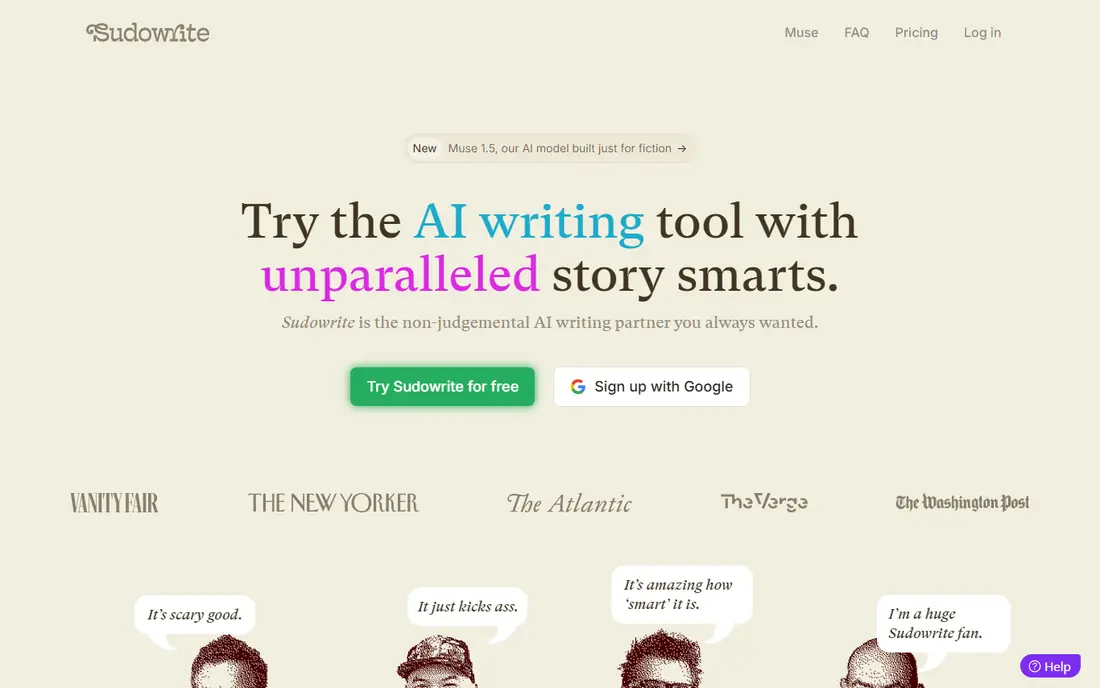
Sudowrite is the most complete fiction-first AI tool in this list. Its Describe, Rewrite, and Brainstorm tools help with prose, tone, and ideas, while its Story Bible tracks characters, settings, and plot points so later chapters stay consistent. Story Engine guides you step by step from outline to draft chapters, which suits novelists who want structure without building their own system. Pricing starts at $10 per month billed annually for the Hobby tier, with Professional at $22 and Max at $44.
Sudowrite's credit model is the main catch. A long novel can use credits quickly, especially on lower tiers, and there is no permanent free plan, only a trial. Even so, for a novelist who wants one tool for drafting, rewriting, and continuity, Sudowrite offers the most polished fiction workflow here, provided you budget for credits and plan to revise every chapter yourself.
- Fiction-focused drafting, rewriting, and brainstorming
- Story Bible for continuity
- Guided Story Engine for novels
- Credit-based pricing can run out on long books
- No permanent free plan
- Output still needs substantial revision
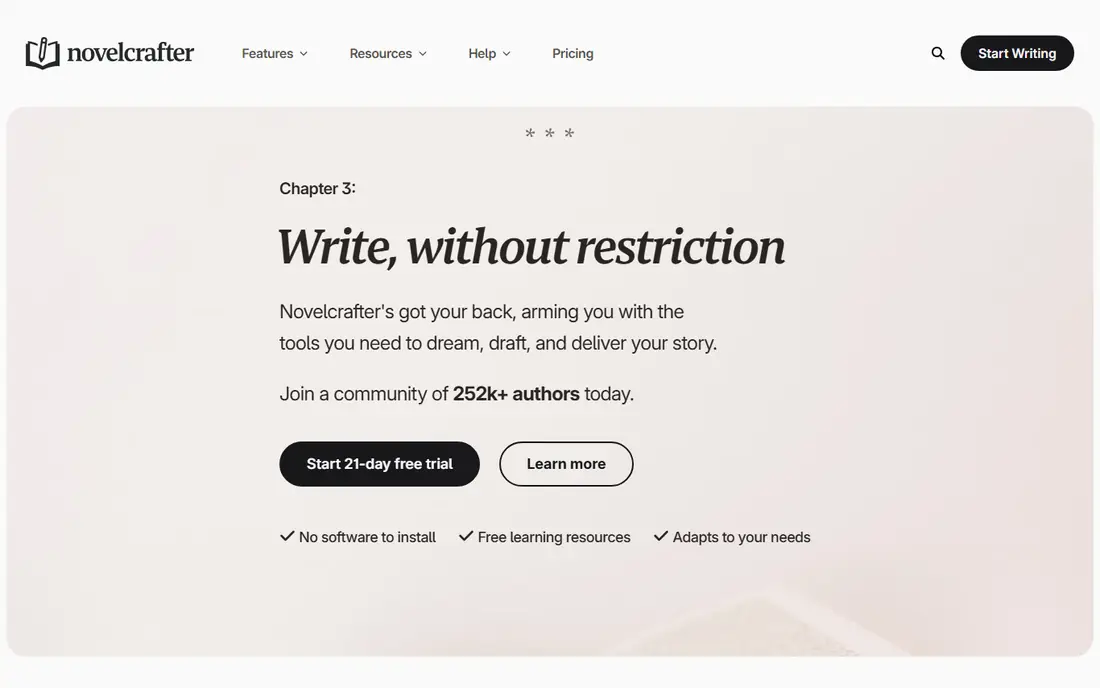
Novelcrafter is a novel management system with AI attached, rather than a simple chat tool. Its codex tracks characters, locations, lore, and plot threads across a long manuscript, and its chapter planning tools help you keep a complex series consistent. Platform pricing starts at $4 per month, rising to $20 per month for tiers with AI access, but you also pay your chosen model provider separately for API use, which can be cheaper or pricier depending on volume.
That bring-your-own-key model is both strength and friction. Experienced writers gain control over model choice and cost, while beginners may find API setup off-putting. For a writer planning a long novel or series, with the patience to set up a model, Novelcrafter offers the strongest organization in this list.
- Strong codex and chapter planning for long books
- Bring-your-own-model flexibility
- Good value for organized writers
- You pay separately for model API costs
- Learning curve for setup
- Cheapest tier includes no AI access
Squibler combines outlining, drafting, and AI assistance in one workspace, with corkboard scene planning, hierarchical outlines, and a Story Bible for continuity. Templates cover novels, nonfiction books, and screenplays, which suits writers who want a guided structure rather than a blank page. A free tier with limited AI credits lets you test the system, while paid plans start at $15.83 per month billed annually for the Plus tier.
AI credits cap how much you can generate per tier, so heavy drafters may need a higher plan. Squibler's AI is also a general assistant rather than a fiction-specialized model, so its prose benefits from clear outlines and careful revision. For a writer who values organization and templates, and who wants AI help within a structured book project, Squibler is a practical middle ground between Sudowrite and a general chatbot.
- Corkboard scene planning and Story Bible
- Book and screenplay templates
- Free tier to start
- AI credits are capped per tier
- Export and advanced features need paid tiers
- Prose quality varies by use
NovelAI is a fiction-focused AI writing service with its own models, a lorebook for tracking world details, and unlimited text generation on its paid tiers, starting at $10 per month. That unlimited model suits prolific writers who generate a lot of draft text and dislike watching credits drain. The lorebook helps keep characters, places, and rules consistent across a long story, which is a real advantage for fantasy and science fiction.
NovelAI offers fewer planning and chapter management tools than Novelcrafter or Squibler, so writers who need strong outlining may pair it with another tool. Its interface also assumes some familiarity with AI fiction tools. For a writer who mainly needs fluent draft prose and world consistency, without credit anxiety, NovelAI is a strong, focused choice.
- Unlimited text generation on paid tiers
- Lorebook for world consistency
- Fiction-trained models
- Fewer structure tools than Novelcrafter
- Interface suits experienced fiction writers
- Subscription needed for full use
Inkfluence AI is an all-in-one book creation tool that guides you from outline to chapters, cover, and EPUB or PDF export, with audiobook narration on higher tiers. Its free tier lets you generate a short book with a cover, and paid plans start at $9.99 per month for Creator, with Premium at $19.99 per month for unlimited chapters. The flat price, with no separate API bill, makes budgeting simpler than bring-your-own-key tools.
Inkfluence is newer than Sudowrite or Novelcrafter, so its track record is shorter, and its guided workflow suits writers who want a finished book path more than open-ended experimentation. Export and audiobook limits also vary by tier, so check them before you commit to a long project. For a nonfiction or fiction writer who wants a guided route to a finished draft, Inkfluence is an accessible start.
- Guided chapter, cover, and export workflow
- Free tier with finished book export
- Flat pricing without API bills
- Newer vendor with a smaller track record
- Less flexible than general chatbots
- Audiobook and export limits vary by tier
ChatGPT Plus, at $20 per month, is a flexible general tool that many writers use for outlining, brainstorming, drafting scenes, and revising prose. It handles nonfiction structure, chapter summaries, and dialogue help well, and it is useful beyond book writing, for emails, research summaries, and editing. The free tier covers basic chat use, while Plus adds higher limits and newer models.
ChatGPT is not a manuscript system. It has no Story Bible, codex, or chapter management, and context resets between conversations, so long novels sprawl unless you manage files and summaries yourself. It can also invent facts, quotes, and references, which matters greatly for nonfiction. Use ChatGPT as a drafting and thinking partner, keep your manuscript in a separate tool, and revise and verify everything before publication.
- Strong general drafting and revision
- Useful for outlines, research, and brainstorming
- No credit system for Plus use
- No built-in manuscript or continuity system
- Context resets between chats
- Output needs careful fact-checking
Claude Pro, at $20 per month, is widely used by writers for long-form drafting, structural revision, and line editing, thanks to its ability to handle large passages and follow detailed style instructions. Writers often paste a chapter, ask for a revision pass, and then edit the result in their own voice. The free tier covers basic use, while Pro adds higher limits for sustained writing sessions.
Like ChatGPT, Claude has no built-in book structure, codex, or chapter tracking, so you must manage the manuscript yourself, in a tool such as Novelcrafter, Squibler, or a word processor. Claude can also produce confident-sounding errors, especially on factual topics, so verify names, dates, and claims. For a writer who already has a manuscript system and wants a strong revision partner, Claude Pro is a reliable choice.
- Strong long-form writing and revision
- Good at following style guidance
- Useful for editing large passages
- No manuscript management system
- Usage limits apply
- Output still needs human editing and verification
Rytr is a low-cost AI writing assistant with templates for outlines, chapters, blog posts, and marketing copy, starting at $9 per month, with a free tier for limited use. It suits writers who need help with a book outline, chapter summaries, back-cover copy, or short sections, rather than a full novel draft in one pass. The low price makes it easy to try alongside a manuscript tool.
Rytr is not built for long-book continuity or chapter management, and its output for extended prose needs substantial revision to sound like a single author. Writers planning a full book should treat Rytr as a helper for sections and supporting copy, not as the main drafting engine. For that supporting role, at a low price, Rytr is good value.
- Low entry price
- Free tier for testing
- Many templates for short-form content
- Less suited to full-length books
- Output needs heavy editing for long prose
- Fewer book-specific tools
Plottr is a visual plotting tool that helps writers plan novels and series with timelines, character arcs, and story structure templates. It suits writers who outline first and draft second, because a clear plot makes AI drafting far more useful, whatever drafting tool you choose. Plottr offers a free trial, with paid plans at about $25 per month, and it works well alongside Sudowrite, Novelcrafter, or a general chatbot.
Plottr is not a full AI drafting engine, so do not buy it expecting it to write chapters for you. Its AI features are lighter than those of Sudowrite, and its value lies in organization, not prose generation. Pair Plottr with a drafting tool if you struggle with structure, and use it to keep a series timeline consistent across books.
- Visual timelines and story structure tools
- Templates for novels and series
- Helps plan before drafting
- Primarily a plotting tool, not an AI drafting engine
- Subscription cost
- AI features are lighter than Sudowrite
How we picked these
We compared vendor pages and current AI writing comparisons, focusing on drafting quality, story organization, credit versus API costs, exports, and fit by book type. We favored tools that are actively available in 2026 and that serve a distinct role, from fiction drafting to plotting to revision. We did not claim hands-on testing of a full published book, and we treated AI output as draft material that requires human revision, not as finished prose.
How to use AI for a book without losing authorship
AI can speed up drafting, outlining, and revision, but the book must remain yours in ideas, structure, and final wording. The practices below keep that line clear.
Draft with AI, decide as the author
Use AI for first drafts, alternatives, and brainstorming, then rewrite in your own voice, cut what does not fit, and fix continuity yourself. Keep your outline, character notes, and key decisions in your own words, because those choices are the core of authorship. If a passage sounds generic, or does not match your intent, rewrite it rather than accepting it.
Edit, verify, and disclose honestly
Check every fact, quote, date, and reference in nonfiction, because AI tools can invent plausible-sounding details. For fiction, check names, timelines, and plot logic across chapters. Where a publisher, platform, contest, or retailer asks whether AI was used, answer honestly and follow its policy, since rules vary and are still changing. Keep records of your drafts and revisions, so you can show your own contribution if asked.
Choose tools by cost model
Credit-based tools such as Sudowrite charge for output, so heavy drafters should budget for higher tiers. Bring-your-own-key tools such as Novelcrafter add API bills on top of the platform fee, which can be cheaper for light use and pricier for heavy use. Flat-price tools such as Inkfluence AI and general subscriptions such as ChatGPT Plus and Claude Pro are easier to budget, but they may lack book-specific structure. Model a month of your actual writing volume before committing.
Frequently asked questions
What is the best AI tool for writing a book?
Sudowrite is our pick for most fiction writers, because it combines drafting, rewriting, and continuity tools in one place. Novelcrafter suits long novels and writers who want model control, while Inkfluence AI suits writers who want a guided path to a finished book. For nonfiction, ChatGPT Plus or Claude Pro paired with a manuscript tool often works better than a fiction-only tool.
What are the best AI tools for writing books for beginners?
Sudowrite and Squibler are the most beginner-friendly book tools, thanks to guided workflows and templates. Inkfluence AI is also accessible, with a free tier that produces a short finished book. Start with a free tier or trial, write one chapter, and judge the tool on how much revision its output needs.
What is the best AI app for writing a book on a budget?
Novelcrafter's low platform fee, plus API costs, can be cheap for light use, while Rytr at $9 per month suits short-form help on a budget. Sudowrite's $10 per month Hobby tier is also affordable for casual fiction writing. Watch credit and API costs, because a low headline price can rise with heavy drafting.
Can I publish a book written with AI?
You can publish AI-assisted work, but you remain responsible for the text, and rules vary by publisher, platform, and contest. Many publishers and retailers ask for disclosure of AI use, and some restrict fully AI-generated books. Always edit thoroughly, verify facts, and disclose honestly where asked. AI output alone, without your own editing and authorship, is not a finished book.
Do I need to disclose AI use in my book?
Follow the policy of the publisher, platform, or contest you submit to, and disclose when asked. Even where disclosure is not required, honesty with readers matters, especially for nonfiction and memoir. Keep your drafts and revision history, so you can describe your process accurately if questions arise.
Is AI book writing software a substitute for editing?
No. AI draft text needs human editing for voice, structure, continuity, and accuracy, and most books also benefit from a human editor or beta readers. AI tools can help with line edits and proofreading passes, but they do not replace judgment about story, argument, or audience. Budget time for revision, even when drafting feels fast.
Sources
- https://www.sudowrite.com
- https://www.novelcrafter.com
- https://www.squibler.com
- https://www.novelai.net
- https://www.inkfluenceai.com
- https://www.chatgpt.com
- https://www.claude.com
- https://www.rytr.me
- https://www.plottr.com
- https://www.inkfluenceai.com/blog/sudowrite-review-pricing-2026
- https://sudowrite.com/blog/best-ai-for-novel-writing/
See where you really rank - block by block
ProMapRanker scans Google Maps across a grid of your service area. Simple monthly plans from $19, white-label on every plan.
Start freeKeep reading
 best tour operator software
Best Tour Operator Software in 2026
Compare the best tour operator software for bookings, channel management, waivers and payments, with pricing models for day tours and multi-day trips.
Read → best time clock app for small business
Best Time Clock App for Small Business in 2026
We compare the best time clock app for small business options, with free plans, GPS clock ins, scheduling and payroll links for hourly teams and payroll help.
Read → best test automation tools
Best Test Automation Tools in 2026
Compare the best test automation tools, from Playwright and Selenium to Cypress, Katalon and BrowserStack, with prices, languages and best uses explained.
Read →