 ProMapRanker
Best Agentic AI Platform We Can Run On Premises in 2026

Key takeaways
- Every platform here can run on your own servers, but the effort needed ranges from a Docker install to a full engineering project.
- Dify and Langflow are the most approachable visual options for teams that want agents without writing a whole framework.
- n8n and Activepieces suit automation heavy teams, with AI steps inside wider workflows.
- CrewAI, LangGraph, Agno and RAGFlow suit engineering teams that want code level control over multi agent systems.
- Flowise reached end of life in August 2026, so we do not recommend starting a new project on it.
- Cloud only agent tools are left out, even when they are popular, since they do not meet the on premises test.
Quick comparison
| Pick | Great for | Pricing starts at | Free tier | |
|---|---|---|---|---|
 Dify | Visual LLM apps and agents | Free | Yes | Visit |
 Langflow | Visual agent and retrieval flows | Free | Yes | Visit |
 n8n | Workflow automation with AI steps | Free | Yes | Visit |
 CrewAI | Role based multi agent teams | Free | Yes | Visit |
 LangGraph | Stateful code first agents | Free | Yes | Visit |
 RAGFlow | Document heavy retrieval agents | Free | Yes | Visit |
 Agno | Code first production agents | Free | Yes | Visit |
 Sim | Visual agent workflows | Free | Yes | Visit |
 Activepieces | Automation with AI features | Free | Yes | Visit |
The best agentic AI platforms we can run on premises
On premises here means the platform itself runs on servers you control, even if the language model behind it is called through an API. That distinction matters, and we state it plainly for each platform below.
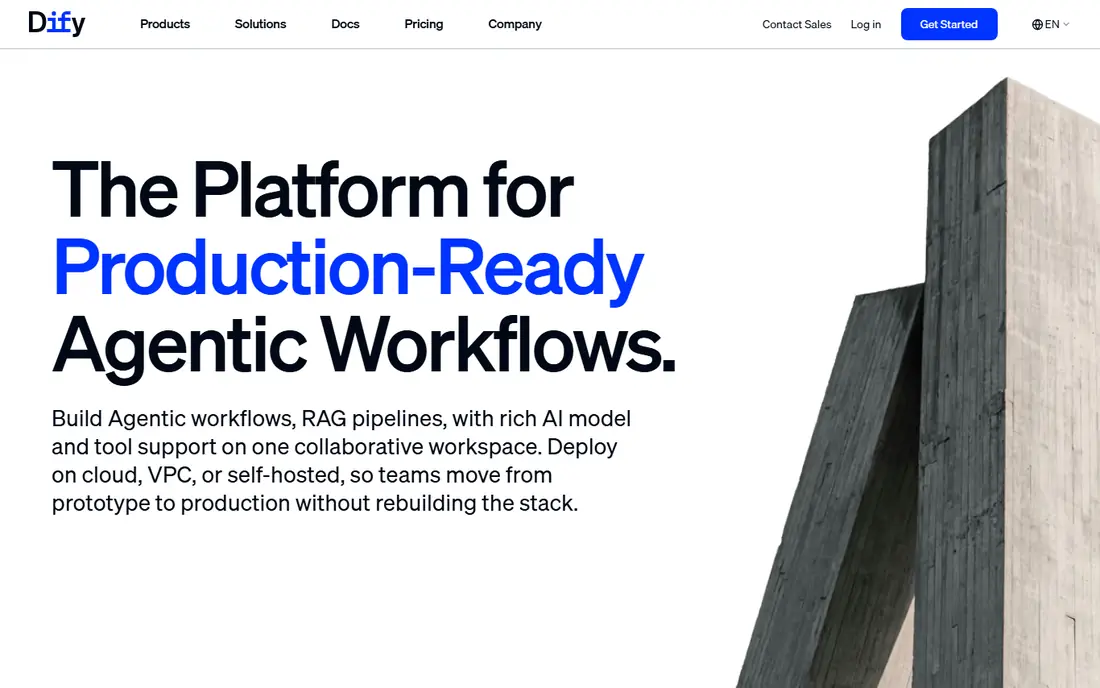
Dify is the most complete visual option for teams that want to build agents without starting from code. You can build chat apps, workflows and agent apps, add a knowledge base from your own documents, and publish each app through an API. That packaging makes a demo fast, which is why many teams start here.
Self hosting uses Docker Compose with several containers, so it is heavier than a single app install. The Community Edition is free, while cloud plans start at $59 per month for Professional, but those cloud prices do not apply to a self hosted install. Check the license before you host Dify for paying customers, since it limits multi tenant resale.
- Visual workflows and knowledge bases
- Agent apps with APIs
- Self hosted Community Edition
- Self hosting needs several services
- License limits multi tenant resale
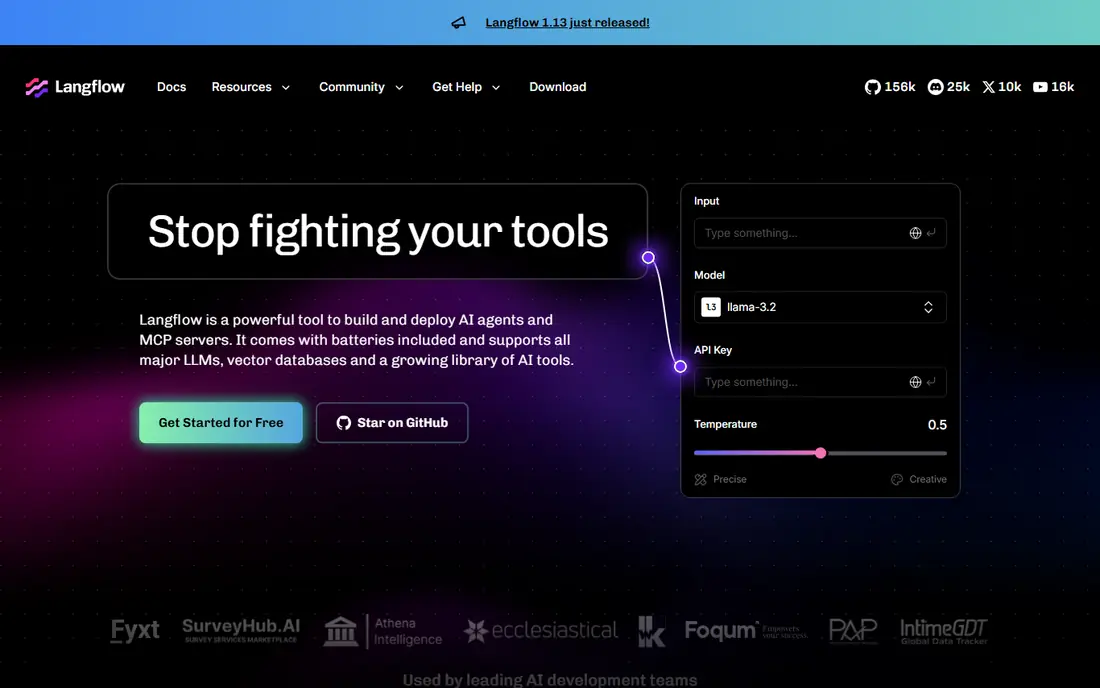
Langflow gives engineers a visual canvas for agent and retrieval flows, with the option to drop into code when a visual node is not enough. It is MIT licensed, which makes it one of the simplest options to run inside a company without license surprises. Flows can be published as services that other systems call.
The open source build has basic access controls, and stronger identity features need extra plugins or a commercial offering. That is fine for an internal team, but a public facing deployment needs a security review first. For prototyping that can grow into production code, Langflow is a strong pick.
- MIT license
- Visual builder with code access
- Every project can act as a server
- Open source access controls are basic
- Production setup needs engineering work
n8n is a workflow platform first, with AI steps added inside wider automations. That makes it a good fit when an agent needs to read a ticket, check a system, draft a reply and log the result, all in one flow. The Community Edition is free to self host, with no workflow or execution caps in that edition.
The license is fair code under a Sustainable Use License, which is source available rather than fully open source. Cloud plans start at about $20 per month, but self hosting avoids that bill, leaving server and model costs. If your main job is automation with agent steps, n8n is the most practical option here.
- Hundreds of connectors
- AI agent node
- Free self hosted Community Edition
- Fair code license, not fully open source
- Multi agent patterns need manual design
CrewAI models agents as a team with roles, goals and tasks, which maps well to jobs that need several specialists working in sequence. A researcher agent can gather facts, a writer agent can draft, and a reviewer agent can check the result, all inside one run. The open source core is MIT licensed and runs as a Python service in Docker.
That clarity comes with a code requirement. Non technical teams will find Dify or Langflow easier, while engineering teams will like the control CrewAI gives over prompts, tools and handoffs. Hosted and enterprise offerings exist, but the self hosted core is where most small teams start.
- Clear role and task model
- MIT open source core
- Python based and container friendly
- Needs Python skills
- Hosted enterprise features are separate from the open core
LangGraph is the code first framework for agents that need memory, loops and careful error handling. You define a graph of steps, and the agent can revisit a step, branch on a result, or pause for human approval. That control suits production agents where a single straight line workflow is not enough.
There is no drag and drop builder by default, so this is a developer tool, not a business user tool. Langflow can help prototype LangChain based flows visually, but LangGraph itself is written in code. If your team already builds in Python, LangGraph gives the most precise control on this list.
- Stateful multi step agents
- MIT license
- Strong control over loops and retries
- Code heavy
- Needs LangChain familiarity
- No visual builder by default
RAGFlow focuses on the retrieval layer that many agents get wrong. It parses documents, chunks them for search, and grounds agent answers in your own files, which reduces made up answers on document questions. The project is Apache 2.0 licensed and runs with Docker on your own servers.
It is not a general automation platform, so pair it with a workflow tool if agents also need to act on other systems. For teams whose main problem is answering questions from contracts, manuals or research files, RAGFlow is the most document focused option here.
- Deep document retrieval
- Apache 2.0 license
- Docker based self hosting
- Retrieval focused, not a general workflow tool
- Setup needs tuning for large document sets
Agno, formerly known for its agent framework work, is a code first option for production agents that need to run fast and stay light. You build agents in Python, give them tools and memory, and deploy the result in a container on your own infrastructure. The Apache 2.0 license keeps the legal side simple.
The community is smaller than LangChain or n8n, so examples and connectors are fewer. That matters when you need a ready made integration rather than writing one. For engineering teams that want a lean framework without a heavy platform, Agno is worth testing alongside LangGraph.
- Apache 2.0 license
- Lightweight agent framework
- Runs as a Python app in containers
- Newer framework with a smaller community
- Needs engineering skills
Sim is a visual agent workflow builder that has gained attention as a maintained alternative since Flowise reached end of life. You build agent flows on a canvas, connect tools and models, and run the result on your own server through a Docker based setup. That combination suits teams that liked Flowise but need a supported path.
Sim is younger than Dify or n8n, so its connector list and long term support record are shorter. Test it with a real workflow before you commit a critical process to it. For a visual, self hosted agent builder that is still actively maintained, Sim is a sensible shortlist entry.
- Visual workflow builder
- Docker based self hosting
- Good Flowise alternative
- Younger project
- Enterprise features and pricing vary
Activepieces is a visual automation platform with growing AI features, and its core is MIT licensed outside its enterprise folders. You can build flows that trigger on events, call models, and act on other systems, then self host the result. Cloud plans start at $20 per month for Plus, but self hosting avoids that fee.
Agent specific features are newer here than in Dify or CrewAI, so it fits automation led teams better than teams building complex multi agent systems. If you already automate with a tool like n8n and want a more openly licensed alternative, Activepieces is worth a trial.
- MIT core
- Visual automation
- Growing AI integrations
- Agent features are newer than n8n
- Enterprise code is separately licensed
How we picked these
We compared official documentation, deployment guides and license terms, and recent self hosting comparisons from October 2026. We kept only platforms that offer a documented self hosted or on premises install, and we excluded cloud only tools and Flowise, which reached end of life on August 31, 2026. We also noted where a platform runs on your servers but still calls a hosted model through an API, since that affects data control.
What to check before you deploy on premises
Separate the platform from the model
A self hosted platform does not always mean a self hosted model. Many teams run Dify or Langflow on their own servers while calling a hosted model API, which means prompts still leave the building. If data must stay fully local, you also need a local model and a vector store on the same network. Decide which level of locality you actually need.
Count the real running costs
Free license does not mean free running. You still pay for servers, storage, backups and model API calls, plus the time of someone who patches and monitors the system. A small team can run these tools on a modest server, but a busy agent workload needs more capacity and a clear owner.
Check the license for your use case
MIT and Apache 2.0 licenses are simple for internal use, while Dify and n8n carry conditions on resale and multi tenant hosting. Read the license before you host an agent for paying customers or remove branding. A short legal check now is cheaper than a rebuild later.
Plan for security and updates
On premises means you own patching, access control and audit logs. Some open source builds have basic access controls, so put the platform behind your own identity system and network controls. Keep a staging copy for updates, and test agent flows after each upgrade before you promote them.
Frequently asked questions
What is the best agentic AI platform we can run on premises?
For most teams, Dify is the best visual starting point, Langflow is best for engineer led visual flows, and n8n is best when agents sit inside wider automations. CrewAI and LangGraph suit code first multi agent systems. The right pick depends on if your builders are business users or engineers.
Can we run these platforms fully offline?
The platform can run offline, but a hosted model API still needs internet access. For a fully offline setup, you must also run a local model, a vector store and any tools the agent calls, all on your own network. That is possible, but it needs more hardware and engineering time.
Is self hosting cheaper than cloud?
License cost is often zero, but server, model and staff costs remain. Cloud plans from Dify and n8n start at about $20 to $59 per month, which can be cheaper than staff time for a small pilot. Self hosting usually wins when volume is high or data control is a requirement, not just a preference.
Why is Flowise not on this list?
Flowise reached end of life on August 31, 2026, with feature development stopped in July 2026 and the repository scheduled for archiving. The code remains available to fork, but we do not recommend starting a new project on an unmaintained platform when Langflow and Sim offer similar visual building with active support.
Do we need engineers to run an on premises agent platform?
For Dify, n8n and Activepieces, a technical administrator can handle setup, while business users build flows. For CrewAI, LangGraph, Agno and RAGFlow, you need Python skills and engineering time. Match the platform to the team you actually have, not the team you hope to hire.
Sources
See where you really rank - block by block
ProMapRanker scans Google Maps across a grid of your service area. Simple monthly plans from $19, white-label on every plan.
Start freeKeep reading
 peec ai alternatives
Peec AI Alternatives in 2026
Compare the best peec ai alternatives for tracking brand visibility in AI answers, from Profound and Otterly to Scrunch, AthenaHQ, Goodie and more in 2026.
Read → janitor ai alternatives
Janitor AI Alternatives in 2026
Compare the best Janitor AI alternatives for character chat and roleplay, with pricing, safety notes, moderation practices, and honest trade-offs in 2026.
Read → best tools for seo e-commerce
Best Tools for SEO E-Commerce in 2026
We compared the best tools for SEO e-commerce, from keyword research and audits to product page optimization, with current pricing and store trade-offs.
Read →