 ProMapRanker
Best Accounting Software for VAT Returns in 2026

Key takeaways
- Xero, QuickBooks, FreeAgent and Sage all support Making Tax Digital for VAT and direct HMRC filing, with entry prices from £10 to £20 per month.
- QuickFile offers a genuinely free core for micro businesses, while Zoho Books is free for businesses under £35,000 turnover.
- FreeAgent is free for life with eligible NatWest, RBS, Ulster Bank or Mettle business accounts.
- FreshBooks supports Making Tax Digital for VAT but is not on HMRC's list for Making Tax Digital for Income Tax, so check your needs carefully.
- This article is general information only, not tax advice, and software alone does not guarantee a correct return.
Quick comparison
| Pick | Great for | Pricing starts at | Free tier | |
|---|---|---|---|---|
 Xero | Growing businesses with an accountant | £18 per month | Free trial | Visit |
 QuickBooks | Best all-round UK small business pick | £10 per month | Free trial | Visit |
 FreeAgent | Freelancers and sole traders | £19 per month | Yes | Visit |
 Sage Accounting | Established firms wanting payroll depth | £20 per month | Free trial | Visit |
 Zoho Books | Micro businesses under £35,000 turnover | Free | Yes | Visit |
 QuickFile | Free core for micro businesses | Free | Yes | Visit |
 Clear Books | Small limited companies | See website | Yes | Visit |
 FreshBooks | Service freelancers focused on invoicing | £16 per month | Free trial | Visit |
 Crunch | Bookkeeping plus UK accountants | Free | Yes | Visit |
The best accounting software for VAT returns
If your UK business is VAT registered, HMRC requires you to keep digital records and submit VAT returns using Making Tax Digital compatible software. Manual spreadsheets are no longer accepted for VAT submissions, so the choice of software is now a compliance decision as well as a bookkeeping one. This article is general information only, not tax advice. We compared official feature pages, pricing pages and HMRC recognition status, focusing on tools that prepare, check and file VAT returns directly.
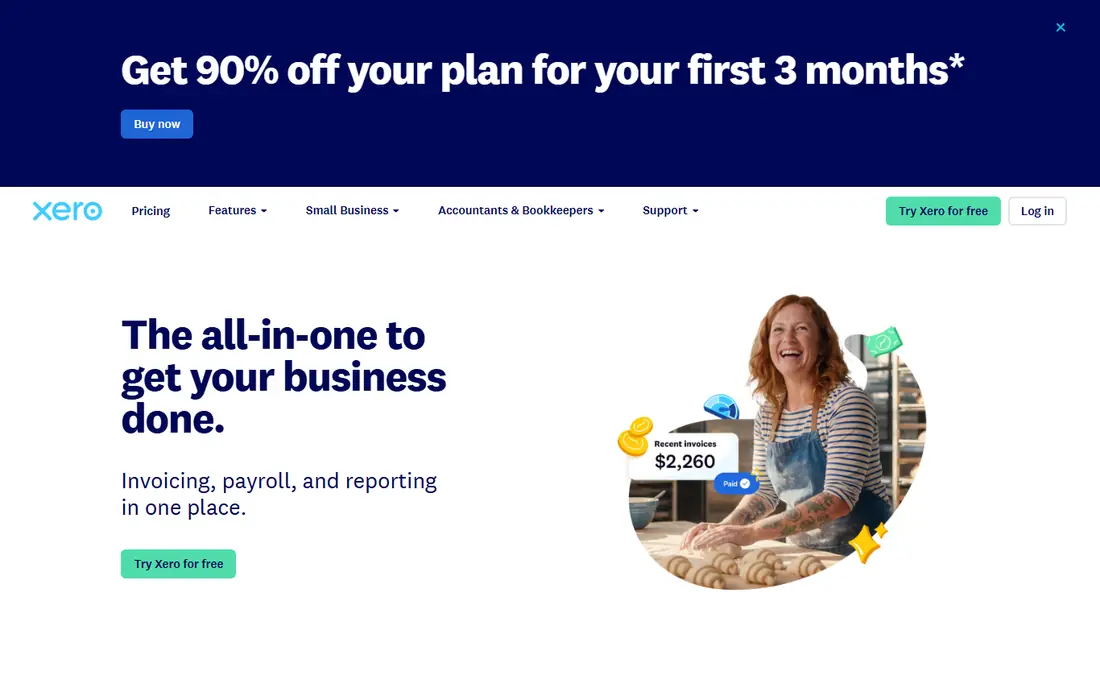
Xero is the most widely used cloud accounting platform among UK small businesses and their accountants, and that network effect is a practical advantage. It covers invoicing, bank reconciliation, expense tracking, VAT returns and Making Tax Digital submissions in one place, and its accountant network means most UK accountants already know how to work with it. The Ignite plan is listed at £18 per month plus VAT, with higher tiers at £39, £55 and £70 in recent October 2026 price checks.
The entry tier limits bite for growing firms, with Ignite capped at 20 invoices and 10 bills a month, so a business that invoices heavily will need a higher plan. Introductory discounts are common but temporary, so budget on the standard price. For a growing business that works with an accountant and wants the widest integration choice, Xero remains the safest all-round pick for VAT returns.
- HMRC recognised for MTD for VAT and Income Tax
- Strong bank reconciliation and accountant network
- Broad app ecosystem
- Ignite plan caps monthly invoices and bills
- Entry price has risen in recent checks

QuickBooks Online is the most widely used small business accounting software in the UK for good reason, balancing capability with ease of use. Its Sole Trader Plus plan is listed at £10 per month, with Simple Start at £16, Essentials at £38 and Plus at £56 in recent price checks, and it handles VAT returns, bank feeds, invoicing and expenses with direct HMRC filing under Making Tax Digital. The mobile app is genuinely useful for snapping receipts on site and tracking mileage, which suits trades and field businesses.
The drawbacks are familiar ones. Pricing has increased over time, payroll is an add-on, and lower tiers limit user counts, so a business that needs its accountant and a bookkeeper to both have access should check the plan carefully. Introductory offers of up to 90 percent off for six months are common but end quickly. For most UK small businesses, QuickBooks is the reliable, well supported all-rounder for VAT.
- HMRC recognised for MTD for VAT and Income Tax
- Strong mobile app for receipts and mileage
- Wide accountant familiarity
- Prices have risen in recent years
- Payroll and advanced features cost extra on higher tiers
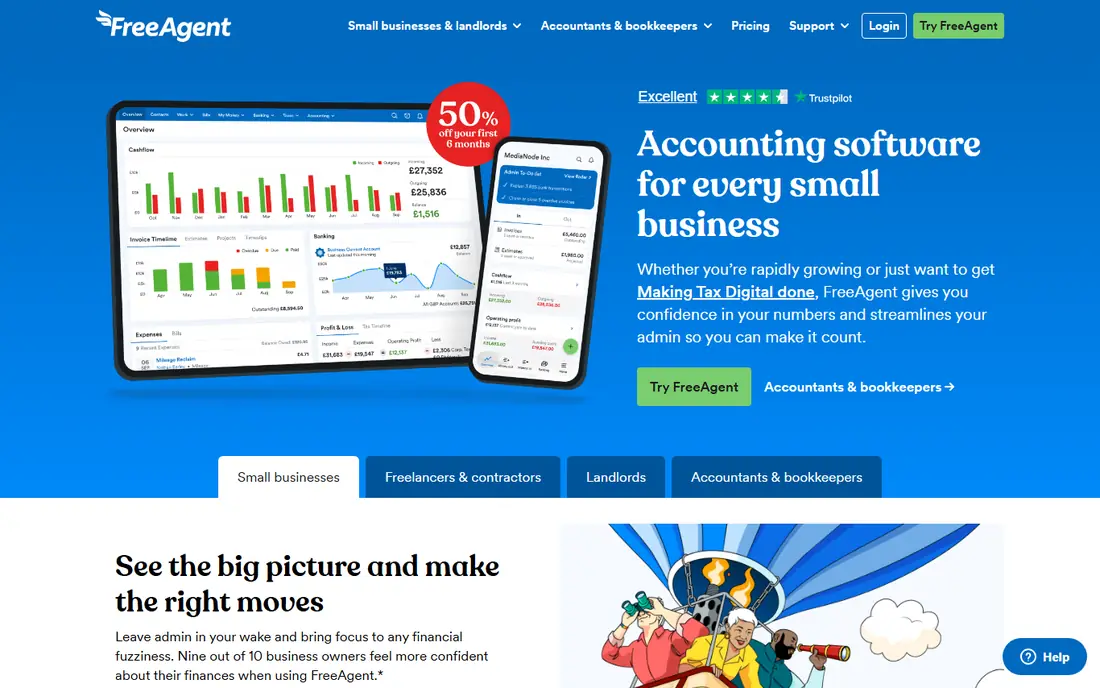
FreeAgent is the freelancer favourite for VAT returns because it was built around UK tax from the start. It estimates income tax, corporation tax and VAT, prepares Making Tax Digital submissions for both VAT and Income Tax, and files Self Assessment directly to HMRC. Its standard sole trader plan is listed at £19 per month plus VAT, but it is free for life for customers with eligible NatWest, Royal Bank of Scotland, Ulster Bank or Mettle business accounts, which can cut the annual cost to zero.
The limit is scale. FreeAgent suits sole traders, contractors and micro businesses well, but it lacks the complex manufacturing, stock and multi-entity tools of larger platforms. A growing limited company with payroll and inventory needs will likely move to Xero or Sage. For a freelancer or contractor who wants UK tax handled simply, FreeAgent is an excellent, focused choice.
- Free for life with eligible NatWest, RBS, Ulster Bank or Mettle accounts
- Strong UK tax focus
- Direct Self Assessment filing
- Built for micro businesses, so complex manufacturing or stock needs outgrow it
- Standard price is higher than rivals
Sage Accounting is widely used in the UK specifically for VAT support, purchase invoice tracking and Making Tax Digital compliance, and it carries the weight of the Sage name that many established firms trust. Its Start plan is listed at £20 per month plus VAT, with Standard at £43 and Plus at £59 in recent checks, and paid plans include payroll, which rivals often charge extra for. A dedicated MTD for VAT portal and automated CIS statements help construction and trade businesses in particular.
The entry price is higher than QuickBooks or Xero, and advanced stock management and multi-currency features wait on the Plus tier. Sage also runs introductory discounts that bring the first months down sharply before the standard price returns. For an established firm already in the Sage world, or one that wants payroll bundled in, Sage is a solid, compliance-focused pick.
- HMRC recognised for MTD for VAT and Income Tax
- Dedicated VAT portal
- Payroll included on paid plans
- Higher entry price than rivals
- Advanced stock and multi-currency sit on higher tiers
Zoho Books is the value pick for micro businesses, because it is free for businesses with annual turnover under £35,000, with paid Standard plans from £12 per month. It handles invoicing, expenses, bank reconciliation and VAT returns with Making Tax Digital for VAT support, and it integrates with the wider Zoho suite for CRM, inventory and payroll. For a side business or a new venture under the threshold, that free tier removes the cost barrier to compliant VAT filing.
The caveat is scope. Zoho Books is recognised for MTD for VAT, but businesses that also need MTD for Income Tax filing should confirm the current HMRC list status for their exact submission type before relying on it. Paid plans also scale with features and users. For a micro business under the turnover threshold, Zoho Books offers genuine, compliant value.
- Free for businesses under £35,000 annual turnover
- HMRC recognised for MTD for VAT
- Strong value in the wider Zoho suite
- MTD for Income Tax recognition is narrower than rivals
- Paid plans rise with users and features
QuickFile is the best free option for VAT returns if you want a proper accounting system without a monthly fee. Its core is permanently free, it is HMRC recognised, and it covers invoicing, bank feeds, expenses and VAT returns with digital filing for sole traders, landlords and micro businesses. For a business that only needs clean books and a VAT return, QuickFile does the job without the subscription cost of the big names.
The trade-off is polish and depth. The interface feels basic compared with Xero or QuickBooks, and larger businesses will miss advanced reporting, payroll depth and the wider app ecosystem. Paid tiers add features and support for growing firms. For a micro business watching every pound, QuickFile is a legitimate, compliant starting point.
- Core accounting is permanently free
- HMRC recognised for MTD submissions
- Simple for sole traders and landlords
- Interface feels basic next to Xero and QuickBooks
- Advanced features and support sit on paid tiers
Clear Books is a UK-built accounting platform aimed at small limited companies, sole traders and VAT-registered businesses that want a straightforward, HMRC recognised system. It covers invoicing, bank reconciliation, expenses and VAT returns with Making Tax Digital support for both VAT and Income Tax, and it offers a free tier with paid tiers for growing firms. Its UK focus means VAT workflows, including flat rate and standard schemes, are handled in familiar terms.
The drawbacks are visibility and ecosystem. Pricing varies by tier and is less clearly published than rivals, so buyers should confirm the current plan price directly, and the third party app ecosystem is smaller than Xero's or QuickBooks'. For a small limited company that wants a UK-focused, MTD-ready system without a big brand premium, Clear Books is worth a trial.
- HMRC recognised for MTD for VAT and Income Tax
- Free tier available
- Suited to small limited companies
- Pricing is not clearly published on one page
- Smaller app ecosystem than Xero or QuickBooks
FreshBooks is the invoicing-first pick for service freelancers, with clean proposals, time tracking, project profitability dashboards and one-click billable hour billing. Its Lite plan is listed at £16 per month plus VAT, and it supports Making Tax Digital for VAT, so a VAT-registered freelancer can file returns digitally from it. For a consultant or agency whose main pain is getting paid on time, FreshBooks is genuinely pleasant to use.
The important limit is Income Tax. FreshBooks supports MTD for VAT but does not appear on HMRC's compatible list for Making Tax Digital for Income Tax, so sole traders who need quarterly Income Tax updates will need another tool for that filing. Tier pricing also scales by active billable client count. Check both points before choosing FreshBooks as your only tax tool.
- Excellent invoicing and late payment chasing
- Lite plan from £16 per month
- Simple for service businesses
- Supports MTD for VAT but not MTD for Income Tax
- Tier pricing scales by billable client count
Crunch combines accounting software with access to UK accountants, which suits business owners who want help, not just a tool. Its basic software is free, paid plans start from £27 per month plus VAT, and the service pairs bookkeeping software with accredited accountants who can handle VAT returns, Self Assessment and company filings. For a founder who would rather hand the return to a professional than learn VAT rules, that pairing is the point.
The cost reflects the service, so self-serve users will find Xero, QuickBooks or QuickFile cheaper for software alone. Crunch is also built for UK small businesses and contractors rather than large, complex firms. If you want software plus a human accountant in one subscription, Crunch offers a clear, UK-focused package.
- Free basic software
- Paid plans pair software with accredited UK accountants
- Handles VAT and Self Assessment
- Paid plans from £27 per month cost more than self-serve rivals
- Best value tied to the accountant service
How we picked these
We compared official feature pages, pricing pages and HMRC recognition status, using UK price checks from October 2026 where available. We favoured tools that are HMRC recognised for Making Tax Digital for VAT and that file returns directly, and we included free, low-cost and full-featured options so different business sizes are covered. Where pricing varies by tier or introductory offer, we used the standard price and flagged the offer, rather than quoting a temporary discount as the real cost.
What to check before you buy
First, confirm the exact HMRC list status for the filing you need. MTD for VAT and MTD for Income Tax are separate systems, and some software that handles VAT submissions is not yet approved for Income Tax quarterly updates. Check the official HMRC compatible software list for your submission type before you commit, and note the April 2026 Income Tax threshold for sole traders and landlords over £50,000, dropping to £30,000 from April 2027.
Next, trial the VAT return itself. Enter a month of real invoices and expenses, run the VAT return, and check how the tool handles exempt, zero-rated and flat rate items, plus any corrections. A tool that makes the return easy but hides its workings will cause trouble at year end. Finally, budget on standard prices, not introductory offers, since most big vendors discount heavily for the first six months and then return to full price.
Frequently asked questions
What is the best accounting software for VAT returns?
For most UK small businesses, Xero and QuickBooks are the safest all-round picks, with HMRC recognition for MTD for VAT and Income Tax, direct filing and wide accountant support. FreeAgent suits freelancers, Sage suits established firms wanting payroll, and QuickFile suits micro businesses that want a free core.
Is accounting software mandatory for VAT returns in the UK?
Yes, in practice. If your business is VAT registered, HMRC requires Making Tax Digital compatible software to keep digital records and submit VAT returns. Manual spreadsheets are no longer accepted for VAT submissions, so you need software on HMRC's compatible list for MTD for VAT.
Which accounting software is free for VAT returns?
QuickFile offers a permanently free core, Zoho Books is free for businesses under £35,000 annual turnover, and FreeAgent is free for life with eligible NatWest, RBS, Ulster Bank or Mettle business accounts. Crunch also offers free basic software, with paid plans adding accountant support.
How much does accounting software for VAT returns cost?
Standard entry prices in recent October 2026 checks run from free for QuickFile and low-turnover Zoho Books, to £10 per month for QuickBooks Sole Trader Plus, £16 for FreshBooks Lite, £18 for Xero Ignite, £19 for FreeAgent and £20 for Sage Start. Introductory discounts often cut these sharply for a few months, so budget on the standard price.
Can I file a VAT return directly from accounting software?
Yes, if the software is HMRC recognised for Making Tax Digital for VAT. Xero, QuickBooks, FreeAgent, Sage, Zoho Books, QuickFile, Clear Books and FreshBooks all support digital VAT filing, though you should confirm the current HMRC list status for your exact plan before relying on it.
Does accounting software guarantee my VAT return is correct?
No. Software calculates VAT from the transactions and rates you enter, checks for common errors and files digitally, but it cannot know if a transaction was coded wrongly or if a special scheme applies. This article is general information only, not tax advice, and an accountant should review complex returns.
Sources
See where you really rank - block by block
ProMapRanker scans Google Maps across a grid of your service area. Simple monthly plans from $19, white-label on every plan.
Start freeKeep reading
 who has best internet service
Who Has the Best Internet Service in 2026
Who has best internet service for US homes? We compare fiber, cable, fixed wireless and satellite providers on speed, price, availability and terms today.
Read → which survey tool has the best analytics
Which Survey Tool Has the Best Analytics in 2026
Find which survey tool has the best analytics in 2026, comparing Qualtrics, SurveyMonkey, Typeform, Alchemer, and more on reports, text, and stats today.
Read → which streaming service has the best movies
Which Streaming Service Has the Best Movies in 2026
Answering which streaming service has the best movies, with Netflix, Max, Criterion and more compared on libraries, prices and free options in this guide.
Read →