 ProMapRanker
Alternatives to Vonage in 2026


All-round business phone · Pricing starts at: $20 per user per month
Key takeaways
- RingCentral and Nextiva are the safest all-round Vonage alternatives for growing teams that need voice, video, and messaging in one place.
- Zoom Phone is the cheapest route for teams that already use Zoom every day, while Dialpad adds AI summaries on every plan.
- Solo users and very small teams often do better with Grasshopper, Google Voice, or OpenPhone than with a full unified system.
- Published per-user prices usually assume annual billing, and taxes and fees can add to the monthly total, so check the full quote.
- Vonage itself is not listed here, because this article covers alternatives only, and each option below replaces its business phone role.
Quick comparison
| Pick | Great for | Pricing starts at | Free tier | |
|---|---|---|---|---|
| RingCentral | All-round business phone | $20 per user per month | Free trial | Visit |
 Nextiva | Customer-facing teams | $15 per user per month | No | Visit |
 Zoom Phone | Zoom users | $10.50 per user per month | No | Visit |
 Dialpad | AI call features | $15 per user per month | Free trial | Visit |
 Ooma Office | Simple small offices | $19.95 per user per month | Free trial | Visit |
 Grasshopper | Solo users | $14 per month | Free trial | Visit |
 Google Voice | Google Workspace teams | $10 per user per month | No | Visit |
 OpenPhone | Text-heavy small teams | $15 per user per month | Free trial | Visit |
 8x8 | International calling | See website | Free trial | Visit |
The best alternatives to Vonage
We compared official pricing pages, feature pages, and plan descriptions for business phone systems that replace Vonage Business Communications. Prices below are starting prices for entry plans, usually with annual billing, and they exclude taxes and fees unless the vendor states otherwise. Check contract terms, number porting, and device needs before you switch.
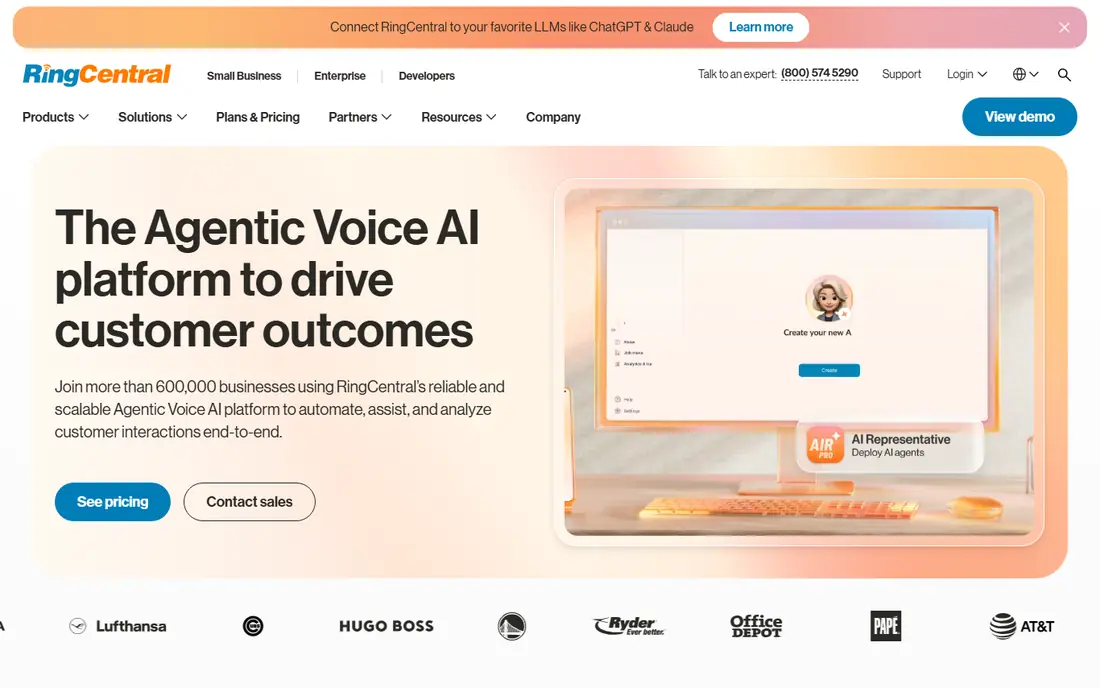
RingCentral is the default pick for teams that want one system to handle calls, meetings, messages, and fax without stitching tools together. It offers a wide integration list, including common CRMs and productivity apps, and its mobile and desktop apps are mature. For a growing business that expects to add staff and locations, that depth reduces the chance of switching again in a year.
The price is the main drawback, and the entry plan does not include every advanced feature. Small teams may find the admin controls more than they need at first. Still, if you want a safe, widely supported Vonage alternative that can scale, RingCentral is our pick for most businesses.
- Voice, video, and messaging in one app
- Large integration list
- Strong reliability record
- Higher price than budget rivals
- Advanced features need higher tiers
- Setup takes time
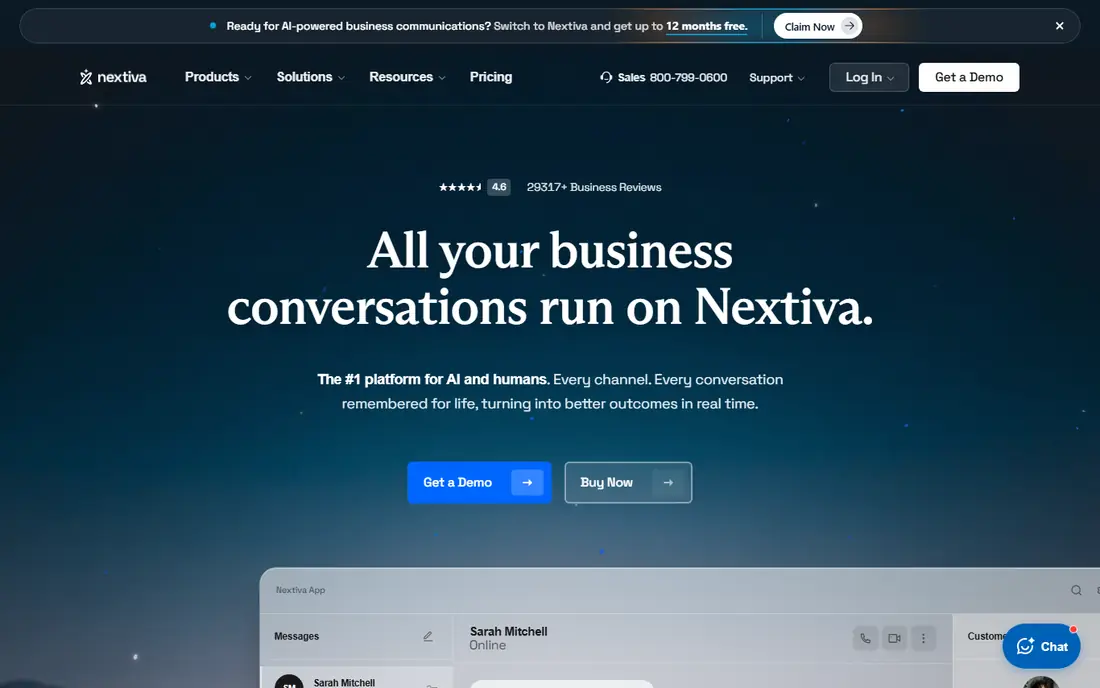
Nextiva pairs business phone service with customer experience tools, including contact management and conversation views that help support and sales teams follow a customer across channels. That combination suits teams where the phone is not just internal chat, but the main way customers reach the business. Support is also a frequent reason teams choose Nextiva over cheaper rivals.
The interface packs in a lot, so new admins may need a short learning period. There is no permanent free plan, and the entry price is for annual billing, so monthly billing will cost more. If customer conversations drive your business, Nextiva is a strong alternative to Vonage.
- Built-in customer tools
- Strong support reputation
- Clear call flow tools
- Interface can feel busy
- Mobile app lags desktop in places
- No free plan
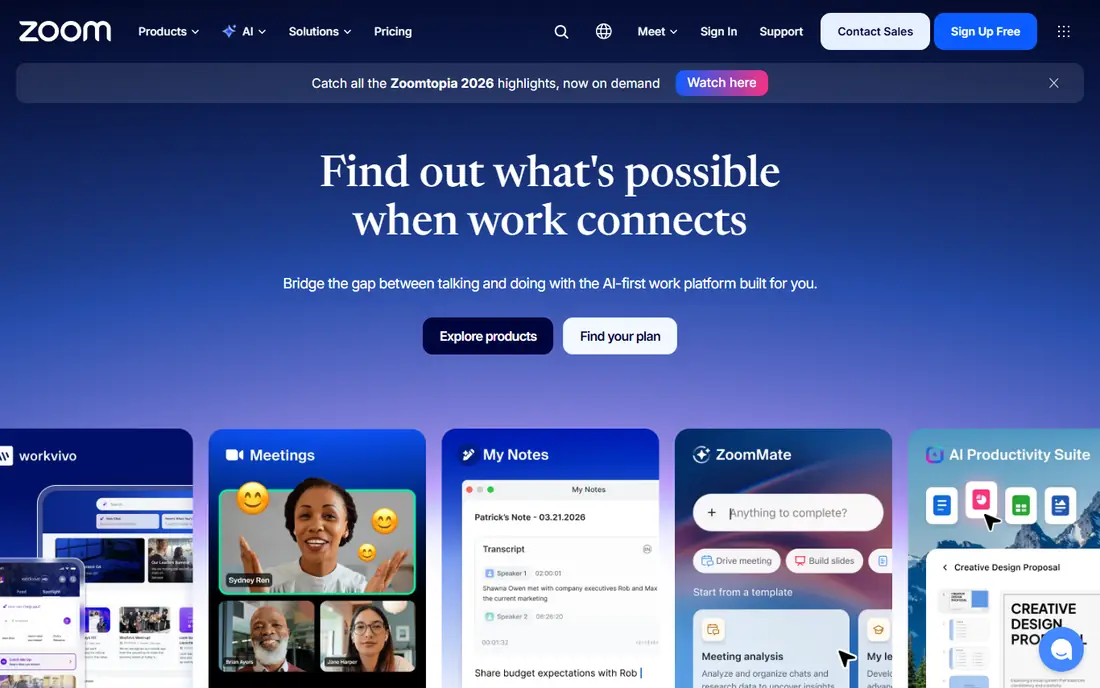
Zoom Phone adds voice calling to the Zoom Workplace many teams already use for meetings. That familiarity is a real advantage, because staff do not need to learn a new app for calls, and a phone call can move to a video meeting with little friction. The entry metered plan is also one of the cheapest starting prices in this list.
The catch is that the low price covers a metered plan, so teams with heavy call volume need to check unlimited options and total cost. Teams that do not use Zoom for meetings gain less from this pick. For Zoom-heavy offices, though, Zoom Phone is the simplest and cheapest Vonage alternative to adopt.
- Low entry price
- Easy escalation from call to meeting
- Familiar Zoom interface
- Metered plan limits need checking
- Best value only for Zoom users
- Add-ons increase cost
Dialpad stands out for AI features that are built into the core product rather than sold as a separate add-on. Calls can be transcribed, summarized, and searched, which helps managers coach staff and helps teams follow up without re-listening to long calls. The interface is modern, and remote teams tend to adopt it quickly.
Not every AI feature is on the entry plan, so read the plan table carefully if summaries or coaching tools are your main reason for switching. Pricing also varies, and taxes and fees apply. If AI call notes matter to your team, Dialpad is our pick over more traditional phone systems.
- AI transcription and summaries on plans
- Clean interface
- Good for remote teams
- Some advanced AI tools need higher tiers
- Pricing varies by region
- Support quality varies by plan
Ooma Office suits small offices and shops that want a phone system that just works, without a long admin project. It includes a virtual receptionist, call routing, and mobile apps, and it supports desk phones for staff who prefer a handset. The setup is straightforward, which matters for businesses without an IT team.
The entry price is higher than Zoom Phone or Grasshopper, and the integration list is smaller than RingCentral. That trade-off is fine if simplicity matters more than deep CRM links. For a small office that wants reliable phones with little fuss, Ooma is a practical Vonage alternative.
- Simple setup
- Virtual receptionist included
- Desk phone support
- Higher entry price than some rivals
- Fewer advanced integrations
- Mobile features are basic
Grasshopper gives a solo user or very small team a professional business number without buying hardware or a complex system. Calls route to your existing mobile or desk phone, with greetings, extensions, and voicemail to email. The flat price for a solo plan makes budgeting simple, and setup can be done in an afternoon.
It is not the right tool for a growing call center or a team that needs deep CRM integration and advanced routing. As headcount grows, per-user systems usually make more sense. For a freelancer, consultant, or one-person shop leaving Vonage, Grasshopper is the simplest replacement.
- Flat monthly price for solo use
- Works over existing phones
- Quick setup
- Not built for large teams
- Limited advanced features
- Per-user value drops as team grows
Google Voice for business is an add-on for Google Workspace, and that is both its strength and its limit. If your team already lives in Gmail, Calendar, and Drive, adding Voice keeps calling inside the same admin and billing system. The interface is simple, and staff can call from a browser, phone, or mobile app.
Teams outside Google Workspace gain little here, because the service requires a Workspace plan. Advanced call center features are also thinner than RingCentral or Nextiva. For Workspace teams that need straightforward business calling, Google Voice is a low-cost Vonage alternative.
- Low entry price
- Simple setup for Workspace users
- Works across devices
- Requires Google Workspace
- Fewer advanced call center features
- Support is tied to Workspace
OpenPhone, now branded in some places as Quo, is built for small teams that do a lot of business texting alongside calls. Shared numbers, team inboxes, and internal threads make it easier for several staff to follow the same customer conversation without passing a single phone around. The design feels modern, and setup is quick.
It does not match RingCentral or 8x8 for large call centers or global calling depth. Teams that mainly need voice, video, and complex routing should look higher in this list. For startups and small service teams where texting is central, OpenPhone is a fresh and practical alternative.
- Shared numbers and team inboxes
- Strong business texting
- Modern interface
- Smaller integration list than leaders
- Call center depth is limited
- Price is per user
8x8 suits businesses with customers, staff, or suppliers in several countries. Its plans include international calling options and contact center tools that smaller systems do not offer, and its global coverage is a reason larger teams choose it. If your Vonage use involved international calls, 8x8 deserves a close look.
Pricing varies by plan and region, so we list it as See website and recommend getting a written quote for your call patterns. The range of plans can also feel complex for a very small team. For international and mid-size teams, though, 8x8 is a strong Vonage alternative with room to grow.
- International calling plans
- Integrated contact center options
- Global coverage
- Entry pricing varies
- Plans can be complex
- Smaller teams may pay for unused depth
How we picked these
We compared official pricing pages, feature pages, and plan descriptions for business phone systems that can replace Vonage Business Communications in October 2026. We looked for systems that are still sold, that support US business calling, and that cover different team sizes, from solo users to international teams. We did not claim hands-on testing, and we did not invent prices, uptime claims, or feature lists. Where pricing varied by region or plan, we wrote See website and advised readers to get a full quote including taxes and fees.
What to check before you switch from Vonage
Start with your call patterns, not just the headline price. Count users, call volume, international minutes, texting needs, and whether you need video meetings, fax, or a contact center. A cheap per-user plan can become costly if you need unlimited calling, extra numbers, or higher tiers for the features you actually use.
Next, check number porting, contract length, and device compatibility. Ask how long porting takes, whether your existing desk phones will work, and what happens if you cancel early. Test the mobile app and admin panel during the trial with real staff, not just in a demo. Finally, confirm total monthly cost with taxes and fees, and compare that figure across providers, because headline prices rarely tell the full story.
Frequently asked questions
What are the best Vonage alternatives?
RingCentral and Nextiva are strong all-round Vonage alternatives, Zoom Phone suits Zoom users, and Dialpad suits teams that want AI call summaries. Solo users should also consider Grasshopper or Google Voice, depending on their current tools.
What is the cheapest alternative to Vonage business phone?
Zoom Phone and Google Voice have low entry prices, and Grasshopper offers a low flat price for solo use. The cheapest option depends on user count, call volume, and whether you need unlimited calling, so compare total cost, not just the starting price.
Can I keep my business number when I leave Vonage?
In most cases, yes, you can port your business number to a new provider, but timing and eligibility vary. Start the port with your new provider before you cancel Vonage, and keep service active until the port completes.
Is RingCentral better than Vonage?
RingCentral offers a broader integration list and a mature all-in-one app, which suits many growing teams. Vonage may still suit teams that want to build on its APIs, so the better choice depends on whether you need a complete phone system or a developer platform.
Do Vonage alternatives offer free trials?
Many do, including RingCentral, Dialpad, Ooma, Grasshopper, OpenPhone, and 8x8, with trial lengths that vary by provider. Use the trial to test call quality, mobile apps, and admin tools with your own team before signing a contract.
What should a small business look for in a Vonage alternative?
Look for clear per-user pricing, reliable call quality, easy number porting, and the features your team uses daily, such as texting, video, or CRM links. Avoid paying for call center depth you will not use, and check contract and cancellation terms.
Sources
See where you really rank - block by block
ProMapRanker scans Google Maps across a grid of your service area. Simple monthly plans from $19, white-label on every plan.
Start freeKeep reading
 top custom software development company
Top Custom Software Development Company in 2026
Looking for a top custom software development company? We compare 9 firms for web, mobile, and enterprise software, covering strengths and fit for 2026.
Read → tableau alternatives
Tableau Alternatives in 2026
Compare the best Tableau alternatives for 2026, from Power BI to Metabase, with prices, hosting options, and picks for small teams and enterprises today.
Read → microsoft teams alternatives
Best Microsoft Teams Alternatives in 2026
Looking for microsoft teams alternatives? We compare 9 chat and video tools for 2026, covering free plans, pricing, meetings, and integrations for teams.
Read →