 ProMapRanker
Alternatives to Uber in 2026

A direct Uber replacement in the US and Canada · Pricing starts at: See website
Key takeaways
- Lyft is the closest all-round Uber replacement in the United States and Canada, with a similar range of ride types.
- Waymo is the standout choice where it operates, offering driverless rides in a growing list of US cities.
- Via and Curb suit different needs: Via for shared, lower-cost rides and Curb for licensed taxis booked through an app.
- Bolt, DiDi, FreeNow and inDrive give you better coverage outside the United States, especially in Europe, Latin America and parts of Asia.
- Prices vary by city, time of day and demand on every app here, so comparing two apps for the same trip is worth the minute it takes.
Quick comparison
| Pick | Great for | Pricing starts at | Free tier | |
|---|---|---|---|---|
| Lyft | A direct Uber replacement in the US and Canada | See website | Yes | Visit |
 Bolt | Rides and scooters outside the US | See website | Yes | Visit |
 Waymo | Driverless rides in supported cities | See website | Yes | Visit |
 Via | Shared rides at lower fares | See website | Yes | Visit |
 Curb | Booking licensed taxis through an app | See website | Yes | Visit |
 DiDi | Rides in Latin America and other international markets | See website | Yes | Visit |
 FreeNow | Taxis and rides across Europe | See website | Yes | Visit |
 inDrive | Riders who want to propose their own fare | See website | Yes | Visit |
The best alternatives to Uber
Uber is convenient, but it is not the only way to get a ride, and in some cities it is not even the cheapest or the fastest option. These eight apps cover the main situations: a direct replacement, a driverless ride, a shared ride, a licensed taxi, or a better option abroad.
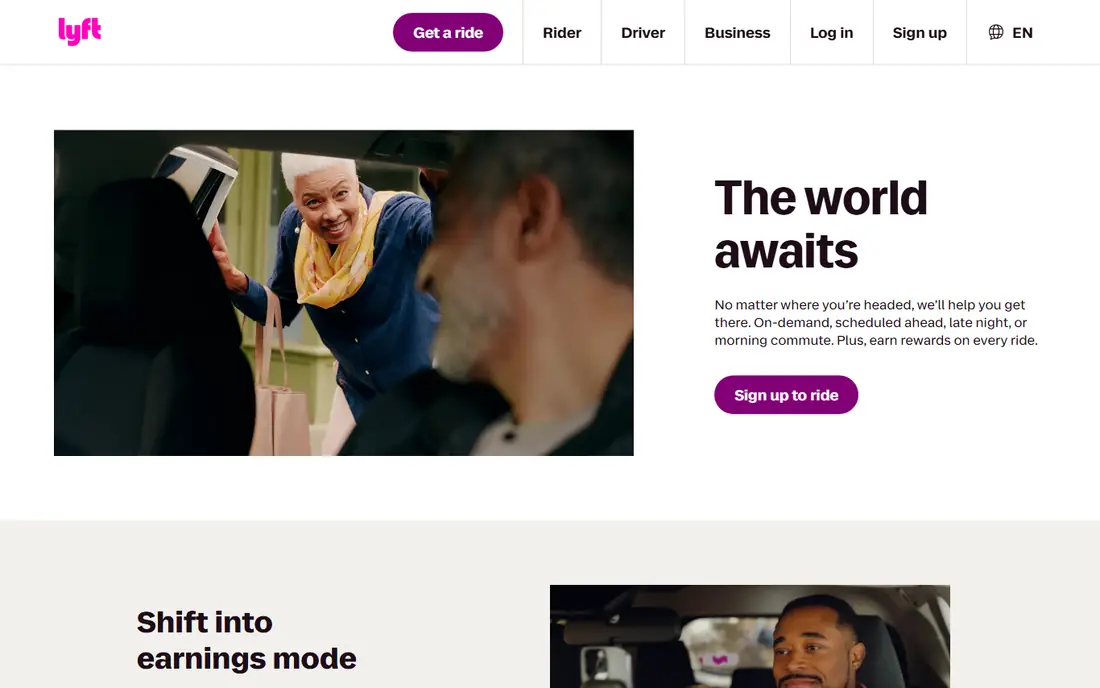
Lyft is the obvious first alternative for most US riders, because it works much like Uber: open the app, set a destination, pick a ride type and watch your driver arrive. Standard rides, larger vehicles, luxury options and scheduled pickups are all available in major cities, and Lyft Pink offers subscription perks such as discounts on rides and bike and scooter benefits in some markets. For everyday city travel, the experience is close enough that switching costs almost nothing.
The limits are geographic and familiar. Lyft operates in the United States and Canada, so it will not help you on a trip to Europe or Asia, and prices rise with demand just as they do on Uber. In some cities, Lyft has also integrated licensed taxis, which can improve availability at peak times. If you ride mostly in North America, keep Lyft installed alongside Uber and compare the two before you confirm.
- Wide US and Canada coverage
- Many ride types
- Scheduled rides and subscription options
- Coverage outside North America is limited
- Surge pricing applies at busy times
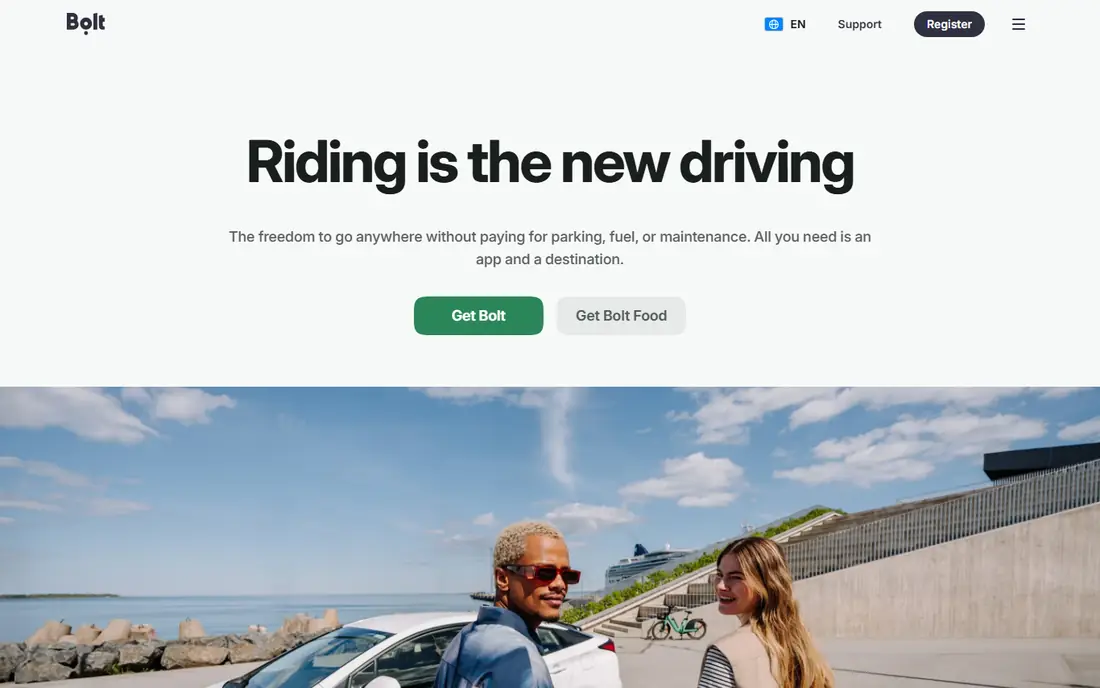
Bolt is one of the largest ride-hailing apps outside the United States, operating in dozens of countries across Europe, Africa and other regions. In many cities it also offers scooters and, in some markets, food delivery, so one app can cover several kinds of trips. Riders often find Bolt fares competitive with local rivals, and the app supports scheduled rides and multiple ride categories in larger markets.
The catch is that Bolt does not operate in the United States, so it is a travel companion rather than a home replacement for US readers. Availability also differs sharply between cities: in some places Bolt is everywhere, in others it is a minor player. Download it before a trip abroad, check coverage in your destination, and keep a local taxi app as a backup for smaller towns.
- Broad international coverage
- Scooters and food delivery in some cities
- Often competitive fares
- No US service
- Availability varies a lot by city
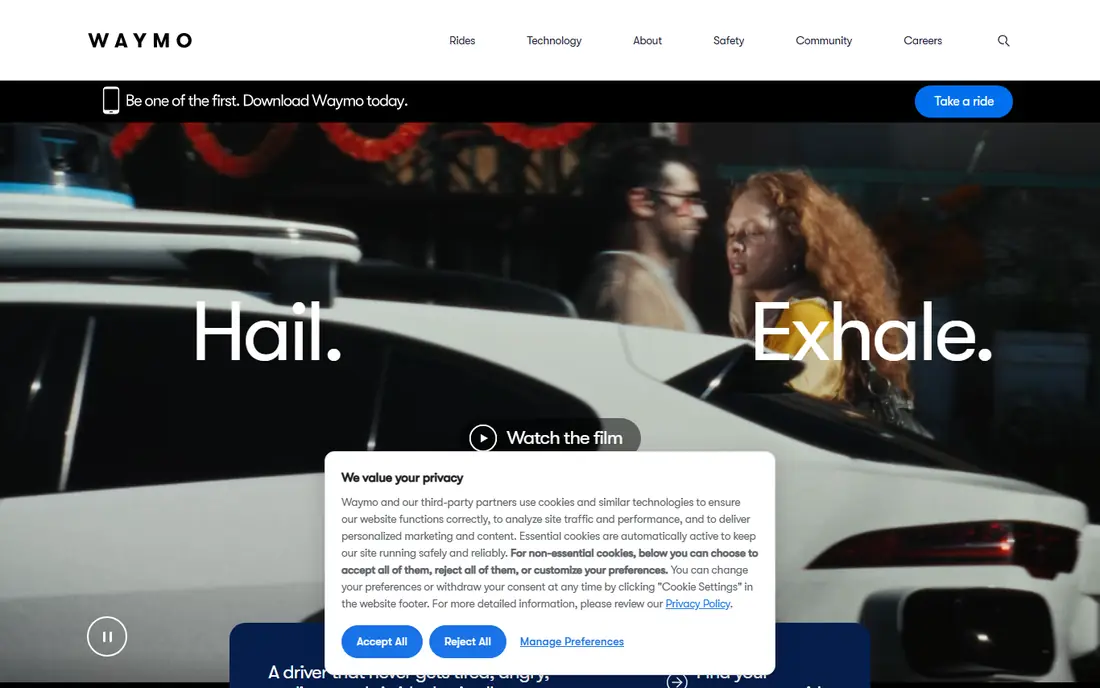
Waymo offers fully driverless rides through its app in a growing set of US cities, including San Francisco, Los Angeles, Phoenix, Austin, Atlanta, Miami and, since October 2026, San Antonio, San Diego and Tampa. You book in the app, the car arrives without a driver, and you ride in a vehicle that follows a mapped service area. For riders who prefer a quiet, predictable trip without small talk or tipping decisions, that consistency is a genuine draw.
The obvious limit is coverage. Waymo only serves defined areas within its launch cities, so it cannot replace Uber for airport runs outside those zones or for trips in most of the country. Service can also pause in severe weather or road conditions. Where it does operate, though, it is a real, everyday alternative rather than a demo, and its expansion through 2026 makes it worth checking before you assume Uber is your only option in a Waymo city.
- No driver, consistent experience
- Growing US city coverage
- App-based booking and support
- Limited to specific cities and service areas
- Not an option for most rural trips
Via built its name on shared rides, matching passengers heading in the same direction into one vehicle along an efficient route. That sharing is what keeps fares lower than a private ride, and in cities where Via operates it can be a smart choice for commutes and airport trips when you are not in a rush. Via also works with transit agencies and employers in some markets, which can mean dedicated services that other apps do not offer.
Sharing has a cost in time: pickups and drop-offs for other passengers add minutes, and routes may include a short walk to a pickup corner. Coverage is also much narrower than the big two, concentrated in selected US cities and a few international markets. If Via serves your route and you value price over speed, it is an excellent second app. If you need a private car right now, Lyft remains the better call.
- Shared rides keep fares down
- Smart routing
- Transit partnerships in some cities
- Shared rides take longer
- Coverage is narrower than Lyft or Uber
Curb connects riders with licensed taxis, giving you app booking, upfront pricing in many markets and card payment without losing the regulated taxi model. In cities with large taxi fleets, such as New York, that can mean faster pickups than ride-hailing at peak times, plus drivers who know the city from years behind the wheel. Curb also integrates with other platforms in some markets, so taxis booked through partner apps still run on Curb systems.
The trade-off is fleet dependence. Where taxis are scarce, Curb cannot conjure cars the way a large driver network sometimes can, and you will find fewer luxury or large-vehicle options than on Uber. Vehicle quality also varies more, since you get the taxi that arrives rather than a chosen tier. For city trips where taxis are common, Curb is a strong, often overlooked alternative.
- Licensed, regulated taxi drivers
- Upfront pricing in many markets
- Works where taxis are plentiful
- Availability depends on local taxi fleets
- Fewer ride categories than Uber
DiDi is a global ride-hailing company with a strong footprint in Latin America, including Mexico and Brazil, as well as markets in Asia-Pacific and elsewhere. The app offers standard rides, larger vehicles and, in some cities, taxi booking, with safety features such as trip sharing, emergency assistance and driver verification built in. For travelers in DiDi markets, it often matches or beats local rivals on availability.
In the United States, DiDi has only a limited presence, so US readers should treat it as a travel app rather than a daily replacement. Coverage and features also vary by country, so check what your destination supports before you rely on it. If you travel regularly to Latin America, having DiDi ready saves you from scrambling for a local app at the airport.
- Strong presence in Mexico, Brazil and other markets
- Multiple ride types
- In-app safety features
- Limited US presence
- Features and coverage vary by country
FreeNow, formerly mytaxi, is a leading taxi and ride-hailing app in Europe, operating in many cities across countries such as Germany, France, Spain, Italy, Poland and the United Kingdom. Its strength is licensed taxis booked and paid for in the app, with ride-hailing options added in some markets. For a European city break, that means one app can cover taxis in several countries without learning a new local app each time.
Outside Europe, FreeNow offers little, and even within Europe, coverage is city by city rather than universal. Taxi fares follow local meters or fixed pricing depending on the market, so costs are less predictable than a quoted ride-hail fare in some places. Still, for European travel, FreeNow is one of the most useful apps you can install before you leave.
- Licensed taxi focus in European cities
- Ride-hailing options in some markets
- Multi-country coverage
- European focus
- Limited value outside its core markets
inDrive flips the usual model: riders propose a fare for their trip, and nearby drivers accept, decline or counter-offer. That negotiation can save money, especially in markets where ride-hailing prices feel high, and it gives riders a sense of control that fixed-price apps do not. inDrive operates in dozens of countries, supports cash payment in many markets, and also offers services such as delivery and intercity rides in some regions.
Negotiation is also the drawback. Haggling takes time, and a fare set too low may sit unaccepted while you wait. The experience differs by market, and in some cities inDrive is a major player while in others it is small. Use it when you have a few minutes and price matters more than instant pickup, and keep a fixed-price app ready for times when you need a car immediately.
- Rider-proposed fares give price control
- Cash payment in many markets
- Broad international reach
- Negotiating takes time
- Driver acceptance is not guaranteed at low fares
How we picked these
We compared official app listings, coverage pages and public reporting for ride services operating in October 2026. We favored apps with real, current service in at least one major market, a distinct reason to choose them over Uber, and clear booking, payment and safety features. We left out apps that had shut down, were limited to a single small city, or offered only car rental or carpooling without on-demand rides. Prices are listed as See website because fares depend on city, distance, time and demand on every service here. We did not claim hands-on rides for this guide; our comparisons rest on published coverage, features and pricing policies.
What to weigh before you switch
Start with coverage, because the best app is the one with cars where you actually travel. Check each app in your home city and in the cities you visit most, and keep two apps installed so a surge or shortage on one does not leave you stranded. Ride types matter too: a shared ride saves money but costs time, a taxi may be faster downtown, and a driverless car only helps inside its service area.
Price is the second check, and it changes by the hour. Compare the same trip on two apps before confirming, and look at the full fare, including fees and tolls, rather than the headline estimate. Safety features are worth a minute as well: trip sharing, driver details, in-app emergency help and support response all differ, and the app you trust matters more on a late-night trip than a small fare gap. Finally, consider payment: some apps support cash in certain markets, others are card-only, and that detail can decide which app works for you abroad.
Frequently asked questions
What is the best Uber alternative in the US?
Lyft is the closest direct replacement for most US riders, with similar ride types and broad coverage. In cities where Waymo operates, it is a strong second choice for driverless rides, and Curb or Via can beat both on specific routes.
Are these alternatives cheaper than Uber?
Sometimes, but not always. Fares on every app here move with demand, distance and city, so the cheapest option for one trip may be the priciest for the next. Comparing two apps for the same trip is the most reliable way to save money.
Can I use Bolt or DiDi in the United States?
Bolt does not operate in the US, and DiDi has only a limited US presence, so neither is a daily US replacement. Both are much more useful as travel apps in their core international markets.
Is Waymo available everywhere?
No, Waymo serves defined areas within a limited set of US cities, and that list is still growing through 2026. Check the Waymo app for your exact pickup and drop-off points before planning around it.
Do I need a credit card for these apps?
Most of these apps accept cards and digital payment, and several support cash in certain markets, including inDrive and Curb taxis. Check payment options in the app for your city, since card-only rules apply in some places.
Are shared rides on Via slower than private rides?
Usually yes, because the car may pick up or drop off other passengers along the way. The trade-off is a lower fare, which makes Via a good fit for trips where you have time to spare.
Sources
See where you really rank - block by block
ProMapRanker scans Google Maps across a grid of your service area. Simple monthly plans from $19, white-label on every plan.
Start freeKeep reading
 best chat tool for website
Best Chat Tool for Website in 2026
Best chat tool for website owners compared, with live chat, AI agents, free plans, and pricing for small stores, SaaS teams, and support teams of all sizes.
Read → best birdwatching app
Best Birdwatching App in 2026
Best birdwatching app picks for 2026: nine free and paid apps for bird ID by sight and sound, checklists, hotspots, and finding birds near you for all birders.
Read → best bird identification app
Best Bird Identification Apps in 2026
Find the best bird identification app for photos, songs and calls. We compare 9 bird apps, including Merlin, BirdNET and Audubon, to help you choose today.
Read →