 ProMapRanker
Alternatives to Duolingo in 2026

Key takeaways
- Babbel and Busuu suit learners who want a structured course with grammar and dialogue, rather than only short game-style drills.
- Pimsleur and italki suit speaking first, with audio lessons and live tutors filling the gap left by app-only practice.
- Rosetta Stone suits immersion-style learning, while Memrise, Drops, and Mondly suit short daily vocabulary practice.
- No single app covers every skill, so pair a core course with speaking practice or vocabulary review for better progress.
Quick comparison
| Pick | Great for | Pricing starts at | Free tier | |
|---|---|---|---|---|
 Babbel | Structured conversation courses | See website | Yes | Visit |
 Busuu | Lessons plus native-speaker feedback | See website | Yes | Visit |
 Rosetta Stone | Immersion without translation | $11.99 per month | No | Visit |
 Pimsleur | Audio-first speaking practice | See website | Free trial | Visit |
 Memrise | Vocabulary with native-speaker clips | See website | Yes | Visit |
 Mondly | Short daily lessons and chatbot practice | $12.99 per month | Yes | Visit |
 Lingodeer | Structured Asian language courses | See website | Yes | Visit |
 Drops | Five-minute vocabulary games | $7.99 per month | Yes | Visit |
 italki | Live one-to-one tutoring | See website | No | Visit |
The best duolingo alternatives
We looked for apps that teach a language in a different way from short gamified drills, and we favored tools with a clear course path, speaking practice, or live human help.
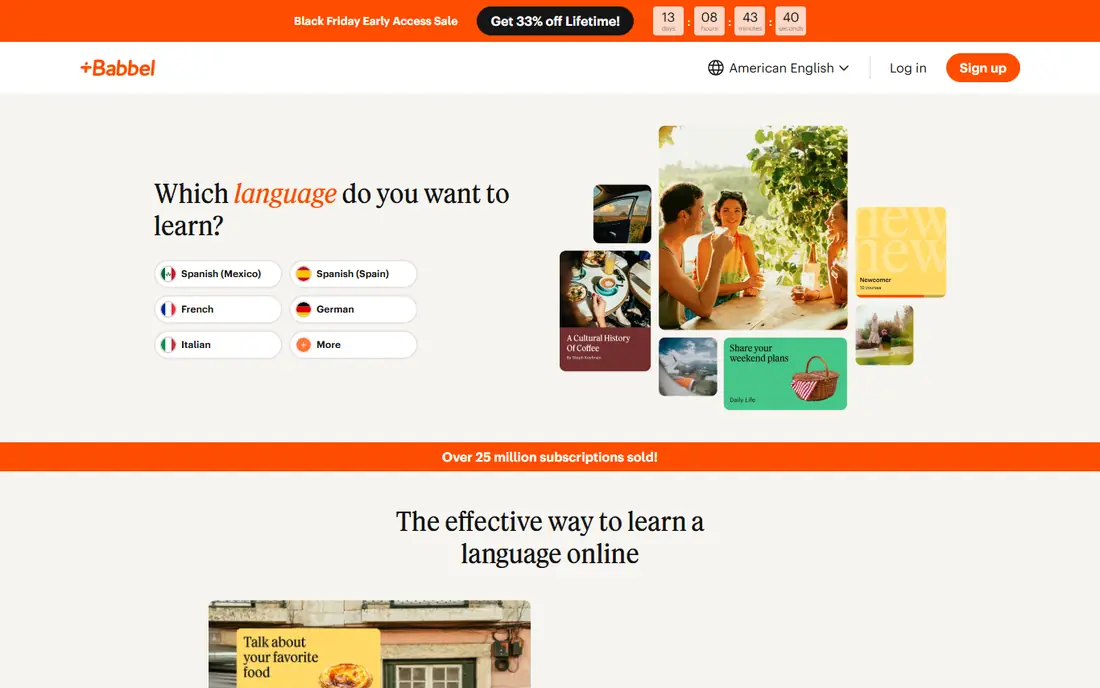
Babbel is the most direct alternative for learners who want a course that feels like a course. Lessons follow a path, introduce grammar inside realistic dialogues, and review words with spaced repetition, so progress feels steadier than a string of unrelated drills. Speech recognition gives pronunciation practice, and live classes are available as an add-on for learners who want a teacher.
The free taste is limited to the first lesson of each course, so you should try a language you actually plan to study before you pay. Babbel covers a focused set of languages, including Spanish, French, German, Italian, and Portuguese, rather than trying to cover every language at a shallow depth. For a learner who wants to hold a real conversation on a trip or at work, that focus is a strength.
- Courses built by language experts with real dialogue
- Grammar explained in context
- Short lessons that fit a daily routine
- Language list is smaller than some rivals
- Full access requires a subscription
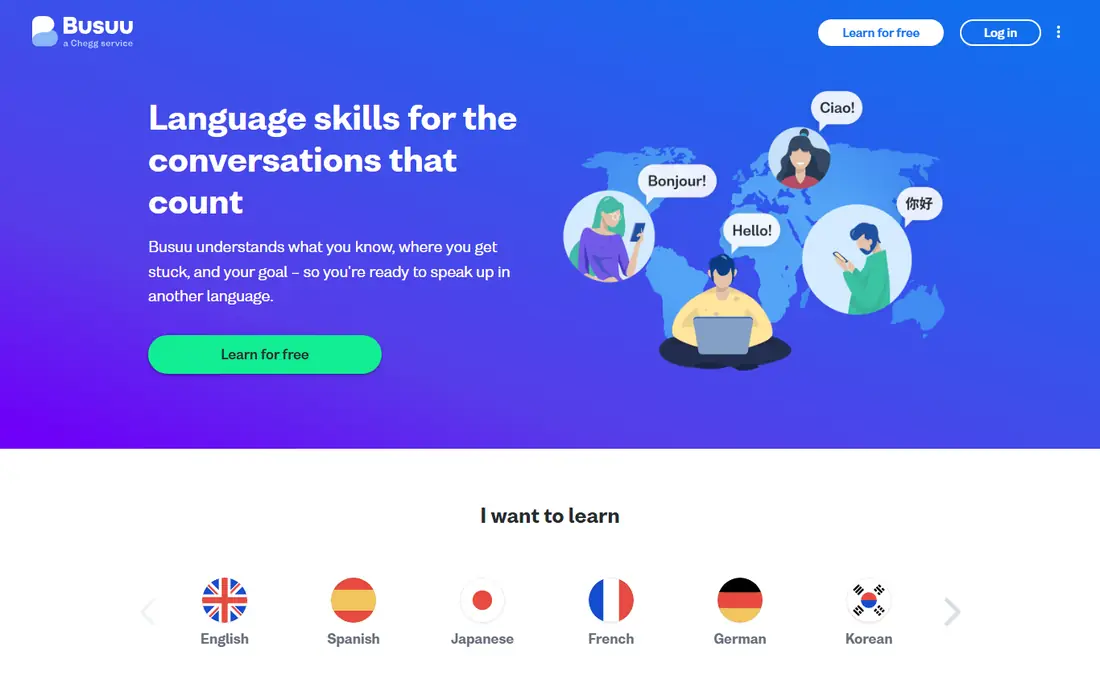
Busuu adds something most app-only tools miss: feedback from real people. You complete a lesson, submit speaking or writing exercises, and native speakers in the community can correct your work. That human check helps with natural phrasing and with mistakes that an automated checker may miss, and it gives a reason to return to the app beyond a streak.
The course structure is clear, with levels that map to common European framework levels, so you can see where you stand. The free plan covers basic lessons, while Premium gives access to full courses, offline mode, and extra review tools. Busuu is a good pick if you like a guided path but also want your sentences checked by people who speak the language every day.
- Structured lessons with CEFR levels
- Corrections from native speakers
- Grammar and vocabulary review built in
- Free plan is limited
- Some languages have less depth than the most popular ones
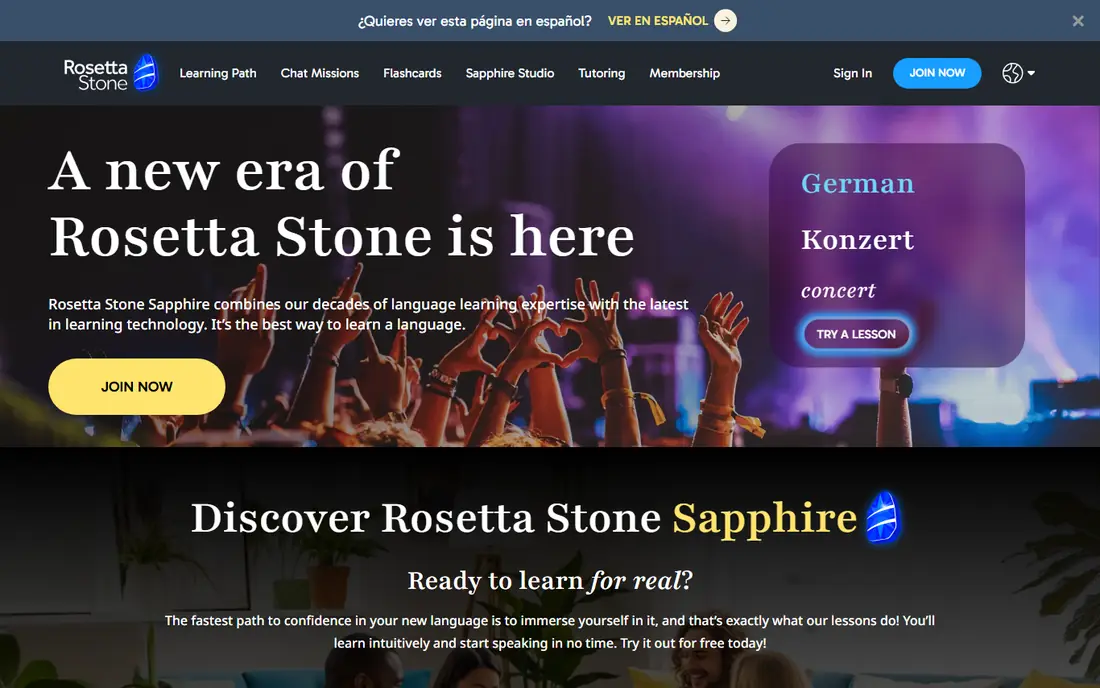
Rosetta Stone teaches by showing, not translating. You match words to pictures, listen to native audio, and speak back with pronunciation feedback, which builds an ear for the language before you lean on your first language for every sentence. That method suits learners who like to absorb patterns and who find grammar tables hard to remember.
The trade-off is pace and explanation. Some learners want to know why a sentence works, and Rosetta Stone gives less of that direct grammar teaching than a structured course. It also has no free plan, so use the trial or demo options to test the method first. If immersion clicks for you, it is a calm and consistent daily habit.
- Immersion method with images and audio
- Speech recognition for pronunciation
- Long track record in language teaching
- Progress can feel slow
- Grammar explanations are lighter than Babbel or Busuu
Pimsleur is the pick for commutes, walks, and chores, because its core lessons are audio. A narrator prompts you to recall and speak phrases, then builds on them in later lessons, which trains listening and speaking in a way that screen drills rarely do. You can learn without looking at a phone, which makes daily practice easier to fit into a busy day.
Reading and writing get less attention here, so pair Pimsleur with a reading app or a course if you need to read menus, emails, or books. The subscription is not the cheapest in this list, and pricing varies by plan, so check the vendor site for the current single-language and all-language options. For speaking confidence first, Pimsleur remains hard to beat.
- Audio lessons built for speaking and listening
- Graduated recall that prompts you at the right moment
- Hands-free learning
- Less reading and writing practice than app courses
- Subscription cost adds up over a year
Memrise is best at one job: helping words stick. It pairs vocabulary with short clips of native speakers, so you hear how a word sounds in a real mouth and a real accent, not only in a synthetic voice. Spaced repetition brings words back just before you would forget them, which suits daily review in short bursts.
Memrise is not a full grammar course, and learners who want a complete path should pair it with Babbel, Busuu, or a tutor. The free plan is useful for vocabulary, while Pro adds more content and offline access. If your main problem is remembering words you have already seen, Memrise is a focused and low-friction fix.
- Short video clips of native speakers
- Spaced repetition for vocabulary
- Free plan for basic learning
- Less structured grammar teaching
- Course depth varies by language
Mondly feels closest to a game-style app, but with a different flavor: daily lessons, themed vocabulary, and a chatbot that lets you practice short dialogues without the pressure of a live person. That low-pressure speaking practice helps beginners who freeze in real conversations, and the short format makes it easy to keep a daily habit.
The limit is depth. Grammar explanations stay light, and intermediate learners often find the material too basic for long-term progress. Mondly works best as a starter or as a second app for vocabulary and speaking confidence, paired with a deeper course for grammar. Try the free lessons first, since the monthly price is higher than some rivals.
- Bite-size lessons across many languages
- Chatbot conversations for low-pressure speaking
- Speech recognition included
- Grammar depth is light
- Advanced learners may outgrow it quickly
Lingodeer earns its place for learners of East Asian languages, where many general apps feel thin. Its Japanese, Korean, and Chinese courses include grammar explanations, alphabet and character practice, and sentence structure in a way that respects how those languages actually work. Lessons progress in a clear order, so you are less likely to hit a wall of unexplained characters.
The language list is smaller, so check that your target language has a full course before you commit. The free plan lets you test the first lessons, while a subscription gives access to full courses. For a learner focused on Japanese or Korean, Lingodeer is often a better core course than a general app that treats every language the same.
- Strong courses for Japanese, Korean, and Chinese
- Grammar notes and writing practice
- Clear lesson progression
- Language list is narrower than Babbel or Busuu
- Some features vary by language
Drops does one thing with focus: it teaches words through quick, visual games in five-minute sessions. You match images to words, hear native audio, and build a vocabulary base without long lessons or grammar drills. That format suits a learner who wants a daily habit in a spare five minutes, or a second app to support a main course.
Drops will not teach you to hold a conversation on its own, since grammar and sentence building are not its job. The free plan limits daily study time, while Premium removes that limit and adds more features. Use Drops to stock your vocabulary, and use a course or tutor to turn those words into sentences.
- Fast visual vocabulary games
- Five-minute sessions that fit a break
- Wide language selection
- Vocabulary only, with little grammar or conversation
- Free plan limits daily time
italki is the most different option in this list, because it replaces an app course with a real teacher. You choose a tutor by language, price, availability, and reviews, then book one-to-one video lessons for conversation, grammar, exam prep, or job interviews. That live feedback corrects pronunciation and phrasing in real time, which no automated app fully matches.
The trade-off is cost and effort. Prices vary widely by tutor, from a few dollars to much higher rates for experienced teachers, and weekly lessons add up over a year. You also need to manage bookings and find a tutor whose style suits you, though trial lessons help. For learners who can already study alone but cannot yet speak with confidence, a weekly italki lesson is often the fastest next step.
- Live lessons with native tutors
- Pay per lesson with no subscription required
- Tutors for many languages and levels
- Quality varies by tutor
- Costs add up with weekly lessons
- You must book and manage your own schedule
How we picked these
We compared official pricing pages, course structures, and public reviews, and we favored tools that offer a clear alternative method: structured courses, audio learning, immersion, vocabulary games, or live tutoring. We excluded the app this article is about, and we did not claim hands-on testing. Prices marked See website reflect plans that vary by language, billing period, or region, so check the vendor site before you buy.
How to choose the right alternative
Start with the skill that is holding you back. If you cannot form sentences, pick a structured course like Babbel or Busuu. If you can read but cannot speak, pick Pimsleur or italki. If you forget words, add Memrise or Drops as a second app rather than replacing your main course.
Next, test the free tier or trial for a full week, not a single session. A method that feels fun on day one can feel thin by day seven, and a slower method like Rosetta Stone or Pimsleur can feel more useful once the routine settles. Track one simple measure, such as how many new sentences you can say without notes, and let that guide the choice.
Finally, set a realistic weekly time budget. A tutor plus a course works well at three to five hours a week, while a single app suits one hour a week or less. Spending more on a tool you will not open is worse than spending less on a tool you use every day.
Frequently asked questions
What are the best duolingo alternatives for serious learners?
Babbel and Busuu are the strongest structured alternatives, with grammar, dialogue, and review built into a clear course path. Add italki or Pimsleur if speaking is your main goal.
What is the best alternative to duolingo for speaking practice?
Pimsleur suits audio-first speaking practice, while italki suits live conversation with a tutor. Mondly's chatbot offers low-pressure speaking practice for beginners who are not ready for a live lesson.
Is there a free alternative to duolingo?
Busuu, Memrise, Mondly, Lingodeer, and Drops all offer free plans with limits, and Babbel offers free first lessons. A free plan works for vocabulary and basics, but full courses usually require a subscription.
Which app is best for learning Japanese or Korean?
Lingodeer is a strong pick for Japanese and Korean, with grammar notes and character practice built into its courses. Pair it with Memrise for vocabulary or italki for speaking practice.
Can an app alone make me fluent?
No app alone guarantees fluency, since fluency needs real conversation, reading, and listening over time. Use an app as a core course, then add speaking practice, books, shows, or a tutor for the skills an app cannot fully teach.
Sources
See where you really rank - block by block
ProMapRanker scans Google Maps across a grid of your service area. Simple monthly plans from $19, white-label on every plan.
Start freeKeep reading
 best chat tool for website
Best Chat Tool for Website in 2026
Best chat tool for website owners compared, with live chat, AI agents, free plans, and pricing for small stores, SaaS teams, and support teams of all sizes.
Read → best birdwatching app
Best Birdwatching App in 2026
Best birdwatching app picks for 2026: nine free and paid apps for bird ID by sight and sound, checklists, hotspots, and finding birds near you for all birders.
Read → best bird identification app
Best Bird Identification Apps in 2026
Find the best bird identification app for photos, songs and calls. We compare 9 bird apps, including Merlin, BirdNET and Audubon, to help you choose today.
Read →