 ProMapRanker
Alternatives for Improving Small CR in 2026


All-around sales and marketing · Pricing starts at: $15 per seat per month
Key takeaways
- The slug and keyword for this article read as truncated, so we interpret the topic plainly as alternatives for improving small-business customer relationships, and this list covers small CRM tools only.
- HubSpot is the safest all-around small CRM, while Zoho CRM offers the most features per dollar and Pipedrive offers the clearest sales pipeline.
- Free plans from HubSpot, Zoho CRM, Freshsales, and Attio can run a very small team, but automation and reporting usually need a paid plan.
- The best CRM is the one your team actually updates daily, so favor simple setup and a good mobile app over a long feature list.
- Watch for price jumps: several tools are cheap at entry level but cost far more once you need automation, extra seats, or advanced reporting.
Quick comparison
| Pick | Great for | Pricing starts at | Free tier | |
|---|---|---|---|---|
| HubSpot CRM | All-around sales and marketing | $15 per seat per month | Yes | Visit |
 Zoho CRM | Features per dollar | $14 per user per month | Yes | Visit |
 Pipedrive | Visual sales pipelines | $14 per seat per month | Free trial | Visit |
 Freshsales | Budget AI-assisted selling | $9 per user per month | Free trial | Visit |
 Salesforce Starter | Growing into enterprise later | $25 per user per month | Free trial | Visit |
 Monday Sales CRM | Visual cross-team workflows | $12 per user per month | Free trial | Visit |
 Close | Outbound calling teams | $9 per user per month | Free trial | Visit |
 Copper | Teams living in Gmail | $9 per seat per month | Free trial | Visit |
 Attio | Flexible modern data model | See website | Yes | Visit |
 Capsule CRM | Simple relationship tracking | $18 per user per month | Free trial | Visit |
The best alternatives for improving small CR
These are small CRM tools that help a small business track contacts, deals, conversations, and follow-ups in one place. Each tool below is a CRM product, chosen to improve how a small business manages customer relationships.
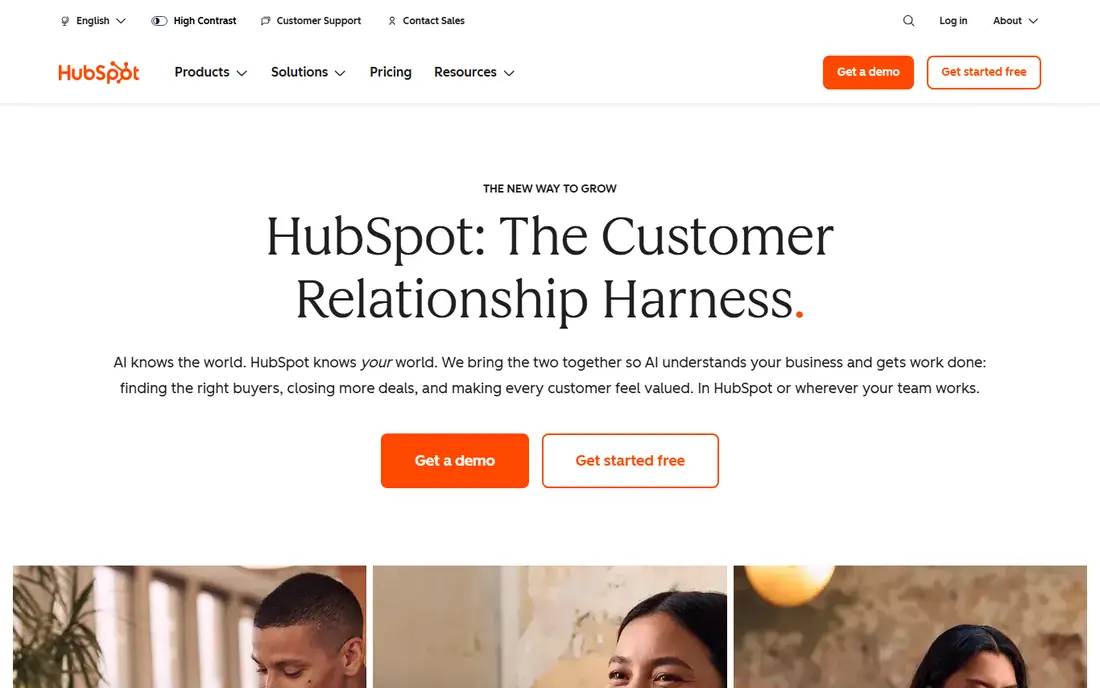
HubSpot is the safest default small CRM because its free tier covers contact management, deal pipelines, meeting scheduling, and forms with no cost, which is enough for a small team to run for months. Paid Starter seats start at $15 per seat per month and add more automation and reporting, while the shared database means marketing activity and sales history live on the same contact record.
The price jump is the well-known catch. Real multi-step automation and custom reporting sit on Professional tiers that cost far more per seat, sometimes with a one-time onboarding fee. Start free, add Starter only when you need it, and move up only when the automation clearly pays for itself.
- Genuinely usable free CRM
- Shared contact record across sales and marketing
- Guided setup
- Steep price jump for automation
- Higher tiers add onboarding fees
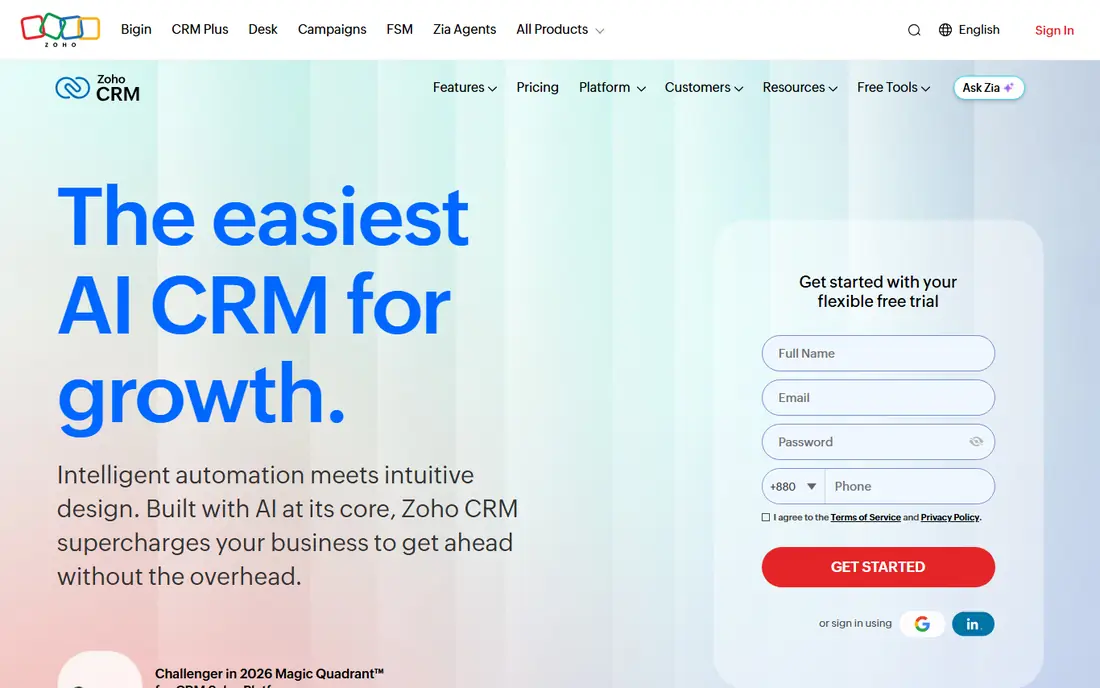
Zoho CRM offers the most features per dollar on this list, with a free plan for up to 3 users and a Standard paid plan starting at $14 per user per month on annual billing. It covers leads, contacts, deals, automation, email integration, and reporting, and it connects to the wider Zoho suite for accounting, support, and marketing. Small businesses that want room to grow without switching tools often pick Zoho for that depth.
Depth comes with complexity. The interface packs in many options, and a careless setup can leave a team with fields nobody uses. Spend a day defining your pipeline stages, required fields, and automation rules before inviting the team. Done well, Zoho can serve a business from three users to thirty without a move.
- Free plan for up to 3 users
- Deep customization
- Wide Zoho app ecosystem
- Interface can feel dense
- Setup takes time to get right
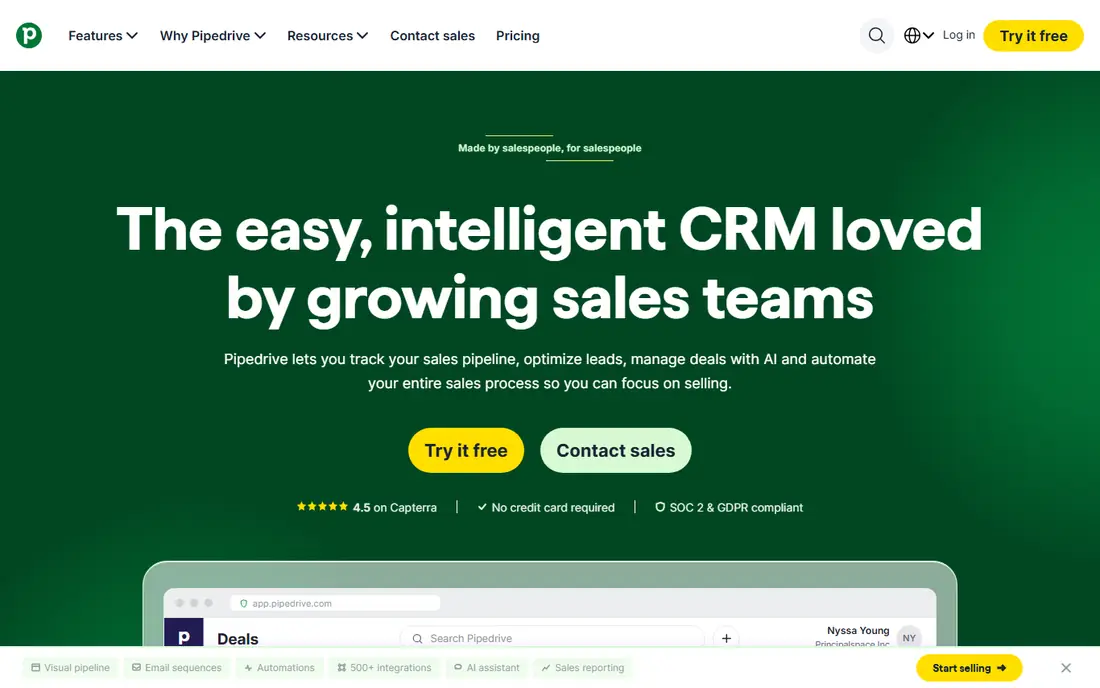
Pipedrive is built around one idea: a visual pipeline that shows every deal by stage, so a small sales team always knows what needs attention next. Its Lite plan starts at $14 per seat per month on annual billing, with a 14-day trial, and its activity reminders, email integration, and mobile app keep follow-ups from slipping. Teams that live in their pipeline tend to adopt it faster than more complex CRMs.
Marketing depth is thinner than HubSpot, so teams that need landing pages, email campaigns, and lead scoring in the same tool may need an add-on. Pipedrive also offers no permanent free plan. For sales-led small businesses, the clarity of the pipeline outweighs those limits.
- Clearest visual pipeline
- Easy to learn
- Strong activity and follow-up reminders
- No permanent free plan
- Marketing features are thinner than HubSpot
Freshsales, part of Freshworks, suits small teams that sell by phone and email and want AI help at a low price. Its Growth plan starts at $9 per user per month on annual billing, with a 21-day trial, and it includes built-in calling, email tracking, lead scoring, and workflow automation. That bundle is strong value for a team that cannot justify HubSpot Professional pricing.
The free tier covers only a small number of users with limited features, so most teams will pay from the start. Deep customization and advanced reporting also sit on higher plans. For a budget-conscious sales team that wants calling, email, and AI scoring in one place, Freshsales is hard to beat.
- Low entry price
- Built-in phone and email
- AI-assisted scoring and insights
- Free tier is limited
- Advanced customization needs higher plans
Salesforce Starter, formerly the Starter Suite, gives small businesses a simplified entry point into the Salesforce platform at $25 per user per month, with a 30-day trial. It covers accounts, contacts, leads, opportunities, and basic marketing and service tools in one guided setup. The real value is the upgrade path: a business that outgrows Starter can move to full Sales Cloud without migrating to a new vendor.
Starter still feels like Salesforce, which means more setup choices than Pipedrive or Capsule. Very small teams may find it heavier than they need. Businesses that expect to grow into a larger Salesforce deployment, or that already use Salesforce elsewhere, should shortlist it despite the higher entry price.
- Clear upgrade path to full Salesforce
- Strong ecosystem and integrations
- 30-day trial
- Higher entry price
- Setup can feel enterprise-heavy for tiny teams
Monday Sales CRM suits teams that already think in boards and want sales, marketing, and delivery work visible in one place. Its Basic plan starts at $12 per user per month on annual billing, with a 14-day trial and a 3-seat minimum on paid plans. Custom boards, automations, and dashboards let a small business shape the CRM around its own process rather than adopting a fixed sales model.
Pure CRM depth is thinner than Pipedrive or Zoho, especially for complex sales reporting and forecasting. Teams that need a strict sales methodology may find Monday too flexible. Teams that value shared visibility across departments, and already use Monday for projects, will find it a natural fit.
- Highly visual boards
- Flexible workflows
- Good cross-team visibility
- Minimum 3 seats on paid plans
- CRM depth is thinner than dedicated CRMs
Close is built for inside sales teams that live on the phone, with built-in calling, SMS, and email plus power dialing and follow-up workflows in one workspace. Its Solo plan starts at $9 per user per month on annual billing, with a 14-day trial, which is a low entry price for a calling-focused CRM. Outbound teams that make dozens of calls a day will feel the difference from a general CRM with calling added on.
Marketing-led teams will find Close thinner on campaigns, landing pages, and lead nurturing than HubSpot. Reporting depth also improves on higher plans. For outbound sales, though, Close keeps reps calling instead of clicking between tools, and that focus is its main strength.
- Built-in calling, SMS, and email
- Fast outbound workflows
- Low Solo entry price
- Less suited to marketing-led teams
- Reporting depth needs higher plans
Copper is the CRM for businesses that run on Gmail and Google Workspace, since it lives inside Gmail, captures contacts and conversations automatically, and syncs with Calendar and Drive. Its Starter plan starts at $9 per seat per month on annual billing, with a 14-day trial. Teams that never leave their inbox will update Copper more reliably than a CRM that requires a separate login habit.
The Google-only focus is also its limit. Businesses on Microsoft 365 or mixed tools will not get the same benefit, and complex customization lags behind Zoho. For a Google Workspace small business that wants a CRM that fills itself in from email, Copper is the easiest adoption story here.
- Deep Gmail and Google Workspace integration
- Simple setup
- Automatic data capture
- Google Workspace only
- Less flexible than Zoho for complex processes
Attio is a modern CRM for data-driven startups and small teams that want a flexible data model rather than a fixed pipeline. Its free plan covers up to 3 seats, and paid plans add more seats, automation, and AI enrichment features. The interface is clean, the record model adapts to unusual business models, and email and calendar sync keep records current with less manual entry.
The ecosystem is smaller than HubSpot or Salesforce, so niche integrations may need extra work. Pricing has varied across plans, so we list it as See website. Teams that find traditional CRMs too rigid, and that value a modern interface and flexible records, should trial Attio before settling on a more conventional tool.
- Flexible data model
- Free plan for up to 3 seats
- Modern interface and AI enrichment
- Pricing varies by plan, so confirm before buying
- Smaller ecosystem than HubSpot
Capsule CRM suits small businesses that sell through relationships rather than high-volume pipelines. Its interface is calm and simple, contact histories are easy to follow, and tasks, tracks, and pipelines cover the core follow-up work without clutter. Paid plans start at $18 per user per month, with a 14-day trial, which reflects its focus on simplicity over breadth.
Automation and advanced reporting are thinner than Zoho or HubSpot, so teams that need complex workflows should look elsewhere. For a service business, consultancy, or agency that mainly needs to remember who it spoke to, what was promised, and when to follow up, Capsule does that job with less noise than larger CRMs.
- Simple and calm interface
- Strong contact history
- Good for relationship-led selling
- Fewer automation features than rivals
- Higher entry price than Freshsales or Close
How we picked these
We compared official pricing pages, product documentation, and public feature lists for small-team fit, free or trial availability, pipeline clarity, and integration coverage in October 2026. We included only CRM tools that suit small businesses, and we left out enterprise-only platforms and general project tools without CRM features. Where pricing differed across recent sources, we used the most recent vendor-aligned figure or wrote See website. We did not run these CRMs with a live sales team for this article.
How to improve customer relationships with a small CRM
A CRM only helps if it holds one true record per customer. Start by importing contacts once, removing duplicates, and recording every conversation, promise, and next step in the same place. That single record stops the classic small-business failure: a customer repeats their story to three staff members because nobody wrote down the last conversation. Review the pipeline weekly as a team so no deal or follow-up sits untouched for more than a few days.
Setup, habits, and follow-up
Keep the setup small: five pipeline stages, a handful of required fields, and one automation, such as a task when a deal sits idle for a week. Add fields only when a real decision needs them. Make updating the CRM part of ending a call, not an end-of-week chore, and use the mobile app for notes on the road. A simple CRM updated daily beats a powerful CRM updated monthly.
Measuring whether relationships are improving
Track response time to new enquiries, the share of deals with a next step booked, and repeat purchase or referral rates over a quarter. If response times fall and follow-ups rise, the CRM is working, even if revenue has not moved yet. If the team still keeps side spreadsheets, the setup is too complex or the mobile experience is too weak, and simplifying the CRM will help more than adding features.
Frequently asked questions
What is the best CRM for a small business?
HubSpot CRM is the best all-around small CRM because its free tier is genuinely usable and it covers sales and marketing in one database. Zoho CRM offers more features per dollar, Pipedrive offers the clearest pipeline, and Freshsales offers the lowest AI-assisted entry price. The best choice depends on your team size, budget, and whether you sell by phone, email, or marketing.
Is there a free CRM for small businesses?
Yes, HubSpot offers a free CRM with core contact and pipeline features, Zoho CRM offers a free plan for up to 3 users, and Attio offers a free plan for up to 3 seats. Freshsales also offers a limited free tier. Free plans suit very small teams, but automation and advanced reporting usually need a paid plan.
What is the cheapest small CRM?
Freshsales and Close both start at $9 per user per month on annual billing, and Copper starts at $9 per seat per month, making them the cheapest paid entry points here. Zoho CRM and Pipedrive start at $14 per user per month, while HubSpot Starter starts at $15 per seat per month. Compare what each plan includes, since the cheapest plan is not always the cheapest once you add automation.
How is a CRM different from a spreadsheet?
A spreadsheet holds a list, while a CRM holds a living record: conversations, emails, calls, deals, tasks, and follow-ups linked to each contact, with reminders when something needs attention. Spreadsheets break down when several people edit them, duplicates appear, and follow-ups are forgotten. A CRM keeps one record per customer that the whole team can trust.
Can a small CRM handle marketing as well as sales?
HubSpot handles marketing and sales together better than any tool here, with forms, email, and campaign tracking on the same contact record. Zoho CRM also covers marketing through its wider suite, while Pipedrive, Close, and Capsule focus mainly on sales. If marketing matters as much as sales, shortlist HubSpot or Zoho first.
How long does it take to set up a small CRM?
A simple setup takes a day or two: import contacts, define pipeline stages, connect email, and set follow-up reminders. A complex setup with automation, custom fields, and integrations can take one to two weeks. Start with the smallest setup that covers your daily work, and add complexity only when the team asks for it.
Sources
See where you really rank - block by block
ProMapRanker scans Google Maps across a grid of your service area. Simple monthly plans from $19, white-label on every plan.
Start freeKeep reading
 best chat tool for website
Best Chat Tool for Website in 2026
Best chat tool for website owners compared, with live chat, AI agents, free plans, and pricing for small stores, SaaS teams, and support teams of all sizes.
Read → best birdwatching app
Best Birdwatching App in 2026
Best birdwatching app picks for 2026: nine free and paid apps for bird ID by sight and sound, checklists, hotspots, and finding birds near you for all birders.
Read → best bird identification app
Best Bird Identification Apps in 2026
Find the best bird identification app for photos, songs and calls. We compare 9 bird apps, including Merlin, BirdNET and Audubon, to help you choose today.
Read →