 ProMapRanker
Best Zendesk Alternatives in 2026


Budget all-round ticketing · Pricing starts at: $19 per agent per month
Key takeaways
- Freshdesk and Zoho Desk give small teams the lowest entry cost, with paid plans starting at $19 and $7 per agent per month when billed annually.
- Intercom suits teams whose support happens inside a product, while Help Scout suits teams whose support is mostly email.
- Gorgias is the clearest pick for Shopify stores, because order data sits inside each ticket instead of in a separate tab.
- AI pricing is now a separate cost on several tools, so check per-resolution or per-session charges before you compare seat prices alone.
- Free plans are limited by seats or contacts on most tools, so a free plan that fits a team of three may not fit a team of ten.
Quick comparison
| Pick | Great for | Pricing starts at | Free tier | |
|---|---|---|---|---|
| Freshdesk | Budget all-round ticketing | $19 per agent per month | Free trial (14 days) | Visit |
 Intercom | In-product messaging and AI answers | $29 per seat per month | Free trial (14 days) | Visit |
 Help Scout | Simple email-first support | $25 per user per month | Yes | Visit |
 Zoho Desk | Lowest-cost help desk | $7 per agent per month | Yes | Visit |
 HubSpot Service Hub | Teams already using HubSpot CRM | Free | Yes | Visit |
 Front | Shared inbox collaboration | $25 per seat per month | Free trial (14 days) | Visit |
 Gorgias | Shopify and ecommerce support | $10 per month | No | Visit |
 LiveAgent | Ticketing, chat, and phone in one tool | $15 per agent per month | Free trial (30 days) | Visit |
 Salesforce Service Cloud | Enterprise teams on Salesforce | $25 per user per month | Free trial (30 days) | Visit |
The best Zendesk alternatives
We compared these tools on ticketing, channels, AI costs, and the price a small team actually pays at entry level. Our pick for most small teams is Freshdesk, with Zoho Desk close behind on price.
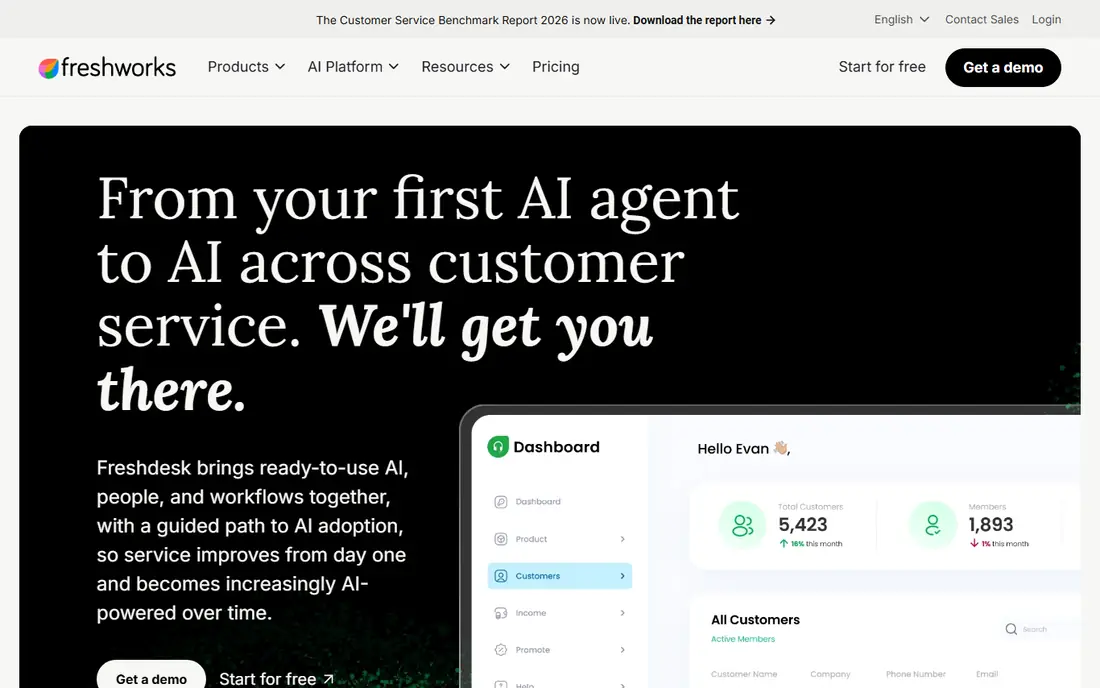
Freshdesk is the closest like-for-like replacement for Zendesk on this list. It covers email, chat, phone, and social tickets in one queue, and it adds a customer portal and knowledge base on paid plans. Teams that want a familiar help desk without enterprise pricing usually settle here first.
The catch is the AI meter. Paid plans include a starter allowance of Freddy AI Agent sessions, and extra sessions are billed in packs after that allowance runs out. That model works well for steady ticket volume, but a sudden spike can raise the bill. If your team mainly needs solid ticketing, Freshdesk at Growth level is strong value. If AI answers are the main reason to switch, price the session packs before you commit.
- Wide channel coverage
- Clear tier structure
- AI agent included on paid plans with a starter allowance
- AI agent costs rise after the included sessions
- Full omnichannel setup can need extra products
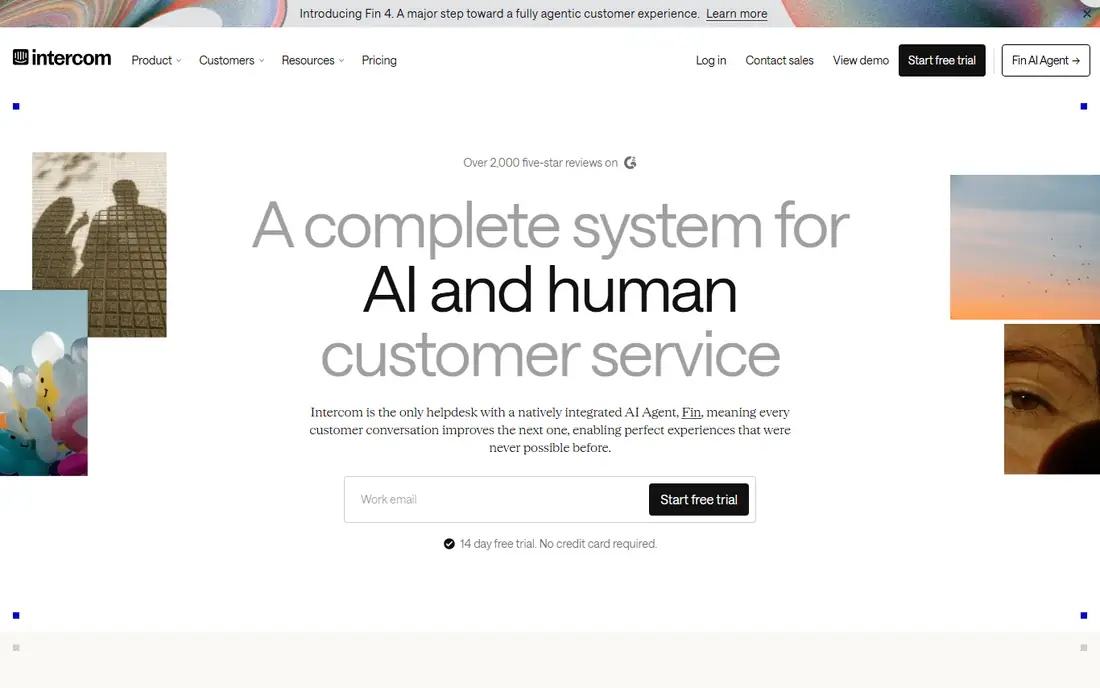
Intercom fits companies whose customers ask for help while using a website or app. The messenger sits inside the product, so a customer does not need to leave to send a message or read a help article. That placement also helps support teams see what the customer was doing when the question arrived.
Fin, the AI agent, is the main reason many teams pick Intercom over a traditional ticket queue. It is billed per outcome, so teams should model how many conversations Fin will resolve in a normal month. For product-led companies, that trade can still be cheaper than adding seats. For email-heavy teams, a simpler shared inbox may cost less.
- Strong in-app messenger
- Fin AI Agent answers inside the product
- Wide channel coverage
- AI outcomes are billed separately
- Costs climb with seat count and AI volume
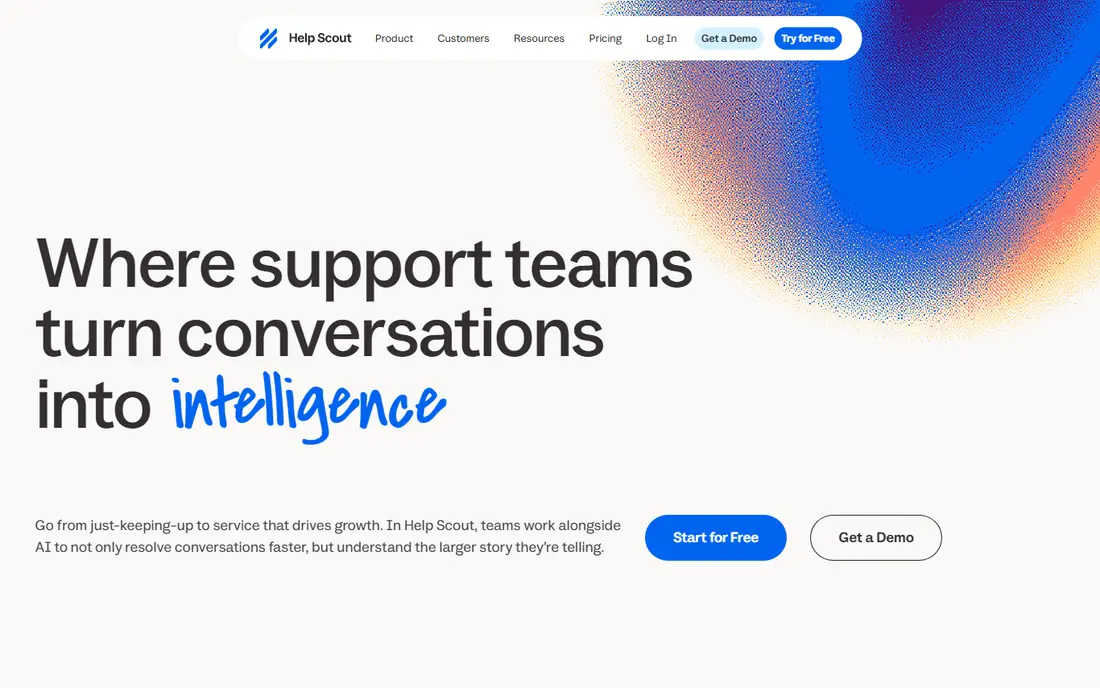
Help Scout feels more like a shared email inbox than a complex ticket system, and that is the point. Small teams can assign conversations, add internal notes, and reply from a shared address without learning a large admin area. The interface stays calm when volume is low, which matters for teams that answer support alongside other work.
The free plan covers a small number of users and a monthly contact limit, so it suits a startup or a side project more than a growing support team. Paid plans add more mailboxes, reporting, and automation. If most of your support arrives by email and you value a personal tone, Help Scout is a strong alternative to Zendesk.
- Clean shared inbox
- Easy setup for small teams
- Limited free plan for very small teams
- Phone support is limited
- AI answers are billed per resolution
Zoho Desk wins on price alone. Its free edition covers up to three agents with email ticketing, a help center, and a knowledge base. The first paid tier starts at $7 per agent per month when billed annually, which is well below most rivals on this list.
The trade is polish. Zoho Desk packs in many settings, and new admins may need time to find the right ones. Teams already using Zoho CRM, Zoho Books, or other Zoho apps get the most value, because customer records and tickets can sit in the same system. For a budget-conscious team that wants a full help desk, Zoho Desk is hard to beat.
- Lowest paid entry price here
- Free plan for up to three agents
- Deep Zoho app connections
- Interface can feel busy
- Higher tiers are needed for stronger automation
HubSpot Service Hub makes most sense when HubSpot CRM is already the record of truth. Tickets, conversations, and customer records connect without extra sync tools, so agents can see purchase and contact history in the same view. The free tools cover a shared inbox, ticketing, and live chat for a small team.
Paid plans add automation, feedback surveys, and AI tools, but the price steps up sharply from Starter to Professional. Teams that only need a help desk, and do not use HubSpot elsewhere, may find a cheaper standalone tool. Teams that already live in HubSpot will save time on setup and on keeping records in one place.
- Free service tools for small teams
- Tickets linked to CRM records
- Shared inbox included
- Paid plans rise quickly
- Onboarding fees apply on higher tiers
Front replaces the ticket queue with shared inboxes that teams manage together. Agents can assign a message, comment internally, and hand it to another team without forwarding emails around. That model works well for operations teams where support, sales, and finance all touch the same customer thread.
Front is less of a traditional help desk and more of a collaboration layer over email and messaging. Teams that need strict ticket workflows, SLAs, and large knowledge bases may prefer Freshdesk or Zoho Desk. Teams that live in email and want faster internal handoffs will find Front a natural Zendesk alternative.
- Strong team collaboration
- Email, SMS, and social in shared inboxes
- Clear assignment and commenting
- No free plan
- AI add-ons cost extra
- Phone support needs separate tools on some plans
Gorgias is built for online stores, and it shows in the ticket view. Agents can see order status, edit orders, and process refunds without opening a separate Shopify tab. That saves clicks on the most common ecommerce questions, which are usually about shipping, returns, and order changes.
Pricing is based on ticket volume rather than seats, starting at $10 per month for a small ticket allowance. Small stores with a lean team can pay far less than per-seat tools. Larger stores should watch ticket counts closely, because overage charges add up during sales peaks. If you do not sell online, skip Gorgias and pick a general help desk instead.
- Order data inside tickets
- Ticket-based pricing suits small stores
- Strong Shopify connection
- Little value outside ecommerce
- Ticket limits mean overage costs at volume
LiveAgent gives small and mid-size teams a wide set of channels for a modest price. Email tickets, live chat, social messages, and phone calls flow into one system, and a built-in call center means phone support does not need a separate product. A customer forum and knowledge base also help deflect repeat questions.
The design is more functional than modern, and some teams may prefer the cleaner look of Help Scout or Front. What LiveAgent offers in return is breadth at entry level. If your team still takes many phone calls and wants chat and tickets in the same tool, LiveAgent covers that mix without enterprise pricing.
- Ticketing, live chat, and call center in one plan
- Forum and knowledge base included
- Long trial
- Interface looks dated next to newer tools
- Advanced automation sits on higher tiers
Salesforce Service Cloud is the enterprise pick on this list. It links cases directly to Salesforce accounts, opportunities, and service contracts, which gives large teams a single customer record across sales and support. Case routing, entitlements, and reporting are built for high volume and complex teams.
That power comes with setup work. Admins should expect a longer implementation than with Freshdesk or Help Scout, and AI features can add per-conversation charges on top of seats. For teams already running Salesforce, the connection is worth it. For teams without Salesforce, a standalone help desk will be faster and cheaper to run.
- Deep Salesforce CRM connection
- Strong case management at scale
- Wide integration options
- Setup is heavy
- Higher tiers and AI features add major cost
How we picked these
We compared official feature pages, pricing pages, and app store listings for each tool, and we checked public reviews for recurring complaints about setup, AI billing, and channel limits. We kept only tools that still sell a current help desk or support product in October 2026 and that can replace the core Zendesk job: taking customer questions from several channels, assigning them, and resolving them with a clear history.
We did not claim hands-on testing. Instead, we weighted the entry price a small team pays, the channels included at that price, whether a free plan or trial exists, and how AI costs are billed. Tools that only handled one channel, or that had no clear current pricing, were left out.
What to check before you switch
Start with the channel mix, not the feature list. Count how many questions arrive by email, chat, phone, and social in a normal month, then check which tools include those channels at entry level. A tool that looks cheap can turn expensive if phone or social support needs an add-on.
Price the AI separately
Many tools now charge seats plus AI outcomes, sessions, or resolutions. Ask each vendor how a normal month of AI answers would be billed for your volume. That figure, added to seat costs, is the real monthly price.
Test the migration, not just the demo
Import a sample of real tickets, try assignment and reporting, and check how your help center content moves across. A clean demo does not prove a clean migration, and ticket history matters once your team goes live.
Check the free plan limits
Free plans on this list limit seats, contacts, or tickets. Write down the limit that your team will hit first, and price the next paid tier now. That avoids a surprise upgrade in the first busy month.
Frequently asked questions
What are the best alternatives to Zendesk for small businesses?
Freshdesk and Zoho Desk are the strongest small-business picks, because both offer low entry prices and full ticketing. Help Scout is a good choice if support is mostly email and the team wants a simple shared inbox. Larger teams that need in-product messaging should look at Intercom, while Shopify stores should look at Gorgias first.
What are the best free Zendesk alternatives?
Zoho Desk offers a free edition for up to three agents, and Help Scout offers a limited free plan for small teams. HubSpot Service Hub also offers free service tools for up to two users. These free plans suit very small teams, but growing teams should budget for a paid tier once seat or contact limits are reached.
Which Zendesk alternative has the best AI support?
Intercom is the strongest AI-first pick, because Fin answers inside the product messenger and is billed per outcome. Freshdesk also offers an AI agent, but it is billed per session after a starter allowance. The best choice depends on where customers ask questions and how AI volume is billed for your team.
Is there a top alternative to Zendesk for ecommerce stores?
Gorgias is the top ecommerce pick on this list, because order data, refunds, and shipping details appear inside each ticket. That connection saves agents from switching between the help desk and the store admin. Stores on other platforms should check which help desks connect to their store before choosing.
Are there alternatives to Zendesk that include phone support?
LiveAgent includes a call center alongside ticketing and chat, which suits teams that still handle many calls. Intercom and Salesforce Service Cloud also cover phone channels, though setup and cost vary. If phone is your main channel, confirm call routing and recording on the plan you intend to buy.
Sources
- https://www.freshdesk.com/pricing
- https://www.intercom.com/pricing
- https://www.helpscout.com/pricing
- https://www.zoho.com/desk/pricing
- https://www.hubspot.com/pricing/service
- https://www.frontapp.com/pricing
- https://www.gorgias.com/pricing
- https://www.liveagent.com/pricing
- https://www.salesforce.com/service-cloud/pricing
- https://www.eesel.ai/blog/zendesk-alternatives
- https://assembly.com/blog/zendesk-alternatives
See where you really rank - block by block
ProMapRanker scans Google Maps across a grid of your service area. Simple monthly plans from $19, white-label on every plan.
Start freeKeep reading
 wordpress alternatives
Best WordPress Alternatives in 2026
Looking for the best WordPress alternatives? We compare 8 free and paid options for blogs, business sites, stores, and developer-led projects in 2026.
Read → which real estate company has the best training
Best Real Estate Company Training in 2026
Compare which real estate company has the best training, from Keller Williams and eXp to Compass and Coldwell Banker, by program, mentor, and fit in 2026.
Read → what's the best tools to generate ai image
Best Tools to Generate AI Images in 2026
Compare the best tools to generate AI images in 2026, from Midjourney and ChatGPT to Adobe Firefly, Leonardo AI, and free open options for every budget.
Read →