 ProMapRanker
Writesonic Alternatives in 2026

Key takeaways
- Jasper suits marketing teams that need consistent brand voice across many writers.
- Rytr is the lowest-cost route for solo writers who mainly need short-form drafts.
- Copy.ai now leans toward chat and go-to-market workflows, not just blog drafting.
- Grammarly and QuillBot are editing tools first, so pair them with a drafting tool if you need long posts.
Quick comparison
| Pick | Great for | Pricing starts at | Free tier | |
|---|---|---|---|---|
 Jasper | Brand voice and long-form marketing | $59 per month | Free trial | Visit |
 Copy.ai | Chat and go-to-market copy | See website | Free trial | Visit |
 Rytr | Budget short-form drafting | $7.50 per month | Yes | Visit |
 Anyword | Predictive scoring for ads | $39 per month | Free trial | Visit |
 Grammarly | Editing and tone polish | $12 per month | Yes | Visit |
 QuillBot | Paraphrasing and summaries | $8.33 per month | Yes | Visit |
 Sudowrite | Fiction and creative writing | $10 per month | No | Visit |
 Simplified | All-in-one copy and design | See website | Yes | Visit |
The best writesonic alternatives
Writesonic has moved toward SEO articles and AI search visibility, which is more than some writers need. We compared official pricing pages, feature documentation, and plan limits for AI writing tools live in October 2026, and we kept only tools that genuinely help draft, rewrite, or polish text.

Jasper is built for marketing teams that need many writers to sound like one brand. Brand voice settings, campaign templates, and long-form documents help teams produce blogs, landing pages, and email sequences with consistent tone. That consistency is its main advantage over general chat tools.
The price is the clear drawback. Solo writers may find cheaper tools sufficient, and Jasper makes most sense when several people publish regularly. If brand consistency and volume matter, Jasper is still one of the strongest options here.
- Brand voice controls
- Long-form templates
- Team workflows
- Higher entry price
- No permanent free plan
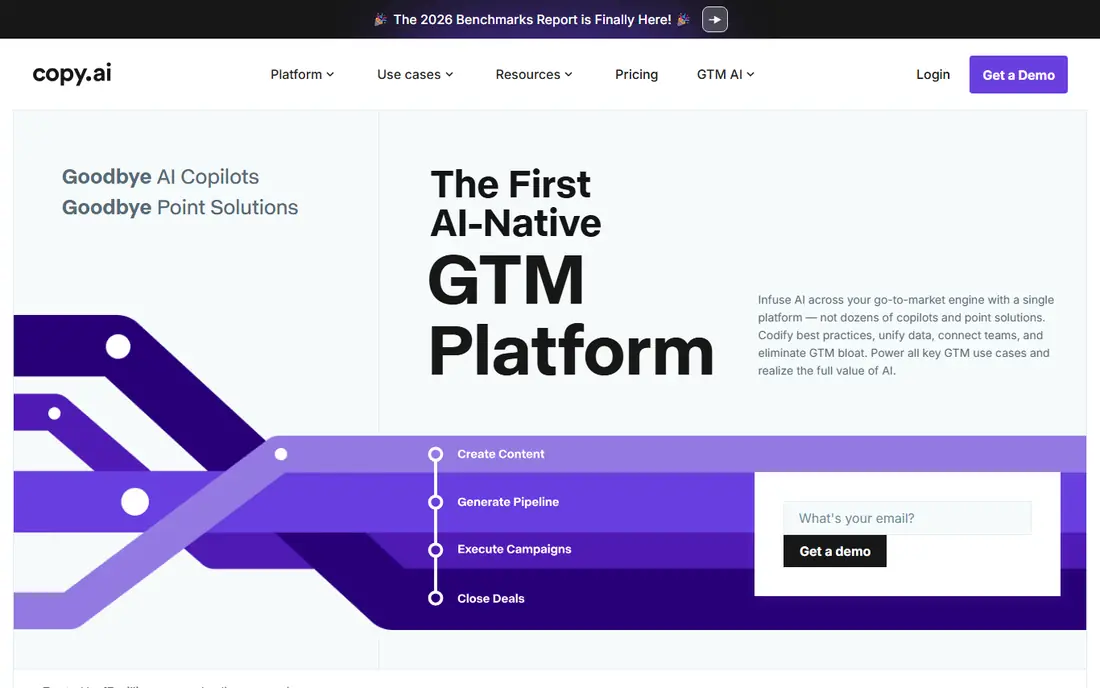
Copy.ai has shifted from a simple copy generator toward chat and go-to-market workflows. Teams can draft short copy, build sequences, and connect writing to sales and marketing tasks. That makes it useful for firms where copy feeds directly into outreach and campaigns.
Blog writers who want long, structured articles may prefer Jasper or a dedicated SEO tool. Copy.ai earns its place for short-form marketing, social copy, and teams that want writing inside a broader workflow, not as a standalone task.
- Chat-based drafting
- Workflow features
- Team seats on paid plans
- Less focused on long blog posts
- Workflow tiers can be costly

Rytr is the budget pick in this list, and it is easy to see why it stays popular. A free tier covers occasional use, and the paid unlimited plan costs less than most rivals. Templates for emails, social posts, product descriptions, and short blogs cover everyday writing needs well.
Long-form quality is the trade-off. Rytr drafts are competent for short pieces, but longer articles need more structure and editing. For solo creators, students, and small businesses on a tight budget, it is a practical starting point.
- Very low price
- Permanent free tier
- Many templates and languages
- Weaker for long-form work
- Output needs more editing
Anyword stands apart because it scores copy for likely performance before you publish it. That helps performance marketers test ad headlines, landing page copy, and email subject lines without running every variant live. For paid campaigns, that scoring layer can save testing budget.
General blog writers may find it narrower than Jasper or Rytr. Anyword is best for teams where copy performance is measured in clicks and conversions, and where small wording changes carry real commercial value.
- Predictive performance scores
- Ad and landing page focus
- Brand voice tools
- Less suited to general blogging
- Scoring is a guide, not a promise
Grammarly is not a direct drafting replacement, but it belongs here because many writers pair it with a drafting tool. It checks grammar, clarity, and tone wherever you write, from email to documents to browsers. That everywhere coverage is hard to match.
The limit is scope. Grammarly improves what you already wrote, and its AI prompts help with short rewrites, but it does not produce a full long-form article from a brief. Use it as an editing layer, not as your only writing tool.
- Works across browsers and apps
- Strong grammar and tone help
- Free tier is useful
- It polishes drafts rather than writing long posts
- Pro price rises on monthly billing
QuillBot helps when you already have a draft and need it clearer, shorter, or differently worded. Its paraphrasing modes, summariser, and grammar checks suit students, researchers, and professionals who rewrite often. The price is modest, especially on annual billing.
It is not the right tool for generating a blog post from scratch. Treat QuillBot as a rewriting and editing companion, and pair it with Jasper, Rytr, or a general chat tool if you also need original drafts.
- Strong paraphraser
- Summariser
- Plagiarism checker on paid plans
- Focused on rewording, not original drafting
- Free tier limits words per pass
Sudowrite is the creative pick here. It helps fiction writers brainstorm, expand scenes, develop characters, and work through drafts without forcing a marketing template onto a story. That focus makes it feel different from the business writing tools on this list.
Marketing teams should look elsewhere. Sudowrite does not aim to produce SEO blogs or ad copy, and its value depends on creative writing needs. For novelists, short story writers, and hobby writers, it is a distinctive and affordable option.
- Creative writing features
- Story and character tools
- Low entry price
- Not built for marketing copy
- No free plan
Simplified suits small teams that need copy and visuals together. You can draft social posts, write short marketing copy, and design graphics in one workspace, which reduces switching between tools. That breadth is useful for solo marketers and small businesses.
Depth is the trade-off. Its writing tools are solid for short-form work but lighter than dedicated long-form tools. If your main need is social and marketing output with design included, Simplified is a practical all-in-one choice.
- Writing plus design tools
- Templates for social and marketing
- Free plan
- Writing depth is lighter than Jasper
- Some features need paid plans
How we picked these
We compared official pricing pages, feature documentation, and plan limits for AI writing tools live in October 2026. We excluded Writesonic itself, as this list is for alternatives only. We kept tools that draft, rewrite, or polish text for real publishing work, and we noted where a tool is mainly an editor rather than a drafter, so readers do not buy the wrong type.
What to check before you buy
Start with the kind of writing you actually do. Long-form marketing, short ads, fiction, and academic rewriting are different jobs, and no single tool leads at all of them. Shortlist two tools that match your main job, then test them on your own briefs during a trial.
Next, check output limits and seats. Some tools limit words, credits, or documents, while others limit team seats. A tool that looks cheap for one user can become costly for a team of five, and a generous solo plan may not cover a busy content calendar.
Editing still matters
AI drafts need human checking for facts, tone, and originality. Read every draft for errors, verify claims and figures, and edit for your audience. Tools that score or polish text help, but they do not remove the need for a careful human editor.
Brand voice and plagiarism
If many writers publish under one brand, test brand voice controls with your own style guide. Also check plagiarism and originality features, especially for academic or client work. A tool that helps you stay consistent and original is worth more than one that simply writes faster.
Frequently asked questions
What are the best Writesonic alternatives?
Jasper is best for marketing teams and brand voice, Rytr is best for budget solo writing, and Copy.ai suits go-to-market teams. Anyword leads for ad performance scoring, while Grammarly and QuillBot are best as editing companions rather than drafting tools.
What is the best free alternative to Writesonic?
Rytr offers a permanent free tier for short-form drafting, and Grammarly and QuillBot offer useful free tiers for editing and paraphrasing. Free tiers limit volume or features, so they suit occasional use better than a busy publishing schedule.
Is Jasper better than Writesonic?
It depends on your job. Jasper is stronger for brand voice and long-form marketing content across a team. Writesonic is stronger for SEO articles and AI search visibility tracking. Choose Jasper for brand consistency, and consider an SEO tool if ranking is your main goal.
Can AI writing tools replace human writers?
No. They speed up first drafts, outlines, and rewrites, but human writers still need to check facts, add original insight, and shape tone for readers. The best results come from using AI as a drafting aid, with a human editor making final decisions.
Which tool is best for ad copy?
Anyword is the strongest pick here, because its predictive scoring helps compare ad and landing page variants before spending on campaigns. Copy.ai also suits short marketing copy, especially when copy feeds into sales workflows.
Do these tools check plagiarism?
Some do, including QuillBot on paid plans, while others rely on originality checks or third-party tools. If plagiarism checking matters for your work, confirm it on the vendor pricing or features page before subscribing, because it is not standard on every plan.
Sources
See where you really rank - block by block
ProMapRanker scans Google Maps across a grid of your service area. Simple monthly plans from $19, white-label on every plan.
Start freeKeep reading
 zscaler alternatives
Best Zscaler Alternatives in 2026
Looking for zscaler alternatives? We compare 9 SASE and zero trust platforms on architecture, data protection, pricing, and fit for your network and team.
Read → zapier alternatives free
Best Zapier Alternatives Free in 2026
Nine automation tools for zapier alternatives free in 2026, all with genuinely free tiers, plus free plan limits, starting prices and upgrade paths explained.
Read → which platform is best for online reputation
Which Platform Is Best for Online Reputation in 2026
Wondering which platform is best for online reputation? We compare 8 review, listing, and response tools for small and multi-location businesses and agencies.
Read →