 ProMapRanker
Whova Alternatives in 2026

Key takeaways
- Cvent suits large enterprise programs that need venue sourcing, registration, and reporting in one system.
- Bizzabo suits B2B marketing teams that want polished event pages and CRM reporting.
- EventMobi suits associations that want a branded mobile app with flexible per-event pricing.
- Swapcard suits trade shows that need AI matchmaking and exhibitor lead capture.
- Eventbrite suits small public events that need simple ticketing and discovery, without a full conference app.
Quick comparison
| Pick | Great for | Pricing starts at | Free tier | |
|---|---|---|---|---|
 Cvent | Enterprise event programs | See website | No | Visit |
 Bizzabo | B2B event marketing | $17,999 per year | No | Visit |
 EventMobi | Branded conference apps | See website | No | Visit |
 Swapcard | Trade show networking | $610 per year | No | Visit |
 Guidebook | Universities and associations | See website | No | Visit |
 Swoogo | Complex registration | $11,800 per year | No | Visit |
 vFairs | Virtual and hybrid expos | See website | No | Visit |
 RingCentral Events | Virtual and hybrid events | See website | Free trial | Visit |
 Eventbrite | Small public events | Free | Yes | Visit |
The best whova alternatives
Whova is known for attendee engagement, networking, and community boards at conferences. Teams look elsewhere for stronger registration, better exhibitor tools, clearer pricing, or a better fit for virtual events. The platforms below cover in-person conferences, trade shows, hybrid events, and small public events.
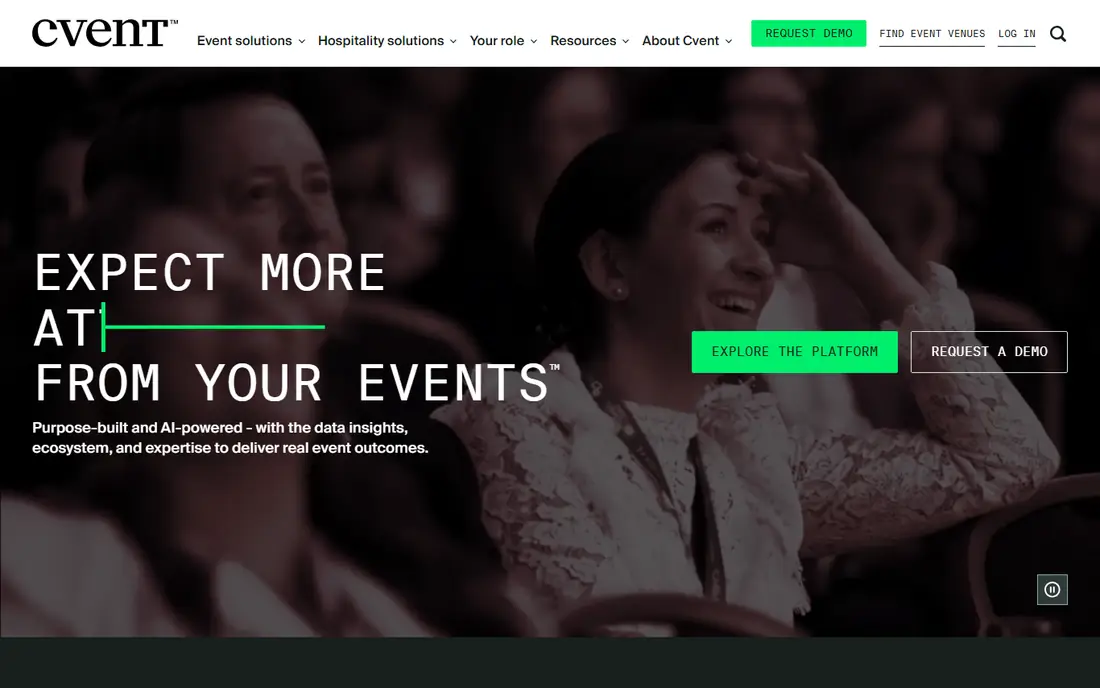
Cvent is the broadest enterprise option in this list. It covers event registration, venue sourcing, onsite check-in, an attendee app, and reporting, with integrations for Salesforce, HubSpot, and Microsoft Dynamics. Large teams that run many events a year benefit from the shared templates, approval workflows, and portfolio reporting.
The size is also the drawback. Pricing is quote-based, and a single small conference may not need the full range. Teams should ask for a scoped quote that covers only the modules they will use, and check what counts as an add-on. For enterprise programs, Cvent is the safest shortlist entry.
- Registration, venue sourcing, and attendee app in one range
- Many integrations
- Strong reporting
- Pricing is quote-based
- Setup can be heavy for a single small event
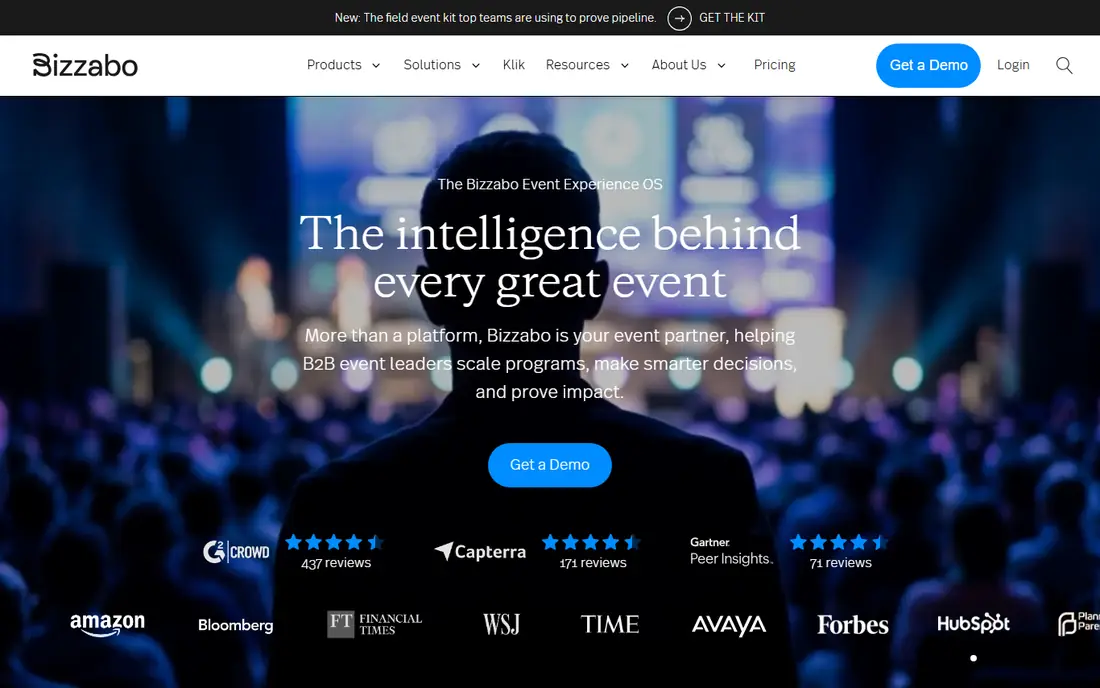
Bizzabo is built for B2B marketing teams that treat events as a pipeline channel. Event pages, registration, email, and onsite tools sit in one system, and SmartBadge helps attendees exchange contact details with a tap. Reporting connects attendance to CRM records, which matters when marketing must show event return.
The entry price, at $17,999 per year, puts Bizzabo out of reach for small associations. Entry plans also require a minimum number of users. Teams that run a few high-value corporate events a year, and need that CRM reporting, get the most from it. Smaller teams should compare EventMobi or Guidebook first.
- Polished event pages and registration
- SmartBadge for onsite networking
- CRM and marketing integrations
- High starting price
- Minimum user count on entry plans
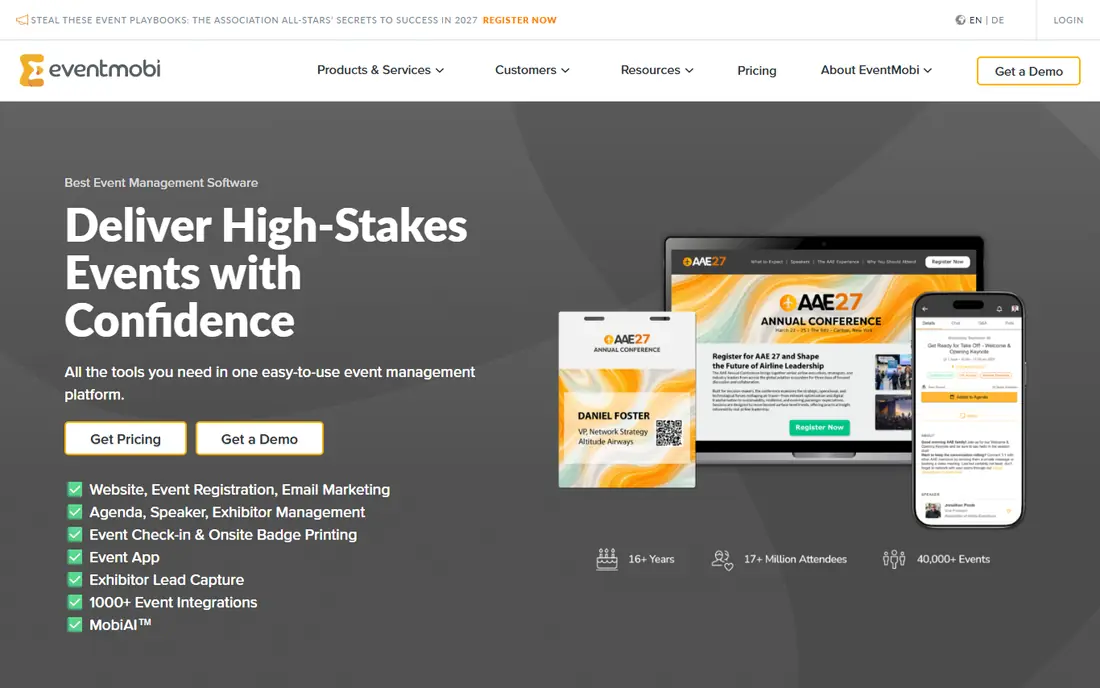
EventMobi focuses on the attendee app experience. Organizers can brand the app, publish agendas, run live polls, and send push updates, with registration and onsite tools available in the wider platform. Associations and mid-size conferences often pick it because the app feels polished without an enterprise contract.
Pricing is the main uncertainty. Published guides cite per-event and annual options, but a firm figure needs a quote based on event size and features. Teams should confirm what is included in the base plan, such as live polling and networking, before comparing it with Whova. For app-first conferences, EventMobi is a strong contender.
- Strong branded mobile app
- Live polls and engagement tools
- Per-event and annual plans
- Pricing varies by plan and needs a quote for a firm figure
- Setup time grows with customization
Swapcard suits B2B trade shows and conferences where meetings drive value. Its AI matchmaking suggests relevant contacts, attendees can book meetings in the app, and exhibitors can capture leads and follow up after the show. Registration, agenda, and engagement tools sit in the same system, which reduces the number of vendors to manage.
The low starting price, at $610 per year for self-service plans, is attractive, but it does not cover every trade show need. Larger shows with complex exhibitor packages, floor plans, and onsite services will need higher tiers. For networking-led events, Swapcard deserves a trial with real attendee and exhibitor data.
- AI matchmaking for meetings
- Exhibitor lead capture
- Registration and app in one platform
- Self-service plans have limits
- Larger trade shows need higher tiers
Guidebook is a practical choice for universities, associations, and corporate teams that run many similar events. Organizers build guides with agendas, maps, speaker profiles, and documents, and attendees can use the native app offline, which helps when venue Wi-Fi is weak. Multi-event support keeps each event separate while sharing a common setup.
Networking is simpler here than in Swapcard or Bizzabo, with less emphasis on AI matchmaking. Pricing is also quote-based, so budget planning needs a conversation with sales. For content-led events where the agenda and documents matter most, Guidebook is a solid and dependable option.
- Native mobile app with offline access
- Easy guide building
- Multi-event support
- Pricing is quote-based
- Networking features are simpler than Swapcard
Swoogo is the pick when registration is the hard part. Conditional logic, custom forms, discount rules, and multi-track pricing can be built without code, which suits conferences with many ticket types, workshops, and member rates. Reporting covers registration and revenue in detail.
The starting price, at $11,800 per year for the Professional plan, reflects that depth. Teams that only need a simple agenda app will not use the registration power, and may find Whova-style engagement tools stronger elsewhere. For complex registration, Swoogo is one of the best tools available.
- Conditional registration logic
- Flexible forms and pricing rules
- Strong reporting
- High starting price
- Attendee app is less central than in Whova
vFairs suits virtual expos, career fairs, and hybrid conferences. Exhibitors get virtual booths, attendees can browse halls and chat with staff, and organizers can run webinars and networking alongside the expo. The platform also supports in-person elements, so hybrid events can run in one system.
Pricing is quote-based, and the virtual expo features add cost that a simple in-person conference may not need. Teams should be clear about whether they need virtual booths, or whether a mobile app plus registration is enough. For expo-led events, vFairs is a strong fit.
- Virtual booths and expo halls
- Hybrid event support
- Lead capture for exhibitors
- Pricing is quote-based
- Virtual-first design can be more than in-person-only events need
RingCentral Events, formerly Hopin, is built for virtual-first conferences and webinars. It handles live sessions, breakout rooms, networking, and expo areas, with registration and attendee engagement in the same platform. Large virtual audiences are a stated strength, which matters for global events with attendees in many time zones.
In-person onsite tools are less central here than in Cvent or EventMobi. Teams running a purely in-person conference may find the virtual features unnecessary. For hybrid and virtual programs, RingCentral Events is a dependable choice with a free trial for testing.
- Reliable virtual sessions and breakouts
- Registration and engagement tools
- Scales to large audiences
- Less focused on in-person onsite tools
- Pricing needs a quote for larger events
Eventbrite is the simplest option in this list, and that is its strength for small public events. Organizers can publish an event page, sell or give away tickets, and check attendees in with the app. Free events are free to list, and public discovery can bring in attendees who would not find a private conference app.
It is not a full conference platform. Multi-track agendas, speaker management, and deep networking are limited compared with Whova and the other tools here. Paid events also carry per-ticket fees. For workshops, meetups, and small public events under a few hundred attendees, Eventbrite is often enough.
- Free for free events
- Built-in discovery
- Simple ticketing and check-in
- Limited conference app features
- Paid-event fees apply
- Less suited to multi-track programs
How we picked these
We compared official product pages, pricing pages, and independent event platform guides current in October 2026. We required a live platform, a real event app or registration function, and a clear fit for conferences, trade shows, or public events. We did not claim hands-on testing. Where pricing is quote-based, we say so plainly.
What to check before you switch
Start with the attendee journey, not the feature list. Map registration, agenda browsing, networking, onsite check-in, and post-event follow-up for your own event type. A trade show needs lead capture and meeting booking. A university conference needs offline access and document sharing. A virtual expo needs booths and chat. The platform that covers your journey with the fewest add-ons is usually the right one.
Check data and integrations next. Confirm CRM, email, and payment connections, and confirm who owns attendee data after the event. Test the mobile app on a weak connection if your venue has poor Wi-Fi, and run a small pilot event before a flagship conference. Pricing should be confirmed in writing, including attendee limits, add-on fees, and renewal terms.
Budget and scale
Count events per year, not just attendees per event. Annual plans suit teams with many events, while per-event plans suit teams with one flagship conference. Check whether networking, polling, and lead capture are included or sold separately, since those add-ons change the total quickly.
Frequently asked questions
What is the best Whova alternative for academic conferences?
Guidebook and EventMobi are strong fits for academic conferences, with agenda apps, speaker profiles, and document sharing. Cvent suits larger academic programs that also need venue sourcing and complex registration.
Which Whova alternative is cheapest?
Eventbrite is cheapest for small free events, since free events carry no listing fee. Swapcard has the lowest published starting price among the conference platforms here, at $610 per year for self-service plans, with limits to check.
Can I migrate attendee data from Whova?
Most platforms support attendee imports from spreadsheets, and some offer migration help. Export your attendee, agenda, and speaker data from Whova first, clean it, and test the import in the new platform before your next event.
Which alternative is best for trade shows?
Swapcard and vFairs lead for trade shows, with matchmaking, exhibitor booths, and lead capture. Cvent also covers trade shows at enterprise scale, with venue and registration depth.
Do these platforms support hybrid events?
Yes, several do. RingCentral Events and vFairs are built for virtual and hybrid events, while Cvent, Bizzabo, EventMobi, and Swapcard support hybrid elements alongside in-person tools. Confirm the exact hybrid features in the plan you buy.
Sources
See where you really rank - block by block
ProMapRanker scans Google Maps across a grid of your service area. Simple monthly plans from $19, white-label on every plan.
Start freeKeep reading
 zoro.to alternatives
Best Zoro.to Alternatives in 2026
We compare the best zoro.to alternatives in 2026, listing only legal licensed anime streaming services, from Crunchyroll to free options for fans today.
Read → zip alternatives
Best Zip Alternatives in 2026
We compare the best zip alternatives for buy now, pay later in 2026, covering pay-in-4 plans, fees, spending limits, and credit reporting options today.
Read → yesware alternatives
Best Yesware Alternatives in 2026
Compare the best yesware alternatives for sales email tracking, templates, and sequences, with current pricing and honest tradeoffs for small sales teams.
Read →