 ProMapRanker
Who Offers the Best Digital OOH Services in 2026


Planning and buying campaigns across many media owners · Pricing starts at: See website
Key takeaways
- Digital out-of-home, or DOOH, covers screens in streets, transit, airports, malls and offices, and buying models range from self-serve to managed campaigns.
- Programmatic platforms suit buyers who want audience targeting and flexible budgets, while media owners suit buyers who want specific landmark screens.
- Measurement usually means impressions, audience estimates and footfall or sales studies, not a simple click count.
- Recent acquisitions have changed ownership in this market, so check current brand names and platform access before signing.
Quick comparison
| Pick | Great for | Pricing starts at | Free tier | |
|---|---|---|---|---|
| AdQuick | Planning and buying campaigns across many media owners | See website | No | Visit |
 Vistar Media | Programmatic buying and selling of DOOH inventory | See website | No | Visit |
 Broadsign | Operating and monetising digital signage networks | See website | No | Visit |
 Place Exchange | Programmatic marketplace access to OOH supply | See website | No | Visit |
 Perion DOOH (Hivestack) | Global programmatic DOOH campaigns | See website | No | Visit |
 Clear Channel Outdoor | Airport and large-market outdoor reach | See website | No | Visit |
 OUTFRONT Media | Urban, transit and high-impact city media | See website | No | Visit |
 Lamar Advertising | Broad US billboard and transit coverage | See website | No | Visit |
 Blip Billboards | Self-serve local digital billboard campaigns | See website | No | Visit |
The best digital OOH services
Digital OOH services fall into three groups: platforms that help buyers plan and purchase screens, technology firms that run signage networks, and media owners that own the screens themselves. A good choice depends on whether you want one city, a national flight, a specific venue type or a programmatic audience buy. We compared official service descriptions and recent industry reporting, and we did not invent inventory counts, prices or performance claims.
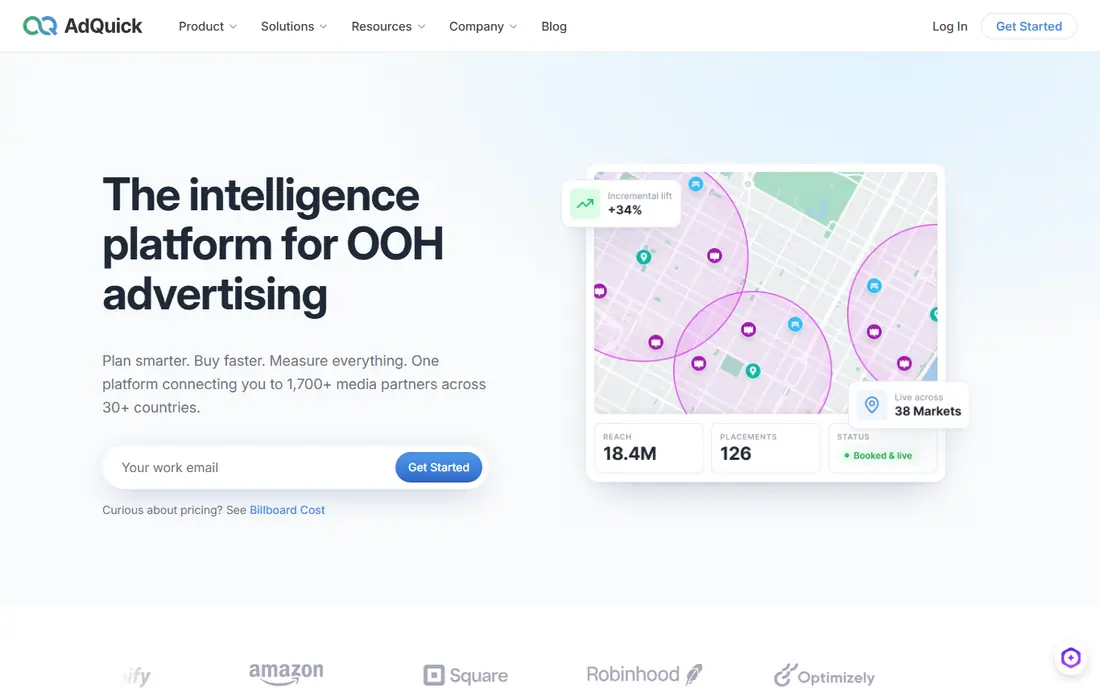
AdQuick helps advertisers plan, buy and measure out-of-home campaigns across many media owners, including digital billboards, transit, street furniture and place-based screens. Buyers can compare inventory on maps, request proposals, manage creative delivery and review reporting without contacting each owner separately. That breadth suits national or multi-city campaigns that would otherwise require many separate negotiations.
The trade-off is complexity. Inventory quality, screen size, location and audience vary widely, so a buyer still needs clear goals and creative that reads at a glance. AdQuick suits teams that want one buying seat for diverse inventory, with a managed option for those who prefer help with planning and execution.
- Marketplace across many media owners
- Planning, proposals and reporting in one place
- Managed service option
- Pricing depends on inventory and campaign scope
- Small buyers may still need guidance on creative specs
Vistar Media provides programmatic technology for buying and selling digital out-of-home inventory, with demand-side and supply-side tools, audience targeting and measurement. Advertisers can buy across place-based, transit and billboard inventory through programmatic deals, while media owners can monetise networks through its supply tools. That dual role made it a central platform in the DOOH market.
Ownership has changed: Vistar Media was acquired by T-Mobile, and buyers should confirm current product names and access routes. The platform still suits agencies and larger advertisers that want programmatic control, flexible flighting and audience-based buying. Smaller buyers may find a self-serve marketplace easier to start with.
- Large programmatic DOOH platform
- Demand and supply tools
- Audience targeting and measurement
- Enterprise and agency focus
- Ownership and access terms have changed through acquisition
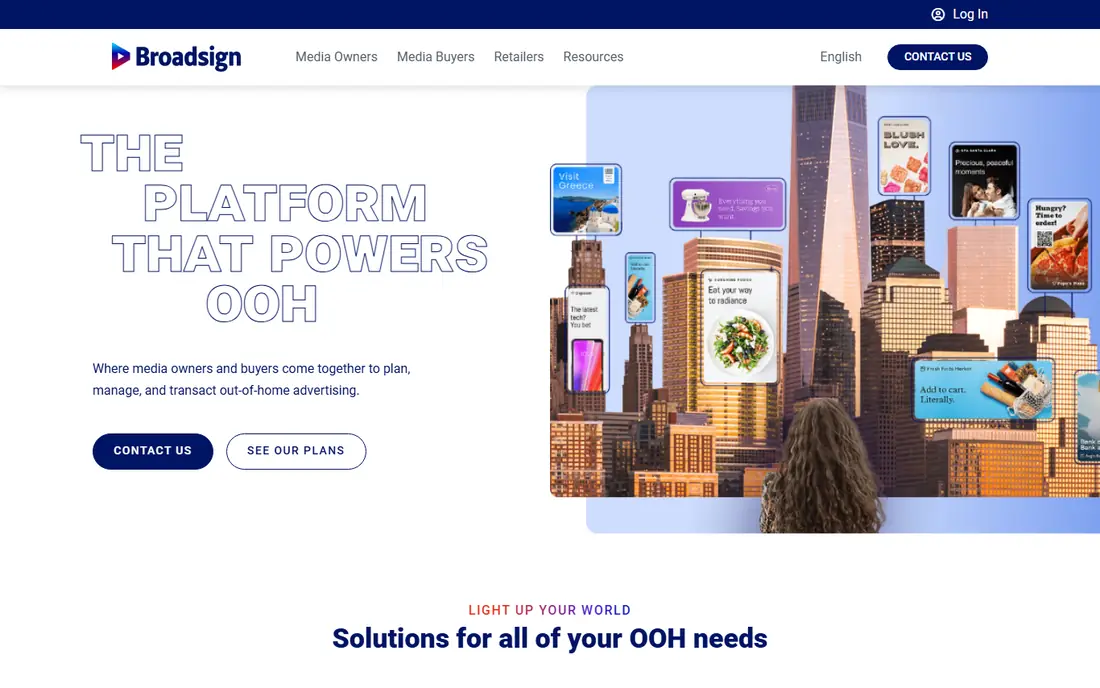
Broadsign provides software for operating digital signage networks, including content scheduling, inventory management, ad serving and campaign reporting. Media owners use it to run screens reliably, while advertisers can reach Broadsign-connected inventory through programmatic supply. Its acquisition of Place Exchange, reported in 2026 industry coverage, links its network software more closely to programmatic demand.
That focus means Broadsign is most useful to network owners and to buyers working through its programmatic channels. A small local advertiser will usually buy through a marketplace or media owner instead. For network operators and programmatic buyers, Broadsign offers a mature and widely used technology base.
- Content management and ad serving for signage networks
- Programmatic supply tools
- Network analytics
- Mainly a network operator platform, not a simple self-serve buyer tool
Place Exchange operates a programmatic marketplace for out-of-home inventory, connecting demand platforms with supply from media owners. Its public pitch centres on transparent supply, curated inventory, audience data and measurement, with integrations into omnichannel buying platforms. That suits agencies that want DOOH inside a broader digital plan.
Industry coverage in 2026 reported its acquisition by Broadsign, so buyers should confirm whether they access it as Place Exchange, through Broadsign or through a demand platform. For programmatic buyers, the marketplace model still offers flexible, impression-based buying without owning screens. Direct buyers who want a specific landmark screen may prefer a media owner.
- Programmatic marketplace with curated supply
- Omnichannel integrations
- Measurement and reporting
- Acquired by Broadsign, so brand and access details should be confirmed
- Agency and platform focus
Hivestack, now part of Perion's DOOH business, provides programmatic demand and supply technology for digital out-of-home campaigns across many countries. Buyers can target by audience and location, manage campaigns across screen types and review delivery and measurement. Sellers can monetise inventory through its supply platform.
Global reach is the main advantage for brands running campaigns in several markets. Smaller or single-city buyers may not need that breadth, and enterprise tools can feel heavy for a first campaign. Confirm current branding and access before planning, since the Hivestack name now sits within a larger company.
- Global programmatic marketplace
- Demand and supply tools
- Audience and location targeting
- Hivestack brand now sits within Perion, so current naming should be confirmed
- Enterprise focus
Clear Channel Outdoor
Great for: Airport and large-market outdoor reach
Clear Channel Outdoor is one of the largest outdoor media owners in the United States, with billboards, transit, street furniture and airport advertising. Its digital inventory includes large-format billboards and airport screens, and it offers audience planning and programmatic access alongside direct sales. That combination suits national brands and large-market campaigns.
Smaller advertisers may find minimums, lead times and creative requirements more demanding than a self-serve platform. For a campaign that needs airport travellers, major city centres or a national billboard flight, Clear Channel Outdoor offers scale that few rivals can match.
- Large US inventory including airports
- Digital billboards and transit
- Programmatic access options
- Large-market focus
- Minimums and creative lead times can suit larger campaigns better
OUTFRONT Media operates billboards, transit advertising, street furniture and large digital displays in major US markets, including high-profile city locations. Its transit inventory covers buses, trains and stations, which suits brands targeting commuters and city audiences. Audience insights and creative services help advertisers adapt messages to specific neighbourhoods and dayparts.
Coverage is strongest in cities, so a campaign needing broad rural reach should pair OUTFRONT with another owner such as Lamar. For urban, transit-led or landmark campaigns, OUTFRONT is a natural first call, especially when creative impact matters as much as reach.
- Strong transit and urban inventory
- High-impact city screens
- Audience insights and creative services
- Urban focus means rural coverage is thinner
- Large campaigns may need longer lead times
Lamar Advertising operates a large network of billboards, digital billboards, transit and logo signs across the United States and Canada, with strength in both large and smaller markets. Local sales teams can help small and mid-sized advertisers plan a campaign in a specific city or region, which is useful for businesses without an agency.
Inventory varies by market, so a screen that works in one city may not have an equivalent in another. Lamar suits advertisers who want broad geographic coverage, local support and a mix of static and digital formats. Pure programmatic buyers may still use a platform alongside Lamar for audience-based targeting.
- Very broad US billboard network
- Digital billboards in many markets
- Local sales support
- Local inventory quality varies by market
- Programmatic options differ from pure platform players
Blip Billboards lets small advertisers run digital billboard campaigns through a self-serve marketplace, choosing boards, budgets and schedules without an agency. Advertisers upload creative, set a daily budget and control when ads appear, with reporting on delivery. That model suits local businesses, events and short campaigns that need visible local presence.
The limit is inventory. Blip only covers participating boards, so national or venue-specific campaigns will need other providers. For a local business that wants to test outdoor advertising with a modest budget, Blip offers the lowest-friction entry point in this list.
- Self-serve marketplace
- Flexible budgets
- Local digital boards with campaign control
- Inventory is limited to participating boards
- Reach is local rather than national
How we picked these
We compared official service descriptions and recent industry reporting for DOOH platforms, signage technology firms and media owners that offer digital inventory or buying tools in 2026. We favoured providers with a clear DOOH offer, published inventory or platform descriptions and a current operating presence, and we noted acquisitions where they affect brand names. We did not claim hands-on testing and did not invent prices, screen counts or performance results, which vary by market, format and campaign.
What to check before buying digital OOH
Start with the goal and the place. A billboard on a highway, a screen in an airport and a panel in a gym reach different people at different moments, so match the venue to the message. Ask for the exact screen locations, sizes, loop lengths and dayparts, not just a city name. A screen that shows your ad for eight seconds in a long loop is a different buy from a dominant large-format display.
Next, check creative and measurement. Outdoor creative must be readable in seconds, so use short headlines, large type and a single call to action, and confirm file specs and lead times early. For measurement, ask whether you will receive impressions, audience estimates, proof of play or a footfall study, and what each term means in that provider's reporting. Programmatic buys often report impressions, while direct buys may report plays and estimated audiences.
Finally, compare buying models honestly. Self-serve platforms suit small budgets and short tests, programmatic platforms suit audience-based and multi-market buys, and media owners suit specific landmark or transit inventory. Get a written quote with inventory, dates, creative specs and reporting included, and start with a test flight before committing a large budget.
Frequently asked questions
What is the difference between OOH and DOOH?
OOH, or out-of-home, covers all outdoor advertising, including printed billboards and transit posters. DOOH, or digital out-of-home, covers digital screens that can change creative, use dayparting and be bought programmatically. DOOH usually allows shorter flights and more flexible creative than printed formats.
How is DOOH priced?
Pricing varies by market, screen size, location, audience and buying model. Direct buys may be priced per period or per screen, while programmatic buys are often priced per impression. Ask for a written quote that lists inventory, dates and reporting, since published prices are rare.
Can small businesses afford digital billboards?
Yes, in many local markets. Self-serve platforms let small advertisers set daily budgets and choose local boards, which lowers the entry cost compared with a national campaign. Costs still vary by city and screen, so test one market before scaling.
How do you measure a DOOH campaign?
Common measures include impressions, estimated audience, proof of play, website visits, footfall and sales studies. No single measure fits every campaign, so agree the measurement method before the flight starts. A clear goal, such as store visits or brand awareness in one city, makes measurement easier.
Do I need an agency to buy DOOH?
Not always. Self-serve platforms and local media owners can work directly with advertisers, especially for local campaigns. Agencies and programmatic platforms help more with national, multi-market or audience-based campaigns, where planning and optimisation are more complex.
Sources
See where you really rank - block by block
ProMapRanker scans Google Maps across a grid of your service area. Simple monthly plans from $19, white-label on every plan.
Start freeKeep reading
 worlds best local seo company
8 Worlds Best Local SEO Companies for Map Pack Growth in 2026
Compare the worlds best local seo company options for Google Business Profile work, citations, reviews, and multi-location rankings and reporting in 2026.
Read → world's best web hosting company
World's Best Web Hosting Company in 2026
Searching for the world's best web hosting company? We compared 10 hosts on price, renewal rates, speed, and support to help you choose well today in 2026.
Read → who's got the best nanny tax services
Who's Got the Best Nanny Tax Services in 2026
We answer who's got the best nanny tax services, comparing full filing, back taxes, software, and pricing so families can handle nanny taxes correctly.
Read →