 ProMapRanker
Best Private Jet Charter Companies in 2026


Frequent flyers wanting the largest owned fleet · Pricing starts at: See website
Key takeaways
- There is no single best provider for every flyer, because fractional ownership, jet cards, memberships and on-demand charter solve different problems.
- NetJets and Flexjet suit frequent flyers who want a large owned fleet and predictable availability, while XO and Jettly suit irregular flyers who want trip-by-trip booking.
- VistaJet fits long-range international travel, and Wheels Up and Sentient Jet fit mainly domestic trips with different pricing structures.
- Always check peak-day rules, daily minimums, fuel surcharges, taxes and cancellation terms before signing, because those terms change the real cost more than the headline hourly rate.
Quick comparison
| Pick | Great for | Pricing starts at | Free tier | |
|---|---|---|---|---|
| NetJets | Frequent flyers wanting the largest owned fleet | See website | No | Visit |
 Flexjet | Premium cabins and dedicated crews | See website | No | Visit |
 VistaJet | Long-range international travel | See website | No | Visit |
 Wheels Up | Domestic travel with app booking | See website | No | Visit |
 XO | Flexible booking and shared flights | See website | No | Visit |
 Sentient Jet | Fixed-rate jet cards for occasional flyers | See website | No | Visit |
 Magellan Jets | Concierge-led charter planning | See website | No | Visit |
 Jettly | Trip-by-trip charter without a deposit | See website | No | Visit |
 BlackJet | Jet cards with no expiry on hours | See website | No | Visit |
The best private jet charter companies
Private jet travel is not one product. Some companies sell shares in an aircraft, some sell prepaid hours, and some simply arrange a flight with an operator for one trip. We compared official program pages, fleet descriptions, pricing models and public program comparisons to show which model fits which kind of flyer.
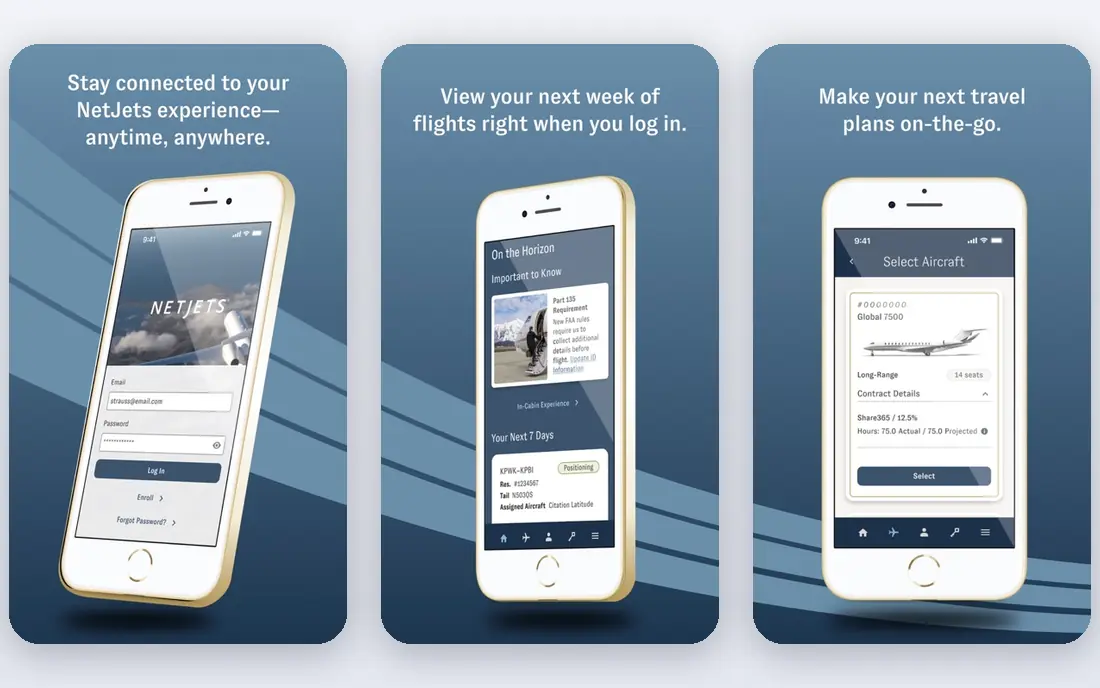
NetJets is the name most frequent flyers start with, and the reason is scale. Its owned and managed fleet gives it depth across light, midsize, super-midsize and large-cabin aircraft, which matters when a requested aircraft type is in demand. Fractional shares suit flyers who expect 50 or more hours a year, while a 25-hour card suits those who want fixed-rate hours without buying a share.
The catch is cost and commitment. Entry prices are high, and card programs include peak-day provisions and usage terms that need careful reading. For a business or family that flies often and values guaranteed availability, that trade can be worth it. For a once-a-year flyer, a card or share is likely more program than needed.
- Very large owned fleet
- Fractional shares and jet cards
- Global coverage
- High entry cost
- Peak-day rules apply
- Card hours have expiry terms

Flexjet competes on consistency rather than on being the cheapest option. Its Red Label program uses dedicated crews for specific aircraft, which appeals to flyers who want the same crew and cabin standard trip after trip. The company also offers fractional shares and a 25-hour card, so buyers can choose between ownership-style access and prepaid hours.
That consistency comes at a premium price, and Flexjet is not the best fit for a buyer shopping mainly on hourly rate. It fits better for flyers who fly enough to notice cabin and crew differences and who are willing to pay for them. Check the card terms, fuel adjustments and peak provisions before comparing its headline rate with a brokered card.
- Owned fleet with consistent cabins
- Dedicated crews on premium programs
- Fractional and card options
- High entry cost
- Premium positioning means higher prices than some card rivals
- Availability terms vary by program
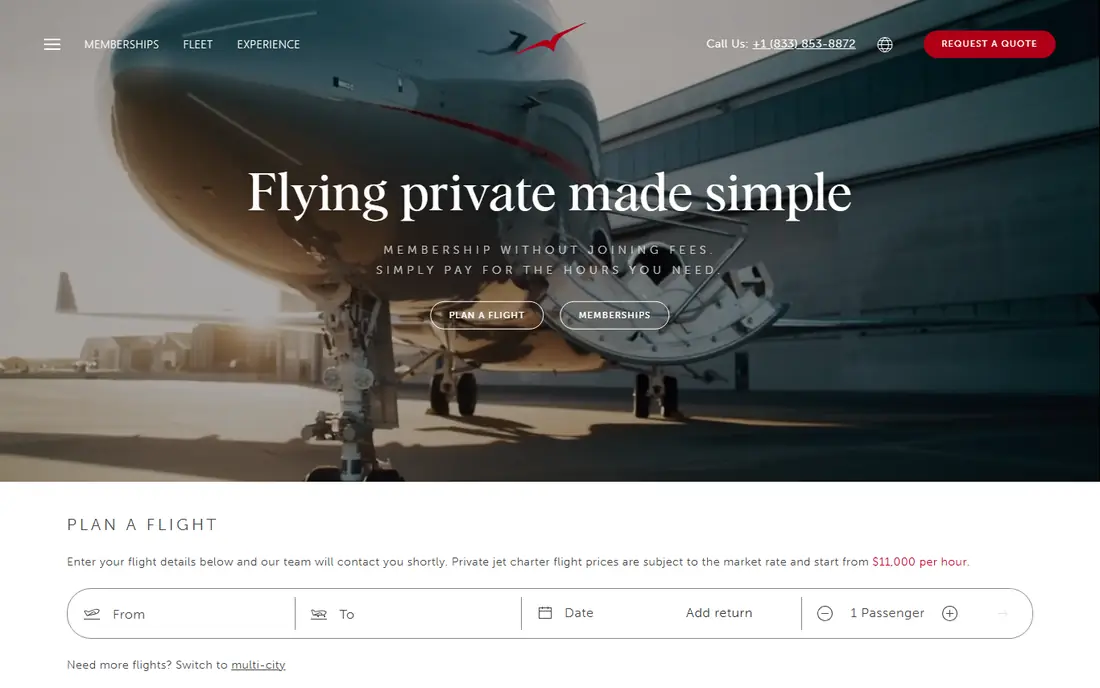
VistaJet runs a subscription-style program rather than selling fractional shares. Members pay for hours under a program agreement and fly on a branded global fleet, with an emphasis on medium and large-cabin aircraft for longer trips. That structure suits international flyers who want the same aircraft standard across regions without buying into an aircraft.
The main drawback is transparency at the research stage, because pricing is quote-only and program terms run for multiple years. Light-jet flyers who mainly take short domestic hops may find the fleet mix less suited to them. For regular transatlantic or intercontinental travel, however, VistaJet is one of the most direct comparisons to NetJets and Flexjet.
- Global branded fleet
- No ownership purchase required
- Strong long-range coverage
- Quote-only pricing
- Multi-year program terms
- Limited light-jet focus
Wheels Up is built around membership and app booking, with a fleet that includes its own aircraft plus partner operators. That mix gives domestic flyers a practical middle path between a full jet card and booking each trip from scratch. Members can use capped rates on some programs, while non-members can still arrange charter trips.
The trade is that the final price depends on membership tier, aircraft class and route, so two flyers can see quite different totals. International coverage is less central to Wheels Up than it is to VistaJet. For US-focused travel with regular but not daily flying, it is a sensible shortlist entry.
- App-based booking
- Owned and partner fleet
- Membership and charter options
- Pricing varies by membership and aircraft class
- Domestic focus is stronger than global coverage
- Fees apply on top of hourly rates
XO is the digital booking arm of Vista Global, and it feels different from a traditional card provider. Flyers can book on demand, use a deposit balance, and on some popular routes buy a single seat on a shared flight. That makes it easier to try private flying without committing to a fractional share or a large block of hours.
Dynamic pricing is the honest catch. A trip that looks affordable on a quiet weekday can cost more at peak times, and shared seats only exist where demand supports them. XO fits irregular flyers who value flexibility and are comfortable checking prices trip by trip. It fits less well for flyers who want a fixed hourly rate locked in for a year.
- App-first booking
- Deposit-based access
- Shared-flight seat options on some routes
- Dynamic pricing on many trips
- Deposit required for membership access
- Aircraft availability varies by route
Sentient Jet sells jet cards rather than aircraft shares, and its best-known feature is that hours on some programs do not expire. That matters for flyers whose travel is irregular, because a card bought this year is not wasted if next year is quieter. Fixed hourly rates also make budgeting simpler than dynamic charter pricing.
Because Sentient Jet arranges flights with vetted operators rather than flying its own fleet, cabin consistency can vary more than with NetJets or Flexjet. Peak-day surcharges also apply, so the fixed rate is not the whole story on busy dates. For moderate, irregular flying, the no-expiry feature is a genuine advantage.
- Fixed-rate card structure
- Hours do not expire on some programs
- Brokered operator network
- No owned fleet of its own
- Peak-day surcharges apply
- Operator and cabin can vary by trip
Magellan Jets positions itself as a concierge-led service, with advisers who source aircraft and handle trip details rather than leaving everything to an app. Its jet card programs offer fixed-rate hours, while on-demand charter suits one-off trips. That human help appeals to first-time charter flyers and to busy travellers who do not want to compare operators themselves.
The drawback is that pricing is often quote-based, so comparison shopping takes more effort than with a published card rate. Magellan Jets also lacks the owned-fleet scale of the largest fractional providers. For flyers who want guidance and a single point of contact, the service model can outweigh those limits.
- Personal concierge service
- Fixed-rate card options
- Flexible fleet sourcing
- Quote-based pricing for many trips
- Smaller brand footprint than NetJets
- Card terms need close reading
Jettly works as a charter marketplace, connecting flyers with operators and aircraft without requiring a deposit or membership. That lowers the barrier to a first private flight, and the range of aircraft on offer is wide. Per-trip quotes also make it easy to see what a specific journey costs before committing.
The trade is certainty. A marketplace cannot guarantee the same aircraft or availability terms as a prepaid card, and service quality depends on the operator chosen for that trip. Jettly fits flyers who book occasionally, want to compare options, and do not need locked-in hours. Frequent flyers who want guaranteed availability should compare it with a card program first.
- No deposit required for on-demand booking
- Very large aircraft marketplace
- Transparent per-trip quotes
- Availability depends on operators
- No guaranteed availability program like a card
- Quality can vary by operator
BlackJet offers jet cards and on-demand charter through vetted operators, and its cards stand out because purchased hours do not expire. That feature suits flyers who want prepaid pricing without a use-it-or-lose-it deadline. The company also includes carbon offsetting on some programs, which some buyers value.
As with other brokered providers, BlackJet does not own the fleet it sells access to, so cabin consistency depends on the operator. Entry costs for cards remain high, and terms vary by cabin class. For buyers who like the card model but fly irregularly, BlackJet deserves a place beside Sentient Jet on the shortlist.
- Card hours do not expire
- Brokered fleet with safety vetting
- Carbon offset included on some programs
- Brokered rather than owned fleet
- Card entry cost is high
- Availability depends on operator network
How we picked these
We compared official program pages, fleet and model descriptions, pricing structures and public program comparisons, rather than relying on a single ranking. We included fractional, card, membership and marketplace models because the question covers charter broadly, not one buying model. We left out providers whose current programs we could not verify from official or reliable public sources, and we used "See website" where pricing is quote-based or varies by aircraft, route and date.
What to check before you sign
Start with how often you fly and where you fly. A fractional share only makes sense at higher annual hours, a card suits regular but not daily flying, and on-demand charter suits occasional trips. Count peak days on your calendar too, because blackout rules and surcharges can change the value of a card quickly.
Next, read the terms that sit behind the hourly rate. Daily minimums, repositioning fees, fuel surcharges, taxes, catering, de-icing and cancellation rules all add up. Ask for a sample quote on a route you actually fly, with all fees shown, and compare that total across providers. Finally, check safety vetting and operator standards, and confirm who operates the aircraft on your trip, since many brands arrange flights with third-party operators.
Frequently asked questions
Who is the best private jet charter company for frequent flyers?
Frequent flyers often shortlist NetJets and Flexjet first, because both offer large owned fleets and structured programs for high annual hours. The right choice depends on cabin preference, routes and program terms, so request quotes from both before deciding.
Is a jet card cheaper than on-demand charter?
A jet card can be cheaper per hour for regular flyers who value fixed rates and guaranteed availability, but on-demand charter is usually cheaper for a single trip. Daily minimums and peak surcharges can erase a card saving, so compare total trip costs, not just hourly rates.
What is the difference between fractional ownership and a jet card?
Fractional ownership buys a share in an aircraft for a set term, usually with monthly management fees and occupied hourly rates. A jet card prepays a block of hours without ownership, usually for a shorter term and with simpler exit terms.
Can I book a private jet without a membership?
Yes. Marketplaces such as Jettly and membership providers such as Wheels Up and XO offer on-demand charter without a long-term share purchase. You will still need to confirm aircraft, operator, price and cancellation terms for each trip.
Do private jet prices include taxes and fees?
Not always. Some published hourly rates include federal excise tax, while others add taxes, fuel surcharges and fees separately. Always ask for an all-in quote for your exact route, date and aircraft class.
How far in advance should I book?
Card and membership programs often require notice ranging from 10 hours to several days, with longer notice on peak days. On-demand charter can sometimes be arranged within a day, but aircraft choice narrows as departure nears.
Sources
- https://www.netjets.com
- https://www.flexjet.com
- https://www.vistajet.com
- https://www.wheelsup.com
- https://www.flyxo.com
- https://www.sentient.com
- https://www.magellanjets.com
- https://www.jettly.com
- https://www.blackjet.com
- https://theflyingengineer.com/private-jet-membership-programs/
- https://jettly.com/post/best-jet-card-programs
See where you really rank - block by block
ProMapRanker scans Google Maps across a grid of your service area. Simple monthly plans from $19, white-label on every plan.
Start freeKeep reading
 worlds best local seo company
8 Worlds Best Local SEO Companies for Map Pack Growth in 2026
Compare the worlds best local seo company options for Google Business Profile work, citations, reviews, and multi-location rankings and reporting in 2026.
Read → world's best web hosting company
World's Best Web Hosting Company in 2026
Searching for the world's best web hosting company? We compared 10 hosts on price, renewal rates, speed, and support to help you choose well today in 2026.
Read → who's got the best nanny tax services
Who's Got the Best Nanny Tax Services in 2026
We answer who's got the best nanny tax services, comparing full filing, back taxes, software, and pricing so families can handle nanny taxes correctly.
Read →