 ProMapRanker
Who Is the Best Merchant Service Provider in 2026

Key takeaways
- There is no single best provider: the right choice depends on sales channel, ticket size, volume, and how much customization you need.
- Flat-rate providers are simplest to start, while interchange-plus providers can cost less at higher volume, but fees and approval vary by business.
- This is general information only: processing fees, approval, payout timing, and account terms vary, and none are guaranteed for any specific business.
- Compare your real statements for three months, not just headline rates, before switching providers.
Quick comparison
| Pick | Great for | Pricing starts at | Free tier | |
|---|---|---|---|---|
 Square | All-in-one POS and payments for small firms | Free | Yes | Visit |
 Stripe | Custom online payments | Free | Yes | Visit |
 Helcim | Low interchange-plus costs with no monthly fee | Free | Yes | Visit |
 PayPal | Familiar online checkout | Free | Yes | Visit |
 Chase Payment Solutions | Firms banking with Chase | See website | No | Visit |
 Stax | High-volume firms on subscription pricing | See website | No | Visit |
 Payment Depot | Growing local firms wanting interchange-plus | See website | No | Visit |
 GoDaddy Payments | Sellers already on GoDaddy | See website | No | Visit |
The best merchant service provider
We compared providers on pricing model, sales channel, monthly fees, and fit. Fees below are published standard rates from 2026 comparisons, and actual fees, approval, and terms vary by business, card mix, and risk review.

Square is the easiest starting point for a small retail, food, or service business that sells in person. Its standard processing has no monthly fee, with a flat in-person rate described in comparisons near two point six percent plus fifteen cents, and an online rate near two point nine percent plus thirty cents. The POS system, inventory, invoicing, and reporting sit in the same account, so a new seller can take cards the same day without a separate gateway or merchant account setup.
The catch is cost at scale and account risk. Flat rates are simple, but they can cost more than interchange-plus pricing once volume grows or card mix shifts to premium cards. Square also reviews accounts for risk, and some sellers report holds or closures, so read the terms, keep clear records, and avoid using a personal account for business sales that need a dedicated merchant account.
- No monthly fee for standard processing
- POS hardware and software in one system
- Fast setup for in-person sales
- Flat rate can cost more at high volume or for premium cards
- Account holds and reviews can affect some sellers
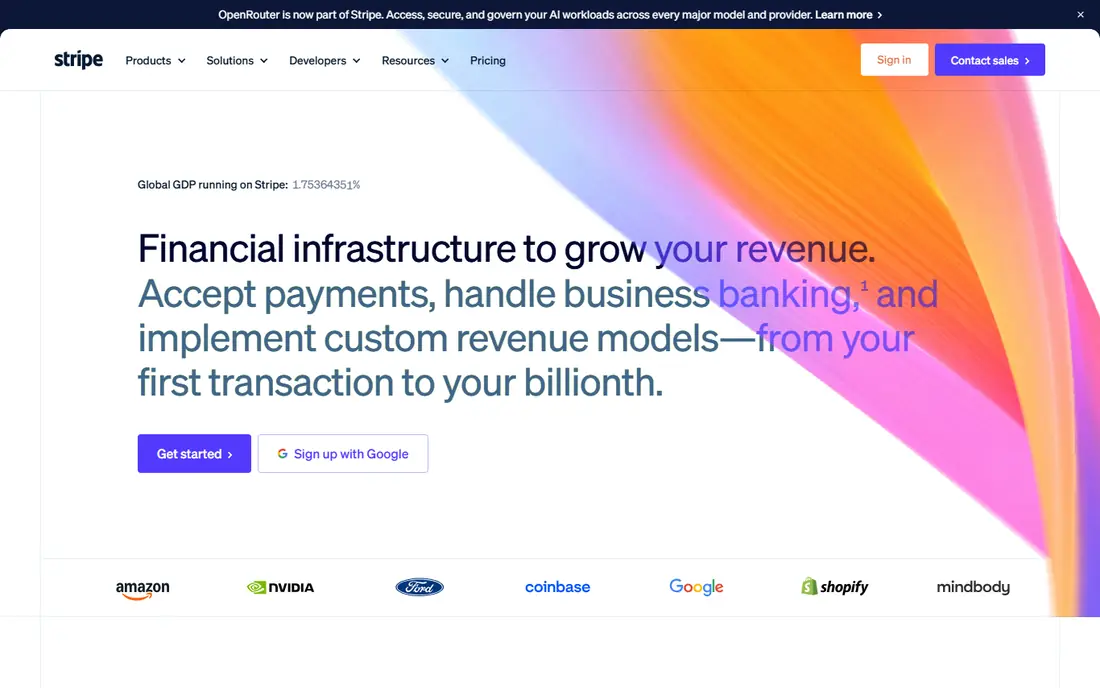
Stripe is the best choice for an online business that needs custom checkout, subscriptions, or a marketplace flow. Its standard online rate in comparisons is two point nine percent plus thirty cents, with no monthly fee for standard processing, and its APIs support cards, wallets, invoicing, and recurring billing. That flexibility suits software, ecommerce, and service firms that want checkout to match their product, not the other way round.
The honest limit is that flexibility costs effort. A custom Stripe build needs developer time, testing, and ongoing maintenance, and the flat rate can be higher than interchange-plus pricing at scale. Small sellers who only need a simple checkout may find Square or PayPal faster, while firms with a developer or a platform partner will get more from Stripe.
- No monthly fee for standard online processing
- Extensive APIs and checkout options
- Strong subscription and marketplace tools
- Flat online rate can cost more at high volume
- Customization needs developer time or a platform partner
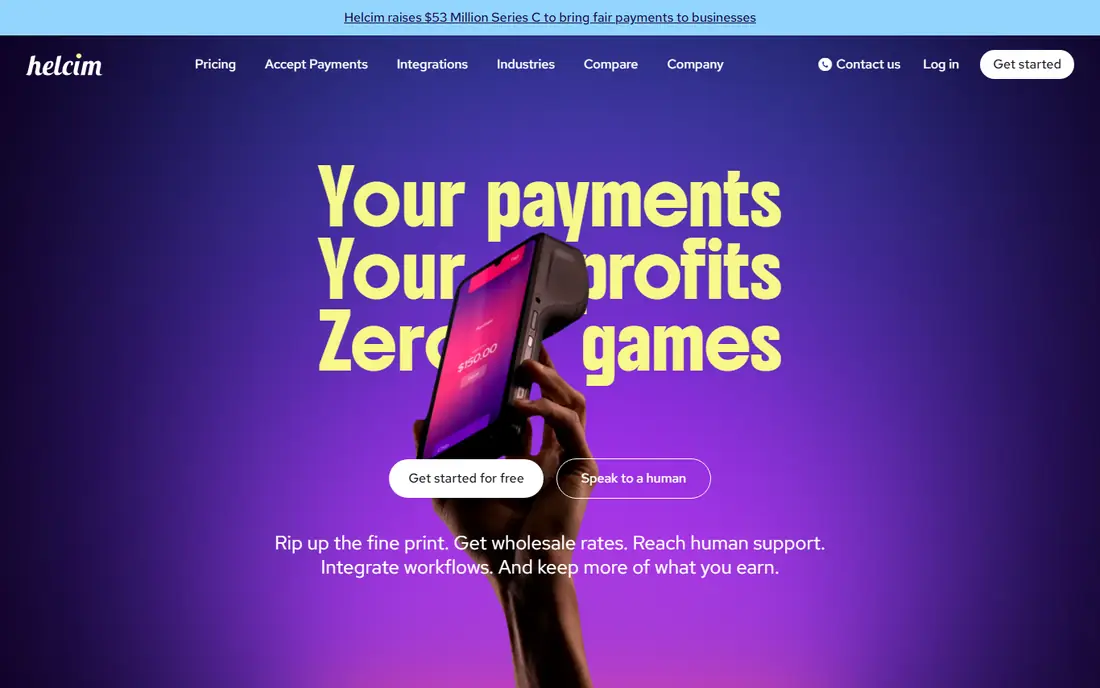
Helcim earns its place for cost transparency: it charges interchange plus a published markup, with automatic volume discounts as processing grows, and no standard monthly account fee. Comparisons describe an in-person markup from interchange plus a small percentage and cents, with a refundable chargeback fee. That model often beats flat-rate pricing for firms with steady volume, because the markup is visible and it falls as volume rises, rather than staying flat.
The catch is that interchange itself varies. A business with many premium rewards or commercial cards will pay higher interchange than a business with mostly debit cards, even on the same Helcim plan. Helcim is still a strong pick for cost-conscious firms, but compare a full month of real statements, not just the markup line, before deciding it is cheaper for your card mix.
- Interchange-plus pricing with automatic volume discounts
- No standard monthly account fee
- Invoicing, ACH, and POS tools
- Interchange costs still vary by card type
- Premium card mix can raise the effective rate
PayPal is the familiar checkout option: customers already have accounts, trust the brand, and can pay without entering card details on every site. Its standard online rate in comparisons is near two point nine nine percent plus a fixed fee, with no monthly fee for a standard account, and it offers invoicing, payment links, and a business debit option. That familiarity can lift conversion for a small online seller, especially for first-time buyers.
The weakness is cost and account control. Flat rates are higher than interchange-plus pricing for many sellers, chargeback fees apply, and PayPal reviews accounts for risk, which can lead to holds. Use PayPal as a checkout option alongside another provider when you can, rather than as your only processing route for a growing business.
- Widely recognized checkout that customers trust
- Fast setup
- Invoicing and online payment links
- Flat rates and chargeback fees add up
- Account reviews can affect sellers in higher-risk categories
Chase Payment Solutions suits a business that already banks with Chase and wants payments, deposits, and banking in one relationship. Comparisons describe flat-rate or custom pricing, with an in-person rate near two point six percent plus ten cents, and a chargeback fee near twenty-five dollars. For a Chase customer, faster funding to a Chase account and a single support relationship can be worth more than a slightly lower rate elsewhere.
The limit is transparency for non-Chase sellers. Pricing is quote-based for many custom plans, and a small seller outside Chase may find Helcim or Square clearer and cheaper to start. If you bank with Chase, ask for a written rate, funding timeline, and contract term, and compare it with an interchange-plus quote on your real statements.
- Direct bank processing for Chase business customers
- POS and online options
- Established bank support
- Pricing is flat-rate or custom by quote
- Less transparent than interchange-plus rivals for small sellers
Stax uses membership pricing: a monthly subscription plus interchange and a small per-transaction fee, with no percentage markup on top of interchange in its core model. That structure can save a high-volume firm a lot, because the subscription is fixed while the markup it replaces would grow with sales. Comparisons describe subscription tiers near ninety-nine dollars and above, with a higher floor for larger firms, so the exact tier depends on volume and channel.
The honest catch is the break-even point. A low-volume seller will pay more on Stax than on a no-monthly-fee flat-rate provider, because the subscription must be covered before any savings appear. Stax fits best once monthly volume is high enough that the subscription is small relative to processing costs, which is why a three-month statement comparison matters before switching.
- Subscription pricing with interchange plus a small transaction fee
- Can cost less at high volume
- POS and online tools
- Monthly subscription must be earned back
- Not worth it for low-volume sellers
Payment Depot targets growing local firms that want interchange-plus pricing without a large enterprise contract. Comparisons describe custom or interchange-plus pricing, with a markup range that varies by volume and channel, and a chargeback fee near twenty-five dollars. Its model suits a firm that has outgrown flat-rate pricing but does not yet need a full enterprise merchant account.
The weakness is quote opacity. Because pricing is custom, two similar firms can receive different quotes, and the total depends on plan costs, gateway fees, and card mix. Ask for a written quote based on your last three statements, including all monthly, gateway, and chargeback fees, before comparing it with Helcim or Stax.
- Interchange-plus and custom pricing for growing firms
- Membership-style model in comparisons
- POS and gateway options
- Pricing is custom by quote
- Membership or plan costs vary, so compare the total, not just the rate
GoDaddy Payments fits sellers who already run a website or store on GoDaddy, because checkout, POS, and reporting sit in the same account. Comparisons describe a flat in-person rate near two point three percent in some listings, with online rates and a chargeback fee that vary by plan, so check the current GoDaddy page for your channel. For a GoDaddy seller, that integration can save setup time and keep support in one place.
The limit is ecosystem fit. A seller outside GoDaddy gains less from the integration, and may find Stripe, Square, or Helcim more flexible or cheaper for their channel. If you are already on GoDaddy, compare its total rate and payout timing with one interchange-plus quote before committing to it as your only provider.
- Flat in-person and online rates described in comparisons
- Simple setup for GoDaddy website and store sellers
- POS options
- Best value is tied to GoDaddy
- Firms outside GoDaddy may find broader providers cheaper or more flexible
How we picked these
We compared 2026 merchant service guides and provider pricing pages, and we favored providers with published standard rates or clear interchange-plus models, plus coverage of in-person, online, and invoicing channels. We did not invent fees, approval odds, or payout guarantees, and where pricing was custom we wrote See website. We treated third-party rate comparisons as guides, not as a promise for any specific business, because card mix, volume, industry, and risk review change the actual cost and terms.
How to compare providers on your own numbers
Start with three months of statements, not a headline rate. Add up total processing fees, monthly fees, gateway fees, and chargeback fees, then divide by total card volume to get your effective rate. That single figure lets you compare a flat-rate provider with an interchange-plus provider fairly, because it includes every fee, not just the advertised percentage.
Next, check the non-rate terms. How fast are payouts, what is the contract term, what happens if you leave early, and how are holds or reserves handled? Ask whether the provider supports your channels, such as in-person, online, invoicing, and ACH, and whether it integrates with your accounting or POS system. Finally, test support before a problem happens: call with a question, check response time, and confirm who handles chargebacks. The cheapest rate is not a good deal if payouts are slow or support is hard to reach when a payment fails.
Frequently asked questions
Who is the best merchant service provider overall?
There is no single best provider for every business. Square suits small in-person sellers, Stripe suits custom online builds, Helcim suits cost-conscious firms that want interchange-plus pricing, and PayPal suits familiar online checkout. Choose by channel, volume, ticket size, and how much customization you need, then compare on your real statements.
What is the difference between flat-rate and interchange-plus pricing?
Flat-rate pricing charges one percentage plus a fixed fee for most cards, which is simple but can cost more at high volume or for premium cards. Interchange-plus pricing passes card network interchange through at cost, plus a visible processor markup, which is more transparent and often cheaper at scale, but the total varies by card mix.
Do merchant providers charge a monthly fee?
Some do not, including Square, Stripe, Helcim, and PayPal for standard processing, while subscription providers such as Stax charge a monthly fee in exchange for a lower markup. Always check for gateway, statement, chargeback, and early termination fees as well, because the monthly fee is only part of the total cost.
Can any business be approved for card processing?
No, approval varies by business type, risk, history, and compliance review, and some high-risk categories need a specialist provider. This guide is general information only, and no provider here guarantees approval, a specific rate, or payout timing for any particular business. Ask for written terms before you switch.
How long do payouts take?
Payout timing varies by provider, bank, and risk review, from next business day for some providers to several business days for others. Confirm the payout schedule, hold policy, and reserve terms in writing, especially for a new account, a large ticket, or a seasonal business.
Should I switch providers to save on fees?
Only after comparing three months of real statements, including all fees, and checking contract, payout, and support terms. A lower headline rate can still cost more if monthly, gateway, or chargeback fees are higher, or if your card mix changes the interchange total. Switch when the effective rate and the terms are both better, not just the advertised rate.
Sources
- https://squareup.com
- https://stripe.com
- https://www.helcim.com
- https://www.paypal.com
- https://www.chase.com/business/payments
- https://staxpayments.com
- https://paymentdepot.com
- https://www.godaddy.com/payments
- https://fitsmallbusiness.com/best-merchant-services/
- https://technologyadvice.com/blog/sales/best-merchant-services/
See where you really rank - block by block
ProMapRanker scans Google Maps across a grid of your service area. Simple monthly plans from $19, white-label on every plan.
Start freeKeep reading
 worlds best local seo company
8 Worlds Best Local SEO Companies for Map Pack Growth in 2026
Compare the worlds best local seo company options for Google Business Profile work, citations, reviews, and multi-location rankings and reporting in 2026.
Read → world's best web hosting company
World's Best Web Hosting Company in 2026
Searching for the world's best web hosting company? We compared 10 hosts on price, renewal rates, speed, and support to help you choose well today in 2026.
Read → who's got the best nanny tax services
Who's Got the Best Nanny Tax Services in 2026
We answer who's got the best nanny tax services, comparing full filing, back taxes, software, and pricing so families can handle nanny taxes correctly.
Read →