 ProMapRanker
Who Does the Best Influencer Campaign Software in 2026

Key takeaways
- CreatorIQ leads for enterprise programs that need strict brand controls, deep analytics, and global campaign reporting.
- GRIN leads for ecommerce brands, thanks to Shopify-linked creator management, gifting, and sales tracking in one workflow.
- Aspire and Upfluence suit mid-sized teams that need marketplace discovery plus campaign workflow without enterprise contracts.
- Modash, Heepsy, and Collabstr lower the entry cost, with discovery-first pricing or marketplace hiring for smaller programs.
Quick comparison
| Pick | Great for | Pricing starts at | Free tier | |
|---|---|---|---|---|
 CreatorIQ | Enterprise creator programs | See website | No | Visit |
 GRIN | Ecommerce creator management | $200 per month | Yes | Visit |
 Aspire | Creator communities and campaigns | See website | No | Visit |
 Upfluence | Customer-to-creator discovery | See website | No | Visit |
 Traackr | Data-led global programs | See website | No | Visit |
 Modash | Discovery at scale without lock-in | $199 per month | Free trial | Visit |
 Heepsy | Affordable discovery for smaller teams | $69 per month | Yes | Visit |
 Collabstr | Marketplace hiring of creators | See website | Yes | Visit |
 HypeAuditor | Audience quality and fraud checks | $299 per month | No | Visit |
The best influencer campaign software
Influencer campaign software covers discovery, outreach, briefs, content approval, payments, and reporting, but platforms weight those jobs differently. These nine cover enterprise, ecommerce, agency, and small-team needs, and we compared official product pages, pricing information, discovery coverage, and campaign workflow features.
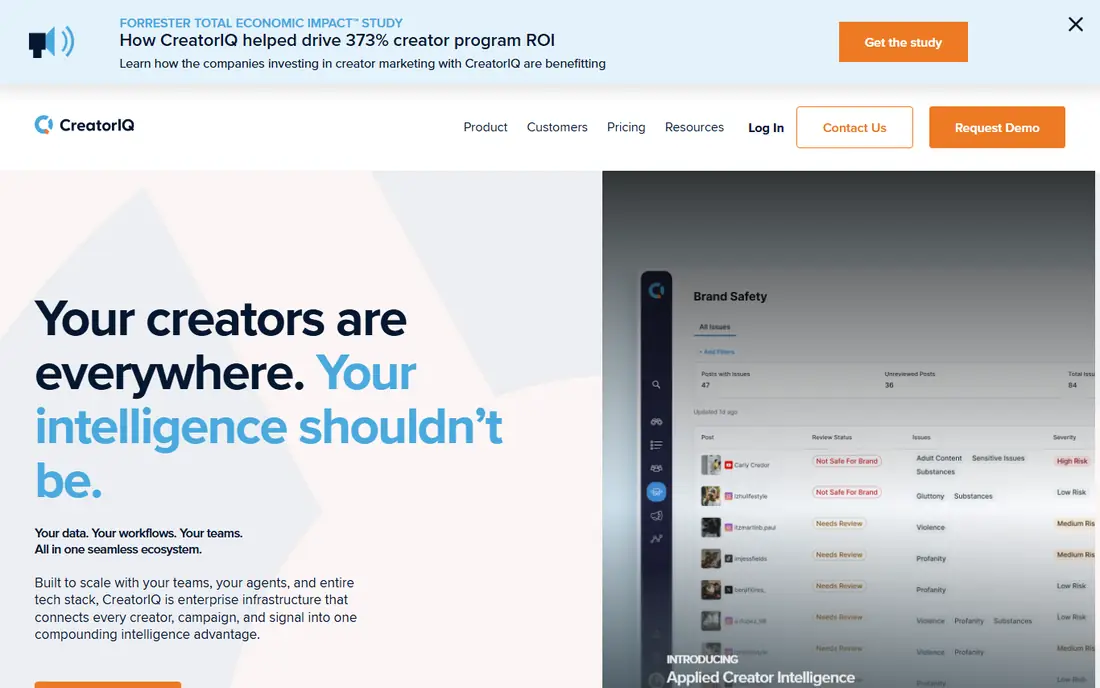
CreatorIQ is the enterprise standard in this list, built for brands and agencies running large, multi-region creator programs with strict controls. Discovery covers millions of creator profiles, with filters for audience, topic, and past brand work, while campaign tools handle outreach, contracts, content approval, and compliance checks in one workflow. Reporting ties creator activity to earned media value and campaign outcomes, which helps large teams justify spend to finance and leadership.
The cost and complexity are the trade-offs. Pricing is custom and typically annual, so a small brand with a handful of creators will pay for scale it does not need. CreatorIQ also needs a team to run it well, with clear campaign processes and reporting needs. For an enterprise program where brand safety, measurement, and global consistency matter most, CreatorIQ sets the benchmark other platforms are measured against.
- Large creator database
- Strong brand safety and compliance workflows
- Deep earned media reporting
- Custom enterprise pricing
- Heavy for a small program
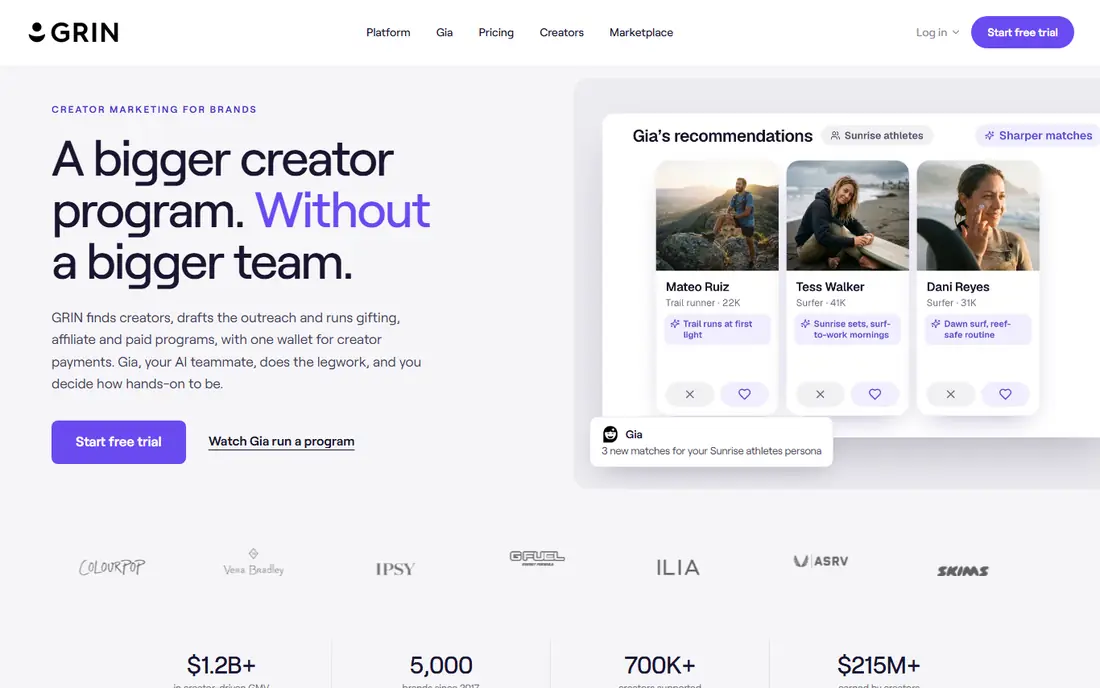
GRIN is built as a creator management system for ecommerce brands, rather than as a discovery-only database. It links creator activity to store data, so a brand can track gifting, discount codes, affiliate sales, and creator performance alongside campaign workflow. That link matters for direct-to-consumer brands, because it connects creator work to revenue without manual spreadsheet matching.
GRIN offers a free starting option, with paid plans from $200 per month in published comparisons, though full enterprise features cost more. Brands that do not sell through Shopify, WooCommerce, or a similar store will get less value from the deepest integrations. For a Shopify brand building a long-term creator program, GRIN gives the most complete ecommerce workflow here.
- Shopify-native creator management
- Gifting and affiliate tracking
- Paid plans from $200 per month
- Best fit is ecommerce
- Enterprise reporting needs higher tiers
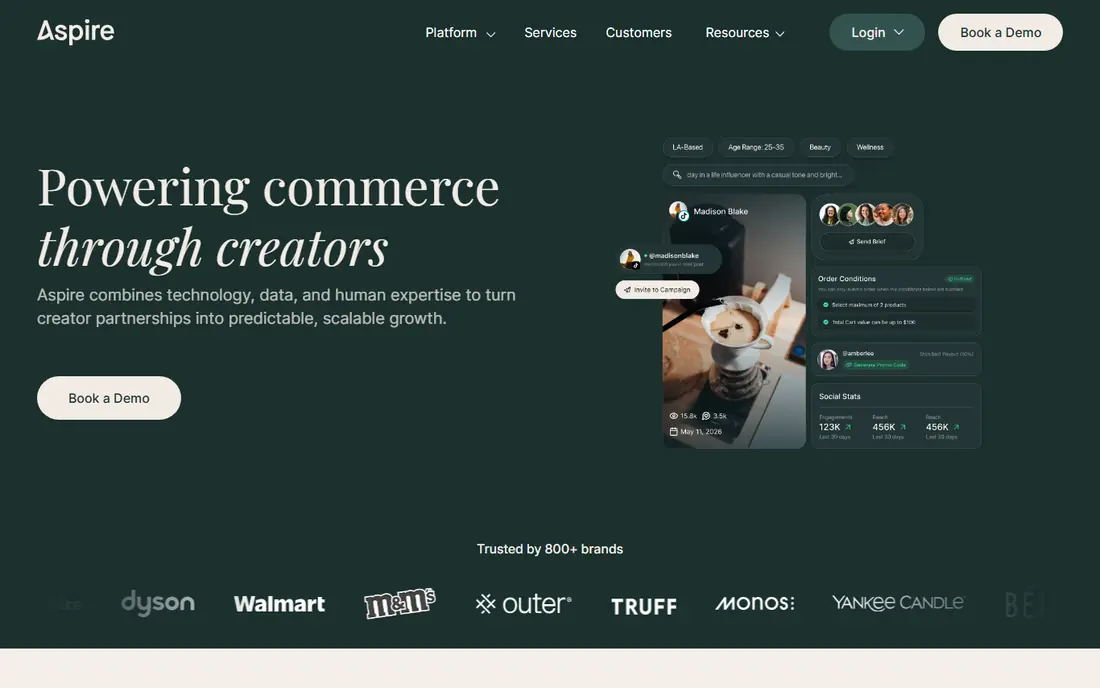
Aspire suits brands that want to build a creator community, not just run one-off campaigns. Its marketplace helps brands find creators, while campaign tools handle outreach, briefs, content tracking, and payments, with reporting on reach and promo-code results. Ambassador and affiliate-style programs fit well, since Aspire supports ongoing creator relationships rather than single posts.
Pricing is not published, so buyers need a demo and a scoped quote based on creator volume and features. That lack of transparency makes early budgeting harder than with Modash or Heepsy. For a direct-to-consumer brand that wants a managed creator community with structured campaign workflow, Aspire remains a strong, well-regarded choice.
- Creator marketplace and campaign workflow
- Strong for ambassador programs
- Shopify integration
- Pricing is not published
- Reporting depth varies by plan
Upfluence is a strong all-rounder for discovery and campaign management, with a useful twist: it can find creators among your existing customers, which often gives higher trust and lower outreach friction than cold discovery. Campaign tools cover outreach, content tracking, affiliate codes, and sales reporting, with integrations for Shopify, WooCommerce, and CRM tools. That breadth suits brands running broader campaigns across several creator types.
Pricing is custom after a demo, and published comparisons note entry points around $1,800 per month for some plans, so Upfluence sits above the budget tools here. Smaller teams should confirm what the quoted plan includes, especially for creator volume and reporting. For a mid-sized to large brand that wants discovery plus sales-linked campaign tools, Upfluence is a balanced pick.
- Large discovery database
- Customer-to-creator search
- Ecommerce and CRM integrations
- Custom pricing after a demo
- Some plans need annual commitment
Traackr suits brands that lead with data: audience quality, creator benchmarking, market trends, and global program reporting. Its visual reports help teams compare creators and markets without exporting everything to spreadsheets, and it has a strong record with beauty, fashion, and global consumer brands. Campaign management covers the core workflow of discovery, outreach, and reporting, with an emphasis on measurement.
Pricing is custom and enterprise-oriented, so Traackr is not a budget pick for a first creator program. Ecommerce brands that need deep Shopify-linked sales tracking may prefer GRIN, while teams that need global data and benchmarking will get more from Traackr. For a large brand that wants data-led decisions across regions, Traackr earns its place.
- Strong global creator data
- Visual reporting
- Good fit for beauty and fashion programs
- Custom enterprise pricing
- Less ecommerce workflow depth than GRIN
Modash is the discovery-first pick here, with a very large creator database and strong profile data for Instagram, TikTok, and YouTube. Teams can search, filter, vet, and shortlist creators quickly, with audience data that helps spot mismatched or low-quality accounts before outreach. Pricing starts at $199 per month in published comparisons, with a 14-day free trial, and monthly billing avoids a long annual lock-in for many plans.
The limit is workflow depth. Modash covers discovery and vetting well, but campaign management, payments, and content approval are more basic than GRIN, Aspire, or CreatorIQ. Agencies that source creators for clients often pair Modash with their own project and payment tools. For a team whose main bottleneck is finding the right creators fast, Modash gives strong value without enterprise pricing.
- Very large creator database
- Monthly pricing from $199
- Strong profile and audience data
- Campaign management is more basic than full-suite rivals
- No annual lock-in on some plans is a plus, not a flaw, yet check feature limits
Heepsy is the cheapest credible way into real creator discovery on this list. The free plan lets a team run searches before paying, and paid plans start at $69 per month billed annually in published comparisons. Filters cover location, category, audience size, and engagement, which is enough for a small brand to build a shortlist without an enterprise database.
Heepsy does not match the workflow depth of GRIN or Aspire, and its database is smaller than Modash, so vetting still needs manual checks on audience quality and past work. For a small or mid-sized team testing influencer marketing for the first time, Heepsy keeps the cost low while the team learns what creator types actually convert. Upgrade only when campaign volume justifies a fuller suite.
- Low entry price at $69 per month billed annually
- Free plan for searches
- Simple filters
- Smaller database than Modash
- Campaign tools are limited
Collabstr works like a marketplace rather than a subscription platform: brands browse creator profiles, compare content packages and rates, and hire directly, with payments held in escrow until work is delivered. That model suits a brand that needs a specific video, post, or user-generated content package without committing to a monthly platform fee. The free starting option lets buyers browse before spending.
The trade-off is program depth. Collabstr is less suited to managing a long-term ambassador roster, complex approvals, and deep sales reporting than GRIN or CreatorIQ. Fees also apply on marketplace transactions, so check the current fee before budgeting. For one-off creator hires and content packages, Collabstr gives a fast, low-commitment route to working creators.
- Browse vetted creators and buy content packages
- Escrow payments
- No subscription needed for basic hiring
- Marketplace model suits one-off hires more than long-term programs
- Fees apply
HypeAuditor is best used as a vetting and analytics layer, with strong audience quality checks, fraud detection, and detailed creator reports for Instagram, TikTok, and YouTube. Teams can check follower growth patterns, audience location, engagement authenticity, and past performance before signing a creator, which reduces the risk of paying for inflated reach. Entry pricing starts from $299 per month billed annually in published comparisons.
Campaign workflow is secondary here, so brands that need full outreach, contracts, and payments should pair HypeAuditor with a management platform, or choose a fuller suite instead. For agencies and brands that vet many creators and need to defend creator choices with data, HypeAuditor gives a level of audience scrutiny that discovery-only tools often lack.
- Strong audience quality and fraud detection
- Detailed creator analytics
- Useful for vetting
- Higher entry price
- Campaign workflow is secondary to analytics
How we picked these
We compared official product pages, pricing information, discovery coverage, campaign workflow, ecommerce links, and reporting depth, and we kept only platforms still available in October 2026. We favoured platforms with real campaign management, not just creator lists, and we listed prices as See website where vendors quote rather than publish a standard rate.
How to choose influencer campaign software
Start with your program shape. A brand running five creators a month needs discovery and simple tracking, while a brand running fifty creators across regions needs approvals, payments, compliance, and reporting in one system. Write down how many creators, how many posts per month, and which sales or content outcomes matter, then match the platform to those numbers rather than to database size alone.
Next, test vetting with real creators in your niche. Run the same ten creators through two platforms and compare audience data, past brand work, and contact accuracy. Check how each platform handles disclosure, usage rights, and payment terms, since those items cause more disputes than discovery ever does. A short paid trial with a live campaign will reveal workflow friction faster than a sales demo.
Finally, model total cost honestly. Include the platform fee, any per-creator or per-campaign charges, payment processing, and staff time for outreach and approvals. A low monthly fee with heavy manual work can cost more than a higher fee that automates gifting, codes, and reporting. Confirm contract length, creator limits, and what happens to campaign data if you cancel.
Frequently asked questions
Who does the best influencer campaign software for enterprise brands?
CreatorIQ and Traackr lead for enterprise programs, thanks to deep analytics, brand safety controls, and global reporting. CreatorIQ suits the broadest enterprise needs, while Traackr suits data-led global programs, especially in beauty and fashion.
Which platform is best for Shopify brands?
GRIN is the strongest pick for Shopify brands, since creator management, gifting, discount codes, and sales tracking link directly to store data. Aspire and Upfluence also integrate with Shopify, but GRIN is built around ecommerce workflow first.
Can small brands afford influencer software?
Yes. Heepsy starts at $69 per month billed annually, Modash starts at $199 per month, and Collabstr lets brands hire without a subscription. Start with discovery and a small campaign, then move to a fuller suite when creator volume grows.
Do I need a platform, or can I manage creators in spreadsheets?
Spreadsheets work for a handful of creators, but outreach, briefs, approvals, payments, and reporting become hard to track once you pass a dozen creators. A platform pays for itself when manual tracking starts causing missed posts, late payments, or lost content rights.
How do platforms check for fake followers?
Tools such as HypeAuditor and Modash analyse audience growth, location, engagement patterns, and account history to flag suspicious accounts. No check is perfect, so also review past content, comments, and brand work manually before signing a creator.
What should a creator contract cover?
A clear contract should cover deliverables, deadlines, usage rights, exclusivity, disclosure, payment terms, and revision limits. Most platforms here support contracts and briefs, but have a local legal review for high-value or regulated campaigns.
Sources
See where you really rank - block by block
ProMapRanker scans Google Maps across a grid of your service area. Simple monthly plans from $19, white-label on every plan.
Start freeKeep reading
 worlds best local seo company
8 Worlds Best Local SEO Companies for Map Pack Growth in 2026
Compare the worlds best local seo company options for Google Business Profile work, citations, reviews, and multi-location rankings and reporting in 2026.
Read → world's best web hosting company
World's Best Web Hosting Company in 2026
Searching for the world's best web hosting company? We compared 10 hosts on price, renewal rates, speed, and support to help you choose well today in 2026.
Read → who's got the best nanny tax services
Who's Got the Best Nanny Tax Services in 2026
We answer who's got the best nanny tax services, comparing full filing, back taxes, software, and pricing so families can handle nanny taxes correctly.
Read →