 ProMapRanker
Which Fintech Company Is Regarded as the Best in 2026

Key takeaways
- This is a guide based on publicly reported factors, not a verified ranking, and it uses no invented scores.
- There is no single best fintech company, since payments, banking, investing, and lending are different jobs.
- Stripe and Adyen lead on merchant payments infrastructure, while Wise leads on transparent cross border pricing for many users.
- For everyday banking and investing, the best fit depends on fees, account protections, and the features you actually use.
- This is general information only, not financial advice. Check fees, terms, and account protections for your country before opening any account.
Quick comparison
| Pick | Great for | Pricing starts at | Free tier | |
|---|---|---|---|---|
 Stripe | Developer payments infrastructure | See website | No | Visit |
 PayPal | Consumer and merchant payments | See website | No | Visit |
 Wise | Cross border money transfers | See website | No | Visit |
 Revolut | Multi currency everyday banking | See website | Yes | Visit |
 SoFi | US banking, lending, and investing | See website | No | Visit |
 Chime | Simple US consumer banking | See website | No | Visit |
 Robinhood | Retail investing | See website | No | Visit |
 Adyen | Enterprise merchant payments | See website | No | Visit |
 Plaid | Bank account connectivity | See website | No | Visit |
The best fintech companies, by job
We compared companies on publicly reported factors: what each firm does, who it serves, its main products, and where it is strongest. We did not score companies or claim a single winner, because a payments platform and a consumer bank cannot be ranked on the same scale. Each profile states the job it does best.
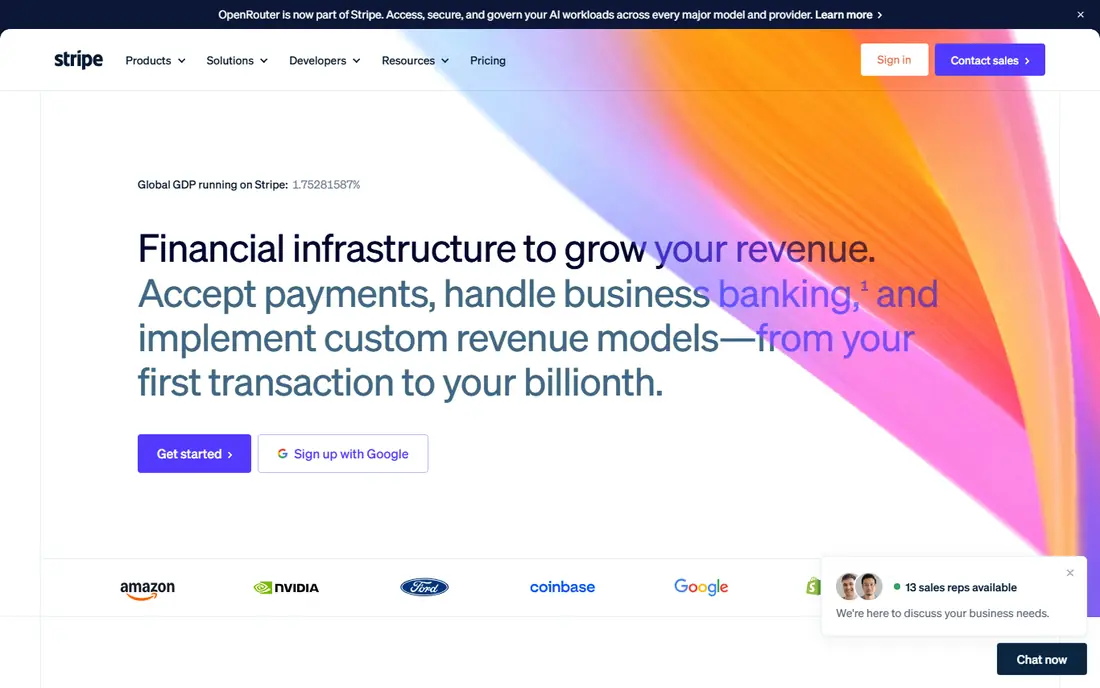
Stripe is the name most often cited for modern payments infrastructure. Businesses use it to accept cards and other payment methods online, manage subscriptions, handle billing, and add fraud and tax tools. Public reports in 2026 placed its payment volume near 1.9 trillion dollars in 2025, which reflects wide adoption rather than a quality score.
Stripe suits businesses that need flexible payments and have developer resources. A small seller who only needs a simple checkout may find PayPal or Square simpler. Compare transaction fees, payout timing, and the cost of add on tools for your sales volume before choosing.
- Broad payments, billing, fraud, and treasury tools
- Strong developer documentation
- Used by businesses of many sizes
- Pricing varies by product and volume
- Smaller sellers may prefer a simpler checkout
- Support is mainly online for standard accounts
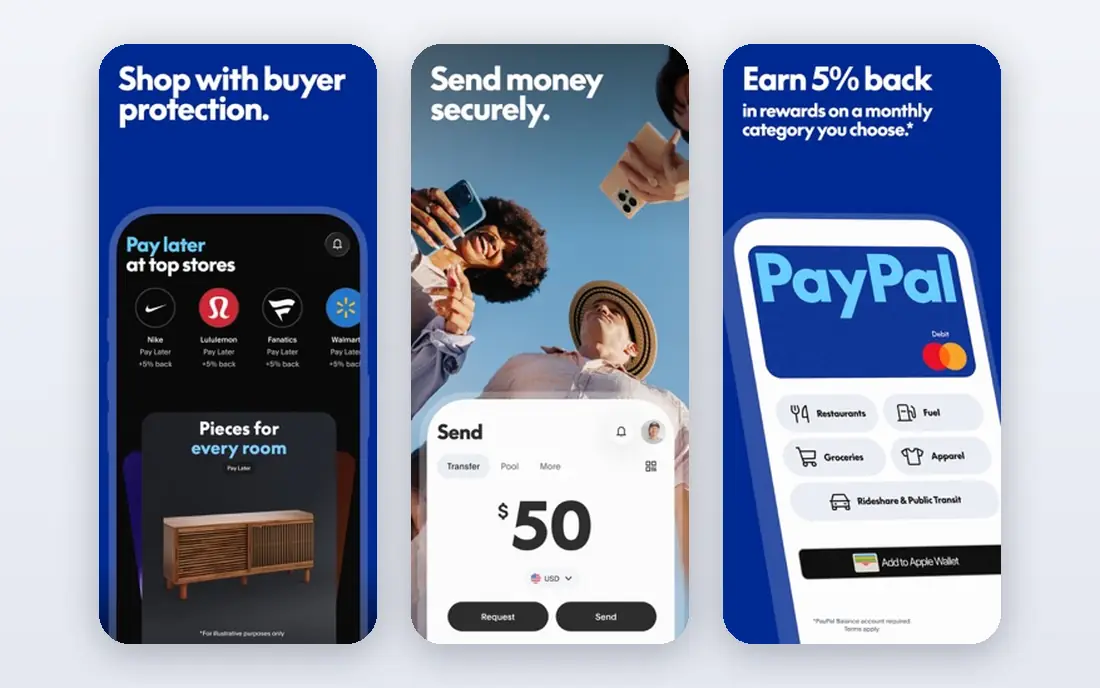
PayPal remains one of the most recognized names in consumer payments. Shoppers trust it at checkout, and small sellers can start without developer work. Its consumer app covers sending money, paying merchants, and managing cards, while its business tools cover invoicing, checkout, and payouts.
The weakness is fee complexity and account holds, which affect some sellers more than others. Read the fee schedule for your transaction types, including cross border and currency conversion fees, before you rely on PayPal for a large share of sales. For broad consumer reach with low setup effort, PayPal still earns its place.
- Very wide consumer recognition
- Simple checkout for small sellers
- Buyer and seller protections on eligible transactions
- Fees vary by transaction type and currency
- Holds can affect new sellers
- Business tools are less deep than Stripe for complex billing
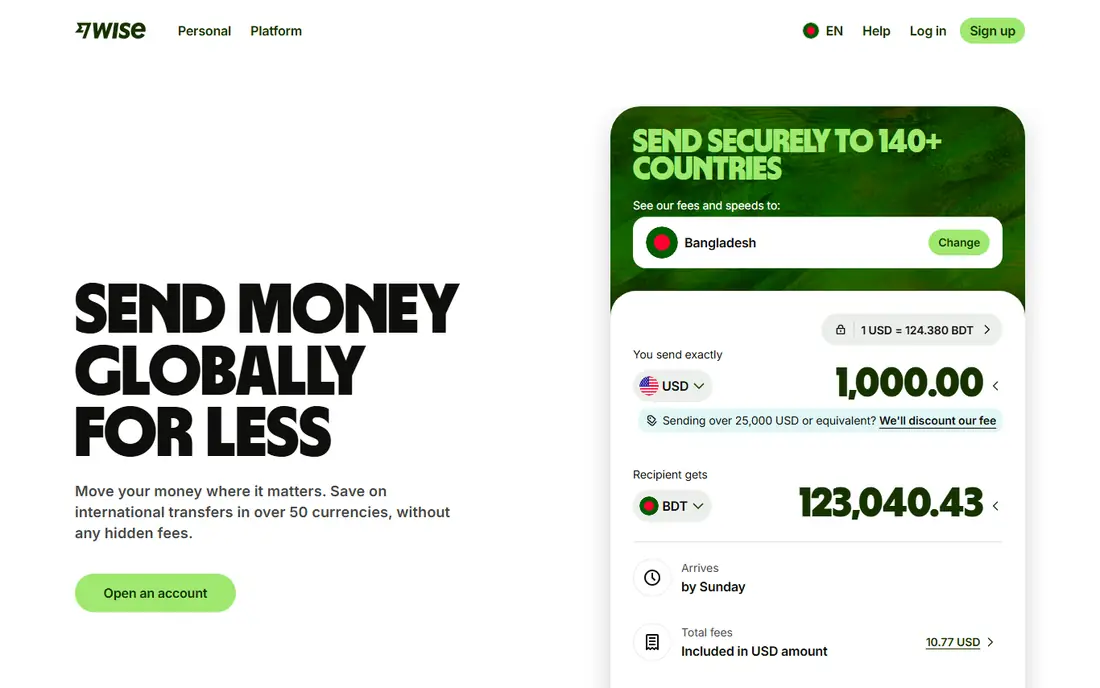
Wise is widely regarded as a strong choice for cross border transfers because it shows fees and the exchange rate upfront. Users can hold and spend in multiple currencies, send money abroad, and receive local account details in several countries. That transparency is the main reason it appears in many best fintech discussions for international users.
Wise is a payment institution in many markets, not a bank, so deposit protections differ from a bank account. Check which legal entity serves your country and what protection applies to your balance. For frequent international transfers, Wise is our pick for most people in this list.
- Transparent transfer fees shown before sending
- Multi currency account for holding and spending
- Mid market exchange rate model for transfers
- Not a full bank in most countries
- Account protections differ by country and entity
- Some features vary by residence
Revolut has grown from a travel card into a broad financial app covering banking, currency exchange, budgeting, investing, and more. Its free tier suits travelers and multi currency users, while paid tiers add higher limits, travel benefits, and extra features. In 2026 reports, Revolut was described as moving toward full UK bank status with a phased migration of eligible customers.
That phased change is why buyers should check their own account status in the app, rather than assuming a single protection applies to all users. Features also vary by country, so confirm that the account type you want is available where you live. For multi currency daily use, Revolut is a strong all round option.
- Multi currency accounts, cards, and budgeting in one app
- Investing and crypto features in many markets
- Wide international availability
- Features and protections vary by country and account type
- UK bank migration was still progressing in 2026
- Premium tiers add monthly cost
SoFi serves US customers with checking and savings, personal loans, student loan refinancing, mortgages, and investing. That breadth suits people who want several financial products in one place, with a single login and app. Direct deposit customers may receive rate or fee benefits on some accounts, depending on current terms.
SoFi is not a global bank, and its investing products carry market risk. Compare loan rates, account fees, and investing costs against specialist providers before consolidating everything in one app. For US users who want banking, lending, and investing together, SoFi is a credible all round pick.
- US bank accounts, lending, and investing in one app
- Direct deposit and autopay benefits on some accounts
- Broad product range
- Mainly US focused
- Investing carries risk
- Loan terms depend on credit and product
Chime is a US fintech that offers checking and savings through partner banks, with a focus on low fees and simple features. Core accounts have no monthly fee, and many users receive direct deposits early, depending on payer timing. A secured credit builder card helps some users build credit history with responsible use.
Because Chime is not itself a bank, account protections come through its partner banks, and product depth is narrower than SoFi. It suits US consumers who want a simple, low fee everyday account and do not need lending or investing in the same app. Check partner bank details and fee schedules in the app before opening an account.
- Simple fee structure with no monthly fees on core accounts
- Early direct deposit on many paychecks
- Large free ATM network through partners
- Not itself a bank, banking services come through partner banks
- Fewer products than SoFi
- Customer support is mainly online
Robinhood is widely known for making retail investing simple, with an app that covers stocks, ETFs, options, crypto in some markets, and retirement accounts. Its clean interface and low cost trading attracted many first time investors. Cash management and card features extend the app beyond trading for some users.
Simplicity is not safety. Investing can lose money, and margin borrowing or options trading can lose more than the starting amount. Treat Robinhood as a brokerage choice, not as financial advice, and compare order fees, interest on cash, and account protections with other brokers. This is general information only, and trading carries risk.
- Simple investing app for stocks and ETFs
- Retirement accounts and cash management options
- Low cost trading for many users
- Investing carries risk and losses are possible
- Margin and options carry added risk
- Support is mainly online
Adyen is an enterprise payments platform used by large global merchants to accept payments online, in app, and in store through one system. Public reports in 2026 placed Adyen alongside Stripe among the largest global merchant acquirers by volume. Its strength is unified reporting, risk tools, and payment method coverage across many countries.
Small businesses will usually find Stripe or PayPal easier to start with. Adyen suits larger merchants with global sales, complex payment flows, and a team to manage integration. Compare total processing costs, including scheme fees and currency costs, for your actual sales mix.
- Single platform for online, in store, and global payments
- Enterprise scale and reporting
- Wide payment method coverage
- Enterprise focus and pricing
- Smaller sellers may find setup heavy
- Support model suits larger merchants
Plaid is infrastructure, not a consumer product. It lets apps connect to bank accounts, verify balances, and move money, which is why so many budgeting, investing, and payment apps rely on it behind the scenes. Consumers rarely choose Plaid directly, but they benefit when their apps connect smoothly and securely to their banks.
Its inclusion here matters because best fintech discussions often overlook infrastructure. When you judge a budgeting or investing app, check whether it uses a reputable connectivity layer and what permissions it requests. Plaid is our pick for the connectivity job, while the other firms above cover the consumer facing jobs.
- Connects apps to bank accounts for payments and verification
- Used by many fintech apps
- Strong developer tools
- Not a consumer bank or wallet itself
- Consumer value depends on the apps that use it
- Pricing is business focused
How we picked these
We compared companies named across 2026 fintech overviews and public reports, and we favored firms with a clear, current product in payments, banking, investing, or infrastructure. We grouped them by job instead of ranking them, and we avoided invented scores, ratings, or user counts. We did not test accounts ourselves, and we did not treat market value or volume as proof that a product fits a given reader.
How to decide which fintech is best for you
Start with the job you need done. If you sell online, compare Stripe, PayPal, and Adyen on fees, payout timing, and payment methods for your customers. If you send money abroad, compare Wise and Revolut on fees, exchange rates, and delivery speed for your corridors. If you need an everyday account, compare SoFi, Chime, and Revolut on fees, protections, and features for your country.
Next, check the fine print that matters most: account protections, fee schedules, currency conversion costs, and investing risks. A product that looks free may charge for transfers, withdrawals, or currency exchange. Confirm which legal entity serves you and what protection applies to your money, since that varies by country and product.
Finally, test with a small amount before moving your main banking or sales. Send a small transfer, make a small sale, or run a trial account for a month, and check support response times and statement clarity. The best fintech for you is the one whose fees, protections, and daily experience fit your actual use, not the one with the most headlines.
Frequently asked questions
Which fintech company is regarded as the best overall?
No single company wins for every need. Stripe is often cited for payments infrastructure, Wise for cross border transfers, and Revolut or SoFi for everyday banking, depending on country. Judge by the job you need, not by a single overall title.
Is Stripe better than PayPal?
It depends on your role. Stripe suits businesses that need flexible payments, subscriptions, and developer tools. PayPal suits sellers and shoppers who want wide recognition and simple checkout with little setup. Many businesses offer both, since shoppers choose different methods.
Is Wise a bank?
In most countries, Wise is a payment institution, not a bank, and protections for balances differ by country and legal entity. Check the Wise page for your country to see which entity serves you and what protection applies before holding large balances.
Is fintech safe?
Reputable fintech firms use encryption, fraud monitoring, and regulated partners, but safety depends on the product and your country. Check whether funds sit with a licensed bank or a payment institution, use strong passwords and two factor authentication, and keep records of transfers and trades.
Should I invest through a fintech app?
You can, but investing carries risk, and past performance does not predict future results. Compare fees, account protections, and the range of investments, and consider whether you need regulated advice for larger sums. This is general information only, not financial advice.
Sources
See where you really rank - block by block
ProMapRanker scans Google Maps across a grid of your service area. Simple monthly plans from $19, white-label on every plan.
Start freeKeep reading
 zoro.to alternatives
Best Zoro.to Alternatives in 2026
We compare the best zoro.to alternatives in 2026, listing only legal licensed anime streaming services, from Crunchyroll to free options for fans today.
Read → zip alternatives
Best Zip Alternatives in 2026
We compare the best zip alternatives for buy now, pay later in 2026, covering pay-in-4 plans, fees, spending limits, and credit reporting options today.
Read → yesware alternatives
Best Yesware Alternatives in 2026
Compare the best yesware alternatives for sales email tracking, templates, and sequences, with current pricing and honest tradeoffs for small sales teams.
Read →