 ProMapRanker
Which ETL Platform Is Best for Data Integration in 2026


Managed ELT pipelines with little maintenance · Pricing starts at: Free to 500,000 monthly active rows
Key takeaways
- Fivetran suits teams that want managed pipelines with little maintenance, while Airbyte suits teams that want open-source control or a lower entry cost.
- Pricing models differ sharply, so compare rows, events, gigabytes, or credits against your real data volume, not just the headline price.
- Hevo Data and Skyvia suit smaller teams that want no-code setup, while Matillion and Qlik Talend suit warehouse-heavy enterprise work.
- Estuary Flow is the pick for streaming and change data capture when low latency matters more than simple batch loads.
- Stitch remains a simple option for straightforward software-to-warehouse loads, but it is less flexible for complex transformation.
Quick comparison
| Pick | Great for | Pricing starts at | Free tier | |
|---|---|---|---|---|
| Fivetran | Managed ELT pipelines with little maintenance | Free to 500,000 monthly active rows | Yes | Visit |
 Airbyte | Open-source ELT and flexible deployment | Free self-hosted; cloud from $20 per month | Yes | Visit |
 Hevo Data | No-code ELT for small and mid-size teams | Free to 1 million events per month | Yes | Visit |
 Stitch | Simple SaaS to warehouse loads | $100 per month | Free trial | Visit |
 Skyvia | No-code integration, sync, and reverse ETL | $79 per month | Yes | Visit |
 Matillion | Warehouse-native transformation | See website | Free trial | Visit |
 Qlik Talend | Enterprise integration and data quality | See website | No | Visit |
 Estuary Flow | Streaming ETL and real-time change capture | Free to 10 GB per month | Yes | Visit |
The best ETL platforms for data integration
We compared connector coverage, deployment options, transformation support, and pricing models from vendor pages and recent comparisons. Our pick for most teams is Fivetran for managed reliability, with Airbyte as the best value alternative when your team can manage more of the setup.
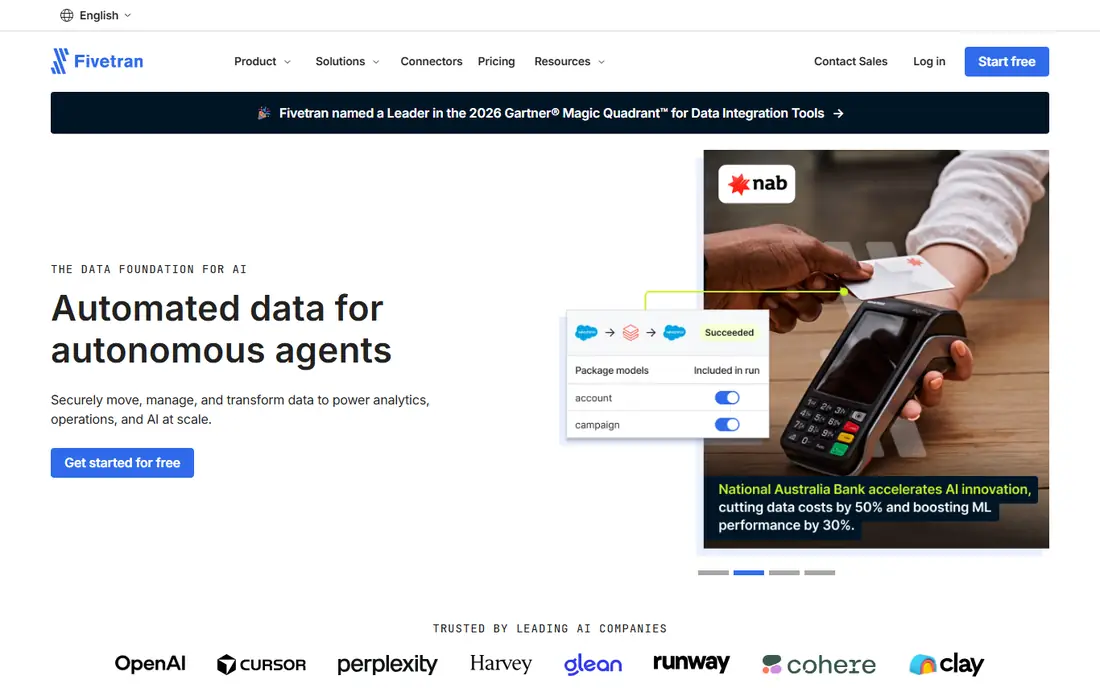
Fivetran moves data from software and databases into a warehouse with minimal pipeline code. It handles schema changes, retries, and monitoring, which helps small data teams support many sources without building each connector by hand. The catalog covers common business software, databases, and files, so most standard stacks can be connected quickly.
The main risk is cost control. Monthly active rows count rows that change, so a chatty source can raise the bill even when the total table size stays flat. Fivetran also focuses on loading first, with transformation handled in the warehouse, often with dbt. If you want a fully managed loader and can watch row volume, Fivetran is hard to beat.
- Large connector catalog
- Automated schema changes
- Managed sync and monitoring
- Costs rise with data churn
- Pricing by monthly active rows can be hard to forecast
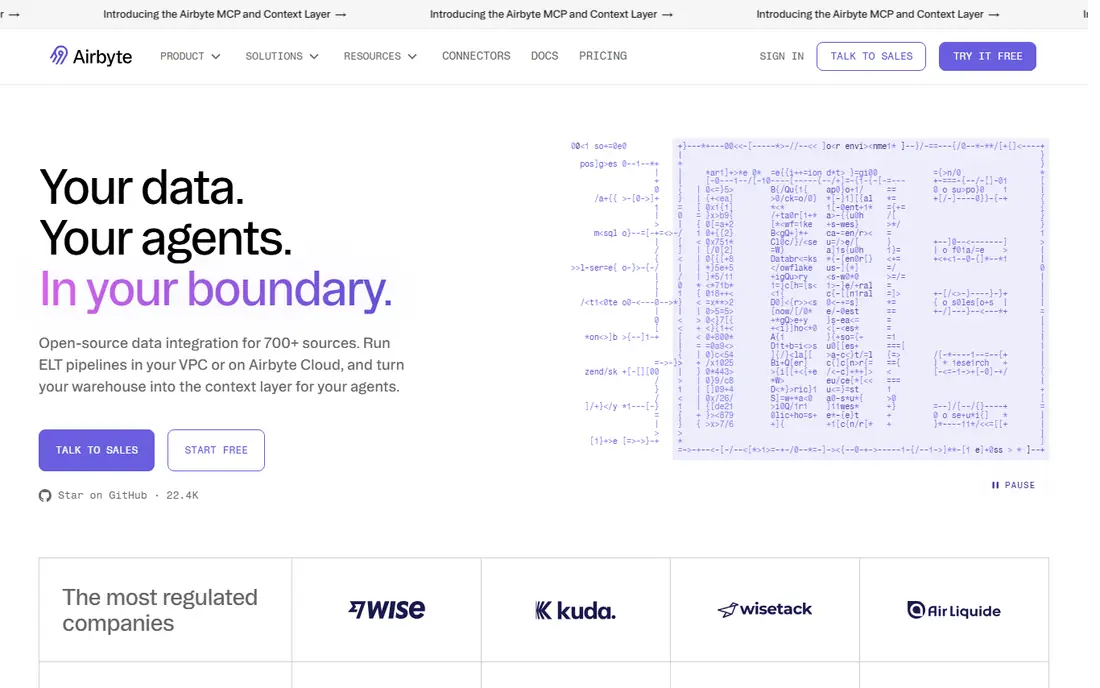
Airbyte gives teams a choice that most rivals do not: run the open-source version yourself, or use Airbyte Cloud and pay for usage. The connector catalog is broad, and the Connector Builder helps teams create custom sources without starting from scratch. That flexibility suits engineering-led teams and companies with strict data location rules.
Self-hosting is free in license terms, but it is not free in effort. You still pay for infrastructure and for the time spent on upgrades and monitoring. Cloud removes that burden but adds usage-based billing. Airbyte fits teams that value control, community connectors, and a clear path from a small pilot to a larger deployment.
- Open-source core
- Large connector catalog
- Self-hosted, cloud, and hybrid options
- Self-hosting needs engineering time
- Cloud pricing depends on volume and credits
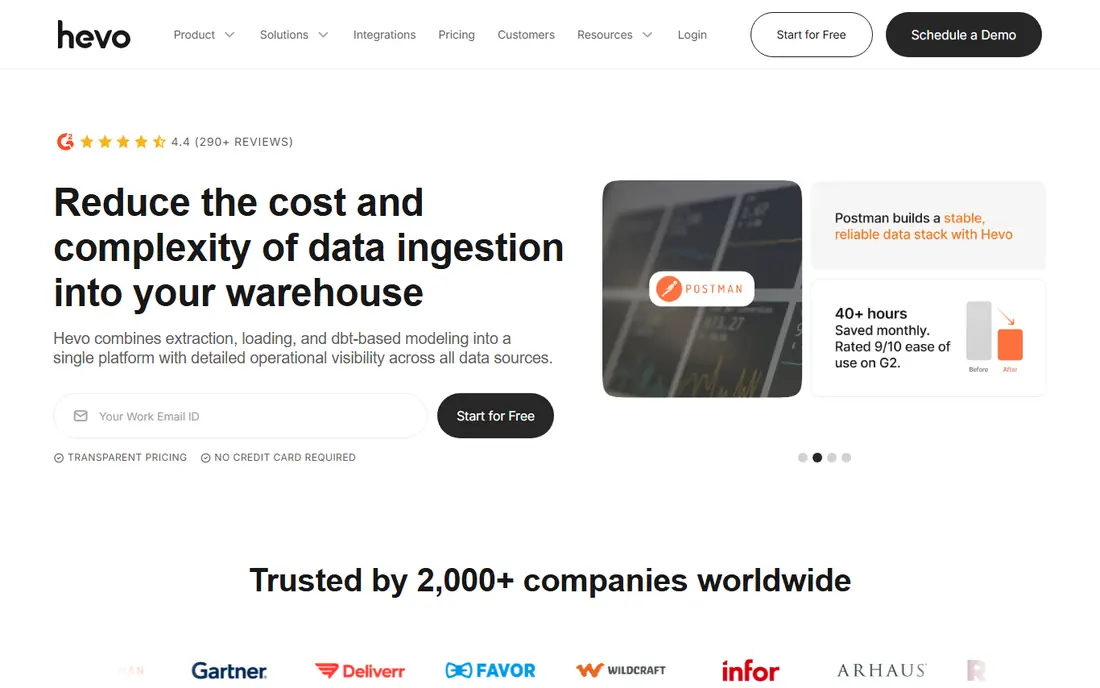
Hevo Data is designed for analysts and small data teams rather than platform engineers. Pipelines are set up through a visual interface, and many sources support near-real-time capture of inserts, updates, and deletes. That combination helps teams that need fresh data for dashboards without writing pipeline code.
Hevo charges by events, so high-volume sources need careful planning. It also offers less depth than Matillion for heavy warehouse transformation. For a team moving from spreadsheets and manual exports to its first reliable warehouse pipeline, Hevo is a practical middle ground between a simple loader and an enterprise platform.
- No-code pipeline setup
- Real-time change capture on many sources
- Pre-built models
- Paid entry price rises with event volume
- Less suited to very large enterprise estates
Stitch, from Talend, focuses on one job: extract data from software and load it into a warehouse. Setup is quick for supported sources, and the row-tier model is easy to explain to a finance team. Small teams with a handful of sources often get value within a day, since there is little pipeline code to write.
The limits show up when needs grow. Transformation is minimal, so most cleaning and modeling must happen in the warehouse. Change capture is also more limited than tools built around streaming. Choose Stitch when your sources are standard, your volume is predictable, and you want a simple loader rather than a full data platform.
- Fast setup for standard sources
- Clear row-tier pricing
- Simple monitoring
- Limited transformation
- Limited change capture compared with newer tools
- Fewer advanced features
Skyvia covers more than one-way loading. It can replicate data, sync records between systems, and support reverse flows back to business tools, all without code. That breadth suits operations teams that need two systems to stay in step, not just a warehouse feed. Unlimited users on paid plans also help when several teams share the tool.
Lower tiers limit how often syncs run, so check the schedule against your reporting needs. Skyvia is not the first choice for sub-minute streaming, where Estuary fits better. For no-code integration, backup, and sync work, Skyvia is a strong value pick.
- No-code visual builder
- Data sync and replication
- Unlimited users on paid plans
- Sync frequency limits on lower tiers
- Less depth for streaming use cases
Matillion is built around the idea that transformation should run where the data already lives. Pipelines use warehouse compute, which can keep large transformations fast and avoid moving data through a separate engine. The visual builder, plus SQL and Python steps, suits data engineers who model data in the warehouse every day.
Pricing is quote-based, so budgeting requires a sales conversation and a clear estimate of usage. Matillion also fits cloud warehouse stacks best, and teams without data engineering skills may find it heavy. If transformation quality and warehouse performance matter more than simple loading, Matillion belongs on the shortlist.
- Runs transformation inside the warehouse
- Visual pipeline builder
- Python and SQL support
- Quote-only pricing
- Best for cloud warehouses, not on-prem estates
- Needs data skills
Qlik Talend, formerly Talend, serves large organizations that need integration, transformation, and data quality in one governed platform. It supports cloud, client-managed, and hybrid deployment, and its data quality tools help teams clean and standardize data before it reaches reports. That scope suits regulated industries and complex estates.
The cost and complexity are real. Pricing is quote-based, and implementation often needs skilled staff or a partner. Smaller teams will likely find Fivetran, Airbyte, or Hevo faster and cheaper. For enterprises with governance, quality, and hybrid deployment requirements, Qlik Talend remains a serious option.
- Broad integration and data quality tools
- Strong governance features
- Hybrid deployment options
- Quote-only pricing
- Setup can be complex
- Open-source Studio was retired in January 2024
Estuary Flow is built for data that cannot wait for a nightly batch. It captures database changes and streams them to warehouses and other destinations with low latency, and it supports derivations that transform data in flight. That design suits operational dashboards, real-time analytics, and event-driven products.
Pricing combines volume and connector count, so model your sources before committing. The vendor is also smaller than Fivetran or Qlik, which may matter for procurement teams that prefer large incumbents. When freshness is the main requirement, Estuary is the most focused tool in this list.
- Low-latency streaming
- Native change capture
- SQL and TypeScript derivations
- Per-gigabyte plus per-connector pricing needs care at scale
- Smaller team than the largest vendors
How we picked these
We compared official product and pricing pages with recent vendor-neutral comparisons, and we favored tools that are actively sold and maintained in October 2026. We included managed loaders, an open-source option, a streaming platform, and enterprise tools, so the list covers different team sizes and technical skill levels. We did not claim hands-on testing, and we used See website where pricing is quote-based or could not be verified cleanly.
What to check before you choose
Start with your sources, destinations, and freshness needs. List every source you must connect in the next year, not just today, and check that each tool supports it natively. A custom connector project can erase the time saved by a simple setup, so connector coverage should rank above minor price differences.
Pricing and volume
Model cost with your real data, not a demo volume. Row-based, event-based, gigabyte-based, and credit-based pricing behave differently when a source spikes. Ask for a trial with production-like volume, and set alerts for usage so a busy week does not become a surprise bill.
Transformation and governance
Decide where transformation will happen. Loaders such as Fivetran and Stitch expect modeling in the warehouse, while Matillion and Qlik Talend do more inside the platform. Also check access controls, audit logs, and compliance terms early, since adding governance later is harder than choosing a tool that already supports it.
Operations and support
Check monitoring, alerting, retry behavior, and schema-change handling before you commit. A pipeline that fails quietly is worse than one that costs a little more. Also confirm support hours, documentation quality, and whether the vendor offers a managed option if your team cannot run infrastructure.
Frequently asked questions
Which ETL platform is best for data integration overall?
Fivetran is our pick for most teams because it is managed, covers many sources, and needs little pipeline code. Airbyte is the best alternative when you want open-source control or a lower starting cost and your team can handle more setup. The right answer depends on volume, freshness, and team skills.
What is the best ETL tool for data integration on a small budget?
Airbyte self-hosted and Hevo Data with a free tier are strong starting points, since you can pilot without a large contract. Skyvia also offers a free plan for limited volume. Watch infrastructure costs for self-hosting, and event or row limits on free tiers.
What is the difference between ETL and ELT?
ETL transforms data before loading it into a warehouse, while ELT loads raw data first and transforms it inside the warehouse. Most modern tools in this list follow ELT, since cloud warehouses handle transformation well. Older enterprise tools still support classic ETL when data must be cleaned before loading.
Do I need change data capture?
Change data capture matters when you need fresh data or when full table reloads are too slow or costly. It captures inserts, updates, and deletes from a source database. For daily reports from software APIs, scheduled batch loads may be enough, and CDC adds complexity you may not need.
Which tool is best for real-time data integration?
Estuary Flow is our pick for streaming and low-latency change capture. Hevo Data also supports near-real-time capture on many sources. If you only need hourly or daily refreshes, a batch loader such as Fivetran, Airbyte, or Stitch will be simpler and often cheaper.
How do I estimate ETL pricing?
Count rows, events, or gigabytes from your largest sources over a typical month, then check the vendor pricing unit. Include growth, seasonal spikes, and backfill loads. A short trial with real volume gives a far better estimate than a headline price.
Sources
See where you really rank - block by block
ProMapRanker scans Google Maps across a grid of your service area. Simple monthly plans from $19, white-label on every plan.
Start freeKeep reading
 zoho inventory alternatives
6 Alternatives to Zoho Inventory, Compared on Price and Fit
Zoho Inventory alternatives: 6 tools compared on price, free plans and fit. Katana leads the list for manufacturers. Fit and flaws are laid out for each entry.
Read → zoho crm alternatives
Best Zoho CRM Alternatives (2026)
Need Zoho CRM alternatives? We compare 7 tools on cost, free access and who each suits. Every pick gets a straight assessment. Built for quick decisions.
Read → zelle alternatives
Best Zelle Alternatives in 2026
Compare the best Zelle alternatives for sending money to friends, paying sellers and moving funds abroad, with honest notes on fees, speed and safety in 2026.
Read →