 ProMapRanker
Which Demo Platform Offers the Best Product Demos in 2026

Key takeaways
- Navattic and Storylane suit marketing-led demo libraries best, with HTML and screenshot tours that embed on a website.
- Walnut, Demostack and Reprise suit enterprise sales teams best, with personalization, sandboxes and cloned product environments.
- Arcade and Supademo suit fast, budget-friendly tours best, with quick capture and simple sharing.
- Tourial suits guided, video-led buying journeys best, where a structured path matters more than a free-form sandbox.
- Demo format matters more than brand: HTML capture, screenshot tours and sandboxes solve different buyer problems.
Quick comparison
| Pick | Great for | Pricing starts at | Free tier | |
|---|---|---|---|---|
 Navattic | HTML website demos | $500 per month | Yes | Visit |
 Storylane | Marketing and sales demo hubs | $40 per user per month | Yes | Visit |
 Walnut | Enterprise sales personalization | $575 per month | No | Visit |
 Demostack | Sandbox sales environments | See website | No | Visit |
 Arcade | Polished visual product stories | $42.50 per user per month | Yes | Visit |
 Supademo | Budget-friendly guided tours | $38 per creator per month | Yes | Visit |
 Tourial | Guided video-led demo journeys | See website | Free trial | Visit |
 Reprise | Cloned enterprise demo environments | See website | No | Visit |
The best demo platforms for product demos
A good product demo lets a buyer try the idea of a product without a live sales call, a trial account or a long setup. Some platforms capture a real product as interactive HTML, some build screenshot tours, and some clone a full product environment for sales teams. We compared official feature pages, pricing pages, app store listings, privacy policies and public reviews to build this list.
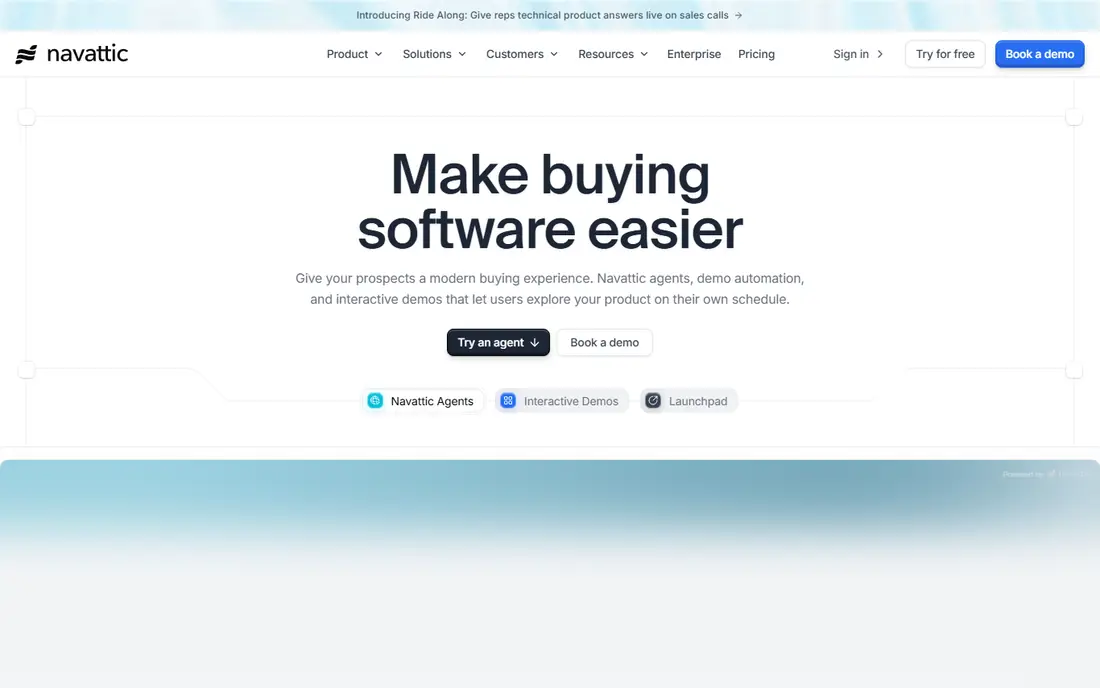
Navattic is the HTML-first choice for product-led teams. It captures a real web product as an interactive demo that visitors can click through on a website, without needing a trial account. That realism helps marketing teams turn website traffic into qualified interest, and sales teams can share the same demo in follow-up messages.
The catch is price and production time. The Base plan starts at 500 dollars a month, and sandbox demos arrive on the Growth plan, so teams should budget for the tier that matches their format. For a marketing-led demo program, the realism is worth it, but a team that only needs simple tours can start cheaper elsewhere.
- HTML demos that feel like the real product
- Website embedding for marketing
- Sandbox demos on higher plans
- Paid plans start at 500 dollars a month
- Sandbox and single sign-on sit on higher tiers
- Setup takes longer than a screenshot tour
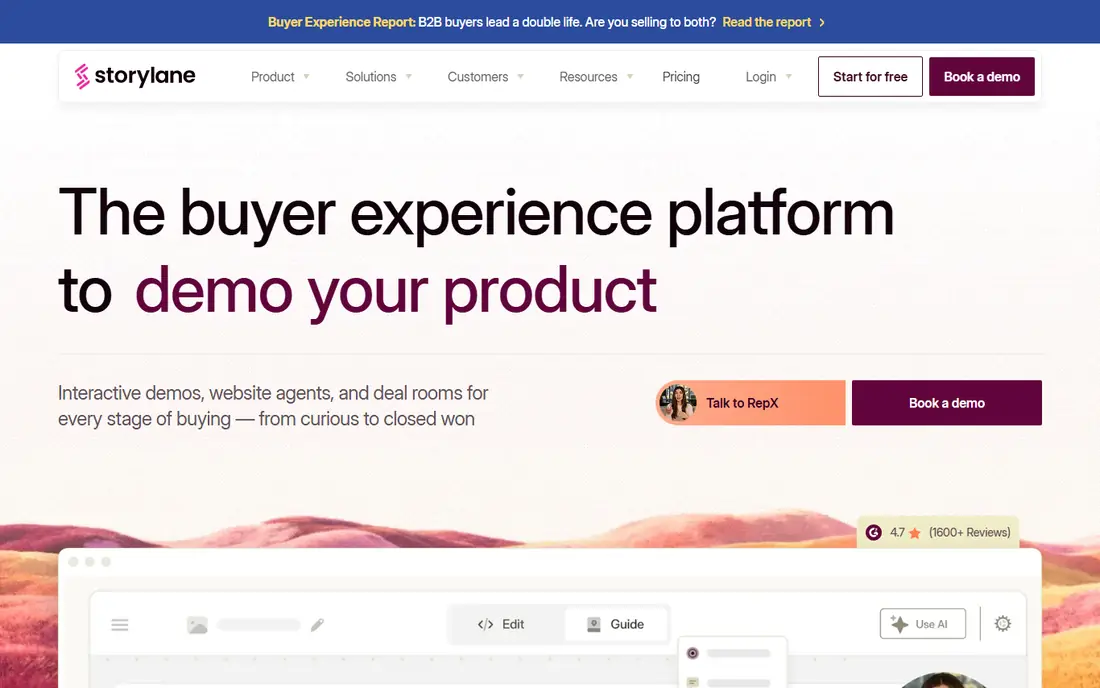
Storylane covers the widest range of demo formats in one place. Teams can build screenshot tours for a website, add HTML demos for deeper interaction, and group finished demos into hubs for buyers, prospects or new customers. Analytics show which steps buyers complete and where they drop off, which helps product marketers improve a tour instead of guessing.
The trade is tiering. Starter pricing covers screenshot demos, while HTML editing starts on a higher plan, so teams that need HTML as the core format should budget for that tier. For a team that wants one demo library across departments, Storylane is a safe first evaluation.
- Screenshot, HTML and video demos in one editor
- Demo hubs for grouping tours
- Strong analytics on viewer steps
- HTML editing sits on higher tiers
- Per-seat pricing grows with larger teams
- Sandbox features require higher plans
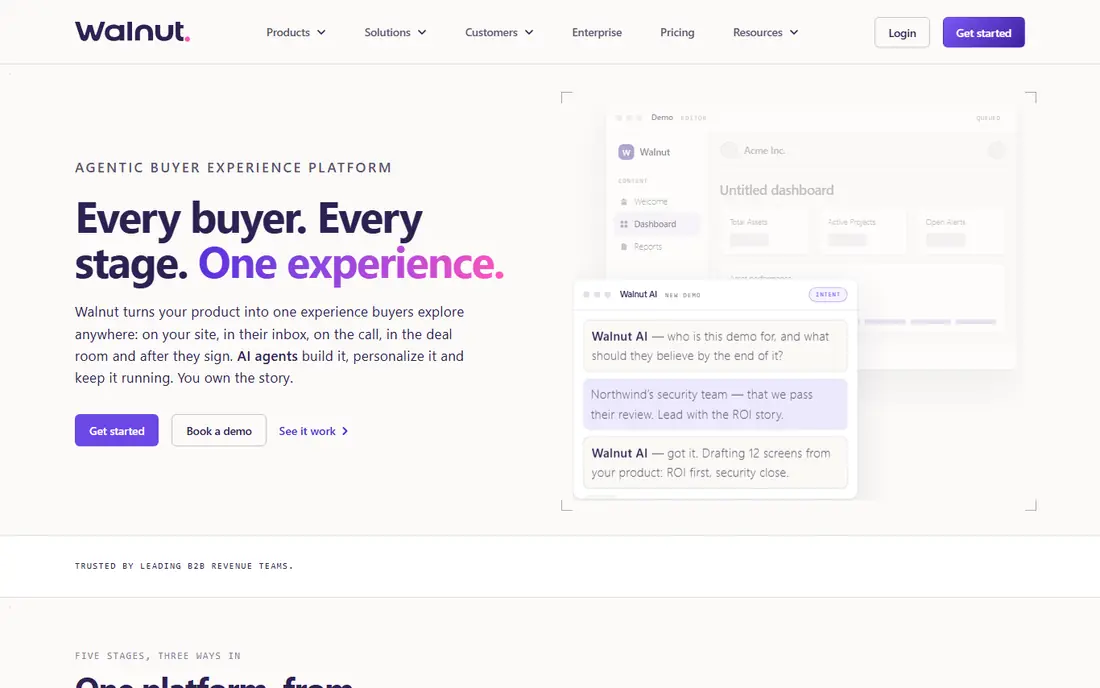
Walnut is built for enterprise sales and presales teams that personalize demos for each prospect. Sellers can tailor a demo to a buyer industry, role or use case, track engagement in the CRM, and share follow-up material through digital sales rooms. That personalization helps in longer, multi-stakeholder deals.
The weakness is cost and access. Pricing starts at 575 dollars a month billed annually, with no free plan, and sandbox demos sit on a higher tier. Walnut suits sales teams with a clear enterprise motion, while smaller teams will likely prefer Supademo or Arcade for a first demo library.
- Personalized demos for specific prospects
- Sandbox demos on higher plans
- Digital sales rooms and CRM tracking
- Enterprise pricing starts high
- No free plan
- Sandbox features require the higher Accelerate plan
Demostack clones a product into a sandbox that sales teams can shape for each buyer, including data, settings and workflows that match a prospect scenario. That depth matters for complex, multi-module products where a screenshot tour cannot show how the system really behaves. Presales teams can run live-style demos without touching production data.
The limit is scope and cost. Demostack is priced as an enterprise platform, and setup requires presales ownership and time. Teams with simple products or website-only demos will not need this depth, while enterprise presales teams with complex products will find it hard to replace.
- Near-live sandbox environments for complex products
- Strong for presales teams
- Data customization for buyer scenarios
- Pricing is quoted and enterprise-level
- Implementation takes time
- Overkill for simple website tours
Arcade starts from a screen recording and turns it into an interactive tour, which makes production fast. Creators add hotspots, callouts, chapters, branching paths and AI voiceover, and a polished tour can be ready in minutes rather than hours. That speed helps product launches, changelog posts and onboarding guides.
The trade is depth. Arcade excels at visual storytelling, but teams that need a full cloned product environment should look at Reprise or Demostack. For marketing, onboarding and launch demos, Arcade gives strong polish at a mid-market price, with a free plan for testing.
- Fast capture from screen recordings
- Polished chapters, hotspots and voiceover
- Easy sharing as video and interactive tours
- HTML demos require higher or custom pricing
- Single sign-on sits on enterprise plans
- Less sandbox depth than Demostack or Reprise
Supademo is the budget pick for teams that need demos across many jobs, from sales follow-up to onboarding, training and support. The free plan lets teams test tour building and sharing, and paid plans add guided HTML demos and then sandbox demos at higher tiers. That range covers most everyday demo needs without enterprise pricing.
The catch is tiering by format. Teams should check which plan carries the format they need, since the cheapest plan does not include every format. Even with that check, Supademo remains the lowest-cost route to a serious demo library for small and mid-size teams.
- Low entry price per creator
- Screenshot, HTML and sandbox formats across plans
- Works across sales, onboarding and support
- Guided HTML demos start on the Business plan
- Sandbox demos start on Growth
- Brand polish is lighter than Arcade for storytelling
Tourial focuses on guided journeys, where a buyer follows a structured path through a product story rather than exploring freely. That structure helps buying groups with several stakeholders, since each person sees the same narrative and the team can track progression. Video-led elements add a human, presentational feel to the tour.
The weakness is flexibility and price clarity. Buyers who want a free-form sandbox will find Tourial more guided than they need, and pricing requires a quote. Tourial fits marketing and sales teams that value a controlled buyer journey over open exploration.
- Guided demo paths for buying groups
- Video-led storytelling
- Analytics on buyer progression
- Pricing is quoted
- Less suited to free-form sandbox exploration
- Smaller ecosystem than the largest demo platforms
Reprise is the enterprise cloning choice, building demo environments that mirror a real product in depth, including back-end behavior that screenshot tours cannot show. Integrations with CRM and marketing tools help sales teams track engagement, and security features suit regulated buyers. For complex enterprise sales, that realism can shorten evaluation cycles.
The drawback is cost and effort. Reprise is quoted at enterprise levels, and running cloned environments needs presales ownership. Teams with simple products should start with Navattic, Storylane or Supademo, while enterprise teams with complex products will get the most from Reprise.
- Full product cloning for front and back end
- Strong enterprise security and integrations
- Live demo environments for presales
- Pricing is quoted at enterprise levels
- Implementation takes time and ownership
- Overkill for simple tours
How we picked these
We compared official feature pages, pricing pages, documentation, privacy policies and public reviews for each platform. We kept only platforms that exist and work today, that produce interactive product demos rather than plain videos alone, and that serve marketing, sales or presales teams. We included HTML capture, screenshot tours, guided journeys and sandbox cloning, because the best demo format depends on the buyer journey.
What to check before you choose
Start with the buyer journey, not the feature list. Website visitors need a short, clickable tour that explains value in minutes. Sales prospects need a personalized demo tied to their use case. Technical evaluators need a sandbox or cloned environment that behaves like the real product. One platform rarely serves all three perfectly, so pick the journey that matters most first.
Next, check format tiering on the pricing page. HTML editing, sandbox demos and single sign-on often sit on higher plans, so the entry price may not buy the format you need. Finally, pilot with one real demo and one real audience. Measure completion rates, drop-off steps and sales follow-up quality, and only expand the library if those numbers beat a plain video or a live call alone.
Frequently asked questions
Which demo platform offers the best product demos overall?
There is no single winner for every team. Navattic and Storylane lead for marketing-led website demos, Walnut and Reprise lead for enterprise sales personalization and cloning, and Supademo and Arcade lead for fast, budget-friendly tours. Match the platform to your buyer journey first, then compare price and format tiers.
What is the difference between HTML demos and screenshot tours?
HTML demos capture a real product interface that visitors can click and interact with, which feels closer to the live product. Screenshot tours use captured screens with hotspots and steps, which are faster to build and easier to update. HTML suits realism, while screenshot tours suit speed and simple explanations.
Do demo platforms replace live sales demos?
No, they usually support live demos rather than replacing them. Interactive demos warm up buyers, answer common questions and let champions share the product internally. Live calls still matter for complex questions, custom scenarios and closing, especially in enterprise deals.
How much does a demo platform cost?
Costs range from free plans and roughly 38 dollars per creator per month to enterprise contracts quoted in the tens of thousands per year. Format tiering matters: HTML and sandbox features often sit on higher plans. Get a written quote for the tier that includes your required format before budgeting.
Can I measure whether a demo works?
Yes, most platforms track views, step completion, drop-off points and sharing. Use those analytics to shorten tours, fix confusing steps and focus on the moments buyers actually complete. Compare demo viewers with non-viewers on meeting booking and deal progression to judge real impact.
Sources
See where you really rank - block by block
ProMapRanker scans Google Maps across a grid of your service area. Simple monthly plans from $19, white-label on every plan.
Start freeKeep reading
 worlds best local seo company
8 Worlds Best Local SEO Companies for Map Pack Growth in 2026
Compare the worlds best local seo company options for Google Business Profile work, citations, reviews, and multi-location rankings and reporting in 2026.
Read → world's best web hosting company
World's Best Web Hosting Company in 2026
Searching for the world's best web hosting company? We compared 10 hosts on price, renewal rates, speed, and support to help you choose well today in 2026.
Read → who's got the best nanny tax services
Who's Got the Best Nanny Tax Services in 2026
We answer who's got the best nanny tax services, comparing full filing, back taxes, software, and pricing so families can handle nanny taxes correctly.
Read →