 ProMapRanker
Best Self-Driving Car Companies in 2026

Key takeaways
- No single company has the best self-driving car for every use, because fully driverless robotaxis and supervised driver-assist systems are different products.
- Waymo leads commercial driverless ride-hailing in the United States, while Tesla, GM Super Cruise and Ford BlueCruise lead supervised highway driver assistance for private owners.
- Zoox, Aurora, Mobileye, Wayve, Pony.ai, WeRide and Apollo Go each focus on different markets, from custom robotaxis to trucking, supplier systems and overseas ride-hailing.
- Availability is limited by city, road type and regulation, so check whether a service or system actually operates where you live before judging it.
Quick comparison
| Pick | Great for | Pricing starts at | Free tier | |
|---|---|---|---|---|
 Waymo | Commercial driverless rides in US cities | See website | No | Visit |
 Tesla | Supervised driver assistance for owners | See website | No | Visit |
 Zoox | Custom-built driverless vehicles | See website | No | Visit |
 Aurora Innovation | Driverless trucking | See website | No | Visit |
 Mobileye | Driver-assist and autonomy systems for carmakers | See website | No | Visit |
 Wayve | AI-led driving software for carmakers | See website | No | Visit |
 Pony.ai | Robotaxis in China and overseas markets | See website | No | Visit |
 WeRide | Robotaxis and driverless services overseas | See website | No | Visit |
 Apollo Go | Large-scale robotaxis in China | See website | No | Visit |
The best self-driving car companies
This question has no single dominant answer, so we angle this article plainly as a comparison of leading providers for different needs. A company that runs a driverless taxi fleet does not sell you a car, and a carmaker that sells driver assistance does not offer a driverless ride. We compared official service coverage, system descriptions and public 2026 reporting on robotaxi scale, and we are clear where a system still needs a human driver.
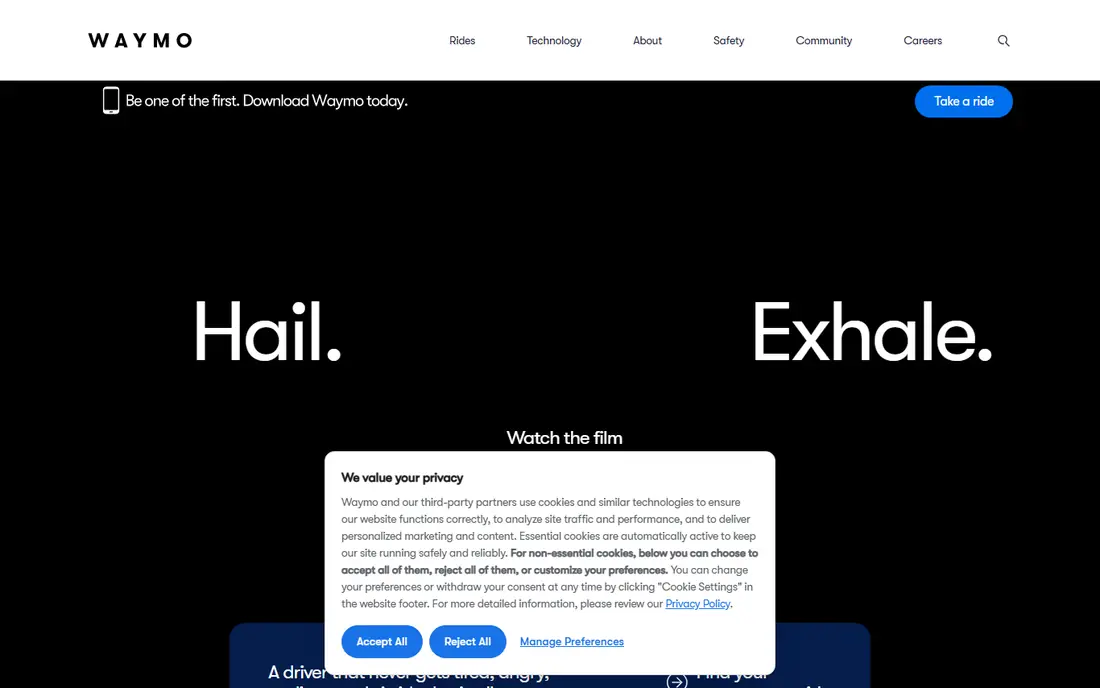
Waymo, owned by Alphabet, runs the most established commercial driverless ride service in the United States, with Waymo One operating in multiple major cities. Its vehicles use cameras, lidar, radar and AI decision-making to drive without a human driver in defined areas. Public reporting in 2026 puts its weekly trip volume in the hundreds of thousands, which is far ahead of most rivals in the US.
The honest limit is geography. Waymo does not operate everywhere, and a rider outside its service areas cannot use it at all. Rides are also priced per trip, so it is a transport service, not a car you buy. For riders in a Waymo city, it is the clearest example of a working driverless car service today.
- Largest commercial driverless ride-hailing network in the US
- Fully driverless rides in defined areas
- Extensive safety and sensor approach
- Coverage is limited to approved cities and areas
- Ride prices vary by trip
- Expansion to new cities takes time
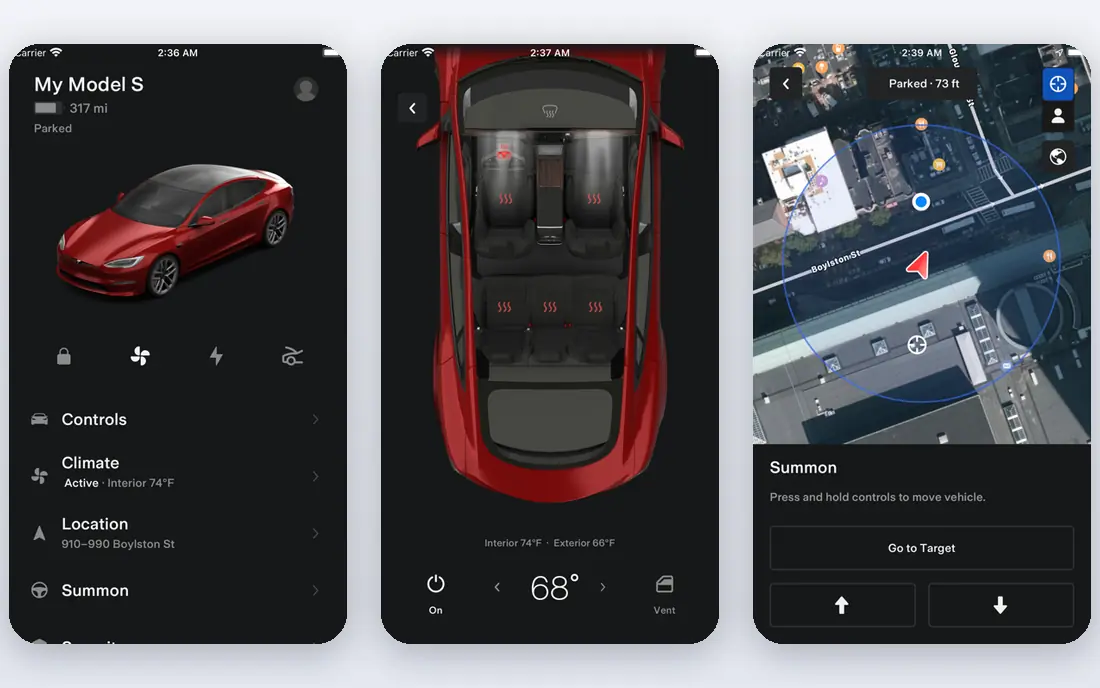
Tesla is the most widely experienced name in this list, because its Autopilot and Full Self-Driving systems ship in cars owners can buy. Those systems assist with steering, speed and lane changes on many roads, which makes highway driving less tiring. Tesla also operates robotaxi services in some US cities, though availability and supervision arrangements vary.
The key point is classification. Tesla Full Self-Driving for private owners is a Level 2 driver-assist system, which means the driver must stay attentive and ready to take over. It is not a fully driverless car for general consumer use. For owners who want advanced assistance in a car they drive themselves, Tesla is a strong option, but it should not be compared directly with a Waymo driverless ride.
- Widely available driver-assist systems
- Works on many road types
- Large fleet data collection
- Full Self-Driving is supervised, not driverless
- Driver must stay attentive
- Robotaxi availability is limited and evolving
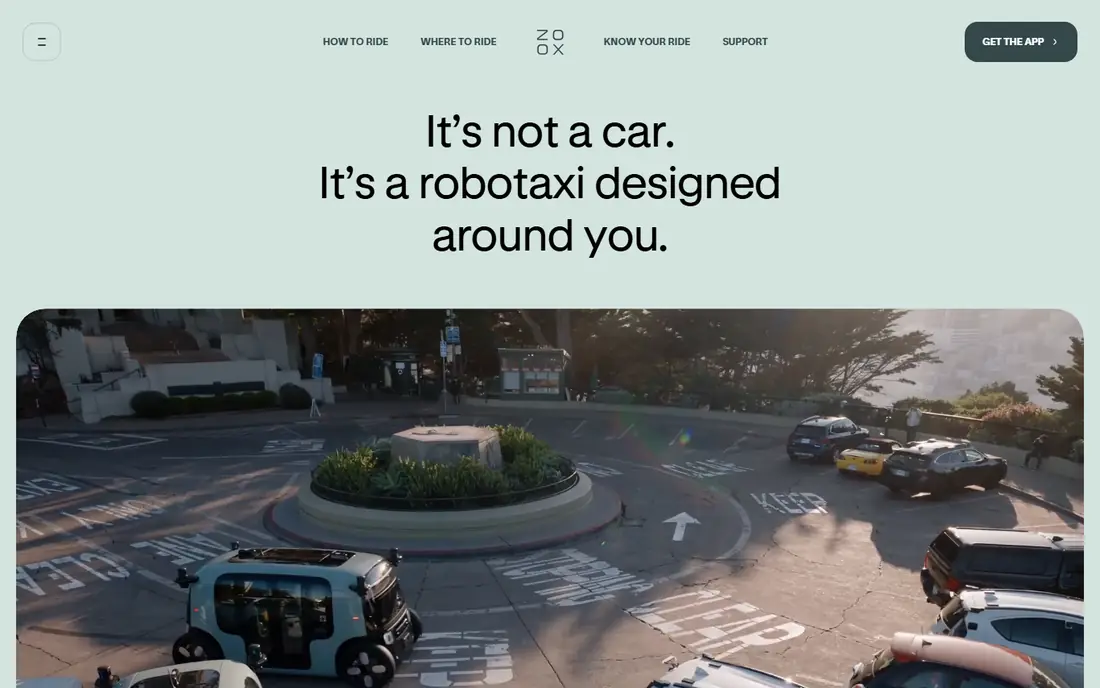
Zoox, owned by Amazon, takes a different approach by building a vehicle designed from the start for driverless ride-hailing, with no steering wheel or pedals. Its symmetrical design and sensor layout suit city trips where passengers face each other. Early rider programs in cities such as San Francisco and Las Vegas show the concept working in controlled service areas.
The limit is scale. Zoox is still in early service phases in limited areas, and it does not sell cars to consumers. Riders outside its test cities cannot use it, and expansion depends on regulation and operational readiness. For the future of purpose-built robotaxis, Zoox is one of the most interesting companies to watch.
- Purpose-built vehicle with no steering wheel
- Designed for driverless ride-hailing
- Amazon backing
- Service is limited to testing and early rider areas
- No consumer car to buy
- Rollout is slower than Waymo
Aurora Innovation focuses on driverless trucking rather than passenger cars, with its Aurora Driver system aimed at highway freight routes. That focus matters, because trucking has different economics, routes and safety cases from city robotaxis. Partnerships with truck manufacturers and carriers support a phased rollout on approved corridors.
The honest catch is relevance to most readers. Aurora does not offer a car you can buy or a ride you can hail in a city. Its progress matters for freight costs and highway safety, but it does not answer a consumer question about which car to buy. For driverless freight, however, Aurora is a leading name.
- Focus on driverless freight
- Highway trucking use case
- Partnerships with truck makers and carriers
- Not a consumer car service
- Freight rollout is phased by route
- Regulatory approval varies by state
Mobileye supplies driver-assist and autonomy technology to carmakers, rather than running its own taxi fleet or selling cars directly. Its systems appear in many production vehicles, and its higher-level Chauffeur system aims at eyes-off highway driving with eyes-on urban use in future models. That supplier model gives it reach across brands.
The limit is visibility. A buyer cannot buy a Mobileye car, and the exact system in a given model depends on the carmaker and trim. Full robotaxi-style autonomy is not yet a mainstream Mobileye consumer product. For technology that improves many different cars, Mobileye is a major, if less visible, player.
- Systems supplied to many carmakers
- Camera-led approach with sensor redundancy
- Highway eyes-off systems in development
- Not a consumer ride service
- Deployment depends on carmaker models
- Full autonomy timelines vary
Wayve develops AI driving software that learns driving behaviour from data, rather than relying only on hand-coded rules for every situation. Its approach appeals to carmakers that want a software-led path to assistance and autonomy. Testing in the UK and partnerships with manufacturers show growing industry interest.
The drawback is maturity for consumers. Wayve does not yet offer a widely available car or ride service, so buyers cannot judge it the way they can judge Waymo rides or Tesla assistance. Its promise lies in future partner models. For AI-led autonomy research and supplier potential, Wayve is a notable name.
- End-to-end AI driving approach
- Partnerships with carmakers
- Testing in the UK and other markets
- No consumer car or ride service yet
- Commercial scale is still early
- System availability depends on partner models
Pony.ai operates robotaxis in China and has expanded into other markets, including Singapore and parts of Europe, with a fleet of well over a thousand robotaxis reported in 2026. It also works on driverless trucking, which gives it two routes to scale. Its experience in dense Chinese cities is relevant to complex urban driving.
The limit for US readers is access. Pony.ai is not a mainstream US ride service, and its cars are not sold to US consumers. Market access, regulation and local partnerships shape where it can operate. For overseas robotaxi scale, Pony.ai belongs on the list beside Apollo Go and WeRide.
- Large robotaxi fleet in China
- Overseas expansion
- Trucking and passenger programs
- Limited US consumer availability
- Regulatory and market access varies
- Ride pricing varies by city
WeRide operates Level 4 vehicles, including robotaxis, in China, the UAE, Switzerland, Spain and other markets, with thousands of Level 4 vehicles reported in 2026. Its range covers passenger rides, buses and logistics vehicles, which shows a broader autonomy portfolio than a single robotaxi line. That diversity helps it adapt to different city and regulatory settings.
The honest weakness for US readers is the same as for Pony.ai, namely limited US availability. WeRide is not a car you buy in the United States, and its ride services are city-specific overseas. For global driverless scale outside the US, WeRide is a credible, established operator.
- Level 4 vehicles across robotaxis and other services
- Operations in China, the UAE and other markets
- Diverse vehicle types
- Limited US consumer availability
- Service areas are city-specific
- Commercial timelines vary by market
Apollo Go, from Baidu, runs one of the largest robotaxi services by trip volume, with operations across many Chinese cities plus Dubai, Abu Dhabi and other markets. Its scale in China, measured in hundreds of millions of autonomous kilometres in public reporting, puts it among the global leaders by fleet experience. Baidu backing supports continued investment.
The catch is that scale is concentrated in China, and regulatory events have affected expansion at times. US readers cannot hail an Apollo Go ride in most American cities. For large-scale robotaxi operations globally, Apollo Go is essential context, even if it is not a US consumer option.
- Very large robotaxi operation in China
- Operations in multiple cities and overseas markets
- Baidu backing
- US availability is minimal
- Regulatory freezes and incidents have affected expansion
- Pricing varies by city
How we picked these
We compared official service descriptions, system classifications and public 2026 reporting on robotaxi scale and coverage. We included both driverless ride operators and driver-assist suppliers, because the question covers self-driving cars broadly, and we clearly labelled supervised systems as supervised. We excluded companies whose current driverless or driver-assist offerings we could not verify, and we used "See website" for ride fares and vehicle pricing, which vary by market and model.
What to check before you trust a self-driving claim
First, check the automation level. Level 2 means the driver must stay attentive, Level 3 means eyes-off in defined conditions with a driver ready to resume, and Level 4 means no driver in defined areas. Marketing often blurs those lines, so read the carmaker or operator description, not just the product name.
Next, check where it works. A robotaxi may operate only in part of one city, and a highway assist system may work only on mapped roads. Finally, check safety reporting and incident history from regulators and reputable news sources, because a system that works well in normal conditions can still struggle in rain, construction zones or unusual traffic. No system in this list drives itself everywhere, in all conditions, today.
Frequently asked questions
Which company has the best self-driving cars?
There is no single winner. Waymo leads US commercial driverless rides, Tesla leads widely available supervised driver assistance for owners, and Apollo Go, Pony.ai and WeRide lead overseas robotaxi scale. Choose by whether you want a ride, a car to drive with assistance, or a freight system.
Can I buy a fully self-driving car today?
No production car sold to consumers today drives itself everywhere without a driver. Available consumer systems are driver assistance, mainly Level 2, and fully driverless rides are offered as a service in limited cities, not as a car you own and use anywhere.
Is Tesla Full Self-Driving actually self-driving?
No, for private owners it is a supervised driver-assist system, and the driver must stay attentive and ready to take over. Tesla robotaxi services in some cities are a separate service with different supervision and availability, so do not confuse the two.
Where can I ride in a Waymo?
Waymo One operates in multiple US cities and defined service areas, with expansion ongoing. Check the Waymo site or app for your city and neighbourhood, because coverage is area-specific and changes as new cities open.
Are self-driving cars safe?
Safety data varies by company, system, city and road type, and regulators and researchers continue to study it. Driverless operators publish safety reports, and driver-assist systems still require an attentive driver, so read official safety material and regulator findings before forming a view.
Will self-driving cars replace human drivers soon?
Driverless rides are growing in specific cities and freight corridors, but general-purpose driverless cars for all roads and weather are not yet available. Expect gradual expansion by city and use case, rather than a single date when all cars drive themselves.
Sources
- https://waymo.com
- https://www.tesla.com
- https://zoox.com
- https://aurora.tech
- https://www.mobileye.com
- https://wayve.ai
- https://www.pony.ai
- https://www.weride.ai
- https://apollo.auto
- https://www.automotive-iq.com/autonomous-drive/articles/top-5-self-driving-car-companies-leading-the-autonomous-vehicle-industry
See where you really rank - block by block
ProMapRanker scans Google Maps across a grid of your service area. Simple monthly plans from $19, white-label on every plan.
Start freeKeep reading
 worlds best local seo company
8 Worlds Best Local SEO Companies for Map Pack Growth in 2026
Compare the worlds best local seo company options for Google Business Profile work, citations, reviews, and multi-location rankings and reporting in 2026.
Read → world's best web hosting company
World's Best Web Hosting Company in 2026
Searching for the world's best web hosting company? We compared 10 hosts on price, renewal rates, speed, and support to help you choose well today in 2026.
Read → who's got the best nanny tax services
Who's Got the Best Nanny Tax Services in 2026
We answer who's got the best nanny tax services, comparing full filing, back taxes, software, and pricing so families can handle nanny taxes correctly.
Read →