 ProMapRanker
Best Cell Phone Companies Provider in 2026

Key takeaways
- The keyword for this article is garbled, so we read it plainly as a comparison of US cell phone carriers and providers for coverage, price and service.
- The big three still lead on rural coverage and in-store support, while prepaid brands on the same networks cost far less for most users.
- A single unlimited line on a major carrier often costs far more than a comparable prepaid unlimited line.
- Coverage depends on your address more than on national maps, so check each carrier at home, at work and on your commute.
Quick comparison
| Pick | Great for | Pricing starts at | Free tier | |
|---|---|---|---|---|
 Verizon | Widest reliable coverage | See website | No | Visit |
 T-Mobile | Fast 5G and travel perks | See website | No | Visit |
 AT&T | Balanced coverage and bundles | See website | No | Visit |
 Mint Mobile | Low-cost T-Mobile service | $30 per month | Free trial | Visit |
 Visible | Low-cost Verizon unlimited | $25 per month | No | Visit |
 US Mobile | Picking your network | $10 per month | No | Visit |
 Google Fi Wireless | International travel | See website | No | Visit |
 Consumer Cellular | Simple plans and phone support | $20 per month | No | Visit |
 Cricket Wireless | AT&T coverage with stores | See website | No | Visit |
The best US cell phone carriers and providers
We read the garbled keyword plainly: this is a comparison of US cell phone carriers and providers, judged on coverage, price and service. We compared official plan pages, coverage guidance, app store listings and public reviews for carriers operating today, including the three national networks and prepaid brands that run on them.
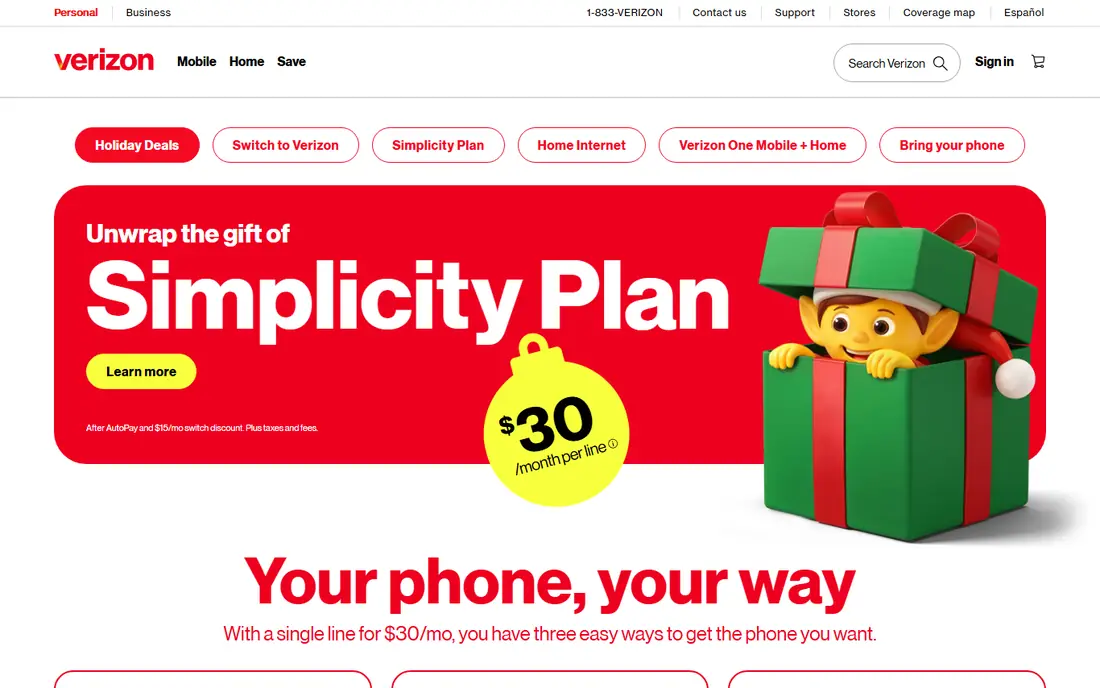
Verizon remains the first choice for many buyers who prioritise coverage outside cities, since its network is widely rated for reliability in rural and suburban areas. Its premium unlimited plans offer priority data, hotspot allowances and travel perks that budget plans do not, and its store network helps customers who want in-person setup and support. For a household that travels widely or lives outside a metro area, that coverage edge can matter daily. The cost is the clear drawback. A single line on a major carrier often costs $65 to $100 per month, and Verizon sits at the higher end unless multi-line discounts apply. Buyers who rarely leave a strong T-Mobile or AT&T area may get similar service for less elsewhere. For coverage-first buyers, Verizon still leads the list.
- Strong rural and nationwide coverage reputation
- Large store network
- Premium unlimited plans with priority data
- Single-line prices are among the highest
- Premium perks sit on higher tiers
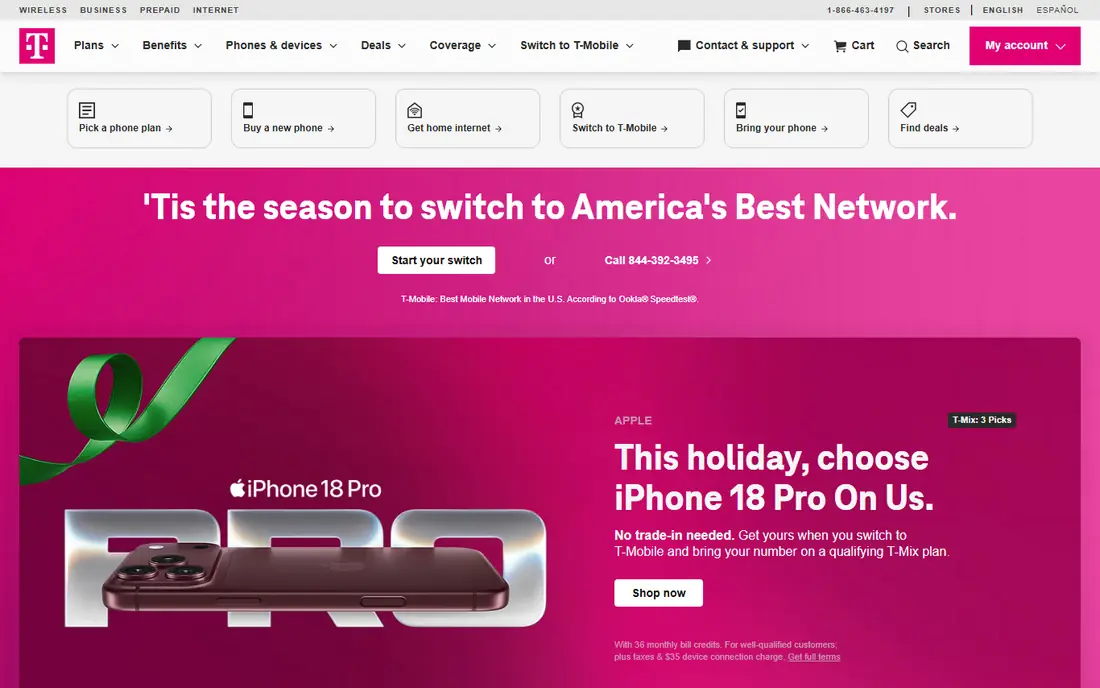
T-Mobile has built its case on fast 5G speeds in cities and suburbs, plus plans that include taxes and fees and bundle travel and streaming benefits. Its unlimited plans suit heavy data users, travellers and families who want predictable billing without a separate fee surprise. International roaming benefits on higher tiers also help frequent travellers, with data and texting included in many destinations. Rural coverage has improved, but in some remote areas Verizon still holds an edge, so a coverage check at the addresses that matter most is essential. Lower tiers also carry less priority data and fewer perks. For a city or suburban user who values speed and perks, T-Mobile is a strong top pick.
- Fast 5G in many cities
- Taxes and fees included on many plans
- Strong travel and streaming perks
- Rural coverage can trail Verizon in some areas
- Premium perks require higher tiers
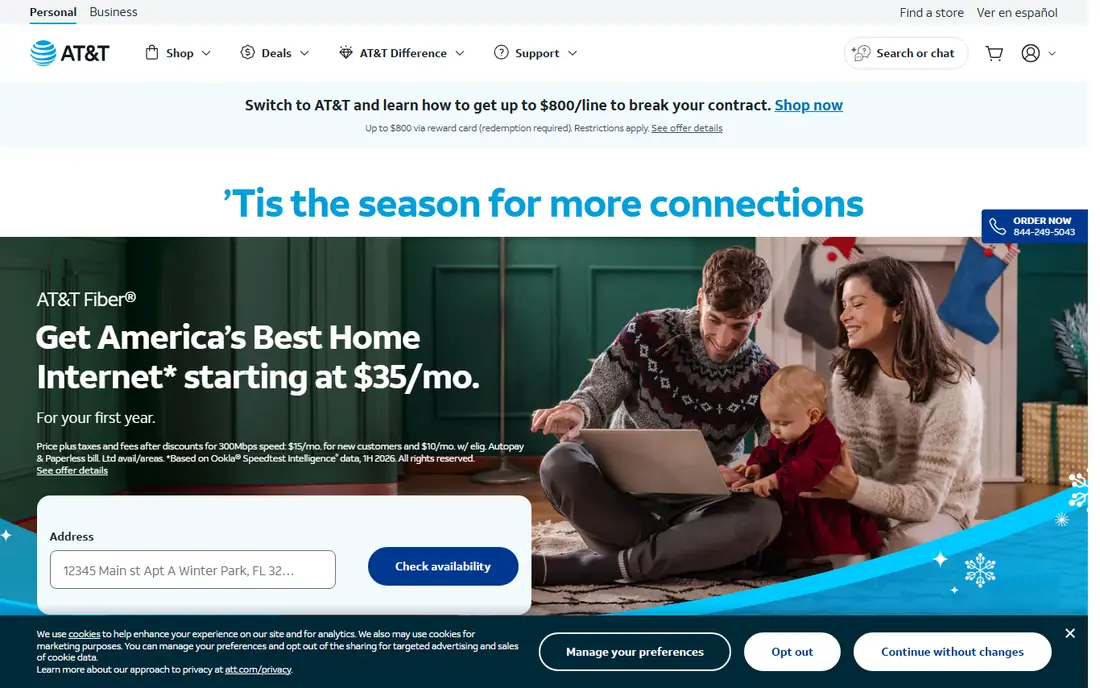
AT&T sits between Verizon and T-Mobile for many buyers: broad nationwide coverage, a large store network, and bundles with home internet or TV where available. Its unlimited plans cover a wide range of users, from a basic unlimited line to a premium tier with large hotspot allowances. For a household that already uses AT&T for home services, bundling can simplify billing and sometimes lower the total. Single-line prices remain high compared with prepaid brands, and comparing tiers takes care since hotspot, priority data and perks differ by plan. Customers should also check whether a quoted price includes taxes and fees. For a buyer who wants a major carrier with bundles and stores, AT&T is a balanced choice.
- Balanced nationwide coverage
- Bundling with home internet and TV in some areas
- Large store network
- Single-line pricing is high
- Plan tiers and perks can be confusing to compare
Mint Mobile runs on the T-Mobile network and offers one of the lowest-cost routes to unlimited data, with its unlimited plan listed at $30 per month. Prepaid pricing means no surprise bill, and a free trial lets new customers test coverage before committing. For a single user or a light family plan, Mint often halves the cost of a major carrier line. The catch is prepayment: the lowest effective prices require paying for several months upfront, and the headline monthly figure depends on that term. Data may also slow during network congestion compared with premium T-Mobile plans. For a budget buyer with good T-Mobile coverage at home, Mint is hard to beat on price.
- Low-cost unlimited on the T-Mobile network
- Simple prepaid pricing
- Free trial for new customers
- Best prices require multi-month prepayment
- Data can slow during congestion on lower tiers
Visible, owned by Verizon, gives budget buyers access to the Verizon network with unlimited data from $25 per month, taxes and fees included. That simplicity is a strength: one base plan, one premium tier, and no multi-line maths to work out. Hotspot is included, though speeds and priority data differ between the base plan and Visible Plus. The lack of stores means setup and support are digital, which suits most buyers but not everyone. Heavy hotspot users should also check the Plus tier limits before choosing the base plan. For a Verizon-coverage buyer who wants the lowest simple price, Visible is the clearest pick.
- Unlimited on the Verizon network from $25 per month
- Taxes and fees included
- Simple single-plan structure
- No stores for in-person help
- Premium data and hotspot limits vary by plan tier
US Mobile stands out by letting customers choose among all three national networks and switch if coverage proves weak in their area. Plans start from $10 per month for light use, with unlimited options from $25 per month on some tiers, and a premium unlimited plan at $44 per month that has been highlighted in independent testing for its data and hotspot mix. That flexibility is unique among budget carriers. Choice brings complexity, since data allowances and hotspot amounts change by network and plan. New buyers should pick the network that covers their home and commute best, then choose a data tier to match use. For a buyer who is unsure which network is strongest locally, US Mobile removes the risk of picking wrong.
- Choice of AT&T, T-Mobile or Verizon networks
- Plans from $10 per month
- Ability to switch networks
- Plan and network combinations can confuse new buyers
- Premium features sit on higher tiers
Google Fi Wireless suits travellers, since its plans include international data and calling in many countries without swapping SIMs. At home it runs on partner networks, with T-Mobile as the main partner, and its app makes plan changes, data tracking and international use simple. Flexible plans suit light users who want to pay for data used, while unlimited plans suit heavier users. Domestic coverage is only as good as the partner network in a given area, so a coverage check still matters. Prices are also higher than the cheapest prepaid unlimited plans for a single domestic line. For a frequent international traveller who wants one plan for home and abroad, Google Fi is a strong choice.
- Strong international data and calling in many countries
- Flexible and unlimited plans
- Good for Pixel and Android users
- Domestic coverage depends on partner networks
- Pricing can be higher than budget prepaid rivals
Consumer Cellular targets buyers who want simple plans and human help, with plans from $20 per month and unlimited talk, text and data options at higher tiers. Its support reputation and AARP discounts appeal to older customers and to anyone who prefers phone help over chat or app-only service. Plans run on the AT&T network, with T-Mobile access on some plans, so coverage is generally strong in cities and suburbs. Lower tiers carry modest data allowances, so heavy streamers should choose an unlimited tier rather than a small data plan. The service is also less suited to buyers who want the fastest 5G or the largest hotspot allowances. For a simplicity-first buyer, Consumer Cellular is a calm and reliable pick.
- Simple plans from $20 per month
- US-based phone support reputation
- AARP member discounts on some plans
- Data allowances on lower tiers are modest
- Network is AT&T-based, so coverage follows AT&T
Cricket Wireless, owned by AT&T, gives prepaid buyers AT&T network coverage plus the benefit of physical stores for setup and support. Its plans are simple to understand, with unlimited options and multi-line discounts that help families. For a buyer who wants AT&T coverage without a postpaid contract or credit check, Cricket is a practical middle ground. Prepaid data may slow during congestion compared with AT&T postpaid priority plans, and perks such as international roaming and hotspot allowances are thinner. Heavy travellers should check those limits before switching. For a store-supported prepaid plan on AT&T, Cricket is a solid choice.
- AT&T network coverage with physical stores
- Simple prepaid plans
- Multi-line discounts
- Data can slow during congestion
- Premium features are thinner than AT&T postpaid plans
How we picked these
We compared official plan pages, coverage guidance, app store listings and public reviews for US carriers and providers operating today. A provider made the list if it runs on one of the three national networks or operates one, offers a plan a new customer can buy now, and publishes clear pricing or plan terms. We did not claim hands-on network testing across the country, since coverage varies by address, and we wrote See website where a carrier does not publish a single starting price. We read the garbled keyword as US cell phone carriers and providers compared for coverage, price and service, and we stated that reading in the intro. No company was invented to fit the keyword, and prepaid brands are listed with the network they actually use, so readers can judge coverage honestly.
What to check before you switch
Check coverage at the addresses that matter, not just on a national map. A carrier that looks strong nationally can be weak at your home, office or commute, and that gap will affect you daily. Use each carrier coverage checker with a full address, and ask neighbours or colleagues on that network about indoor signal.
Compare total monthly cost
Add taxes, fees, device payments and add-ons to the plan price. A $25 prepaid plan with taxes included can beat a $65 postpaid plan once fees are added, while a family plan with multi-line discounts can reverse that maths for four lines.
Check data priority and hotspot limits
Budget plans may slow during congestion, and hotspot allowances vary widely. If you tether a laptop daily, choose a plan with a stated hotspot allowance and priority data, rather than assuming unlimited phone data means unlimited hotspot.
Keep your number and test first
Number porting is standard, but test a new carrier with a trial or a second line before cancelling the old plan. A short trial will reveal coverage, speed and support quality far better than a map or a review.
Frequently asked questions
Which US cell phone provider is best overall?
There is no single best provider, since coverage depends on location. Verizon often leads on rural reliability, T-Mobile on city 5G speed, and AT&T on balanced coverage, while prepaid brands on the same networks cost less for most users.
Are prepaid carriers as reliable as major carriers?
Prepaid brands run on the same towers as major carriers, so coverage is usually the same. The main difference is data priority during congestion, where postpaid premium plans may keep faster speeds than prepaid plans.
Can I keep my phone and number when switching?
In most cases yes, provided the phone is free of a carrier lock and compatible with the new network. Number porting is standard, but do not cancel the old plan until the port completes, or the number can be lost.
How much data do I actually need?
Light users who mainly message and browse can manage on 5 to 10 GB, while streamers and hotspot users often need unlimited or a large data tier. Check past usage in your current carrier app before choosing a tier.
Is a family plan always cheaper?
Often, but not always. Multi-line discounts can make a major carrier cheaper per line than a solo prepaid plan, so compare the total for your exact line count rather than assuming prepaid always wins.
What does data deprioritisation mean?
It means a carrier may slow your data during congestion if you are on a lower-priority plan. Most users notice it rarely, but heavy users in busy areas should choose a plan with priority data if speed matters at peak times.
Sources
See where you really rank - block by block
ProMapRanker scans Google Maps across a grid of your service area. Simple monthly plans from $19, white-label on every plan.
Start freeKeep reading
 worlds best local seo company
8 Worlds Best Local SEO Companies for Map Pack Growth in 2026
Compare the worlds best local seo company options for Google Business Profile work, citations, reviews, and multi-location rankings and reporting in 2026.
Read → world's best web hosting company
World's Best Web Hosting Company in 2026
Searching for the world's best web hosting company? We compared 10 hosts on price, renewal rates, speed, and support to help you choose well today in 2026.
Read → who's got the best nanny tax services
Who's Got the Best Nanny Tax Services in 2026
We answer who's got the best nanny tax services, comparing full filing, back taxes, software, and pricing so families can handle nanny taxes correctly.
Read →