 ProMapRanker
What is the Best SEO Tool in 2026

Key takeaways
- Semrush is the best all-round SEO platform for teams that want keyword research, audits, tracking, and PPC data in one place.
- Ahrefs leads for backlink research and keyword discovery depth, with a free Webmaster Tools option for your own sites.
- Moz Pro is the easiest credible entry point for smaller teams, while SE Ranking offers strong value for agencies.
- No single tool fits every budget, so start with the job you do most: research, tracking, content, or link building.
Quick comparison
| Pick | Great for | Pricing starts at | Free tier | |
|---|---|---|---|---|
 Semrush | All-round SEO and PPC | $139 per month | Free trial | Visit |
 Ahrefs | Backlink and keyword depth | See website | Yes | Visit |
 Moz Pro | Beginner-friendly all-rounder | $49 per month | Free trial | Visit |
 SE Ranking | Agency value and reporting | See website | Free trial | Visit |
 Surfer SEO | Content optimization | $59 per month | Free trial | Visit |
 Ubersuggest | Budget keyword research | $29 per month | Yes | Visit |
 Mangools | Simple keyword research | $49 per month | Free trial | Visit |
 SpyFu | Competitor keyword and PPC history | $39 per month | Yes | Visit |
The best SEO tools
The best SEO tool depends on the work you do most. Some teams need deep backlink data, others need daily rank tracking, and others need content guidance. The platforms below cover those jobs, from free starting points to full professional suites.

Semrush is the benchmark all-round platform for a team that wants one subscription to cover most SEO work. Keyword research, site audits, rank tracking, backlink analysis, competitor research, and content tools sit together, and PPC data adds value for teams that also run paid search. That breadth saves time, because a strategist can move from a keyword gap to a technical audit to a competitor report without exporting data between tools. For an agency or a growing business, that workflow is a real advantage.
The downside is price and seat limits. The entry plan is the most expensive here, and teams should check how many projects, tracked keywords, and users are included before assuming one plan covers everyone. Smaller sites may not use the full toolkit, which makes a cheaper tool better value. If you want one platform for SEO and PPC together, Semrush is still our top pick.
- Full keyword, audit, tracking, backlink, and competitor toolkit
- PPC research included
- Large content and reporting features
- Highest entry price in this list
- Single-user limits on entry plan can frustrate teams
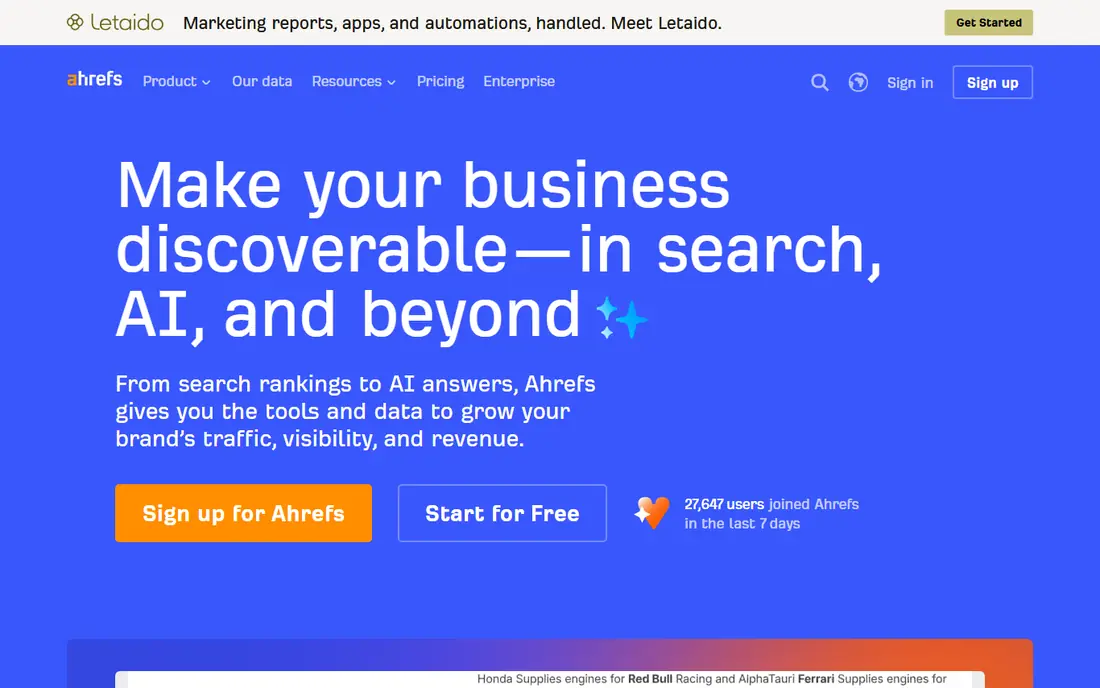
Ahrefs is the tool most SEO professionals open first for research. Keywords Explorer offers deep keyword data, parent-topic clustering, and difficulty scores that practitioners trust, while Site Explorer gives one of the strongest backlink views in the industry. That depth helps with content planning and link building, because you can see not only what competitors rank for, but also which links support those rankings. Ahrefs Webmaster Tools also gives free Site Explorer and audit access for your own verified sites, which is a genuine free starting point.
The catch is cost and tracking cadence. Higher plans add projects, keywords, and daily tracking, but the bill grows with them. Teams that need daily rank tracking for many keywords should check plan limits carefully. For pure research depth, though, Ahrefs remains the standard other tools are measured against.
- Deep keyword and backlink databases
- Trusted difficulty and traffic estimates
- Free Webmaster Tools for your own sites
- Pricing rises quickly with plan level
- Rank tracking updates can be weekly on lower plans
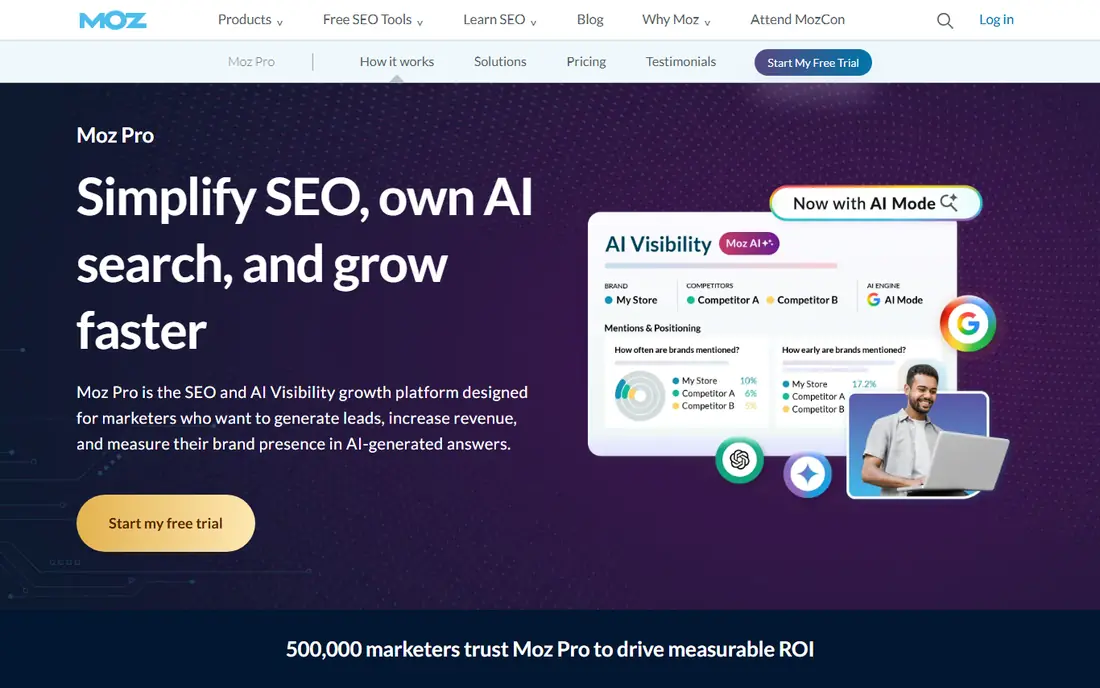
Moz Pro suits small teams and beginners who want credible SEO data without a steep learning curve. Keyword Explorer, site audits, rank tracking, and link research cover the core jobs, and Domain Authority gives clients a familiar benchmark for comparing sites. Reports are clear, and the interface does not overwhelm a new user with dozens of modules. For a small business owner doing their own SEO, that clarity matters more than raw database size.
The limit is depth. Moz backlink data is useful but does not match Ahrefs for link research, and some advanced features arrive later than on Semrush or Ahrefs. Teams that live on link building or large-scale research may need a second tool. For a first professional SEO platform, Moz Pro is an accessible and credible choice.
- Easy to learn
- Domain Authority is familiar to clients
- Solid keyword, audit, and tracking tools
- Backlink index is smaller than Ahrefs
- Some advanced features lag larger rivals
SE Ranking is the value pick for freelancers and agencies that need a full suite without Semrush or Ahrefs pricing. Rank tracking, site audits, keyword research, backlink checks, and competitor tools are all present, and white-label reporting helps agencies present results to clients cleanly. Newer plans add AI search tracking, which helps teams report on visibility in AI answers as well as classic search results. For an agency managing many client sites, that combination is practical.
The trade-off is database depth. SE Ranking keyword and backlink data are good for most client work but do not match the largest indexes for deep research. Pricing also changed during 2026, so the current tier and keyword limits matter more than older reviews. If you want a capable all-round suite at a lower cost, SE Ranking is a strong contender.
- Strong rank tracking and audits
- White-label reporting for agencies
- AI search tracking on newer plans
- Keyword and backlink depth is less than the largest databases
- Pricing changed in 2026, so check current tiers
Surfer SEO is a specialist, not a generalist. It scores a draft against top-ranking pages and suggests terms, headings, structure, and length that help a page cover a topic more fully. For content teams, that guidance turns vague advice into a concrete edit list, which speeds up publishing and improves consistency. It works well alongside a research tool, because the research tool finds the keyword and Surfer helps the writer win it.
The limit is scope. Surfer does not replace Semrush or Ahrefs for keyword discovery, rank tracking, or backlink research, so budget for it as an add-on, not as your only SEO tool. Teams that publish rarely may also find the subscription hard to justify. For a team that publishes content every week, Surfer is a useful specialist.
- Clear content scoring and term guidance
- Helps writers cover a topic fully
- Integrates with common editors
- Not a full SEO suite on its own
- Needs a research tool alongside it for keyword and link data
Ubersuggest is the cheapest usable full platform in this list for a solo owner or small business. It covers keyword ideas, search volume, difficulty estimates, site audits, and rank tracking in a simple interface that does not require SEO training to use. A limited free tier lets you test the basics, and paid plans stay affordable compared with the large suites. For a business that needs solid keyword guidance without a professional budget, that value is hard to ignore.
The downside is depth and scale. Ubersuggest data is lighter than Semrush or Ahrefs, and reporting is more basic, so agencies and large sites will outgrow it. Lifetime offers also vary over time, so check current terms before buying on that basis. For a small site starting SEO on a tight budget, Ubersuggest is a sensible first tool.
- Low monthly price and lifetime option in some offers
- Simple keyword and audit tools
- Good for beginners
- Data depth is lighter than Semrush or Ahrefs
- Reporting and tracking are more basic
Mangools, built around KWFinder, is the friendliest keyword research tool here. The interface is clean, results are easy to read, and long-tail keyword ideas are presented with difficulty and volume in a way beginners can act on. Rank tracking and SERP analysis cover the follow-up work, so a blogger or small site owner can research, publish, and track in one place. For solo creators, that simplicity often leads to more consistent SEO work than a complex suite they avoid opening.
The limit is breadth. Mangools is not a full backlink research platform, and agencies that need deep competitor and link data will need another tool. Pricing also sits in the mid-range, so value depends on how much you use the keyword tools. If keyword research is your main SEO job and you want it to feel easy, Mangools is an excellent pick.
- Very clean interface
- KWFinder is excellent for long-tail keywords
- Easy rank tracking and SERP checks
- Less depth for backlink research
- Not a full agency suite
SpyFu answers a different question from most tools here: what are your competitors actually doing? It shows organic keywords, paid keywords, ad history, and ranking changes over time, which helps a team find gaps and understand a rival strategy. That history is valuable for PPC planning as well as SEO, because you can see which terms a competitor has defended for years and which they tested briefly. The entry price is also affordable, and limited free searches let you test the data before paying.
The trade-off is scope. SpyFu is not a full audit, content, or backlink suite, so most teams will pair it with another tool for technical work. Its interface also feels less modern than Semrush or Ahrefs. For competitor research on a budget, SpyFu is a strong specialist that earns its place alongside a general SEO platform.
- Deep competitor keyword and ad history
- Shows what rivals rank for and bid on
- Affordable entry price
- Not a full site audit or backlink suite
- Interface feels dated compared with newer tools
How we picked these
We compared official pricing pages, product documentation, and public SEO comparisons for tools that are live in 2026. We favored platforms that cover keyword research, audits, tracking, or backlink data, and we mixed full suites with specialists so different budgets and jobs are represented. We did not claim hands-on testing. Where pricing varied by billing term or plan changes during 2026, we wrote See website rather than publishing a figure we could not verify.
What to check before you choose
Start with your main SEO job. If you build links, prioritize backlink depth. If you publish content, prioritize keyword research and content scoring. If you manage clients, prioritize tracking limits and reporting. Run the same keyword and site audit in two tools during trials and compare the results, because database differences show up quickly in real data.
Next, check limits that affect cost. Count projects, tracked keywords, users, and report exports on the plan you can afford, and confirm whether daily tracking or extra users cost more. Also check whether a free tier covers your own sites, as Ahrefs Webmaster Tools does, because that can delay a paid purchase. Finally, pick one primary tool and add a specialist only when a clear gap appears, rather than paying for three overlapping suites.
Frequently asked questions
What is the best SEO tool overall?
Semrush is the best all-round choice for teams that want one platform for research, audits, tracking, and PPC. Ahrefs is the best choice for backlink and keyword depth, and Moz Pro is the easiest credible entry point for smaller teams.
What is the best SEO platform for a small business?
Moz Pro, Ubersuggest, and Mangools suit small businesses, depending on budget and job. Ubersuggest is cheapest, Mangools is simplest for keywords, and Moz Pro offers the most complete small-team suite. Start free or on a trial before committing annually.
Is there a free SEO tool worth using?
Yes. Ahrefs Webmaster Tools gives free audit and Site Explorer data for your own verified sites, and Ubersuggest and SpyFu offer limited free searches. Google Search Console is also free and shows the queries your site already appears for.
Do I need both Semrush and Ahrefs?
Most small businesses do not. One full suite is enough, with a specialist such as Surfer for content or SpyFu for competitor history added only when needed. Larger agencies may use both for database depth, but that cost is hard to justify for a single site.
How much should I budget for an SEO tool?
A solo site can start free or near $29 to $49 per month. A professional suite runs from about $49 to $139 per month at entry level, with higher plans for teams and agencies. Check tracked keyword and project limits, because those drive upgrades more than headline price.
Sources
See where you really rank - block by block
ProMapRanker scans Google Maps across a grid of your service area. Simple monthly plans from $19, white-label on every plan.
Start freeKeep reading
 zscaler alternatives
Best Zscaler Alternatives in 2026
Looking for zscaler alternatives? We compare 9 SASE and zero trust platforms on architecture, data protection, pricing, and fit for your network and team.
Read → zapier alternatives free
Best Zapier Alternatives Free in 2026
Nine automation tools for zapier alternatives free in 2026, all with genuinely free tiers, plus free plan limits, starting prices and upgrade paths explained.
Read → which platform is best for online reputation
Which Platform Is Best for Online Reputation in 2026
Wondering which platform is best for online reputation? We compare 8 review, listing, and response tools for small and multi-location businesses and agencies.
Read →