 ProMapRanker
What's the Best Platform for High Schoolers in 2026

Key takeaways
- Khan Academy is the best free starting point for core high school subjects, with videos, practice and test prep at no cost.
- Brilliant, IXL and Codecademy suit students who want interactive practice in maths, science or coding beyond video lessons.
- Quizlet and Duolingo suit revision and language learning, while CK-12 and freeCodeCamp offer free textbooks and coding projects.
- Parents and guardians should review accounts, privacy settings and tutor contact together with the student before regular use.
Quick comparison
| Pick | Great for | Pricing starts at | Free tier | |
|---|---|---|---|---|
 Khan Academy | Free core subjects | Free | Yes | Visit |
 Brilliant | Interactive maths and science | $24.99 per month | Yes | Visit |
 Duolingo | Language learning | See website | Yes | Visit |
 Quizlet | Flashcards and revision | See website | Yes | Visit |
 IXL | Skill practice and reports | $9.95 per month | No | Visit |
 Codecademy | Interactive coding courses | See website | Yes | Visit |
 CK-12 | Free textbooks and lessons | Free | Yes | Visit |
 freeCodeCamp | Free coding projects | Free | Yes | Visit |
 Schoolhouse.world | Free peer tutoring | Free | Yes | Visit |
The best platforms for high schoolers
We compared learning platforms on age fit for high school students, subject coverage, practice quality and pricing, and we kept only learning platforms, with no dating, anonymous chat or adult contact features.
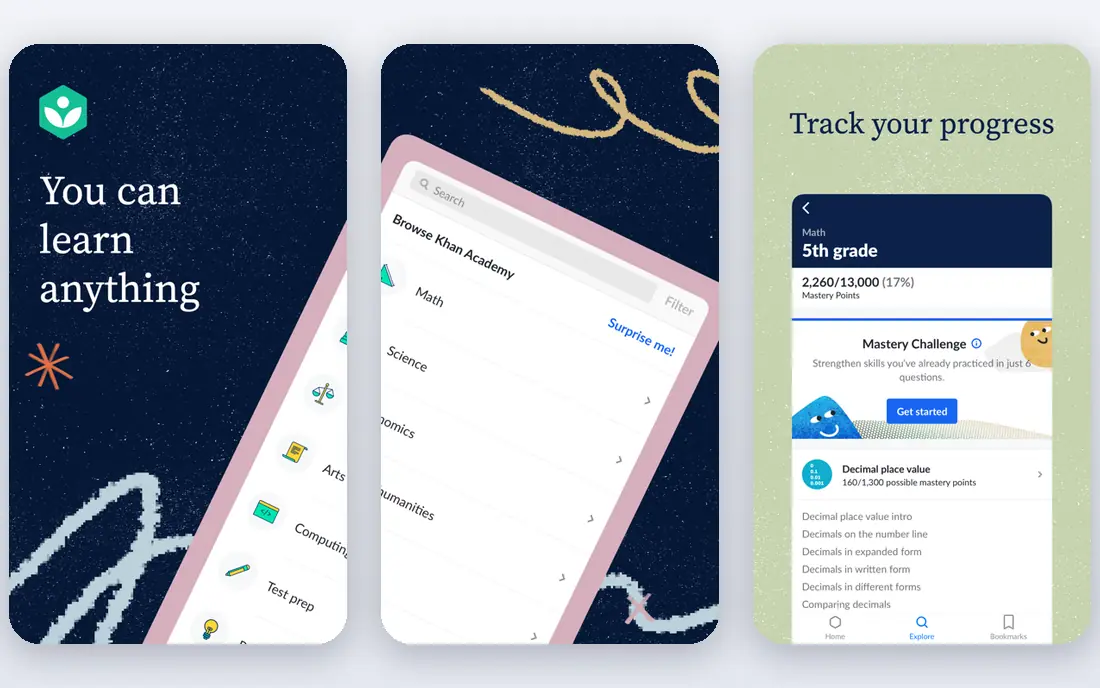
Khan Academy is our first pick for most high school families because it is free and covers core subjects well. Students can watch short lessons, practise with instant feedback and work through test prep for exams such as the SAT. Parent and teacher dashboards show progress without needing a paid plan, which helps families keep study on track.
The catch is that Khan Academy is stronger on teaching concepts than on endless adaptive drill. Pair it with IXL or Quizlet when a student needs more targeted practice, and check Khanmigo pricing separately if you want its AI tutor, since it is not included in the free core service.
- Free for all learners
- Broad maths, science, humanities and test prep
- Parent and teacher dashboards
- Less adaptive drill than IXL
- AI tutor Khanmigo is a separate paid option
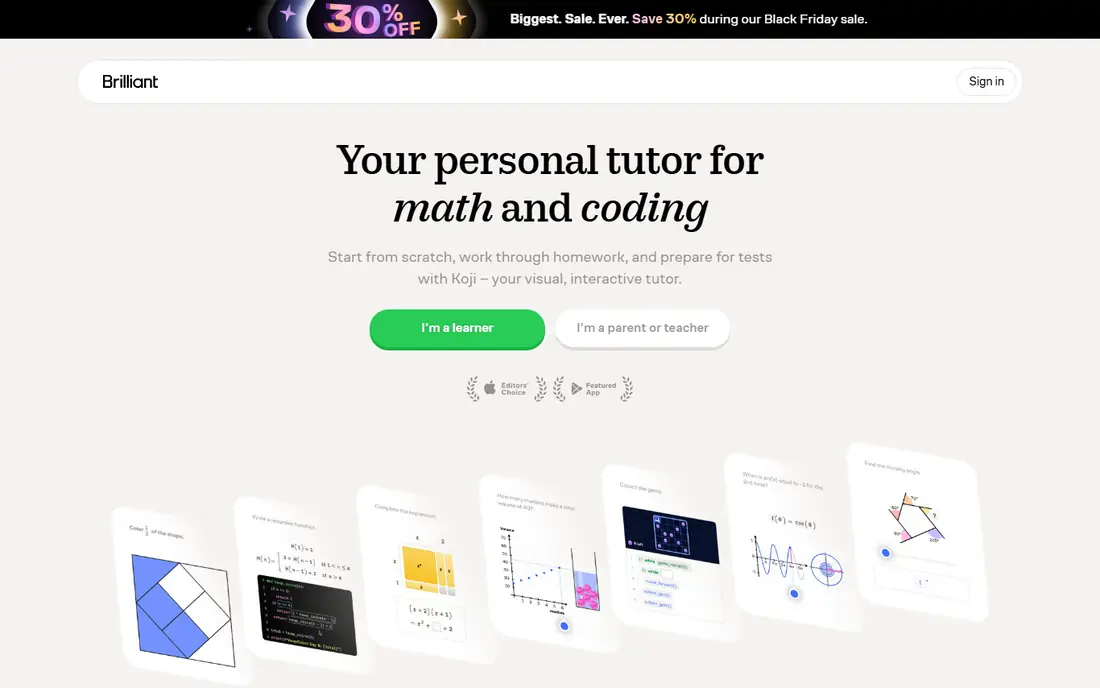
Brilliant suits students who learn by doing, not only by watching videos. Its interactive lessons break maths, science and coding concepts into small problems with visual explanations, which helps students who find textbook chapters hard to follow. Short daily lessons also make it easier to build a regular study habit.
The drawback is price. Monthly billing is $24.99 per month, with lower annual pricing, and the free tier only gives a preview. Try the free lessons first, and check if a school programme covers Brilliant before paying for a family plan.
- Interactive problem solving
- Visual maths and science lessons
- Short daily lessons that build habits
- Monthly price is high
- Free tier is limited to previews and daily problems
Duolingo is a good companion for high school language classes, especially for vocabulary and daily practice. Its short, gamified lessons fit into a busy school day, and its free plan covers core learning for many languages. Students can use it to reinforce class work, not to replace teacher feedback on speaking and writing.
The limit is depth. Duolingo helps with recognition and basic sentences, but it does not replace classroom discussion, essays or oral exams. Use it for daily vocabulary, and keep class materials and teacher feedback as the main guide for grades.
- Free core language lessons
- Gamified streaks and short lessons
- Many languages for school study
- Free plan has ads and limits
- Not a replacement for classroom grammar and speaking practice
Quizlet suits revision for vocabulary, science terms, history dates and other fact heavy subjects. Students can make their own sets or use class sets, then practise with Learn, Test and Match modes that turn recall into a game. That active recall helps more than re-reading notes alone.
Accuracy is the main catch, since many sets are user made and can contain errors. Students should check sets against class notes or textbooks, and teachers or parents should review shared sets before exam revision. Paid features add offline access and extra modes, but the free plan covers core flashcard study.
- Huge set library and easy set creation
- Learn, Test and Match modes
- Useful for vocabulary and facts
- User made sets vary in accuracy
- Advanced features need a paid plan
IXL suits students who need targeted skill practice with clear progress tracking. Its adaptive questions adjust to student level, and its reports show parents and teachers exactly which skills are mastered and which need more work. That detail makes it useful for homework support and exam preparation in maths and language arts.
The drawback is cost and style. IXL is subscription based, starting at $9.95 per month for one subject, and its drill format can feel repetitive compared with video lessons. Use it alongside Khan Academy, with Khan Academy for teaching and IXL for practice, rather than as the only study tool.
- Adaptive skill practice
- Detailed progress reports
- Broad maths and language arts coverage
- Subscription only after trial
- Can feel repetitive for some students
Codecademy suits high school students interested in coding, with interactive lessons that let them write and run code in the browser. Paths cover Python, web development and data basics, which fit school computer science classes and coding clubs. Immediate feedback helps students fix errors without waiting for a teacher.
The catch is plan limits. Free access covers introductory material, while full paths, projects and certificates need a paid plan. Check the current pricing on the vendor site, and start with a free path to confirm the level fits the student before paying.
- Interactive coding in the browser
- Clear paths for Python, web and data
- Good for school coding clubs
- Full access needs a paid plan
- Some paths are better for older students
CK-12 is a strong free option for high school maths and science, with digital FlexBooks, lessons and adaptive practice. Teachers can assign material and track progress, and students can read at their own pace with videos and simulations built in. That makes it useful as a free textbook replacement or homework support tool.
The interface is less polished than paid platforms, and students may need teacher guidance to pick the right FlexBook for their class. Check with the school first, since a teacher assigned CK-12 book will match class work far better than a random search.
- Free digital textbooks and lessons
- Strong maths and science coverage
- Adaptive practice included
- Interface is less polished than paid apps
- Teacher setup helps for full use
freeCodeCamp suits motivated high school students who want to learn coding by building projects. Its free curriculum covers web development, JavaScript, Python and data topics, with challenges and projects that build a portfolio over time. Certificates for completed paths can help with college applications and coding club work.
The trade-off is support. freeCodeCamp expects students to read, try and debug on their own, with community forums as the main help route. Younger or less confident students may do better starting with Codecademy or Khan Academy computing courses, then moving to freeCodeCamp projects.
- Free coding curriculum
- Project based learning
- Certificates for completed paths
- Best for motivated older high school students
- Less hand holding than Codecademy
Schoolhouse.world, founded by Sal Khan of Khan Academy, offers free peer tutoring for high school students in maths, science and test prep. Sessions are led by trained peer tutors in small groups, which can help students who learn better by asking questions live than by watching videos alone. It is a nonprofit service, so there is no subscription cost for learners.
Parents and guardians should review how sessions work together with the student, including scheduling, camera and chat settings, and school rules for online tutoring. Use Schoolhouse.world for subject help in scheduled sessions, and keep school teachers as the main contact for grades and coursework decisions.
- Free live tutoring from trained peer tutors
- Maths, science and test prep sessions
- Small group learning
- Sessions are scheduled, not on demand at all hours
- Parent review of tutor sessions is wise
How we picked these
We compared learning platforms on age fit, subject coverage, practice quality, safety and pricing, and we kept only platforms suitable for high school students. We excluded dating, anonymous chat and adult contact services, and we gave weight to free access, teacher and parent tools, and clear privacy handling. Prices shown are starting prices from vendor pages or recent listings, and where pricing varied we wrote See website.
Safety and parent guardian notes
A learning platform should support school work, not open new contact risks. Parents and guardians should set up accounts together with the student, review privacy settings, and agree on which features are allowed, such as messaging, forums and live sessions. Keep personal details private, use school email where the school provides one, and talk about what to do if a stranger contacts the student on any platform. If a platform offers chat or live tutoring, check who can join, how sessions are moderated, and how to report a problem before regular use.
How to build a study routine that lasts
Pick one core platform for each subject, such as Khan Academy for maths and Duolingo for languages, and add one practice tool such as Quizlet or IXL for revision. Study in short, regular sessions, review mistakes the next day, and keep phone notifications off during study blocks. A routine that fits real school days will beat a perfect plan that only lasts a week.
Frequently asked questions
What is the best platform for high schoolers overall?
Khan Academy is the best free starting point for core subjects, thanks to its breadth, practice and test prep at no cost. Add Brilliant, IXL or Codecademy when a student needs deeper interactive practice in a specific subject.
Are these platforms safe for high school students?
These learning platforms are age-appropriate for high school study, but parents and guardians should still review accounts, privacy settings and live session rules together with the student. Avoid any platform that offers dating, anonymous chat or adult contact.
Which platform is best for high school maths?
Khan Academy covers core maths for free, Brilliant adds interactive problem solving, and IXL adds adaptive drill with detailed reports. Use Khan Academy to learn, then Brilliant or IXL to practise.
Can high school students learn coding for free?
Yes. Khan Academy computing, CK-12, freeCodeCamp and the free tier of Codecademy all offer free coding material. freeCodeCamp suits motivated older students, while Codecademy offers more guided paths.
Should parents pay for a learning platform?
Not at first. Start with free options such as Khan Academy, CK-12 and freeCodeCamp, then pay only when a student uses a paid tool regularly and the free tier clearly limits progress. Check school programmes first, since schools may already cover Brilliant or other tools.
Sources
See where you really rank - block by block
ProMapRanker scans Google Maps across a grid of your service area. Simple monthly plans from $19, white-label on every plan.
Start freeKeep reading
 worlds best local seo company
8 Worlds Best Local SEO Companies for Map Pack Growth in 2026
Compare the worlds best local seo company options for Google Business Profile work, citations, reviews, and multi-location rankings and reporting in 2026.
Read → world's best web hosting company
World's Best Web Hosting Company in 2026
Searching for the world's best web hosting company? We compared 10 hosts on price, renewal rates, speed, and support to help you choose well today in 2026.
Read → who's got the best nanny tax services
Who's Got the Best Nanny Tax Services in 2026
We answer who's got the best nanny tax services, comparing full filing, back taxes, software, and pricing so families can handle nanny taxes correctly.
Read →