 ProMapRanker
What's the Best Option for Best Phone Service in 2026

Key takeaways
- There is no single winner, because coverage at your home, work, and commute matters more than any national ranking.
- Low-cost brands on the same networks often cost $25 to $35 per month for unlimited data, against $65 to $100 or more for a comparable major carrier line.
- Family plans change the maths completely, since multi-line discounts can bring a major carrier close to prepaid prices per line.
- Read the data rules before switching, including premium data limits, hotspot allowances, and how speeds change after a threshold.
Quick comparison
| Pick | Great for | Pricing starts at | Free tier | |
|---|---|---|---|---|
 Verizon | Widest reliable coverage | See website | No | Visit |
 T-Mobile | Fast 5G and travel perks | See website | No | Visit |
 AT&T | Bundles and balanced coverage | See website | No | Visit |
 Mint Mobile | Low-cost T-Mobile service | $15 per month | Free trial | Visit |
 Visible | Low-cost Verizon unlimited | $25 per month | No | Visit |
 US Mobile | Choosing your network | $25 per month | No | Visit |
 Google Fi Wireless | International travel | $35 per month | No | Visit |
 Cricket Wireless | AT&T coverage with stores | $35 per month | No | Visit |
The best phone services for different needs
We compared official feature pages, pricing pages, app store listings, privacy policies, and public reviews for carriers and low-cost brands operating in the United States in October 2026. This guide is plainly a comparison by need, not a declaration of one winner for everyone, because the right service depends on coverage where you live, how much data you use, and how many lines you need.
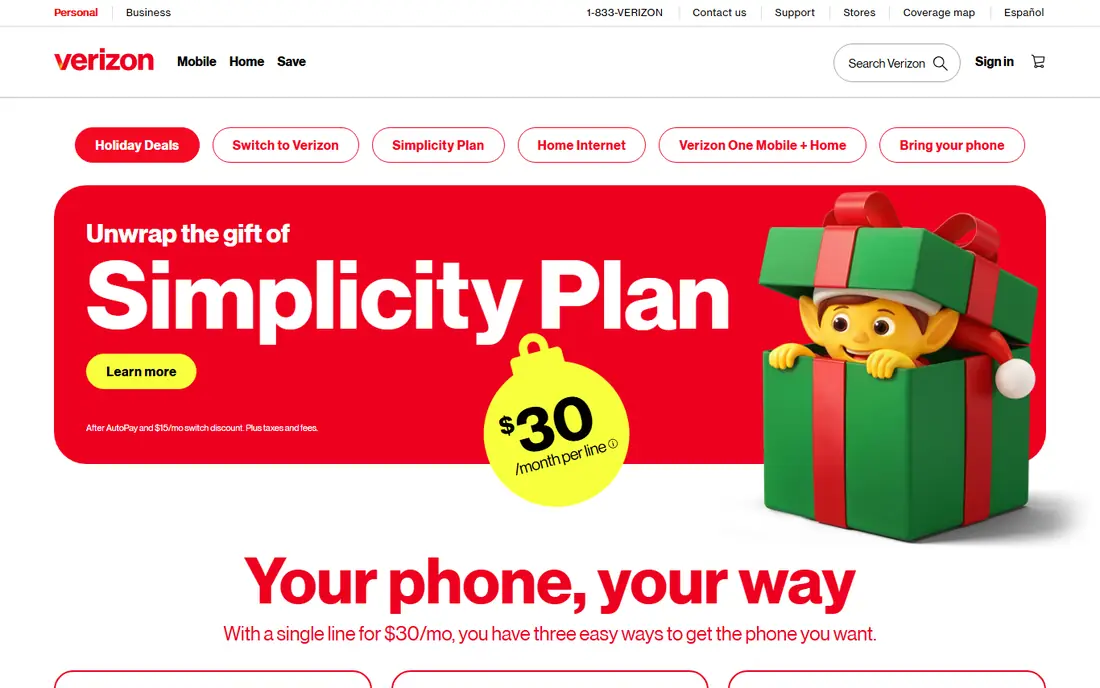
Verizon suits buyers who put coverage first, especially outside cities, and who want a store to walk into when a phone or plan problem needs a person. Its premium unlimited tiers include large amounts of premium data and generous hotspot allowances, which matter for heavy users and for people who tether a laptop often. Device deals and bundle perks are also a real part of the value here, although they can make a straight price comparison harder than it should be.
The honest catch is cost, since a single premium line can run well above the price of a prepaid unlimited line on the same network. Buyers who mainly use Wi-Fi, who live in a strong coverage area for another carrier, or who do not need premium data may get the same day-to-day service for far less elsewhere. Verizon is the safer pick when coverage in rural or fringe areas is the deciding factor and the budget allows it.
- Broad national coverage, including rural areas
- Strong premium unlimited tiers
- Extensive store network
- Higher prices than prepaid brands
- Plan and perk bundles can be confusing to compare
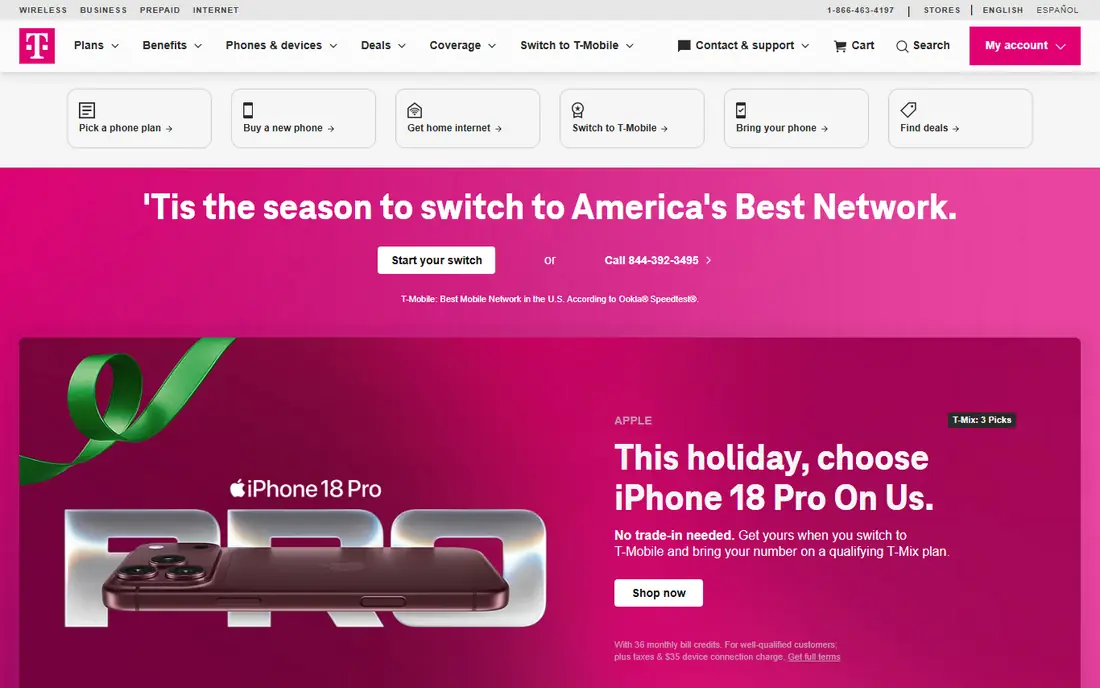
T-Mobile appeals to travellers and to households that want strong 5G speeds plus perks such as international data and inflight connectivity on higher tiers. Its family plans are often competitive per line, and its network has improved steadily in cities and suburbs, where most users spend most of their time. For a household that travels, streams, and uses several lines, the combination of speed and included travel benefits can justify the higher tier price.
Coverage in very rural areas is the point to check before switching, since performance varies by location more than any national map suggests. Lower tiers also drop some travel perks and premium data, so buyers should compare the tier they would actually buy, not the flagship tier in the advertisement. Check coverage at home, at work, and along a regular commute during any trial or return window.
- Broad 5G coverage
- Travel benefits on higher tiers
- Competitive family pricing
- Rural coverage can lag Verizon in some areas
- Higher tiers are needed for the best perks
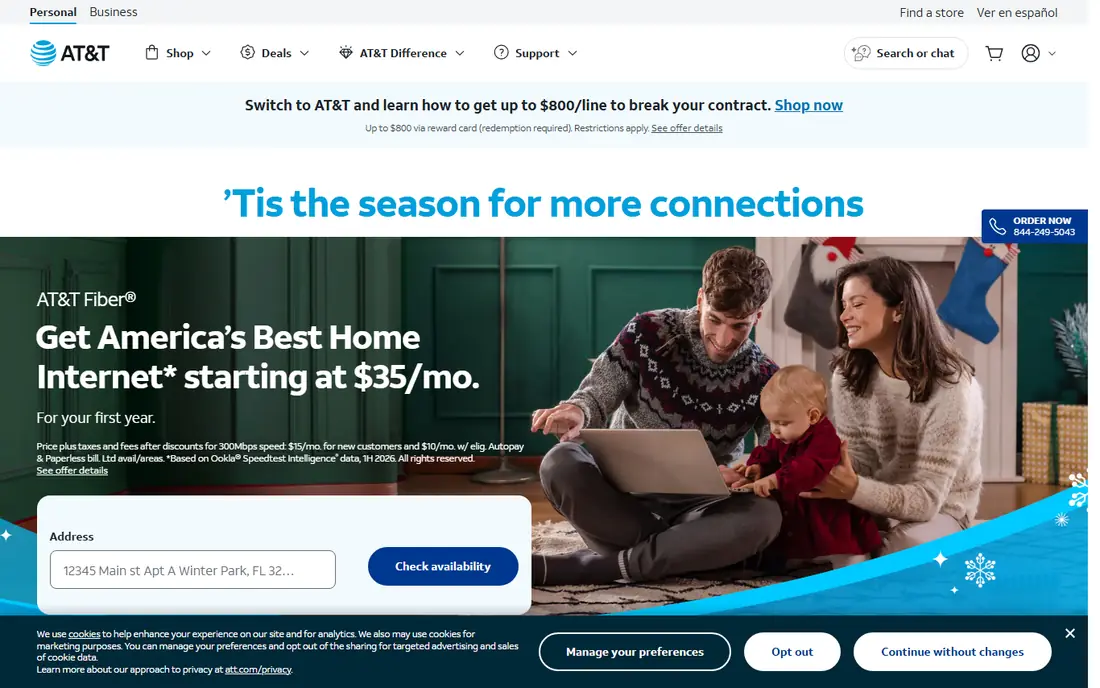
AT&T fits households that already use AT&T for home internet or TV and want one bill, one account, and bundle savings across services. Coverage is balanced across cities and many rural areas, and its unlimited tiers include hotspot data and, on higher tiers, travel and entertainment perks. For a family that values in-store help and a single provider for several services, that bundle convenience is a genuine benefit.
Single-line buyers get the weakest value here, since AT&T prices, like those of the other major carriers, are built around multi-line discounts. The gap between tiers in premium data and hotspot allowances also rewards careful reading of the plan page. If you need only one line and rarely use perks, a prepaid brand on the AT&T network, such as Cricket Wireless below, may deliver similar coverage for less.
- Balanced national coverage
- Bundle options with home internet and TV
- Large store network
- Single-line prices are high
- Plan differences between tiers can be hard to follow
Mint Mobile is the low-cost route to T-Mobile coverage, with its lowest effective monthly price available when a buyer pays for a full year in advance. Unlimited plans are also available at a higher monthly rate, and the plan range stays simple enough to compare in minutes. For a solo user with good T-Mobile coverage who is comfortable paying upfront, the annual saving against a major carrier is large.
Paying upfront is also the main risk, since it locks money in before a buyer has lived with the service for a year. Data priority is another honest limit, because prepaid traffic can wait behind the host carrier's own customers when a tower is busy. Try the trial, check coverage at the places that matter, and only then commit to the annual term if the service holds up.
- Very low prices when paid annually
- Runs on the T-Mobile network
- Simple plan range
- Best prices require paying for 12 months upfront
- Data priority can drop during congestion
Visible gives Verizon network coverage at a prepaid price, with taxes and fees included, which makes the monthly bill easy to predict. The base unlimited plan includes unlimited data and hotspot, while the higher tier adds faster speeds, more premium data, and extra hotspot capacity for buyers who need it. For a solo user who wants Verizon coverage without a major carrier bill, Visible is one of the clearest value options on this list.
The limits sit in the fine print of the base plan, where hotspot speeds and data priority differ from premium Verizon tiers. Support is also mainly app and chat based, with no store to visit, which suits confident self-servers better than buyers who want in-person help. If those trade-offs fit, the price and the included taxes make Visible easy to budget for month to month.
- Taxes and fees included in the headline price
- Unlimited data and hotspot on Verizon network
- No annual prepay needed
- Base plan speeds and hotspot speeds are capped in ways premium plans are not
- Support is mainly digital
US Mobile stands out because it lets a buyer pick which major network the line runs on, and change networks later if coverage disappoints. Unlimited plans start at a prepaid price with taxes and fees included, and smaller data plans suit light users who mainly use Wi-Fi. That flexibility is valuable for a household where different members live or work in areas covered better by different networks.
Flexibility also brings complexity, since premium data, hotspot, and international features vary by plan and by network choice. A buyer should confirm the exact plan terms for the network they pick, rather than assuming every option on the site is identical. For buyers willing to spend ten minutes on that check, US Mobile offers a rare combination of low price and network choice.
- Choice of Verizon, T-Mobile, or AT&T networks
- Taxes and fees included
- Flexible plan sizes
- Network switching and plan rules need a careful read
- Premium data limits vary by plan
Google Fi Wireless suits travellers who want one plan that works abroad without buying a local SIM at every stop. Its premium unlimited tier includes international data in many destinations, plus calls and texts in Canada and Mexico, which removes a common travel headache. At home, it runs mainly on the T-Mobile network, so domestic coverage follows T-Mobile strengths and limits in the same way Mint Mobile does.
The price is the honest catch, since the premium tier costs more than Mint Mobile, Visible, or US Mobile unlimited plans. Buyers who rarely travel may not use the feature they are paying for, and should compare a cheaper domestic plan plus a travel eSIM instead. For frequent travellers who value a single bill and a United States number that keeps working abroad, Google Fi Wireless is a strong, simple choice.
- International data in many destinations on higher tiers
- Runs mainly on the T-Mobile network
- Simple billing
- Higher price than other prepaid unlimited plans
- Best travel features need the premium tier
Cricket Wireless is the store-based route to AT&T coverage at a prepaid price, which matters for buyers who want a person to help with setup, a new phone, or a plan change. Taxes are included on many plans, family discounts bring the per-line price down, and the plan range covers light users as well as unlimited users. For a household that likes AT&T coverage but not AT&T postpaid prices, Cricket Wireless closes much of that gap.
Cheaper plans cap data speeds, and premium data limits are tighter than on AT&T postpaid tiers, so heavy users should check the unlimited plan terms rather than the cheapest headline. Congestion priority can also differ from postpaid service. If in-person help and predictable AT&T coverage matter more than top-tier speeds, Cricket Wireless is a practical middle ground.
- AT&T network coverage
- Taxes included on many plans
- Stores for in-person help
- Data speeds can be capped on cheaper plans
- Premium data is limited compared with AT&T postpaid
How we picked these
We compared official feature pages and pricing pages, app store listings, privacy policies, and public reviews, and we kept only services operating in the United States in October 2026. We grouped services by need, covering the three major carriers, low-cost brands on each network, a travel-focused option, and a store-based prepaid option, and we noted where prices require annual prepay, autopay, or multi-line discounts. We did not name a single winner, because coverage and usage differ too much from one household to the next for one pick to fit everyone.
How to choose for your own needs
Start with coverage, by checking each carrier's map at your home address, your work address, and along your commute, and by asking neighbours or colleagues what actually works indoors. Next, look at your last few months of data use, including hotspot use, and pick a plan with headroom above that figure rather than the cheapest plan that looks close. Then compare the total monthly cost with taxes, fees, autopay discounts, and multi-line discounts included, since headline prices hide those differences.
Finally, use any trial or return window to test the service in real life, including calls indoors, data at busy times, and hotspot use if you rely on it. Keep your old plan active until the new one proves itself, and confirm that your phone is open to other networks and compatible before you port a number. A plan that looks best on paper but drops calls at home is not the best option for you, whatever a national ranking says.
Frequently asked questions
What is the best phone service for most people?
There is no one answer, because coverage and data use decide it. A solo user with good Verizon coverage and light hotspot needs may do best with Visible, while a frequent traveller may value Google Fi Wireless, and a family may get the best per-line price from a major carrier family plan. Start with coverage at your address, then price.
Are prepaid brands really on the same networks as major carriers?
Yes, in the main cases here. Mint Mobile and Google Fi Wireless run mainly on T-Mobile, Visible runs on Verizon, Cricket Wireless runs on AT&T, and US Mobile lets you choose among the three. The difference is usually data priority during congestion, support channels, and perks, not the towers themselves.
How much data do I actually need?
Check your phone settings or past bills for the last three months. Light users on Wi-Fi often use under 5 GB per month, while streamers and hotspot users can pass 20 GB or more. An unlimited plan is worth it when your use is high or unpredictable, while a small fixed plan saves money for steady light use.
Should I pay annually for a cheaper monthly rate?
Only after a trial. Annual prepay, as with Mint Mobile, lowers the effective monthly price a lot, but it locks money in for a year. Test coverage and speeds first, then commit if the service holds up at home, at work, and during busy hours.
Can I keep my number when I switch?
Yes, in most cases, as long as your current account is active and your phone is open to other networks where required. Do not cancel the old line before the port completes, and have your account number and transfer PIN ready, since the new carrier will ask for both.
Sources
See where you really rank - block by block
ProMapRanker scans Google Maps across a grid of your service area. Simple monthly plans from $19, white-label on every plan.
Start freeKeep reading
 worlds best local seo company
8 Worlds Best Local SEO Companies for Map Pack Growth in 2026
Compare the worlds best local seo company options for Google Business Profile work, citations, reviews, and multi-location rankings and reporting in 2026.
Read → world's best web hosting company
World's Best Web Hosting Company in 2026
Searching for the world's best web hosting company? We compared 10 hosts on price, renewal rates, speed, and support to help you choose well today in 2026.
Read → who's got the best nanny tax services
Who's Got the Best Nanny Tax Services in 2026
We answer who's got the best nanny tax services, comparing full filing, back taxes, software, and pricing so families can handle nanny taxes correctly.
Read →