 ProMapRanker
What's the Best Online Mental Health Service in 2026

Key takeaways
- BetterHelp is the broadest subscription option for weekly therapy with messaging, but it does not take insurance in the usual way.
- Talkspace is the stronger pick if you want to use insurance, and it also offers psychiatry and medication management.
- Cerebral and Brightside combine therapy with psychiatry, which suits people who need both talk therapy and medication care in one place.
- Amwell and MDLive work per session and accept insurance, which suits people who do not want a subscription.
- Grow Therapy and SonderMind help you find licensed therapists who take insurance, with prices set by the provider and plan.
Quick comparison
| Pick | Great for | Pricing starts at | Free tier | |
|---|---|---|---|---|
 BetterHelp | Weekly therapy with messaging | $70 per week | No | Visit |
 Talkspace | Insurance and psychiatry | $69 per week | No | Visit |
 Cerebral | Therapy plus medication care | $95 per month | No | Visit |
 Brightside | Anxiety and depression care | See website | No | Visit |
 Amwell | Per-session therapy and psychiatry | $109 per session | No | Visit |
 MDLive | Per-session therapy and psychiatry | $140 per session | No | Visit |
 Online-Therapy.com | Budget CBT programs | $40 per week | No | Visit |
 Grow Therapy | Finding insured therapists | See website | No | Visit |
 SonderMind | Finding insured therapists | See website | No | Visit |
The best online mental health service
This article is general information only, not medical advice, and it does not replace care from a licensed professional who knows your history. Online services can make therapy easier to start, but they are not the right choice for every condition, and they are not crisis services. If you are in crisis in the United States, call or text 988 to reach the Suicide and Crisis Lifeline, or call 911 in an emergency. If you are outside the United States, contact local emergency services or a local crisis line.
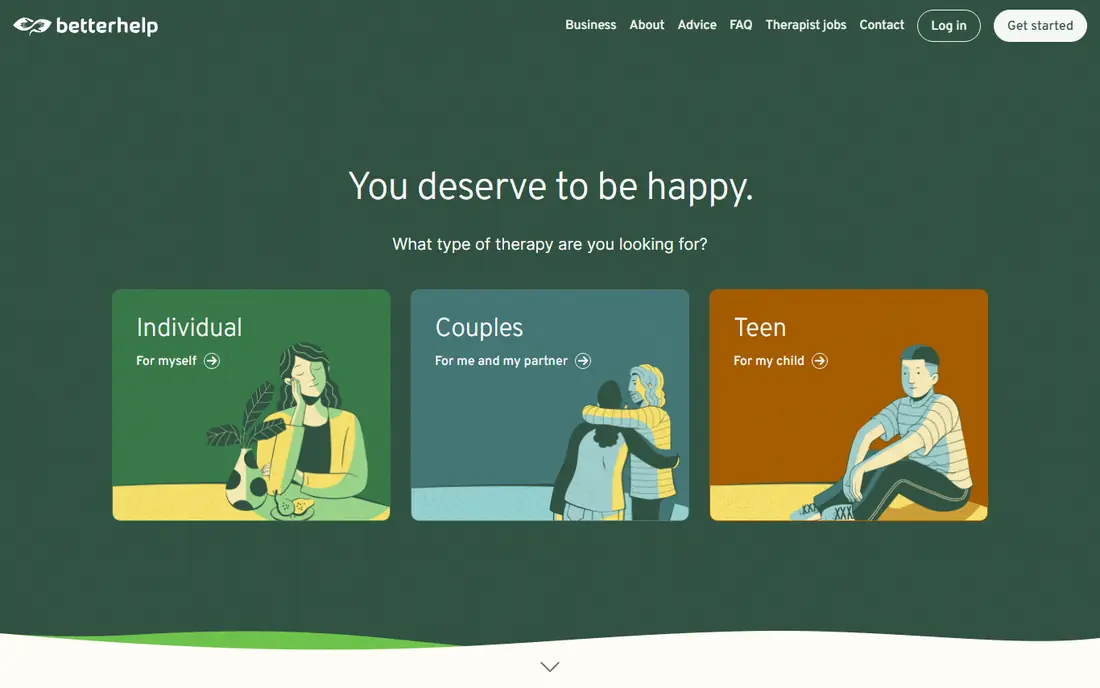
BetterHelp is our pick for most people who want to start weekly therapy quickly and keep in touch with a therapist between sessions. You fill in a questionnaire about your needs and preferences, get matched with a licensed therapist, and receive one live session per week plus messaging. Group sessions and worksheets are also available, which some users find useful between live sessions.
The main limits are insurance and medication. BetterHelp is paid out of pocket in most cases, with prices listed at $70 to $100 per week in recent comparisons, and it does not offer psychiatry. If you need medication, or if insurance coverage is essential, Talkspace, Cerebral, or a per-session provider below may fit better.
- Large licensed therapist network
- Weekly live session plus messaging
- Easy therapist switching
- Does not take insurance in the usual way
- No psychiatry or medication management
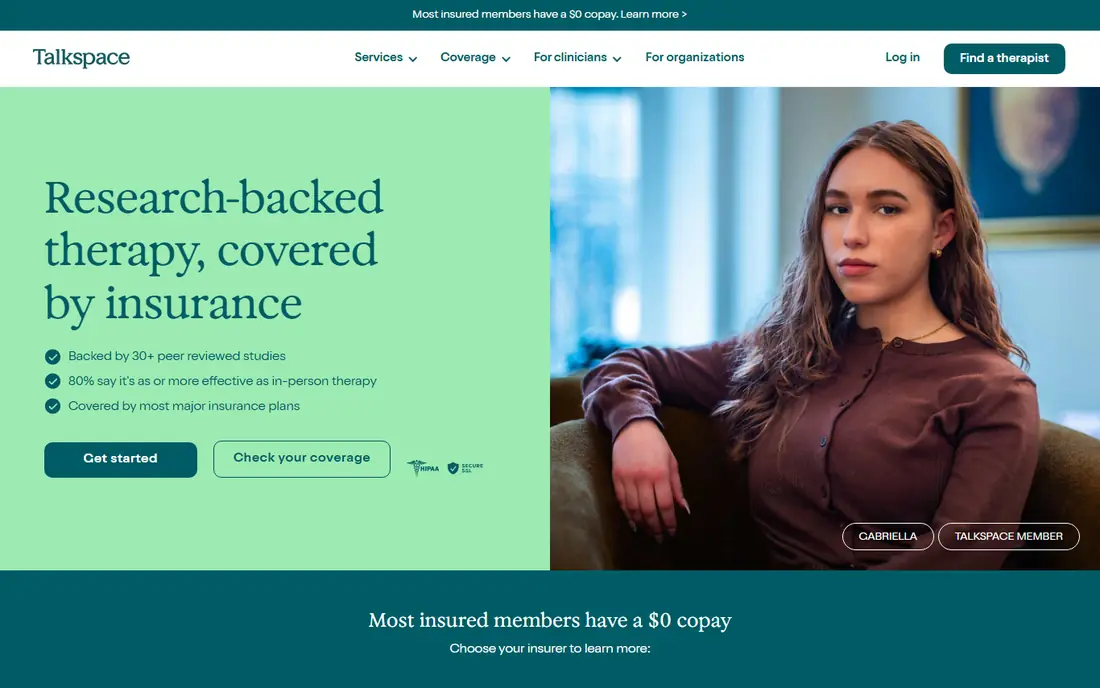
Talkspace is the strongest pick for people who want to use insurance for online therapy. It accepts many major insurance plans, and with insurance the cost can fall to a copay, while self-pay plans start at $69 per week in recent comparisons. It also offers psychiatry and medication management, so therapy and medication care can sit in one account.
The trade is session length and self-pay cost. Some Talkspace live sessions are 30 minutes, shorter than the 45 to 60 minutes offered elsewhere, so check the plan details for the session length you need. Without insurance, the monthly total is similar to BetterHelp, so insurance is the main reason to choose Talkspace first.
- Accepts many insurance plans
- Therapy plus psychiatry
- Messaging and video options
- Live video sessions can be shorter than some rivals
- Self-pay prices are high without insurance
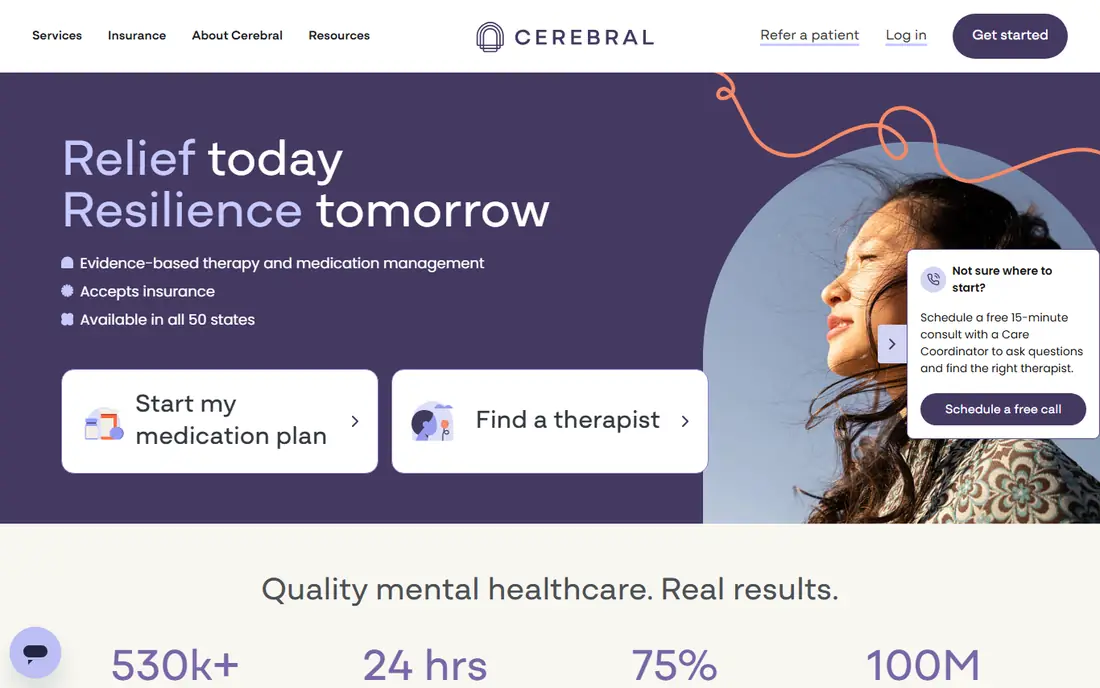
Cerebral combines therapy with medication management, which suits people who need both kinds of care and want them coordinated. Medication management plans start at $95 per month in recent comparisons, with therapy plans higher, and the service offers messaging and video sessions with licensed therapists and prescribers. That combined model can save the hassle of coordinating two separate providers.
Buyers should also know the history. Cerebral faced regulatory action over past data sharing and prescribing practices, and it no longer prescribes certain controlled substances. Read the current privacy policy, confirm what medications are offered, and check whether your insurance is accepted before you commit, because those details matter more here than for a therapy-only service.
- Therapy and medication management in one place
- Prescriber access
- Structured care plans
- Past privacy and prescribing issues are on record
- Therapy session counts vary by plan
Brightside focuses on anxiety and depression, rather than trying to cover every condition, and that focus shows in its care model. It combines therapy with psychiatry and medication management, tracks progress with standard symptom scales, and adjusts care based on those scores. For someone whose main need is anxiety or depression care, that focused approach can feel clearer than a general platform.
The limit is scope. If your main need is couples therapy, trauma work, or a condition outside anxiety and depression, a broader platform or a specialist provider may fit better. Pricing varies by bundle, so check the current therapy-only and therapy-plus-medication prices on Brightside's site before you choose.
- Focus on anxiety and depression
- Therapy plus psychiatry
- Progress tracking with standard scales
- Narrower focus than general therapy platforms
- Pricing varies by therapy and medication bundle
Amwell suits people who want to pay per session rather than subscribe. Therapy sessions are listed at up to $109 per 45-minute session in recent comparisons, with psychiatry priced separately, and Amwell accepts many insurance plans, including Medicare in recent guides. That per-session model is useful if you need occasional therapy or a second opinion, rather than weekly care.
The trade is continuity. Per-session booking can mean less regular contact than a subscription with messaging between sessions, and initial provider matching may not let you choose your first therapist directly. If weekly contact and messaging matter most, a subscription platform may suit you better.
- Accepts many insurance plans
- Per-session pricing with no subscription
- Psychiatry for adults
- Therapy sessions are 45 minutes in recent guides
- Provider choice can be limited at first
MDLive is another per-session option, with therapy follow-up sessions listed at $140 and psychiatry initial visits higher in recent comparisons, though insurance can lower the cost sharply. It offers therapy and psychiatry for children ages 10 and up in recent guides, which is broader than some rivals, and it lets you search by specialty, which helps when you need a provider with a specific focus.
Self-pay cost is the main drawback. At $140 per therapy session, weekly care without insurance adds up fast, so MDLive makes most sense when insurance covers most of the fee, or when you need occasional sessions rather than weekly care. Check your plan coverage before your first booking.
- Large therapist network
- Accepts insurance
- Therapy and psychiatry for ages 10 and up in recent guides
- Higher self-pay session prices
- Psychiatry initial visit costs more
Online-Therapy.com is the budget pick for people who want structured cognitive behavioral therapy work. Plans start at $40 per week in recent comparisons, with a discount in the first month in some offers, and the program includes worksheets, a journal, and guided CBT activities alongside live sessions. That structure suits people who like homework and self-guided work between sessions.
It does not take insurance, and lower tiers offer fewer live sessions than BetterHelp or Talkspace. If live weekly video is your priority, compare the higher tiers here against BetterHelp's price. If structured CBT work is your priority, the lower price and program format are a real advantage.
- Low starting price
- CBT-focused programs with worksheets
- Video, voice, and text options
- Does not take insurance
- Fewer live session options on lower tiers
Grow Therapy is a marketplace that helps you find licensed therapists who take your insurance, rather than a single subscription service. You can search by insurance plan, specialty, location, and session type, and book video or in-person sessions with a provider who fits. That model suits people who want a named therapist, insurance billing, and the option to meet in person later.
The catch is variation. Prices, availability, and session formats depend on the individual provider and your insurance plan, so there is no single Grow Therapy price to compare. Use it when insurance and provider choice matter more than a flat subscription price, and confirm coverage with the provider before your first session.
- Search licensed therapists by insurance and specialty
- In-person and video options
- Booking help
- Prices vary by provider and insurance
- Availability varies by state and specialty
SonderMind works in a similar way to Grow Therapy: it matches you with licensed therapists based on your needs, insurance, and preferences, with video and in-person options where available. That matching help is useful when you do not want to search dozens of profiles yourself, and insurance billing can make ongoing care more affordable than a subscription.
As with Grow Therapy, prices and availability vary by provider, plan, and state, so check coverage and session costs with the matched therapist before you start. SonderMind is best for people who want insurance-based care with a personal match, rather than a fixed-price subscription with messaging between sessions.
- Matches you with licensed therapists who take insurance
- Video and in-person options
- Specialty matching
- Prices vary by provider and insurance
- Availability varies by location
How we picked these
We compared official service pages, insurance information, and recent 2026 comparisons of online therapy services, and we kept only services that use licensed therapists or prescribers for therapy and psychiatry. We left out peer-support apps, meditation-only apps, and AI chatbots as primary picks, because they are not a substitute for licensed care, even though they can be useful alongside it. We also noted where a service has a known problem, such as Cerebral's past privacy action, because that history matters when you share health information.
How to choose safely
Start with what you need, not the lowest price. If you need medication, narrow the list to services with psychiatry, such as Talkspace, Cerebral, Brightside, Amwell, and MDLive. If you need weekly therapy with messaging, BetterHelp and Talkspace are the main subscription options. If insurance is essential, start with Talkspace, Amwell, MDLive, Grow Therapy, or SonderMind, and confirm coverage before you book.
Next, check credentials and fit. Confirm that the therapist is licensed in your state, ask about their experience with your main concern, and use the free therapist switch or rematch option if the first fit feels wrong. A good fit matters more than a brand name, and most platforms allow a switch without a penalty, so do not stay with a poor match out of politeness.
Finally, plan for safety. Online therapy is not a crisis service, and it is not suited to every emergency or severe condition. Save the 988 number in your phone, know your local emergency number, and tell a trusted person or your primary care provider that you are starting therapy, so you have support outside the app as well.
Frequently asked questions
What is the best online mental health service overall?
For most people who want weekly therapy with messaging, BetterHelp is the broadest subscription pick. If insurance matters, Talkspace is often better, because it accepts many plans and also offers psychiatry.
Can online therapy prescribe medication?
Some services can, and some cannot. Talkspace, Cerebral, Brightside, Amwell, and MDLive offer psychiatry and medication management, while BetterHelp and Online-Therapy.com focus on therapy alone. Prescribing rules vary by state and medication type, so confirm with the service before you sign up.
Does online therapy take insurance?
It depends on the service. Talkspace, Amwell, MDLive, Grow Therapy, and SonderMind work with insurance in many cases, while BetterHelp and Online-Therapy.com are mainly paid out of pocket. Check your plan and the provider's coverage before your first session, because copays vary widely.
How much does online therapy cost without insurance?
Subscription therapy typically costs $40 to $100 per week in recent comparisons, depending on the service and plan, while per-session therapy costs $109 to $140 per session for Amwell and MDLive in recent guides. Psychiatry visits cost more, especially for an initial visit.
Is online therapy as effective as in-person therapy?
For many common concerns, such as mild to moderate anxiety and depression, research and clinical guidance support video therapy as an effective option, but fit depends on the person, the condition, and the therapist. If you need in-person care, crisis care, or a higher level of support, discuss that with a clinician rather than relying on an app alone.
What should I do if I feel unsafe or in crisis?
If you are in crisis in the United States, call or text 988 to reach the Suicide and Crisis Lifeline, or call 911 in an emergency. Online therapy platforms are not crisis services, so do not wait for a message reply from a therapist when you need immediate help.
Sources
See where you really rank - block by block
ProMapRanker scans Google Maps across a grid of your service area. Simple monthly plans from $19, white-label on every plan.
Start freeKeep reading
 zscaler alternatives
Best Zscaler Alternatives in 2026
Looking for zscaler alternatives? We compare 9 SASE and zero trust platforms on architecture, data protection, pricing, and fit for your network and team.
Read → zapier alternatives free
Best Zapier Alternatives Free in 2026
Nine automation tools for zapier alternatives free in 2026, all with genuinely free tiers, plus free plan limits, starting prices and upgrade paths explained.
Read → which platform is best for online reputation
Which Platform Is Best for Online Reputation in 2026
Wondering which platform is best for online reputation? We compare 8 review, listing, and response tools for small and multi-location businesses and agencies.
Read →