 ProMapRanker
What's the Best Mobile Marketing Platform in 2026

Key takeaways
- OneSignal and Pushwoosh give small app teams a free starting point, while Braze, Airship and Iterable are built for larger teams with a sales-led purchase.
- Klaviyo stands out for online stores because email and SMS sit close to order data, but it is not a full app-first push platform.
- MoEngage and CleverTap suit mobile-first consumer brands that want app analytics and journeys in one place.
- Customer.io fits product teams that already track events and want messages triggered by what users do inside an app.
- Always check consent, opt-in status and message frequency before you scale, since a push that annoys users can cost you installs and trust.
Quick comparison
| Pick | Great for | Pricing starts at | Free tier | |
|---|---|---|---|---|
 Braze | Enterprise cross-channel campaigns | See website | No | Visit |
 Airship | Large app brands needing mobile journeys | See website | No | Visit |
 OneSignal | Small apps starting with push | Free | Yes | Visit |
 Klaviyo | Online stores using email and SMS | Free | Yes | Visit |
 Iterable | Growth teams running cross-channel journeys | See website | No | Visit |
 MoEngage | Mobile-first consumer brands | See website | No | Visit |
 CleverTap | App analytics plus engagement | See website | Yes | Visit |
 Customer.io | Event-triggered product messaging | $100 per month | Free trial | Visit |
 Pushwoosh | Low-cost push and in-app messages | Free | Yes | Visit |
The best mobile marketing platforms
We compared official feature pages, pricing pages and public reviews for app-first messaging tools, then kept the ones that still offer push, in-app or cross-channel campaigns for US app teams.
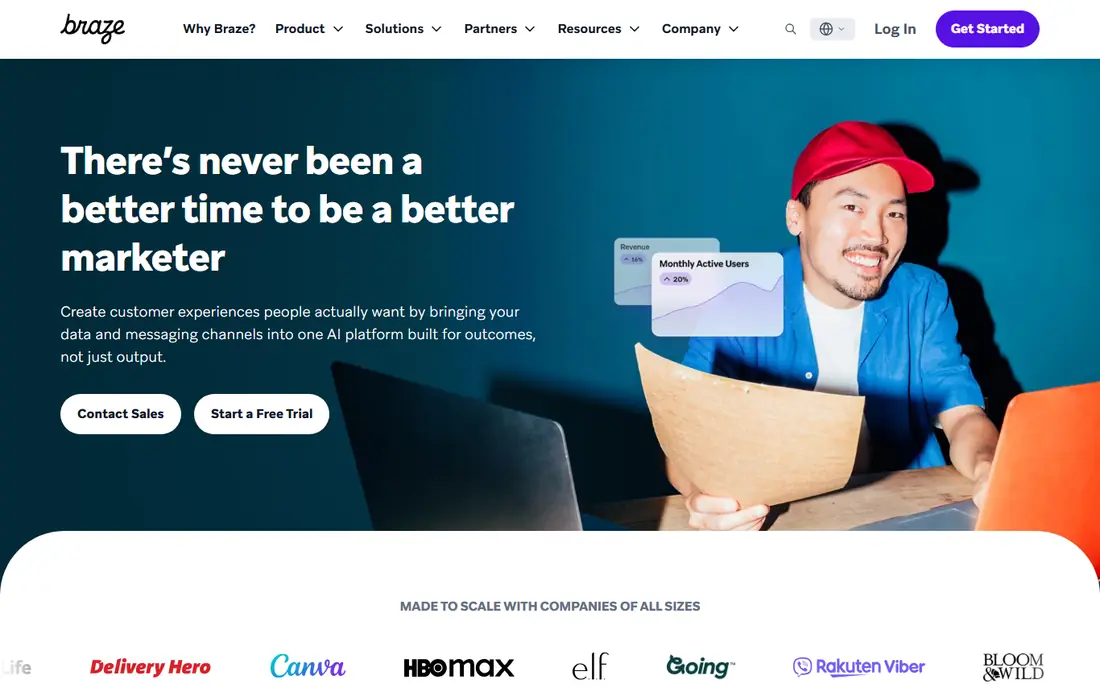
Braze is the choice we point to when an app team has several channels to run from one place. Push, email, SMS, WhatsApp and in-app messages can sit inside the same journey, which helps when a user moves from a first open to a purchase over several days. Its segmentation tools also let marketers build audiences from recent behaviour rather than from a static list.
The trade-off is cost and effort. Braze does not publish a list price, so budgeting starts with a sales conversation, and the implementation work is real. Smaller teams may find that they pay for depth they do not use in the first year. For a large brand with dedicated lifecycle staff, that depth is the point.
- Broad channel coverage
- Real-time segmentation
- Journey building across push, email and in-app
- Quote-based pricing
- Setup can demand developer time
- More depth than a small team needs
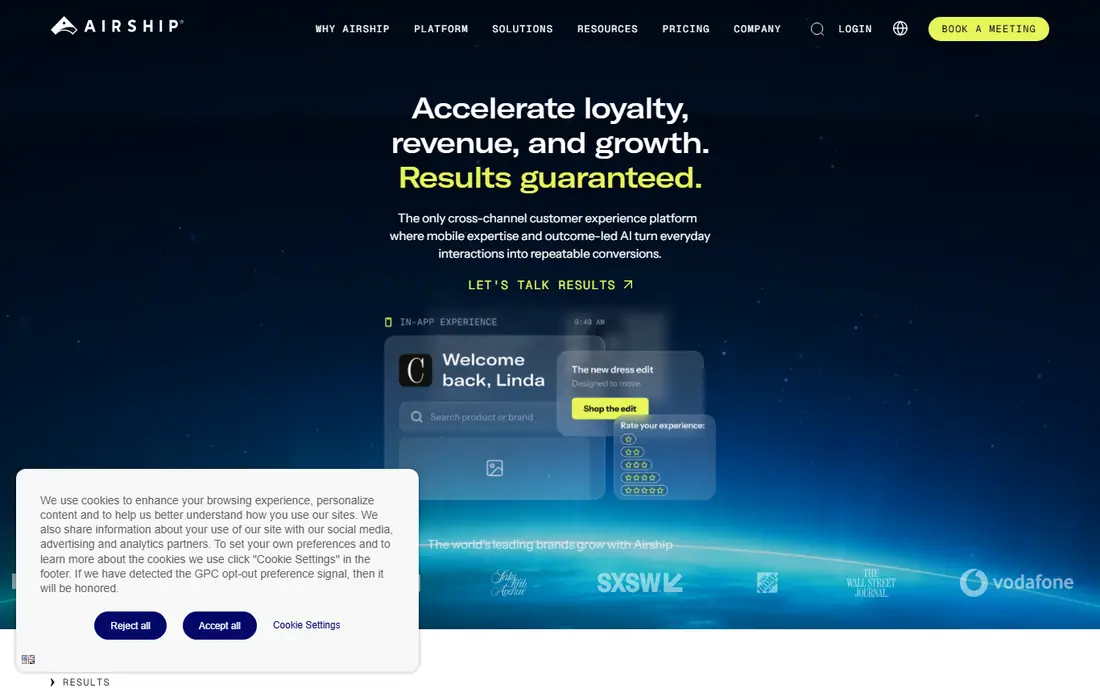
Airship began as a mobile messaging company, and that history still shows in its push and in-app work. Teams can build journeys, test variants and send messages tied to app behaviour without stitching together several vendors. Wallet passes and app inbox features also help brands that want offers and updates to live inside the app.
Airship is priced for mid-market and enterprise buyers, so a small app with a few thousand users will likely find cheaper options here. It also rewards teams that plan their data and audience structure early. If you have that structure and a large audience, Airship gives marketers a lot of control.
- Strong mobile push and in-app tools
- Journey and campaign builders
- Wallet and message features for app brands
- Quote-based pricing
- Onboarding can feel heavy
- Overkill for a single simple push use case
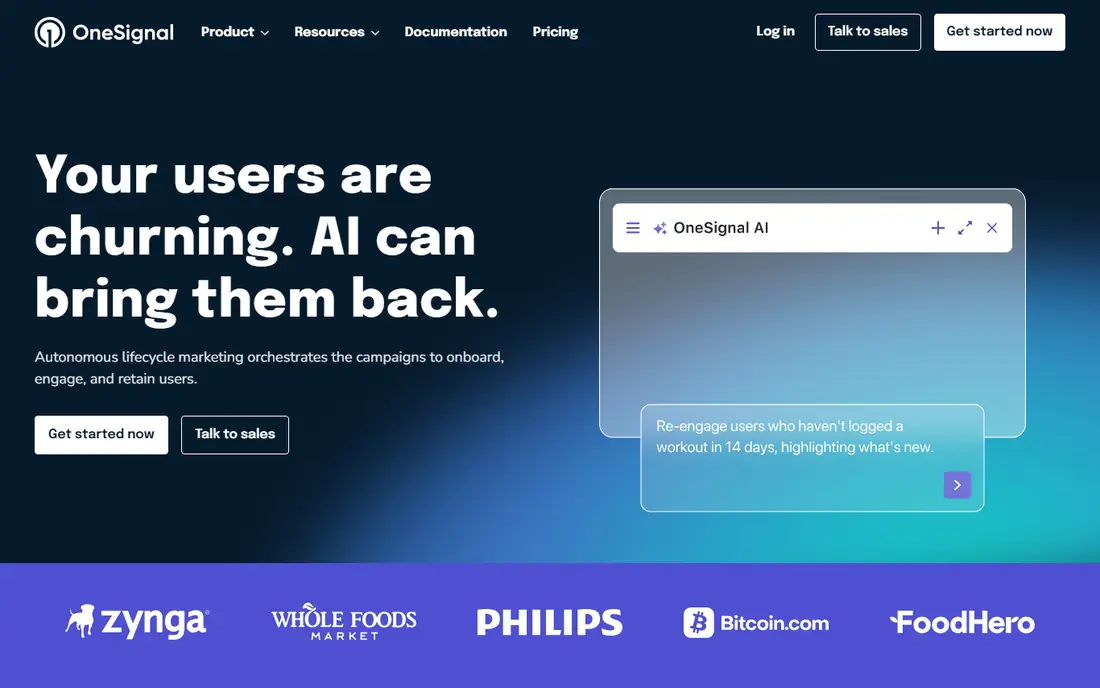
OneSignal is the easiest place to start if push is your main need. A small team can send mobile push, add web push and test basic segmentation without a sales call. The documentation is aimed at developers, but the dashboard work for a basic campaign is plain enough for a marketer to follow.
Growth brings a familiar pattern. Paid plans add journeys, advanced segmentation and delivery tools, and the bill follows audience size. Teams that later need deep cross-channel orchestration may outgrow OneSignal, but for a first push setup it remains a practical and low-risk pick.
- Free plan for getting started
- Unlimited mobile push sends on the free plan as described by the vendor
- Simple setup for web and mobile push
- Advanced journeys and analytics sit on paid plans
- Costs rise with audience size
- SMS and email are add-ons for many teams
Klaviyo earns its place here for stores whose mobile marketing is really phone-based email and SMS. Abandoned cart flows, post-purchase messages and browse abandonment all tie directly to store data, which is why many Shopify and WooCommerce stores start here. The free plan covers up to 250 active profiles, and paid email plans start at $20 per month for the next tier.
The limit is scope. Klaviyo does not replace a dedicated app push platform for a team whose product is an app. If your customers live mainly in an app, pair Klaviyo with a push tool or choose an app-first platform instead. For store-first teams, it is often the simplest route to revenue from mobile messages.
- Deep store integrations
- Strong email and SMS flows
- Clear pricing by active profile count
- Push is not its main strength
- Costs rise as the list grows
- SMS credits add to the bill
Iterable suits teams that want one workflow engine for email, SMS, push and in-app messages. Its journey builder is built for marketers, with branching based on events and profile data, and it handles personalisation well when customer data is clean. That makes it a good fit for growth-stage consumer brands with several campaigns running at once.
Pricing is the main barrier. Iterable does not publish a self-serve price, and costs scale with contacts and message volume. A team without engineering support may also find the first setup slow. If you have that support and a clear cross-channel plan, Iterable is a strong contender.
- Cross-channel journey builder
- Personalisation from customer data
- Strong email plus push and in-app coverage
- Quote-based pricing
- Setup needs technical help
- Smaller teams may not use the full toolset
MoEngage pairs customer analytics with messaging, so a team can spot a drop in activity and act on it in the same tool. That link matters for consumer apps, where retention often depends on timing a message to a recent action. It supports push, in-app, email, SMS and WhatsApp, and its journey tools cover common lifecycle cases such as onboarding and win-back.
The buying model is less friendly to tiny teams. Current plans are sales-led with a one-year minimum on Growth and Enterprise, and there is no permanent free tier. For a mobile-first brand with a real audience and a retention problem, that trade can still make sense.
- Insights-led engagement
- App analytics tied to campaigns
- Journey tools for mobile-first teams
- Quote-based pricing
- No permanent free tier
- Annual contract terms on current plans
CleverTap is useful when a team wants to understand app behaviour and message users from the same data. Funnels, cohorts and retention views sit next to push, in-app and email tools, which shortens the gap between spotting a problem and sending a fix. The free tier covers smaller audiences, which makes it easier to test before committing.
We list its starting price as See website because third-party sources give different entry figures and the vendor prices by module and audience size. Confirm the plan that covers your channels before you compare it with a flat-rate rival. For app teams that value analytics as much as messaging, CleverTap deserves a trial.
- Mobile analytics built in
- No-code journeys
- Free tier for smaller audiences
- Published entry prices vary by source, so confirm the quote
- Advanced tiers are quote-based
- Full depth takes time to learn
Customer.io is built around events. When a user signs up, finishes onboarding or drops off at checkout, a workflow can respond across email, push, SMS, in-app and WhatsApp. That model fits product-led teams that already send events from their app or website and want marketing to follow product behaviour closely.
Essentials starts at $100 per month, which is clear, but Premium starts at $1,000 per month billed yearly, so the jump is steep. Teams without developer help may also struggle to set up the data side. If your events are already reliable, Customer.io turns them into timely messages with little manual work.
- Event-driven journeys
- Data pipelines and integrations
- Clear Essentials starting price
- Needs clean event data to shine
- Premium starts much higher
- Less suited to teams that only want newsletters
Pushwoosh is a budget-friendly way to run push, in-app and web push without paying for channels you do not use. The push-only plan is priced per 1,000 monthly active users, and the project stays free while it remains within 1,000 monthly active users. Segmentation, journeys and A/B testing are included across plans, which is unusual at this price.
The catch is scale and scope. Larger brands may want the account support and enterprise tooling that bigger vendors sell, and WhatsApp and SMS pricing needs checking for your volumes. For a small or mid-size app that mainly needs push done well, Pushwoosh is hard to beat on price.
- Free up to 1,000 monthly active users
- Unlimited push sends
- All features included on every plan as described by the vendor
- Smaller brand presence than Braze or Airship
- Email and SMS costs sit on top of the base model
- Support depth varies by plan
How we picked these
We compared official pricing pages, product documentation and public reviews, and we kept only tools that still offer mobile push or in-app messaging in October 2026. We favoured tools with a clear channel fit, a working free tier or trial where one exists, and pricing that a reader can verify on the vendor site. Where pricing was quote-based or varied across sources, we wrote See website rather than guessing a figure. We did not claim hands-on testing, and we did not list tools that have closed or stopped selling to new customers.
What to check before you pick a mobile platform
Start with the channel your users actually use. An app team needs push and in-app first, while a store team may get more value from SMS and email. Check how each platform counts its bill, since some charge by monthly active users, some by profiles and some by messages. A low headline price can rise fast if your audience grows or if SMS sits outside the base plan.
Next, look at consent and data. Confirm how opt-ins are collected, how users can stop messages, and how long message history is kept. Ask how the platform handles Apple and Google push rules, and test a message on a real device before you send to a full list. Finally, run a small trial with one journey, such as onboarding or abandoned cart, and measure opens, taps and unsubscribes before you commit to a yearly contract.
A short checklist for the trial
Write down the audience size, the channels and the message volume you expect in the next six months. Send the same journey on your top two tools if you can, and compare delivery, tap rates and support response time. Check the export options too, since switching later is painful if your segments and templates cannot move with you.
Frequently asked questions
What is a mobile marketing platform?
A mobile marketing platform sends and measures messages on phones, mainly push notifications, in-app messages, SMS and mobile email. It also helps teams build audiences, run journeys and test which message works best for each group.
Which platform is best for a small app?
OneSignal and Pushwoosh are good starting points because both offer a free tier for smaller audiences. Klaviyo is a better fit if your business is an online store and most mobile revenue comes from email and SMS rather than app push.
Do I need consent to send push notifications?
Yes, users must opt in to push on their device, and you should also respect email and SMS consent rules in each market you serve. Give users a clear way to change preferences, and avoid sending messages to people who have withdrawn consent.
How much does Braze cost?
Braze does not publish a list price, so you need a sales quote based on audience size, channels and add-ons. That is why we list it as See website, and why smaller teams often start with a self-serve tool first.
Can one platform handle email, SMS and push?
Yes, Braze, Airship, Iterable, MoEngage, CleverTap and Customer.io all cover several channels. The right choice depends on how much of your traffic is app-based, how clean your event data is, and how much setup help your team has.
Is Klaviyo a mobile marketing platform?
Klaviyo is a marketing platform with strong mobile reach through SMS and email, but it is not primarily an app push platform. It fits store teams best, while app-first teams should shortlist Braze, Airship, OneSignal, CleverTap or Pushwoosh.
Sources
See where you really rank - block by block
ProMapRanker scans Google Maps across a grid of your service area. Simple monthly plans from $19, white-label on every plan.
Start freeKeep reading
 worlds best local seo company
8 Worlds Best Local SEO Companies for Map Pack Growth in 2026
Compare the worlds best local seo company options for Google Business Profile work, citations, reviews, and multi-location rankings and reporting in 2026.
Read → world's best web hosting company
World's Best Web Hosting Company in 2026
Searching for the world's best web hosting company? We compared 10 hosts on price, renewal rates, speed, and support to help you choose well today in 2026.
Read → who's got the best nanny tax services
Who's Got the Best Nanny Tax Services in 2026
We answer who's got the best nanny tax services, comparing full filing, back taxes, software, and pricing so families can handle nanny taxes correctly.
Read →