 ProMapRanker
What Is the Best Customer Data Platform in 2026

Key takeaways
- Segment is the best starting point for most engineering led teams, thanks to a free tier, a broad integration catalog, and a published Team price.
- Tealium and mParticle suit large, regulated, or mobile heavy companies that need strong consent, governance, or mobile SDK coverage.
- RudderStack and Hightouch suit teams that want a composable, warehouse centered approach rather than a stored profile store.
- BlueConic suits marketing led teams that want to build audiences without writing SQL for every segment.
- CDP pricing is mostly volume based and often quoted, so a trial on real event volumes matters more than a headline price.
Quick comparison
| Pick | Great for | Pricing starts at | Free tier | |
|---|---|---|---|---|
 Segment | Developer led data routing | $120 per month | Yes | Visit |
 Tealium | Enterprise consent and governance | See website | No | Visit |
 mParticle | Mobile heavy consumer apps | See website | No | Visit |
 RudderStack | Open and composable CDP | See website | Yes | Visit |
 Hightouch | Warehouse native activation | See website | Yes | Visit |
 BlueConic | Marketer led audiences | See website | No | Visit |
 Treasure Data | Enterprise decisioning | See website | No | Visit |
 ActionIQ | Composable enterprise CDP | See website | No | Visit |
 Amperity | AI identity resolution | See website | No | Visit |
 Bloomreach | Personalization and engagement | See website | No | Visit |
The best customer data platform
The best customer data platform depends on where your customer data already lives and who will build audiences from it. A packaged CDP stores profiles and activates them, while a composable CDP reads from your warehouse and syncs audiences out. Both models are valid, and the wrong choice usually comes from picking a model that fights your existing stack.
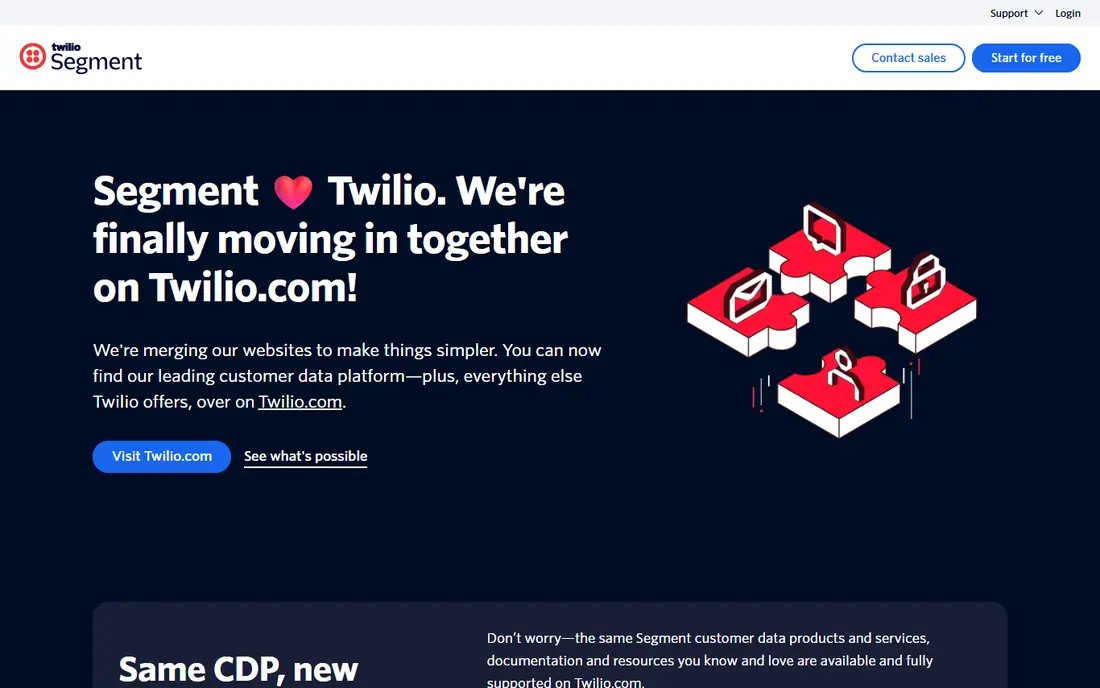
Segment, from Twilio, is our pick for most teams starting with a CDP. One API collects events from web, mobile, and server sources, then routes them to analytics, advertising, and CRM destinations. A free tier for up to 1,000 monthly tracked users lets a small team test a real tracking plan before paying, and a Team plan gives a published entry price.
The main risk is volume. Pricing follows monthly tracked users, so a site with high anonymous traffic can reach a higher bill faster than expected. Invest in a clean tracking plan and in Protocols schema rules early, since bad events are harder to fix after they spread to many destinations.
- Broad integration catalog
- Free tier up to 1,000 monthly tracked users
- Protocols for schema control
- Costs rise with tracked users
- Advanced features need higher tiers
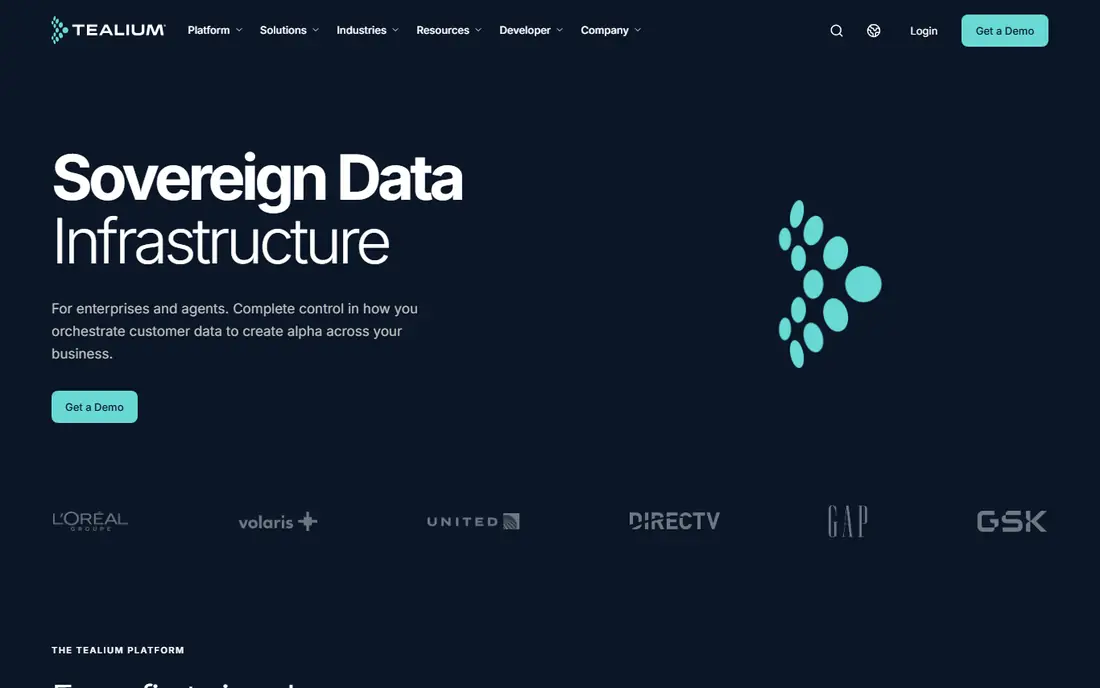
Tealium suits a large company that must prove consent and governance, not only move data. Tag management, consent enforcement, and audience building sit in one platform, and the integration catalog covers many enterprise tools. Regulated teams often pick Tealium for that control layer.
The downside is cost and complexity. Pricing is quoted, implementation can be a project, and a small team will find the platform heavier than it needs. If consent, privacy controls, and enterprise scale are the main drivers, Tealium earns its price. If speed and low cost matter more, Segment or RudderStack will be faster.
- Strong tag management and consent controls
- Large integration catalog
- Enterprise governance features
- Pricing is quoted and often enterprise level
- Implementation needs specialist help
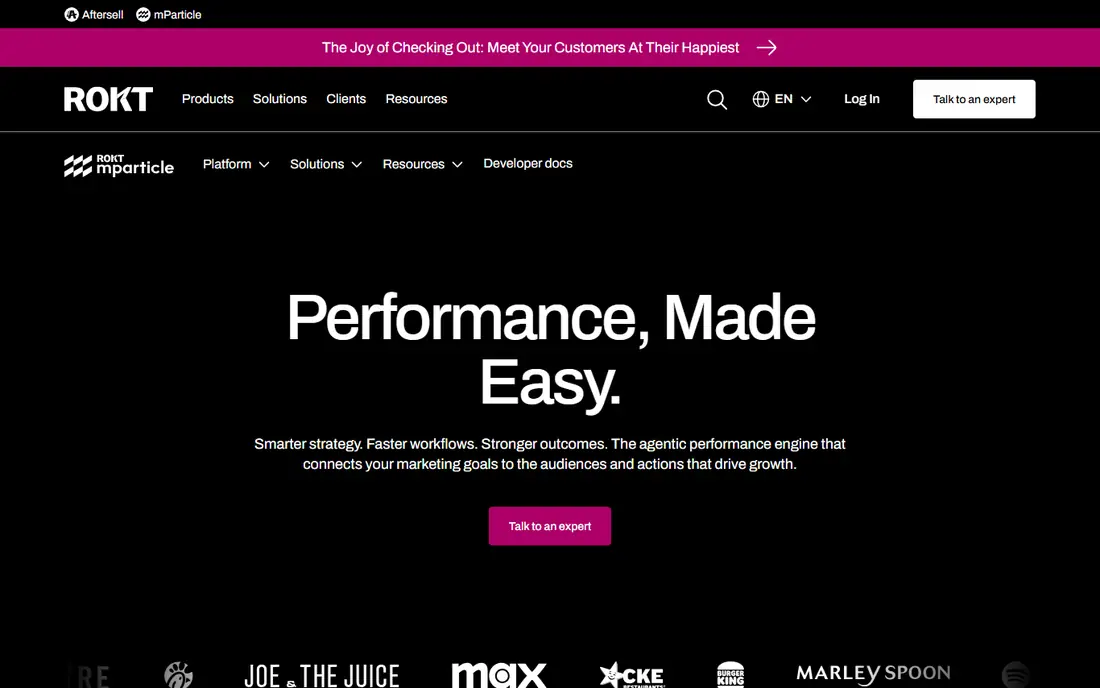
mParticle is built for consumer apps that live on mobile, web, and connected TV at the same time. Its SDKs collect events across platforms, real-time rules build audiences as data arrives, and integrations push those audiences to advertising and engagement tools. That mobile depth is why large consumer brands choose it.
The trade-off is entry cost. Pricing is quoted, and the platform is aimed at scale, so a small team or a web only product will find it oversized. A mobile heavy company with millions of users, by contrast, will value the SDK quality and the real-time audience engine.
- Strong mobile SDK coverage
- Real-time audience rules
- Good fit for multi-platform consumer products
- Pricing is quoted and enterprise level
- Less suited to a small web only team
RudderStack suits a team that wants control over its data and its warehouse. Events can be routed to a warehouse first, then activated to destinations, and an open source option lets a team self host. That design avoids storing a second copy of customer data in a separate profile store.
The cost is effort. A composable CDP asks more of data engineers than a packaged tool, especially for identity resolution and governance. For a team that already runs a warehouse well, that effort pays off in control. For a marketing team with no data engineering help, a packaged CDP will be faster.
- Open source option and self hosting
- Warehouse centered design
- Free tier for testing
- Needs more data engineering input than a packaged CDP
- Pricing varies by model
Hightouch is the clearest warehouse native option in this list. Instead of storing profiles in its own database, it reads models and tables from your warehouse and syncs audiences to advertising, email, and CRM tools. That keeps the warehouse as the single source of truth, which data teams prefer.
The limit is dependence. If the warehouse is messy, Hightouch will sync messy audiences, so modeling and identity work must happen upstream. A team with a clean warehouse gets fast activation with little new infrastructure. A team without one should fix modeling first, or pick a packaged CDP that handles identity itself.
- Syncs audiences from the warehouse
- Reverse ETL to many destinations
- Free tier for testing
- Depends on a well modeled warehouse
- Not a standalone profile store
BlueConic suits a marketing team that wants to own audiences without waiting for engineers or SQL. Listeners collect first-party behavior, profiles build over time, and segments can be created and activated through the interface. That independence is valuable when marketing needs to move fast.
The downside is price transparency and developer depth. Pricing is quoted, and a data team that wants API first control may prefer Segment or RudderStack. For a marketer led company that values speed and consent based first-party data, BlueConic is a strong fit.
- No-code audience building for marketers
- First-party data focus
- Timeline views of customer behavior
- Pricing is quoted
- Less developer focused than Segment or RudderStack
Treasure Data suits a large enterprise that needs to unify customer data at scale and drive decisions from it. Profile unification, journey analysis, and predictive scoring sit alongside activation, which helps retail and manufacturing teams that deal with many channels and offline data.
Small and mid-size teams should look elsewhere. Implementation is a project, pricing is enterprise level, and the platform assumes a data team that can manage it. For a Fortune scale company with complex data, the breadth justifies the effort. For a startup, it does not.
- Large scale profile unification
- Predictive scoring
- Strong fit for retail and manufacturing
- Enterprise pricing and implementation
- More platform than a small team needs
ActionIQ is a composable CDP for enterprises that already trust their warehouse. It builds audiences from warehouse data, orchestrates them in real time to channels, and adds governance controls that large companies require. Media and financial services teams are common users.
The limit is the same as with any composable tool: it assumes a mature data stack. A company without a well modeled warehouse will not get full value, and pricing is enterprise level. For a large team with a strong warehouse, ActionIQ offers control without a second profile store.
- Composable design that reads warehouse data
- Real-time orchestration
- Strong enterprise governance
- Enterprise pricing
- Needs a mature warehouse and data team
Amperity stands out for identity resolution. Its AI based stitching builds a single golden profile from messy, multi-channel records, which matters for retail, hospitality, and other businesses where the same customer appears under many identifiers. That identity layer then feeds activation and analytics.
The trade-off is cost and scope. Amperity is an enterprise platform with quoted pricing, and it needs clean input data and data team time to reach its best results. A company whose main problem is duplicate and fragmented identities will value it highly. A company with a simpler identity problem may not need it.
- AI based identity resolution for golden profiles
- Strong fit for retail and hospitality
- Large scale unification
- Enterprise pricing
- Implementation needs data team input
Bloomreach suits an ecommerce team that wants a CDP plus personalization and engagement in one platform. Customer data, product discovery, and campaigns share the same profiles, which shortens the path from a segment to a personalized email, site banner, or product recommendation.
The caution is breadth. A team that only needs data routing will find Bloomreach larger and more expensive than Segment or RudderStack. An ecommerce team that will actually use personalization and engagement, though, may save money by combining tools rather than buying them separately.
- Combines CDP with personalization and engagement
- Strong ecommerce fit
- Real-time customer views
- Pricing is quoted
- Broader than a pure CDP, so some teams pay for features they do not use
How we picked these
We compared official feature and pricing pages, integration catalogs, identity approaches, and deployment models, and we favored platforms with clear evidence of active use in October 2026. We kept both packaged and composable CDPs, because the best model depends on whether a team already runs a warehouse well. Where a vendor does not publish a starting price, we wrote See website rather than guessing a figure from a third party range.
What to check before you choose
Start with your data home. If a warehouse already holds clean customer models, shortlist Hightouch, RudderStack, and ActionIQ. If no warehouse exists, or if marketing must move without engineering help, shortlist Segment and BlueConic. If consent and governance drive the purchase, add Tealium to the shortlist.
Next, test identity on your own data. Send a sample of real records, including duplicates and cross device cases, and check how many profiles each vendor creates. Finally, model price on real volumes: monthly tracked users, events, or profiles, depending on the vendor. A CDP quote based on a guess will almost always be wrong.
Frequently asked questions
What is the best customer data platform for most teams?
Segment is the best starting point for most engineering led teams, because it has a free tier, a broad integration catalog, and a published Team price. A marketing led team may prefer BlueConic, while a warehouse centered team may prefer Hightouch or RudderStack. The best choice follows your stack, not a single ranking.
What is the difference between a packaged and a composable CDP?
A packaged CDP stores customer profiles in its own database and activates them from there. A composable CDP reads profiles and audiences from your warehouse and syncs them out, without a second profile store. Packaged tools are faster to start, while composable tools give a data team more control and a single source of truth.
How much does a CDP cost?
Cost varies widely and is usually based on volume, such as monthly tracked users, events, or profiles. Segment publishes a Team price, while most enterprise CDPs are quoted. Treat any published figure as a floor, and model a full year of real volumes before signing, since overages are common.
Do I need a CDP if I already have a CRM?
A CRM and a CDP do different jobs. A CRM manages known customers and sales or service records, while a CDP unifies behavior across web, mobile, and offline channels into profiles for activation. A company may need both, with the CDP feeding segments and the CRM holding the sales record.
How do CDPs handle privacy and consent?
Good CDPs enforce consent rules, suppress profiles on request, and limit which destinations receive sensitive fields. Tealium is strongest here among packaged tools, but every vendor needs a clear consent policy from the buyer. Check how deletion, suppression, and regional rules are handled before sending personal data.
Sources
See where you really rank - block by block
ProMapRanker scans Google Maps across a grid of your service area. Simple monthly plans from $19, white-label on every plan.
Start freeKeep reading
 zoro.to alternatives
Best Zoro.to Alternatives in 2026
We compare the best zoro.to alternatives in 2026, listing only legal licensed anime streaming services, from Crunchyroll to free options for fans today.
Read → zip alternatives
Best Zip Alternatives in 2026
We compare the best zip alternatives for buy now, pay later in 2026, covering pay-in-4 plans, fees, spending limits, and credit reporting options today.
Read → yesware alternatives
Best Yesware Alternatives in 2026
Compare the best yesware alternatives for sales email tracking, templates, and sequences, with current pricing and honest tradeoffs for small sales teams.
Read →