 ProMapRanker
What Is the Best App to Learn Japanese in 2026

Key takeaways
- LingoDeer is our pick for structured beginners, since it explains grammar clearly while teaching kana, words, and sentences together.
- Duolingo is best for building a daily habit, but most learners outgrow it within a few months and need a grammar tool next.
- WaniKani and Bunpro are the strongest specialist pair, covering kanji with mnemonics and grammar with spaced repetition.
- No single app delivers fluency alone, so plan for a main course plus speaking practice and real reading or listening.
Quick comparison
| Pick | Great for | Pricing starts at | Free tier | |
|---|---|---|---|---|
 Duolingo | Daily habit building | Free | Yes | Visit |
 LingoDeer | Structured beginners | See website | Free trial | Visit |
 Busuu | Speaking with feedback | See website | Yes | Visit |
 Bunpro | Grammar practice | $5 per month | Yes | Visit |
 WaniKani | Kanji mastery | $9 per month | Yes | Visit |
 JapanesePod101 | Listening lessons | See website | Yes | Visit |
 Pimsleur | Audio speaking | See website | Free trial | Visit |
 Memrise | Vocabulary review | See website | Yes | Visit |
 Drops | Short vocabulary sessions | Free | Yes | Visit |
 Renshuu | Grammar and JLPT review | Free | Yes | Visit |
The best app to learn japanese
Japanese needs several skills at once: kana, kanji, grammar, listening, and speaking. No app covers all of them equally well, so this list pairs a main course with specialists for the skills that course misses. We focused on apps that are live in October 2026 and that offer a clear path from beginner to intermediate.
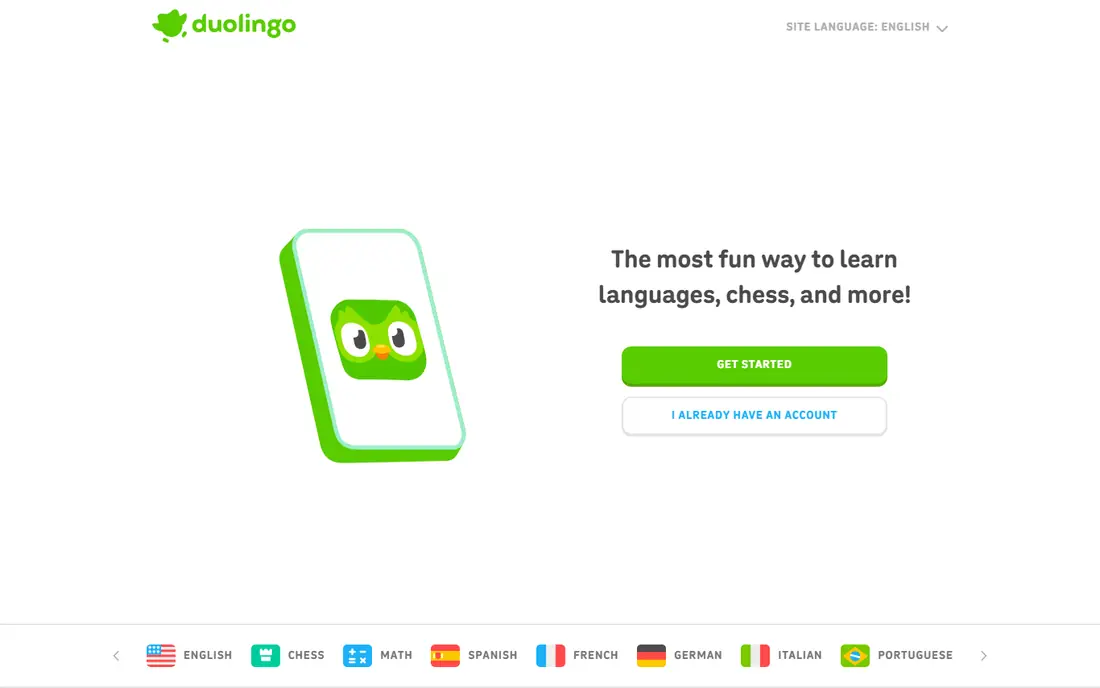
Duolingo is the easiest way to start Japanese and keep going. Lessons are short, streaks encourage daily practice, and the early course covers hiragana, katakana, and basic vocabulary in a friendly order. For a complete beginner who is unsure about committing, that low barrier matters more than depth.
The limit shows up soon after the basics. Grammar is taught mostly by pattern rather than explanation, and sentence range stays narrow. Use Duolingo to build the habit, then add LingoDeer or Bunpro for grammar and WaniKani for kanji. On its own, Duolingo will not carry you to comfortable reading or conversation.
- Free and easy to start
- Short gamified lessons
- Good for kana and basic words
- Grammar explanations are thin
- Most intermediate learners outgrow it quickly

LingoDeer is our pick for learners who want a real course rather than a game. Each lesson explains the grammar point in plain English, then practices it with native audio, reading, and sentence building. That structure helps beginners understand why a sentence works, not just memorize it.
It does not cover advanced Japanese, and it offers little live speaking practice. Think of LingoDeer as the foundation course: finish its beginner and intermediate path, then move to reading, listening, and conversation tools. For the first year of study, it is the most complete single app in this list.
- Clear grammar explanations
- Native audio
- Structured path from kana to sentences
- Coverage stops short of advanced levels
- Speaking practice is limited
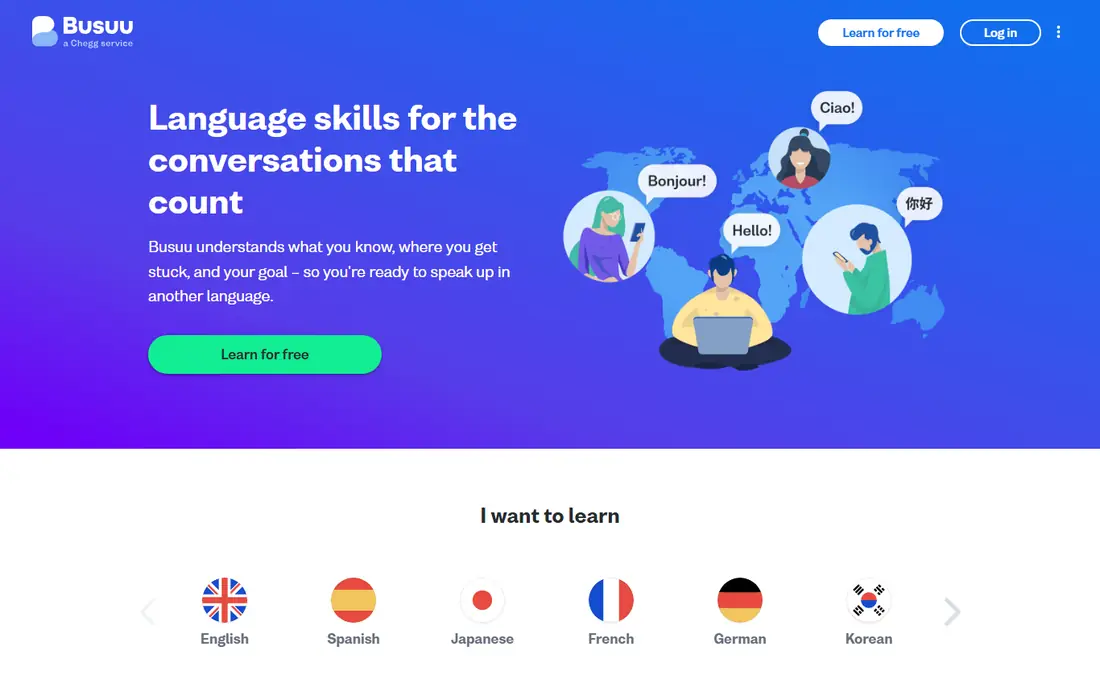
Busuu suits learners who want feedback from real people, not just automated checks. Lessons follow a clear level structure, and community corrections let native speakers fix your writing and speaking exercises. That feedback is useful for pronunciation and natural phrasing, which self-study apps often miss.
Grammar depth is thinner than LingoDeer, so Busuu works best as a second app rather than your only course. Pair it with Bunpro for grammar drills and use Busuu for the speaking and writing practice that keeps your Japanese active. The free plan lets you test the format before paying.
- CEFR-aligned lessons
- Native speaker corrections on exercises
- Speaking and writing practice
- Japanese content is less deep than LingoDeer for grammar
- Full features need Premium
Bunpro fills the gap most course apps leave: grammar that actually sticks. It teaches each grammar point with examples, then reviews it on a spaced schedule so you revisit it before you forget it. Paths aligned to JLPT levels help learners who want a clear target, from N5 upward.
It is not a friendly first course on its own, since it assumes you are learning vocabulary and reading elsewhere. Used alongside LingoDeer or a textbook, Bunpro turns grammar from a list of rules into something you can use in sentences. At around $5 per month in published pricing, it is also one of the cheaper specialist tools here.
- Spaced repetition for grammar points
- JLPT-aligned paths
- Clear example sentences
- Best as a supplement, not a first course
- Interface is plain compared with gamified apps
WaniKani is the most systematic kanji tool in this list. It teaches radicals first, then builds kanji from those parts, then vocabulary from the kanji, using mnemonics at each step. Spaced reviews keep older kanji in memory, and the level path gives a clear sense of progress toward reading real Japanese.
It covers only kanji and related vocabulary, so you still need grammar, listening, and speaking elsewhere. The review pace can also feel strict if you miss days, since reviews pile up. For learners who want to read Japanese rather than just speak it, WaniKani is worth the monthly cost, with free levels to test first.
- Mnemonics for radicals, kanji, and words
- Clear level-by-level path
- Large community
- No speaking or listening practice
- Review schedule can feel rigid
JapanesePod101 is best for learners who study by listening, such as on a commute. Lessons follow a podcast style, with dialogues, vocabulary, and cultural notes at each level. The library is large, so you can find material for your level and interests, and downloads make offline study easy.
The size of the library is also a weakness, since it is easy to drift without a structured path. Use the level pathways and pick one series to finish rather than jumping between lessons. Pair it with a grammar app so listening turns into understanding, not just background sound.
- Large library of audio and video lessons
- Levels from beginner to advanced
- Downloadable lessons for offline use
- Lesson library can feel disorganized without a clear path
- Limited interactive speaking practice
Pimsleur suits learners who want to speak Japanese but have little time to sit at a desk. Lessons use spaced recall and call-and-response speaking, which builds pronunciation and listening faster than reading apps alone. You can study while walking, driving, or doing chores, which helps consistency.
Reading, writing, and kanji get far less attention, so Pimsleur is a supplement rather than a complete course. It is also a paid subscription, so check current pricing before committing. For speaking confidence in the early months, it is one of the best audio options available.
- Strong audio method for speaking and listening
- Hands-free lessons
- Good pronunciation practice
- Less reading and writing coverage
- Subscription cost adds up over time
Memrise works well as a vocabulary top-up, especially for words you keep forgetting. Short review sessions fit into a busy day, and native speaker video on some courses helps with listening and pronunciation. It is easy to use for five or ten minutes at a time, which keeps a study habit alive.
It is not a structured Japanese course, and course quality varies, so check reviews for the specific Japanese course you plan to use. Use Memrise to reinforce words from your main course, not to replace grammar or kanji study. The free plan is enough to test whether the format suits you.
- Spaced repetition for words and phrases
- Video clips of native speakers on some courses
- Easy daily review
- Japanese catalog quality varies by course
- Less grammar structure than LingoDeer or Bunpro
Drops is the best app in this list for a five-minute vocabulary habit. Words are taught with images and quick matching games, which makes review feel light and fast. It covers everyday topics well and is a good way to learn kana-linked vocabulary without a long lesson.
The free plan limits sessions to five minutes per day in published descriptions, and there is no grammar teaching. That makes Drops a side tool, not a main course. Use it to warm up before a longer study session, or to keep vocabulary fresh on days when you cannot study properly.
- Visual, game-like vocabulary drills
- Five-minute free sessions
- Good for kana and everyday words
- Free sessions are short
- No grammar or sentence practice
Renshuu is a strong free option for learners who want JLPT-focused review without paying for several apps. It covers grammar, kanji, vocabulary, and sentence practice, with quizzes that adapt to your level. The free tier is generous, which makes it a good second app after Duolingo or alongside Bunpro.
It is less guided than LingoDeer, so beginners may feel unsure where to start. Pick a JLPT level, follow one study path, and use Renshuu for daily review rather than as your only teacher. For intermediate learners on a budget, it offers a lot for no cost.
- Free tier covers a wide range of grammar, kanji, and vocabulary
- JLPT-focused quizzes
- Gamified review
- Interface is busier than Duolingo or LingoDeer
- Less guided than a full course
How we picked these
We compared official feature and pricing pages, course structures, and public learner guides, and we kept only apps that are live in October 2026 and that teach Japanese specifically rather than general language tools with a thin Japanese course. We favored a mix of main courses, kanji and grammar specialists, and listening tools, and we used See website where prices varied by plan or region. We did not claim hands-on testing, and we treated vendor level claims as a starting point to check against your own goals.
How to build a study plan that lasts
Pick one main course and two specialists, then stick with that set for at least a month. A common mix is LingoDeer for structure, WaniKani for kanji, and JapanesePod101 for listening. Add speaking practice through Busuu or a tutor once you can form basic sentences, since speaking needs real feedback.
Study little and often
Short daily sessions beat long weekend sessions for memory, especially with spaced repetition tools like Bunpro and WaniKani. Aim for a routine you can keep on busy days, such as ten minutes of kanji review plus one lesson. If reviews pile up, clear the backlog before adding new material, or the pile will grow faster than your memory.
Move to real Japanese early
Apps teach patterns, but real progress comes from reading and listening to Japanese made for learners and then for native speakers. Graded readers, NHK easy news, and slow podcasts help bridge the gap. When you meet a word or grammar point in real text, add it to your review app so the app work supports real use.
Frequently asked questions
What is the best app to learn japanese for beginners?
LingoDeer is our pick for structured beginners, since it explains grammar and teaches kana, words, and sentences in order. Duolingo is a good free start if you want to test the habit first. Most beginners do best with LingoDeer as the main course and Drops or Memrise for vocabulary.
What is the best app to learn japanese for kanji?
WaniKani is the strongest kanji app here, thanks to its mnemonic system and level-by-level path. Renshuu is a good free alternative for kanji review, especially if you are studying for JLPT levels. Both work best alongside a grammar course, since kanji alone does not teach you to form sentences.
How long does it take to learn Japanese with an app?
That depends on your target and daily time. Basic conversation and kana can take a few months of daily study, while comfortable reading takes much longer, often a year or more with steady kanji work. Apps help most when paired with speaking practice and real reading, not used alone.
Is Duolingo enough to learn Japanese?
No, not on its own. Duolingo builds a habit and covers basics, but its grammar explanations are thin and its range stays narrow. Pair it with LingoDeer or Bunpro for grammar and WaniKani for kanji, and add listening and speaking practice when you are ready.
What is the best free app to learn Japanese?
Renshuu offers the most complete free tier for grammar, kanji, and vocabulary review. Duolingo and Drops also offer useful free plans for beginners. Free apps work best as part of a mix, with one paid specialist added only when you hit a clear limit.
Sources
See where you really rank - block by block
ProMapRanker scans Google Maps across a grid of your service area. Simple monthly plans from $19, white-label on every plan.
Start freeKeep reading
 zscaler alternatives
Best Zscaler Alternatives in 2026
Looking for zscaler alternatives? We compare 9 SASE and zero trust platforms on architecture, data protection, pricing, and fit for your network and team.
Read → zapier alternatives free
Best Zapier Alternatives Free in 2026
Nine automation tools for zapier alternatives free in 2026, all with genuinely free tiers, plus free plan limits, starting prices and upgrade paths explained.
Read → which platform is best for online reputation
Which Platform Is Best for Online Reputation in 2026
Wondering which platform is best for online reputation? We compare 8 review, listing, and response tools for small and multi-location businesses and agencies.
Read →